Baking Soda vs Baking Powder
Baking soda is a base that needs an acid in the recipe to make gas, and it helps cookies spread and brown. Baking powder is baking soda packaged with its own acid, so it works in a batter that has none, and it adds height and a light crumb. To replace baking soda with baking powder, use about three times as much, according to King Arthur Baking. The reverse swap does not work on its own, because baking soda has nothing to react with.
Side by side
| Baking soda | Baking powder | |
|---|---|---|
| What it is | Sodium bicarbonate, a base with a pH of about 8 | Baking soda packaged with a dry acid and a starch |
| Starts working | As soon as it meets an acid and liquid | When it gets wet, and again in the oven if it is double-acting |
| What it gives you | More spread, more browning, a tender crumb | More height, puff and lightness |
| Strength | Strong, so recipes use small amounts | Weaker, so recipes use more |
| Acids that wake it up | Buttermilk, yogurt, sour cream, lemon juice, vinegar, honey, maple syrup, brown sugar, natural cocoa | None needed; it has its own |
| If you use too much | A soapy taste when there is not enough acid to use it up | A slightly bitter taste |
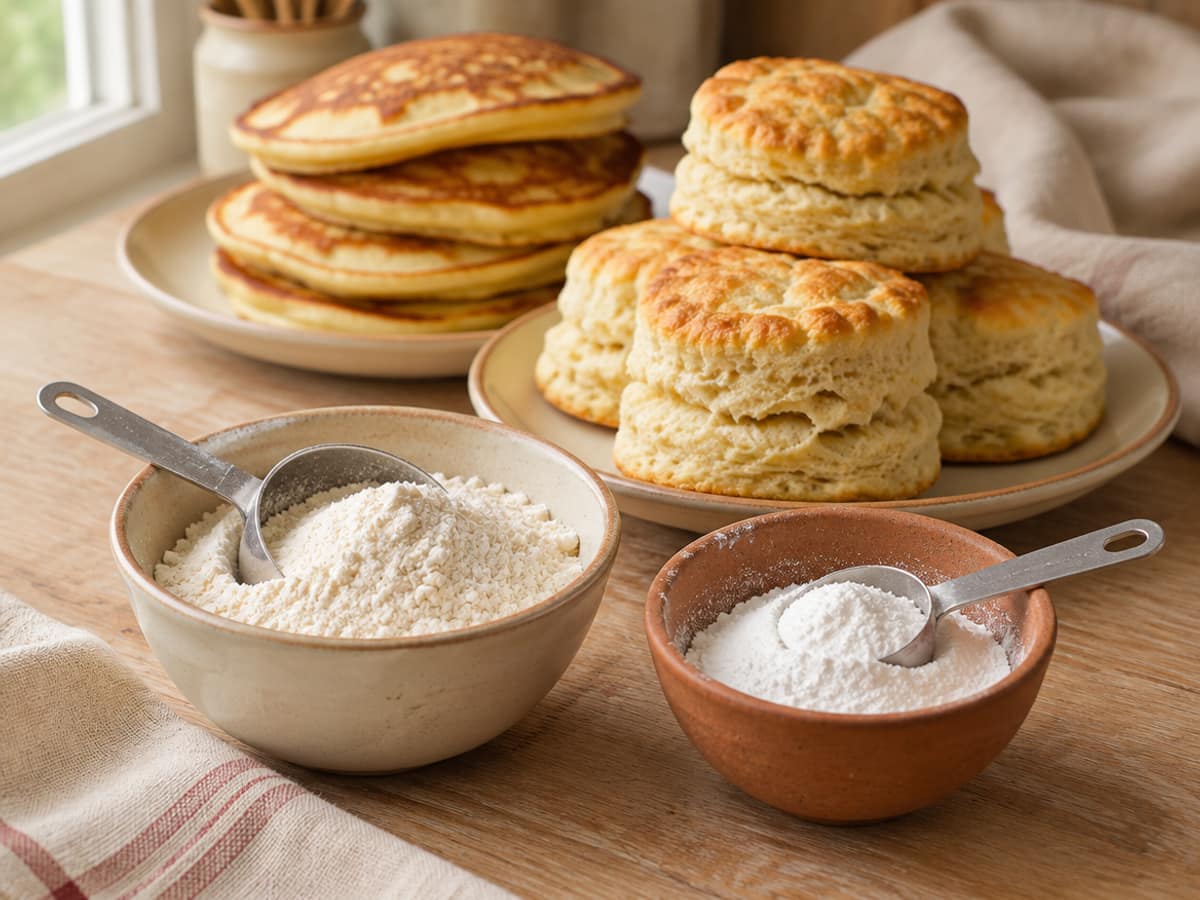
| Where you find it | Cookies, banana bread, buttermilk and cocoa cakes | Biscuits, pancakes, muffins, cakes with plain milk |
King Arthur sums up the difference this way: soda equals spread, and powder equals puff.
How baking soda works
Baking soda is alkaline. When it meets an acid and moisture, it makes carbon dioxide, and the gas lifts the dough. The reaction begins right away, so recipes that rely on baking soda are best baked soon after mixing. Because soda needs an acid, recipes pair it with one of the acidic ingredients in the table, and the acid is also what keeps the baked good from tasting soapy.
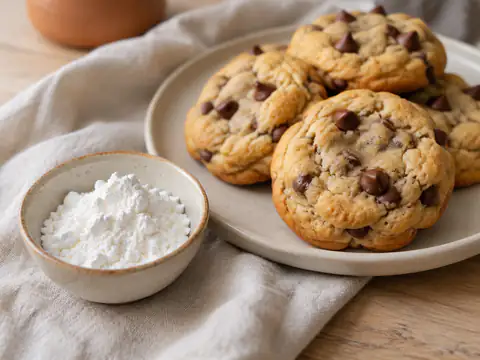
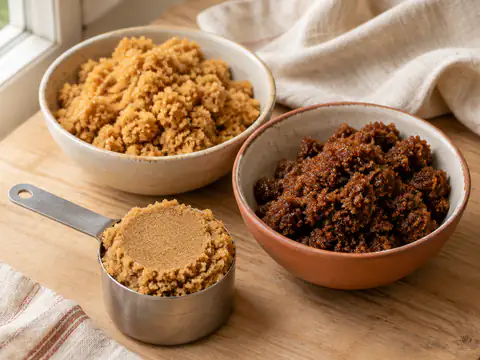
Soda also changes browning and spread. In cookies it helps the dough spread out and turn golden, which is why the classic chocolate chip cookie recipe uses baking soda with the acid in its brown sugar. For a closer look at what each cookie ingredient does, see chocolate chip cookie ingredients.
How baking powder works
Baking powder carries both parts of the reaction. King Arthur describes it as baking soda combined with an acid, with cream of tartar as the classic one. Most store-bought baking powder is double-acting. It reacts a first time when it dissolves in the wet batter, and a second time when the heat of the oven reaches it. That is why pancake batter that rests for a few minutes starts to bubble, and why baking powder is the leavener in biscuits, scones and muffins.
Because baking powder does not need an acid from the recipe, it suits batters made with plain milk or water, or ones that are not very acidic.
Why some recipes use both
When a recipe lists baking soda and baking powder, there is usually some acid in it, but not enough for soda alone. King Arthur explains that baking powder then does most of the lifting, while baking soda neutralizes the extra acid, softens its sharp taste and adds a little lift. A cocoa cake with buttermilk or a banana bread with brown sugar often works this way. If you see both on the list, keep both.
Swapping one for the other
| You are out of | Recipe calls for | What to do | Watch for |
|---|---|---|---|
| Baking soda | 1 tsp baking soda | Use 2 1/2 to 3 tsp baking powder (King Arthur says about 3; the cookie recipes on this site use 2 1/2) | A slightly bitter taste; the cookies or cake may be paler and puffier |
| Baking powder | 1 tsp baking powder | Do not use baking soda alone. Add an acid: 1/4 tsp baking soda with 1/2 tsp cream of tartar | Single-acting, so bake right away |
| Either one | A recipe with both | Keep both as written | Changing one can throw off the other |
For a batch of homemade baking powder with a spoon chart, see homemade baking powder. For a three-way view with cream of tartar, see cream of tartar vs baking powder vs baking soda. If you want to bake with only baking powder, chocolate chip cookies with baking powder is built for it.
Where the swap is easy and where it is not
Cookies and quick breads that rely on a lot of acid, such as buttermilk or natural cocoa, are the trickiest to change, because the acid will not be neutralized if you drop the soda. Pancakes, muffins and biscuits that already use baking powder are the easiest. Pancakes show it well: easy pancakes from scratch uses baking powder alone, and the batter needs no acid.
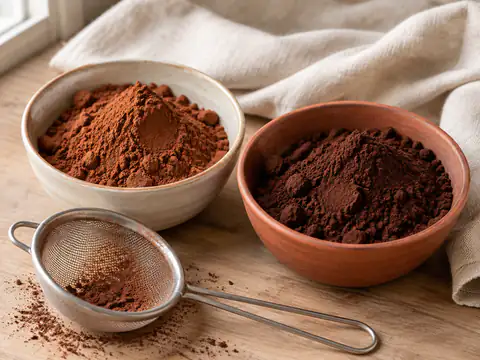
Cocoa adds another wrinkle. Natural cocoa is acidic and goes with baking soda. Dutch-process cocoa is not, so recipes that use it lean on baking powder. Natural vs Dutch-process cocoa powder explains how to switch.
An unlabeled jar
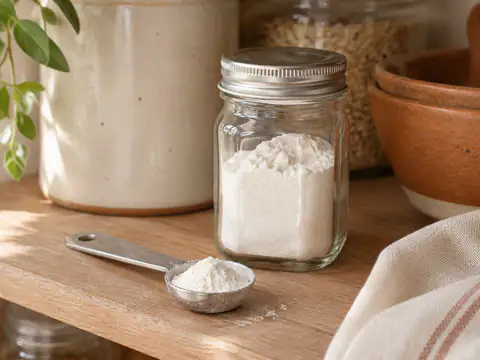
If you find a white powder with no label, King Arthur suggests stirring 1 teaspoon into 1 tablespoon of water. Baking powder fizzes, and baking soda does not. Use that test only to tell the two apart. To check that a jar still works, see the freshness checks in cream of tartar vs baking powder vs baking soda.
Common mistakes
- Swapping 1 to 1. The two have different strengths. Soda is the stronger.
- Adding soda where there is no acid. The dough will not lift, and it can taste soapy.
- Letting batter sit. A recipe that depends on baking soda starts to lose its gas as soon as the batter is mixed. Bake it soon.
- Heaping spoons. A small amount of soda is easy to overdo. Level every spoon.
Cream of tartar is the acid in many homemade leavening mixes; the main guide to cream of tartar explains how it fits. For other basics, browse baking basics.
Questions and answers
Can I use baking powder instead of baking soda?
Yes, but not 1 to 1. King Arthur Baking says to use three times as much baking powder as baking soda, and to expect a slightly bitter taste from that much powder.
Can I use baking soda instead of baking powder?
Not on its own. Baking soda needs an acid to make gas. Pair it with an acid such as cream of tartar, as described in the cream of tartar comparison, or use baking powder.
Why do some recipes use both?
The recipe has some acid, but not enough for baking soda alone. Baking powder does most of the lifting, and baking soda neutralizes the acid and adds some lift.
How can I tell baking soda from baking powder in an unlabeled jar?
King Arthur Baking says to stir 1 teaspoon of the powder into 1 tablespoon of water. If it fizzes, it is baking powder. If it does not, it is baking soda.