How to Measure Flour Correctly (Cups vs Grams)
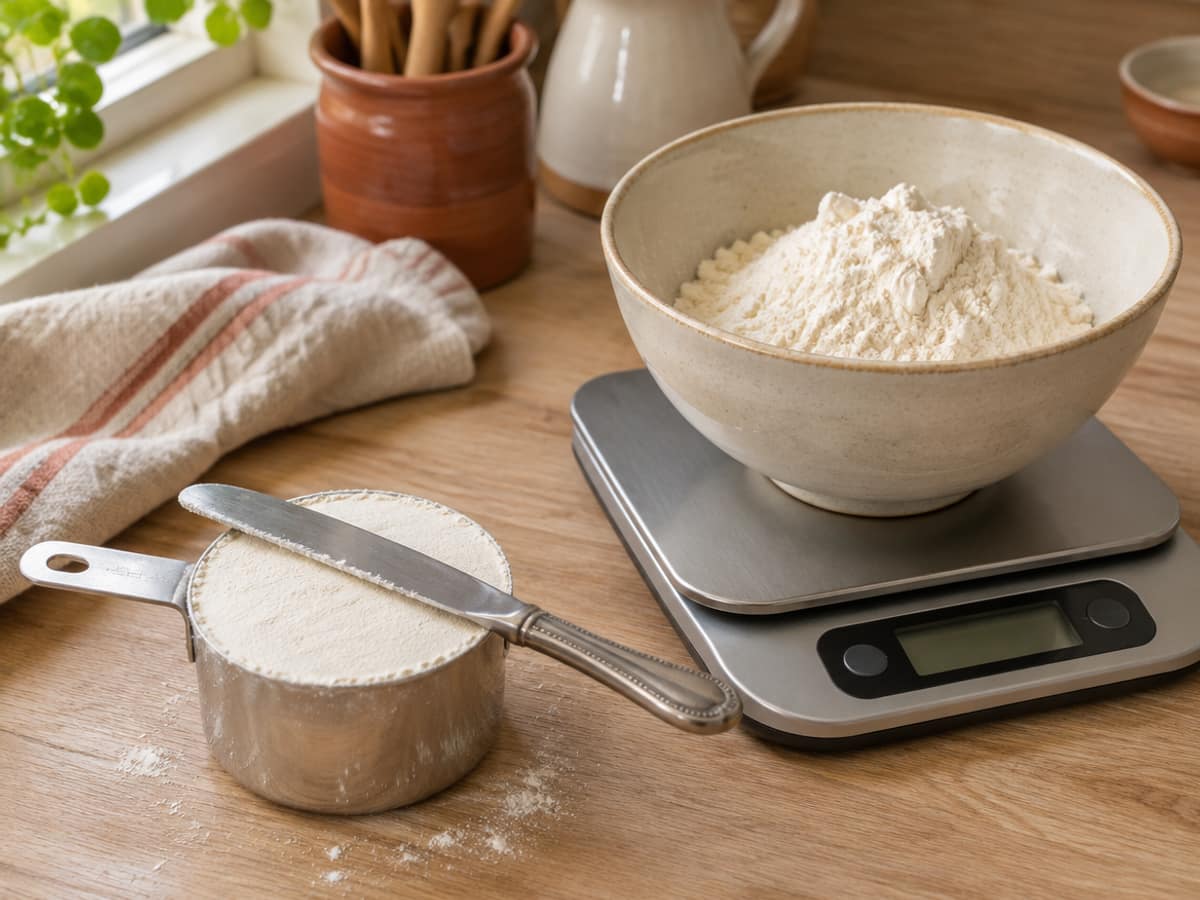
The most accurate way to measure flour is to weigh it. On this site, 1 cup of all-purpose flour is 125 grams, which matches the cup weight in USDA FoodData Central. If you do not have a scale, fluff the flour, spoon it lightly into the measuring cup and level the top with a knife. Do not dip the cup into the bag, because that packs the flour and can give you far more than the recipe expects.
Why the method matters
Flour is light and compressible. A cup can hold very different amounts depending on how it is filled. King Arthur Baking says a cup of all-purpose flour can hold up to 160 grams if the flour is packed, and around 120 grams if you fluff, scoop and level. A recipe built on 125 grams that gets 160 grams in the bowl has about 28 percent too much flour. That is the usual cause of dry, dense or cakey cookies and cakes.
| Method | How | What a cup can hold |
|---|---|---|
| Weigh | Set a bowl on a scale, press tare, add flour | 125 g, exactly |
| Spoon and level | Fluff, spoon into the cup, level | Close to 125 g |
| Dip and sweep | Push the cup into the flour, then level | Can be as much as 160 g, per King Arthur |
How to weigh flour
- Put a bowl on a digital scale and turn it on.
- Press the tare or zero button so the scale reads 0.
- Spoon in flour until you reach the weight in the recipe. Use grams if the scale offers them.
- If the recipe lists more ingredients that you also weigh, press tare again before each one.
Weighing also makes cleanup easier, because you use one bowl and no measuring cups. It is why every recipe on this site lists grams next to cups.
How to spoon and level
- Stir or fluff the flour in its container with a fork or whisk to loosen it. Flour settles and packs as it sits.
- Use a spoon to lift flour lightly into a dry measuring cup. Let it fall in. Do not press down or tap the cup on the counter.
- Heap the flour above the rim.
- Sweep the back of a knife across the top to level it, letting the extra fall back into the container.
Use a cup meant for dry ingredients, not a glass liquid measuring cup, which is hard to level. The same method applies to fractions: for 1/2 cup, use the 1/2-cup measure, not half of a full cup.
Cups to grams for flour
These amounts use 125 grams per cup.
| Measure | Grams |
|---|---|
| 1/4 cup | 31 |
| 1/3 cup | 42 |
| 1/2 cup | 63 |
| 2/3 cup | 83 |
| 3/4 cup | 94 |
| 1 cup | 125 |
| 1 tablespoon | about 8 |
The baking conversion chart has the same table for sugar, cocoa, oats and chocolate chips, and the oven temperature chart.
What happens when the amount is off
- Too much flour: cookies come out dry, thick and cakey; cakes turn dense; dough feels stiff. See cakey chocolate chip cookies for what a flour-heavy dough looks like on purpose.
- Too little flour: cookies spread flat and greasy, and batters are thin. Why are my cookies flat walks through the causes.
- Fix mid-recipe: if a dough feels too wet, add flour 1 tablespoon at a time. If it feels dry and crumbly, add a splash of milk. Small changes go a long way.
Why published weights differ
Published cup weights are not the same everywhere. USDA FoodData Central lists 125 grams for 1 cup of enriched all-purpose flour. King Arthur Baking says all of its recipes assume 120 grams per cup. The difference is about 4 percent, small enough that either number works if you use it consistently. If a recipe gives a weight in grams, use that and ignore the cup. This site uses 125 grams per cup for all-purpose flour, and the same for bread flour, so its recipes give grams to remove any doubt.
Other flours and sifting
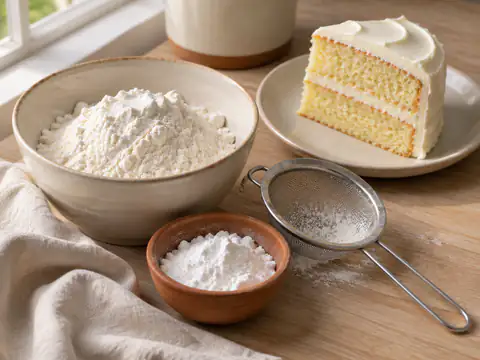
Whole wheat, cake flour, almond flour and others weigh different amounts per cup. The house chart on this site lists all-purpose and bread flour at 125 grams a cup and cake flour at 120 (if you are out of cake flour, cake flour substitute shows how to make it from all-purpose flour), so weigh any other flour and follow the grams in the recipe. Sifting adds air, so a cup of sifted flour weighs less than a cup of unsifted flour. When a recipe gives grams, weigh the flour first and sift afterward if it asks you to.
Tips for steady results
- Keep flour in a bin with a lid. Measure from a container with a wide mouth.
- Use the same method every time, so your results stay consistent from one batch to the next.
- Buy a scale. A basic digital kitchen scale is enough; look for one that measures in grams and has a tare button.
- Check your measuring cups. Sets from different brands can differ slightly.
Measuring other ingredients
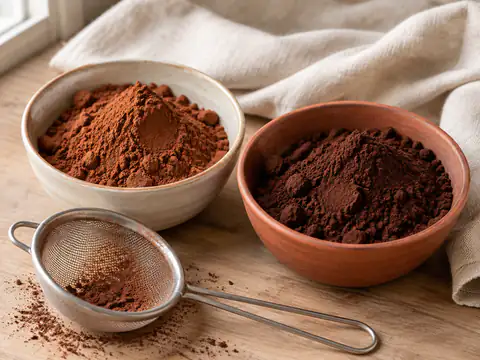
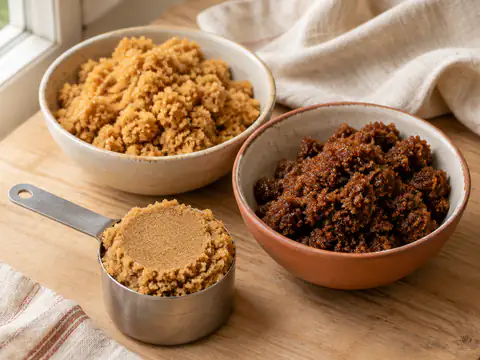
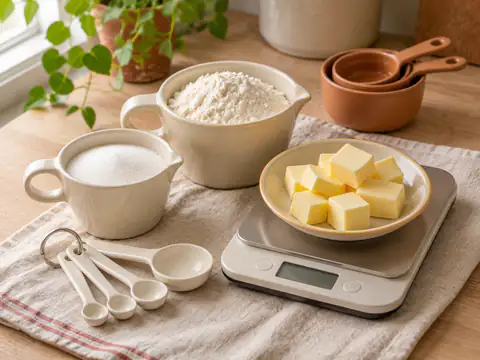
Flour is the ingredient where the method matters most. Brown sugar is packed into the cup, cocoa is spooned and leveled like flour, and butter is easiest to weigh or cut from the marked wrapper. See light vs dark brown sugar for more on packing, and browse baking basics for more guides. The classic chocolate chip cookie recipe lists every amount in cups and grams.
Questions and answers
How many grams are in a cup of flour?
On this site, 1 cup of all-purpose flour is 125 grams, spooned in and leveled. USDA FoodData Central lists 125 grams per cup, and King Arthur Baking uses 120 grams per cup in its recipes.
What is the best way to measure flour without a scale?
Fluff the flour with a fork or spoon, spoon it lightly into the cup until it mounds, and level the top with the back of a knife. Do not scoop with the cup or press the flour down.
Does sifting change how much flour I use?
Sifting adds air, so a sifted cup holds less flour than an unsifted one. If a recipe gives grams, weigh the flour and sift afterward if it asks you to.
Is bread flour the same weight as all-purpose flour?
On this site, yes. We count both as 125 grams per cup, and give grams in recipes so the amount is clear.
Sources
- How to measure flour — King Arthur Baking
- Measure flour the right way — King Arthur Baking
- Wheat flour, white, all-purpose, enriched, bleached (FDC ID 168894) — USDA FoodData Central