The Best Chocolate Chip Cookie Recipe Ever
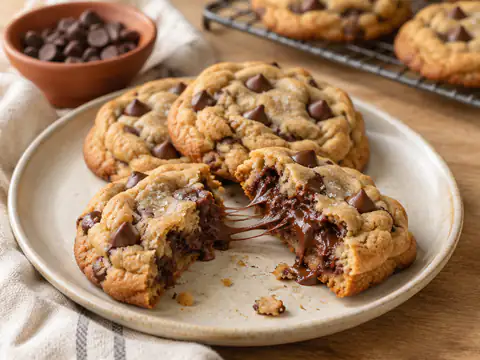
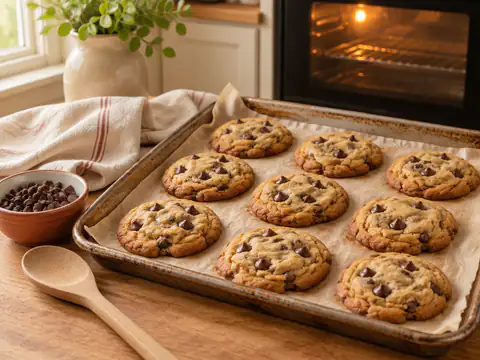
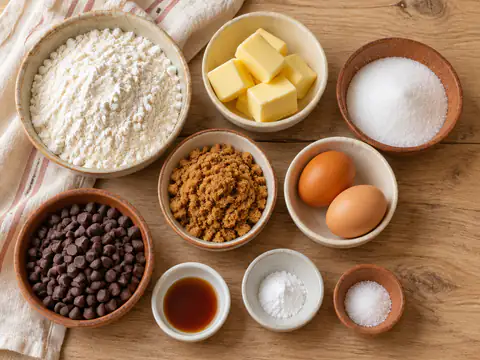
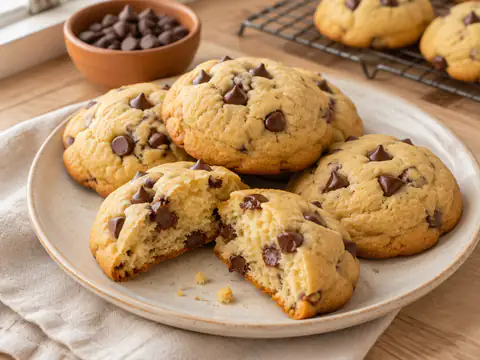
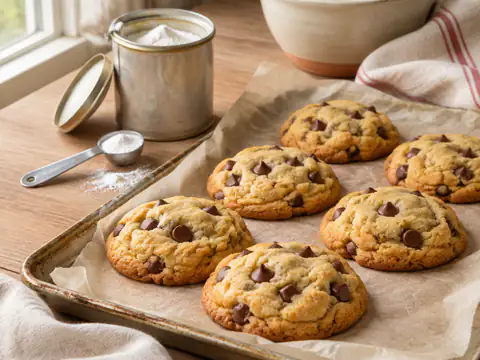
This chocolate chip cookie recipe makes about 28 cookies with crisp golden edges and soft, chewy centers. You need flour, butter, two sugars, eggs, vanilla, baking soda, salt and a 12 oz bag of chocolate chips. Cream the butter and sugars, mix in the eggs and dry ingredients, chill the dough for 30 minutes, then bake at 350°F (180°C) for 11 to 13 minutes. Every amount is given in cups and grams.
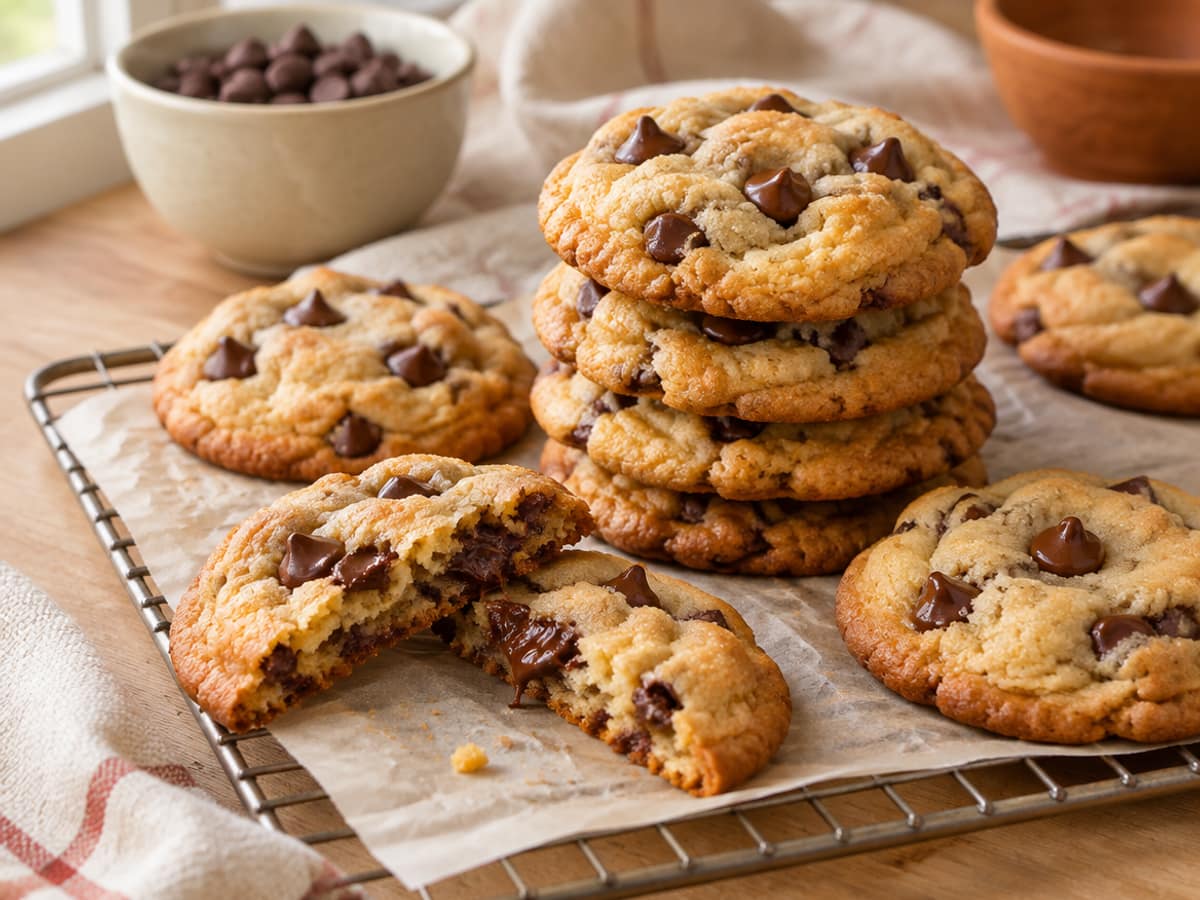
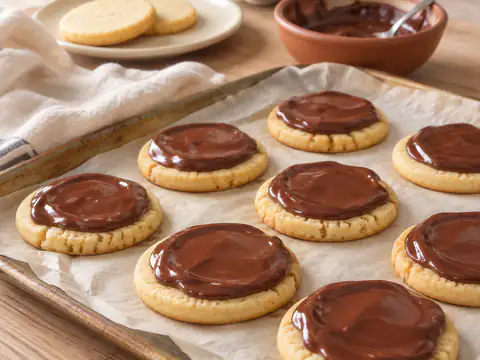
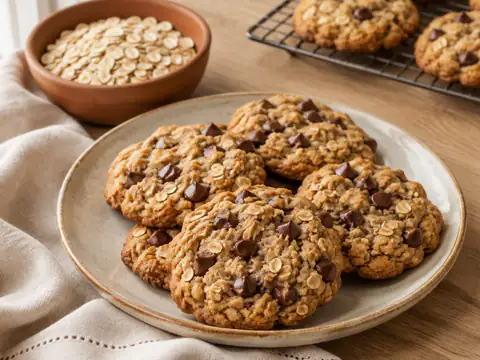
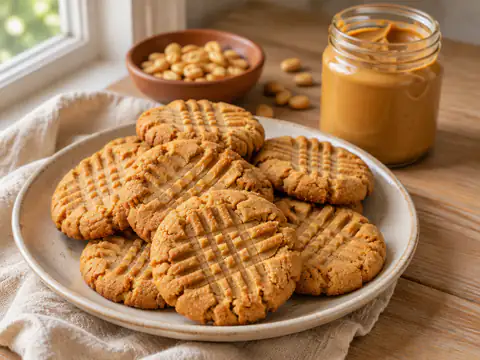
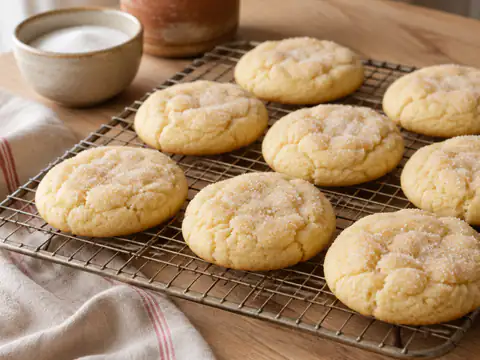
More cookie recipes live in the cookie recipes hub. Related recipes include brown butter chocolate chip cookies, oatmeal chocolate chip cookies, small-batch chocolate chip cookies for six cookies, chocolate chip cookies without brown sugar and chocolate-topped cookies. For other classics, try peanut butter cookies or soft sugar cookies.
Why this method works
The recipe follows the classic American ratio: a bit less butter than sugar, more flour than butter, and two eggs. That balance is widely used because it spreads just enough to give crisp edges while the middle stays soft.
Three choices do most of the work:
- More brown sugar than you might expect. Brown sugar holds moisture, so the centers stay soft and chewy for days.
- Baking soda, not baking powder. Soda helps the cookies spread and brown, which gives the caramel flavor and the crinkled top.
- A short chill. Cold butter melts more slowly in the oven, so the cookies set before they spread too far.
Recipe
Chocolate Chip Cookies
- YieldAbout 28 cookies (3 tablespoons / 45 g dough each)
- Prep20 min
- Cook36 min
- Chill / rest30 min
- Total1 hr 26 min
- Oven350°F / 180°C
Ingredients
Dry ingredients
- 2 1/4 cups280 g all-purpose flour, spooned into the cup and leveled
- 1 tsp6 g baking soda
- 1 tsp6 g fine salt, or 2 tsp (5.5 g) Diamond Crystal kosher salt
Wet ingredients
- 1 cup (2 sticks)226 g unsalted butter, softened until it dents when pressed, 68 to 72°F (20 to 22°C)
- 3/4 cup150 g granulated sugar
- 3/4 cup, packed160 g light brown sugar
- 2 largeabout 100 g out of the shell eggs, at room temperature
- 2 tsp10 ml vanilla extract
Mix-ins
- 2 cups (one 12 oz bag)340 g semisweet chocolate chips, or the same weight of chopped chocolate
Method
- Whisk the flour, baking soda and salt in a medium bowl and set aside.
- Beat the softened butter, granulated sugar and brown sugar on medium speed for 2 minutes, until lighter in color and fluffy. Scrape the bowl.
- Beat in the eggs one at a time, then the vanilla, about 30 seconds after each addition. The mixture should look smooth, not curdled.
- Add the flour mixture and mix on low just until no dry streaks remain. Stir in the chocolate chips by hand with a spatula.
- Cover the bowl and chill the dough for at least 30 minutes. This firms the butter so the cookies spread less and bake thicker.
- Heat the oven to 350°F (180°C) with a rack in the center. Line the pans with parchment.
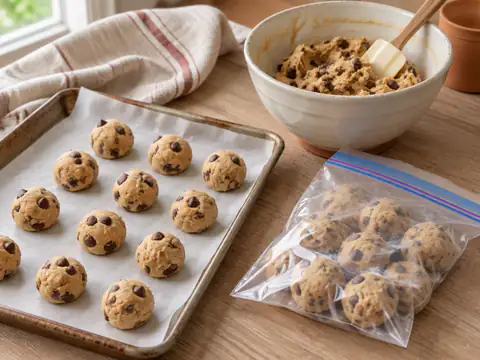
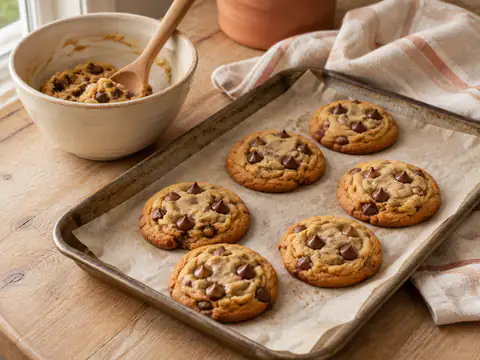
- Scoop 3-tablespoon (45 g) balls of dough and set them 2 inches (5 cm) apart, about 12 per pan.
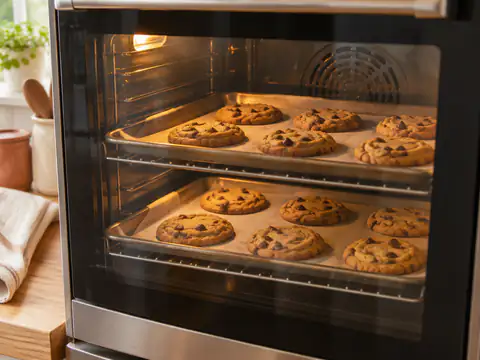
- Bake one pan at a time for 11 to 13 minutes, until the edges are golden and set and the centers look puffed and slightly underdone.
- Leave the cookies on the hot pan for 5 minutes so the centers finish setting, then move them to a wire rack. Bake the rest of the dough on a cooled pan.
Notes
- Weigh the flour if you can. A packed cup of flour can weigh 150 g instead of 125 g, which gives dry, cakey cookies.
- For a convection (fan) oven, bake at 325°F (160°C) and start checking at 9 minutes.
- Do not eat the raw dough. Raw flour and raw eggs can carry harmful bacteria (see the FDA link in the sources).
What each ingredient does
Each ingredient has one main job, which makes a bad batch easy to fix. The guide to what each cookie ingredient does covers what happens when you swap melted for softened butter or change the flour.
| Ingredient | Amount | What it does |
|---|---|---|
| All-purpose flour | 2 1/4 cups / 280 g | Structure. More flour means thicker, drier cookies. |
| Butter | 1 cup / 226 g | Flavor and tenderness; its temperature controls spread. |
| Granulated sugar | 3/4 cup / 150 g | Sweetness, crisp edges and spread. |
| Brown sugar | 3/4 cup / 160 g | Moisture, chew and a caramel note. |
| Eggs | 2 large / 100 g | Bind the dough and add moisture and richness. |
| Baking soda | 1 tsp / 6 g | Helps the dough spread and brown. |
| Salt | 1 tsp / 6 g | Sharpens the sugar and chocolate. |
| Vanilla | 2 tsp / 10 ml | Rounds out the butter and chocolate. |
| Chocolate chips | 2 cups / 340 g | The point of the cookie. |
Weigh the flour if you can. A cup scooped straight from the bag can hold 20 percent more than the recipe expects, so spoon it in and level it, as how to measure flour shows.
How long to bake chocolate chip cookies, and at what temperature
Bake time depends on the size of the dough balls and the oven temperature. These times assume dough chilled for 30 minutes on a light-colored pan lined with parchment.
| Cookie size | 350°F (180°C) | 375°F (190°C) | Convection 325°F (160°C) |
|---|---|---|---|
| 1 tablespoon (15 g) | 8 to 10 min | 7 to 9 min | 7 to 9 min |
| 3 tablespoons (45 g) | 11 to 13 min | 9 to 11 min | 9 to 11 min |
| 1/4 cup (60 to 70 g) | 13 to 15 min | 11 to 13 min | 11 to 13 min |
| Bakery-style (115 g) | 18 to 20 min | 16 to 18 min | 15 to 18 min |
At 350°F (180°C) the cookie bakes evenly and is easier to pull at the right moment. At 375°F (190°C) the outside sets faster, for a crisper edge and gooier center, but a minute too long dries the middle. In a convection oven, lower the temperature by 25°F (about 15°C) and start checking 2 minutes early; baking cookies in a convection oven covers every cookie type. Dark pans brown the bottoms faster, so take 1 to 2 minutes off. The time and temperature chart adds giant cookies and rack position.
How to make chewy, crispy, gooey or cakey cookies
The same dough can go in different directions. Change one thing at a time.
Chewy
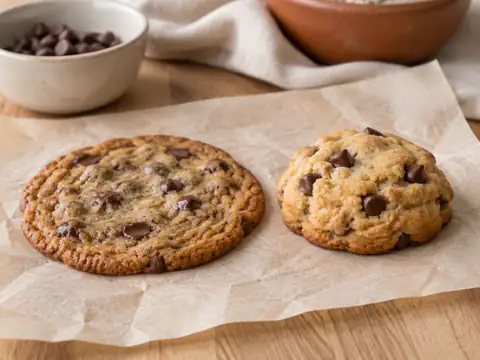
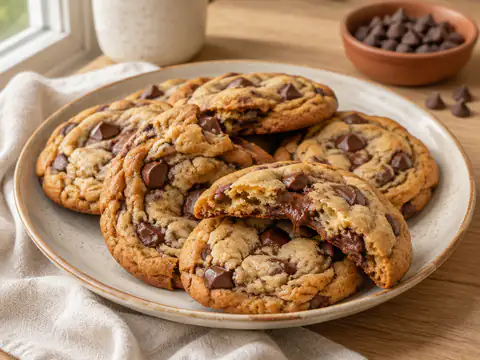
Chew comes from moisture and sugar. Swap 1/4 cup (50 g) of the granulated sugar for the same weight of brown sugar, and pull the cookies while the centers still look underdone. See chewy chocolate chip cookies.
Crispy
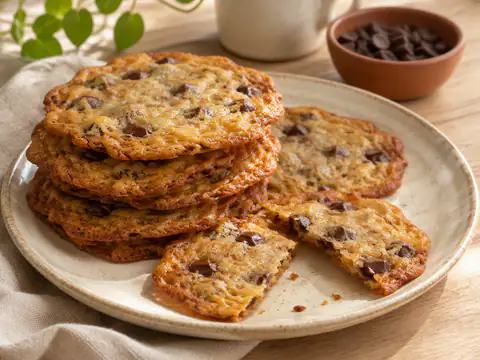
Crisp cookies need less moisture and more spread. Use more granulated sugar than brown (1 cup / 200 g granulated and 1/2 cup / 105 g brown), skip the chill, flatten the balls and bake until golden all the way across. See crispy chocolate chip cookies.
Gooey
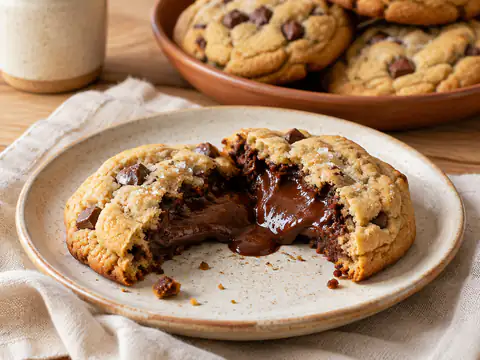
For a molten middle, make the dough balls larger and taller, chill them well, and bake at 375°F (190°C) so the outside sets before the center cooks through. Take them out while the centers still look wet. See gooey chocolate chip cookies.
Cakey
Cakey cookies have more flour, more egg and more lift. Add 1/4 cup (31 g) of extra flour and swap the 1 tsp baking soda for 2 1/2 tsp (10 g) baking powder. Expect a puffy, pale, soft cookie with a tender crumb. See cakey chocolate chip cookies.
Chocolate chips vs chunks
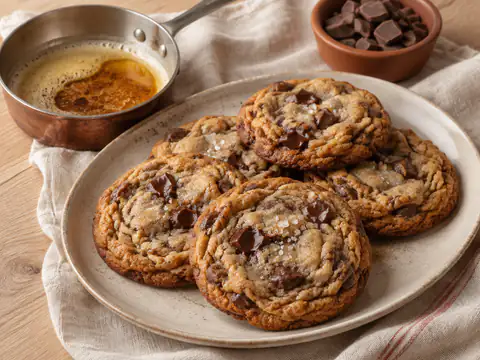
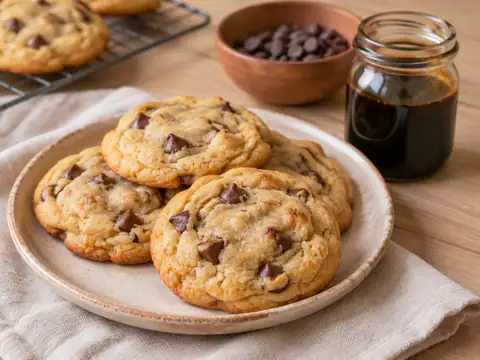
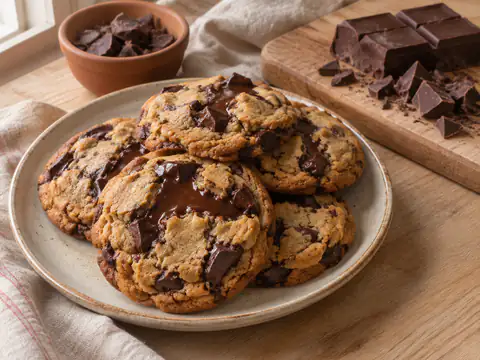
Chips are made to hold their shape in the oven, so you get neat bites of chocolate in every cookie. Types of baking chocolate differ in this way. Chopped bar chocolate, or chunks, melts into wide pools and shards, with the small bits marbling through the dough. Chunks look more like bakery cookies and taste richer, but they make a softer, messier cookie.
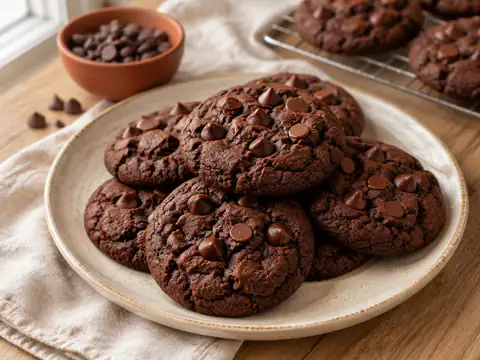
You can mix the two. Keep the total at 340 g (12 oz) so the dough still holds together. Semisweet chips are the classic choice; bittersweet chocolate (60 to 70 percent cocoa) cuts the sweetness, and milk chocolate makes a sweeter, milder cookie. For a recipe built around chopped chocolate, see chocolate chunk cookies. If you want a cocoa dough with chocolate chips in it, try double chocolate chip cookies.
Bakery-style thick cookies
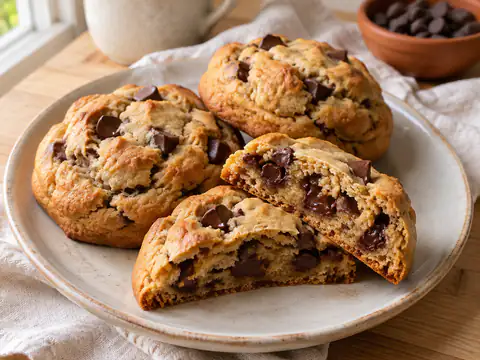
Bakery cookies are tall because they’re big and cold when they go in the oven. Shape the dough into 115 g (about 1/2 cup) balls, roughly 12 from this batch. Keep them tall rather than round, then chill them for at least 1 hour, or overnight.
Bake at 350°F (180°C) for 18 to 20 minutes, six to a pan, until the edges are deep golden and the tops look set but soft. Let them cool on the pan for 10 minutes, because large cookies are fragile when hot. A little extra flour (2 tablespoons / 16 g) also helps them stand up. Use a light-colored pan, because big cookies burn on the bottom before the middle sets on a dark one. A dough built for this, with more flour and cornstarch, is in bakery-style chocolate chip cookies.
Baking soda vs baking powder in cookies
Baking soda is pure sodium bicarbonate. It needs an acid to react with, and brown sugar supplies some. It makes the dough more alkaline, which weakens the structure a little so the cookies spread, and it speeds up browning. That’s how you get flat-ish, chewy, deeply golden cookies.
Baking powder is baking soda mixed with a dry acid, so it lifts the dough on its own. Cookies made with only baking powder rise more, spread less and stay paler, with a cake-like texture. Some recipes use a little of both. If you want classic chocolate chip cookies, stay with soda.
To swap one for the other, use about 2 1/2 to 3 times as much powder as soda. Baking soda vs baking powder gives the full swap rules, and chocolate chip cookies with baking powder is a recipe built around powder alone.
Chilling and freezing the dough
Chilling the dough does two things. Cold butter melts slowly, so the cookies spread less and bake thicker. Resting also lets the flour absorb liquid, which gives a deeper, more caramel flavor. Thirty minutes helps; a few hours to a day in the fridge, covered, gives the biggest change. How long dough keeps, freezing logs and thawing are in chocolate chip cookie dough: make ahead, chill and freeze.
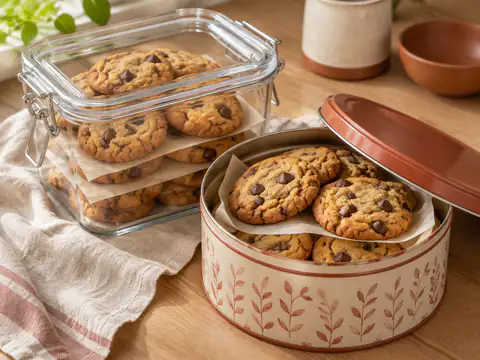
To freeze, scoop the dough into balls, freeze them on a tray until hard, then move them to a freezer bag. Bake straight from the freezer at 350°F (180°C) and add 1 to 2 minutes. The USDA notes that food kept frozen at 0°F (−18°C) stays safe indefinitely, though texture and flavor slowly fade, so use the dough within a few months.
Don’t snack on the raw dough. The FDA warns that both raw flour and raw eggs can carry bacteria that cause food poisoning.
Common cookie problems and how to fix them
Flat cookies
Flat, greasy cookies usually come from butter that was too soft or partly melted, too little flour, or dough scooped onto a warm pan. Fixes: use butter that is cool and only just dents when pressed (how to soften butter explains the cues), weigh the flour, chill the dough and let pans cool between batches. An oven that runs cool can also cause spreading, because the dough melts before it sets; an inexpensive oven thermometer will tell you. Dough made with warm butter looks shiny and greasy before it goes in the oven; if it does, chill it for 30 to 60 minutes. Too much sugar, old baking soda and a foil-lined pan also cause spread. The cause-and-fix table in why are my cookies flat matches each symptom to its fix.
Hard cookies
Hard cookies are overbaked or have too much granulated sugar. Pull them when the centers still look soft, since they keep cooking on the hot pan. If they harden after a day, store them airtight.
Dry or crumbly cookies
Dry cookies almost always have too much flour. A cup of flour scooped straight from the bag can weigh 150 g instead of 125 g. Spoon and level, or weigh. Overbaking and too little butter also dry them out.
Puffy, cakey cookies when you wanted chewy
Too much flour, overbeating after adding the eggs, or baking powder in place of soda will all give a cakey cookie. Mix only until the flour disappears.
For more doughs to try, browse the cookie recipes hub and the baking basics hub. If cream of tartar shows up in your other cookie recipes, our guide on what cream of tartar is and does explains why.
Questions and answers
How long do you bake chocolate chip cookies?
Bake 3-tablespoon cookies at 350°F (180°C) for 11 to 13 minutes, or at 375°F (190°C) for 9 to 11 minutes. Pull them when the edges are golden and the centers still look soft.
Should I bake chocolate chip cookies at 350 or 375°F (190°C)?
350°F (180°C) gives a softer, more even cookie and is easier to judge. 375°F (190°C) browns the edges faster for a crisper rim and a gooier center, but the window between done and overdone is shorter.
Do I have to chill the dough?
No, but 30 minutes of chilling gives thicker cookies that spread less. Dough baked warm spreads wider and thinner.
Can I use baking powder instead of baking soda?
You can, but the cookies change. Use 2 1/2 tsp (10 g) baking powder for 1 tsp soda and expect a paler, puffier, more cake-like cookie.
Why are my cookies flat?
The usual causes are butter that was too warm or melted, too little flour, or a hot pan. Chill the dough, measure flour by weight and always scoop onto a cool pan.
Sources
- Handling Flour Safely: What You Need to Know — U.S. Food and Drug Administration
- Freezing and Food Safety — USDA Food Safety and Inspection Service