Types of Baking Chocolate: Chips, Bars and Cocoa
Baking chocolate comes in a handful of types, and they differ in how much cacao, sugar and milk they hold. Unsweetened chocolate has no sugar. Bittersweet and semisweet add sugar and cocoa butter. Milk chocolate adds milk, white chocolate has no cocoa solids, and cocoa powder is the cacao with most of the fat pressed out. Pick by what the recipe needs: flavor, sweetness or melting. For more, see the chocolate desserts hub.
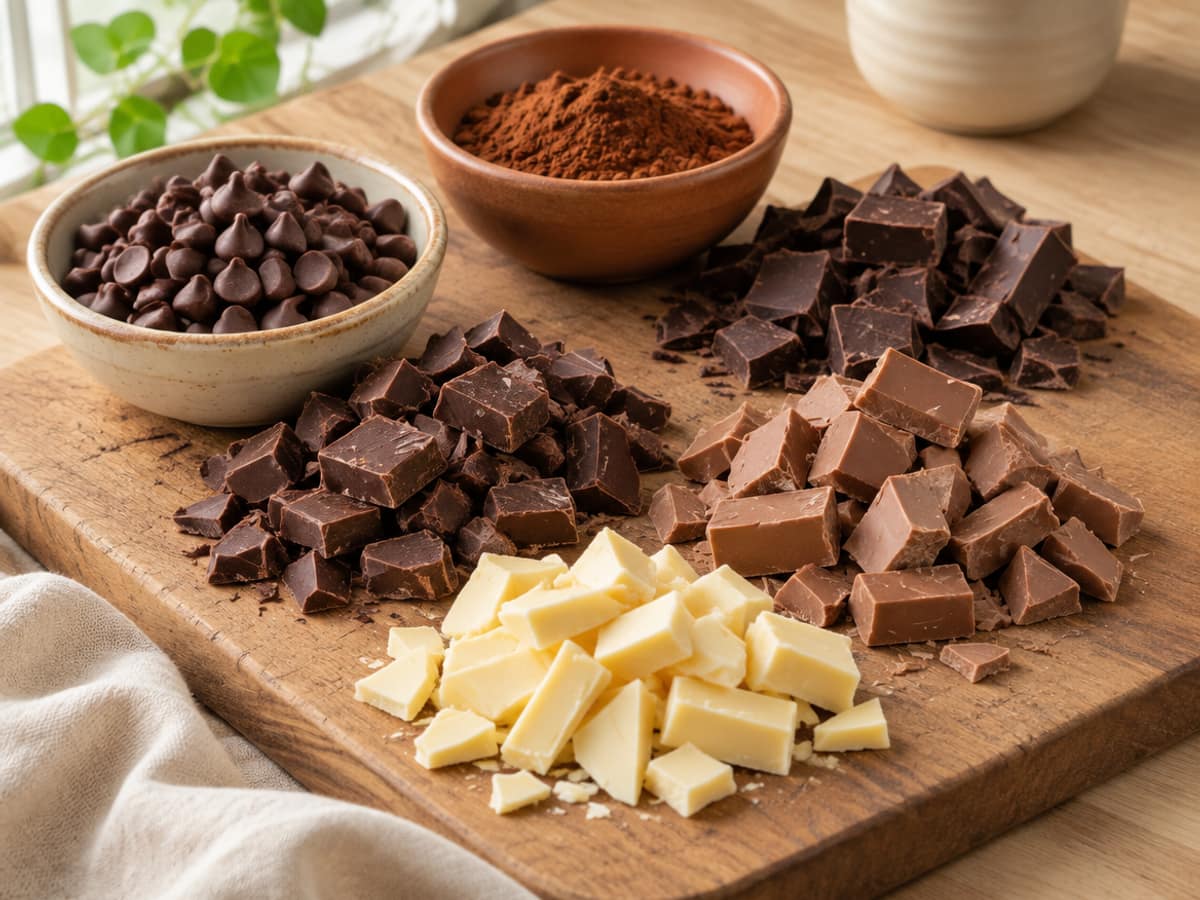
The table puts them side by side. The minimums come from FDA standards of identity for cacao products (21 CFR part 163), linked in the sections below.
| Type | What it is | FDA minimum | Sweetness | Best for |
|---|---|---|---|---|
| Unsweetened (baking chocolate) | Pure ground cacao nibs, no sugar | It is chocolate liquor, with 50 to 60 percent cacao fat | None | Brownies and cakes where you add the sugar |
| Bittersweet | Chocolate liquor, cocoa butter and sugar | At least 35 percent chocolate liquor | Least sweet of the sweetened bars | Ganache, mousse, truffles, dark cookies |
| Semisweet | Chocolate liquor, cocoa butter and more sugar | At least 35 percent chocolate liquor | Medium | Cookies, brownies, frostings, hot chocolate |
| Sweet (dark) chocolate | Sweetened dark chocolate with little milk | At least 15 percent chocolate liquor, under 12 percent milk solids | Sweeter | Candy coatings, some baking |
| Milk chocolate | Chocolate with dairy added | At least 10 percent chocolate liquor and 12 percent milk solids | Sweet and mild | Cookies, bars, mild frosting |
| White chocolate | Cocoa butter, sugar and milk, no cocoa solids | At least 20 percent cocoa butter and 14 percent milk solids | Very sweet | Blondies, cookies, drizzles |
| Chocolate chips | Usually semisweet, made to hold a shape | Same as the type on the bag | Depends on the bag | Cookies, muffins, mix-ins |
| Cocoa powder | Cacao with part of the fat pressed out | At least 10 percent cacao fat for cocoa; lowfat cocoa has less | None | Cakes, brownies, drinks |
Unsweetened chocolate
The FDA calls it chocolate liquor, and also allows the names unsweetened chocolate, bitter chocolate and baking chocolate. It is cacao nibs ground to a paste, and it holds 50 to 60 percent cacao fat. It tastes bitter and strong, which is why recipes using it add a lot of sugar. You cannot swap it for a sweetened bar without changing the sugar in the recipe.
Bittersweet and semisweet
By FDA standards, semisweet and bittersweet chocolate must contain at least 35 percent chocolate liquor. King Arthur Baking notes that semisweet has more sugar than bittersweet, and that the percentage printed on the label matters more than the name, since brands vary. In most recipes the two swap one for one. Taste first, and if the recipe is very sweet, choose the bittersweet bar.
A chocolate maker quoted by King Arthur Baking says most home baking recipes do well with a chocolate around 63 percent, and names its own semisweet chips as an example.
Reading the percentage
A number such as 70 percent on a bar is the portion of the finished chocolate that came from the cacao bean, as King Arthur Baking explains. It includes both cocoa solids, which give flavor, and cocoa butter, which gives mouthfeel. The rest is mostly sugar. A higher percentage leaves less room for sugar, so the chocolate is generally less sweet and more bitter.
The FDA minimums above are legal floors, not the amounts on the label. Many good bars list far more than 35 percent.
Milk and white chocolate
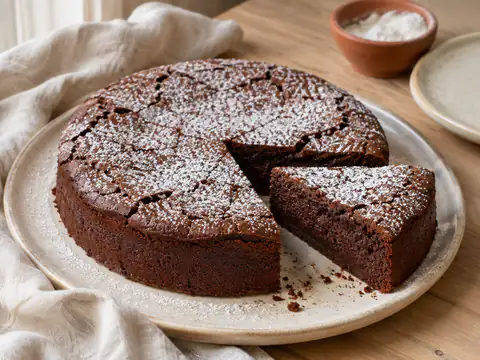
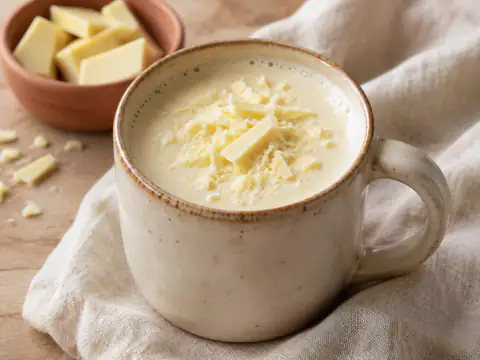
Milk chocolate must contain at least 10 percent chocolate liquor, at least 12 percent total milk solids and at least 3.39 percent milkfat. Because of the milk and sugar, it is sweeter and milder than dark chocolate. White chocolate contains at least 20 percent cacao fat and 14 percent milk solids, and no more than 55 percent sweetener. It has no chocolate liquor, so King Arthur notes it is not technically chocolate, and it carries only the flavor of cocoa butter. For a drink built on it, see white hot chocolate, and for a cake that is almost all chocolate, flourless chocolate cake shows why the bar you choose matters.
Chips vs bars
Chocolate chips tend to have less cocoa butter than other shapes and often contain lecithin, which helps them hold their shape in the oven, according to King Arthur. That is what you want in a cookie, where the chips should stay chips. It is not what you want in a sauce.
- Use chips when the chocolate should keep its shape: classic cookies, muffins and quick breads.
- Use a chopped bar when the chocolate should melt: chocolate chunk cookies, brownies, ganache and hot chocolate.
- Do not swap chips for chopped chocolate in a recipe that needs smooth melting. Their different fat content and stabilizers change the result.
Cocoa powder
Breakfast cocoa holds at least 22 percent cacao fat. Cocoa, also called medium-fat cocoa, holds at least 10 percent and less than 22 percent. Lowfat cocoa has less than 10 percent. When a cocoa is made with alkali, the label says “processed with alkali”, which is Dutch-process cocoa. Natural vs Dutch-process cocoa powder explains how that changes baking.
Swapping one chocolate for another
- Bittersweet for semisweet, or the reverse: one for one, and adjust the sugar to taste.
- Milk chocolate for dark: expect a sweeter, milder result, and cut the sugar a little if the recipe has a lot.
- Cocoa for unsweetened chocolate: a common rule is 3 tablespoons (16 g) of cocoa plus 1 tablespoon of oil or melted butter for each ounce (28 g) of unsweetened chocolate. This works best in recipes that already add sugar.
- Chips for chopped chocolate: possible in cookies, risky in sauces.
Chocolate Chip Cookie Ingredients keeps a short note on choosing chips, and the cakes in 15 easy chocolate cakes use cocoa powder.
Storing chocolate
Keep chocolate wrapped, in a cool, dry place. A hazy white coating is called bloom. The Canadian Food Inspection Agency says it may affect the taste but is harmless and safe to eat. Heat melts the cocoa butter so it rises to the surface, and moisture makes the sugar crystallize into speckles.
Questions and answers
Can I use chocolate chips instead of a chopped bar?
You can, but they behave differently. Chips often have less cocoa butter and added lecithin so they hold their shape in the oven, so they melt less smoothly. For melting into a sauce, a ganache or a drink, chop a bar.
Are bittersweet and semisweet the same?
Both must contain at least 35 percent chocolate liquor by FDA rules, and semisweet usually has more sugar. They swap one for one in most recipes, but read the percentage on the label, because brands vary.
What does 70 percent cacao mean?
It means 70 percent of the finished chocolate came from the cacao bean, as cocoa solids and cocoa butter. The remaining 30 percent is mostly sugar and other ingredients, so a higher percentage is generally less sweet.
Sources
- 21 CFR 163.111 Chocolate liquor — U.S. Food and Drug Administration, via Cornell Legal Information Institute
- 21 CFR 163.123 Sweet chocolate — U.S. Food and Drug Administration, via Cornell Legal Information Institute
- 21 CFR 163.130 Milk chocolate — U.S. Food and Drug Administration, via Cornell Legal Information Institute
- 21 CFR 163.124 White chocolate — U.S. Food and Drug Administration, via Cornell Legal Information Institute
- 21 CFR 163.112 Breakfast cocoa — U.S. Food and Drug Administration, via Cornell Legal Information Institute
- 21 CFR 163.113 Cocoa — U.S. Food and Drug Administration, via Cornell Legal Information Institute
- Types of chocolate — King Arthur Baking
- White coating on chocolate (chocolate bloom) — Canadian Food Inspection Agency