Chocolate Buttercream Frosting
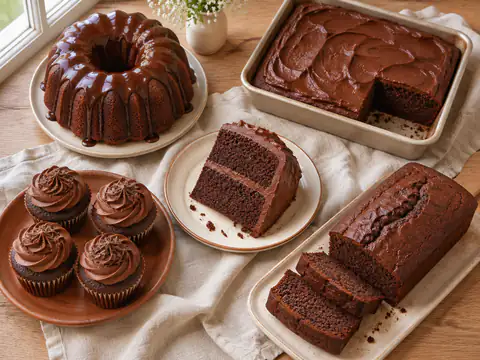
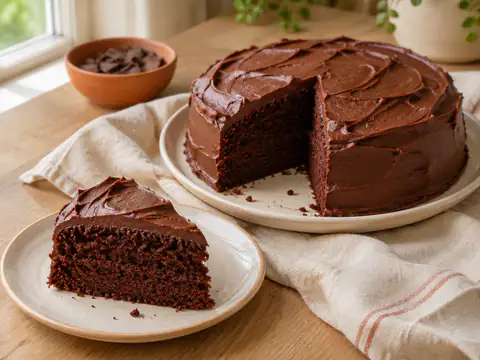
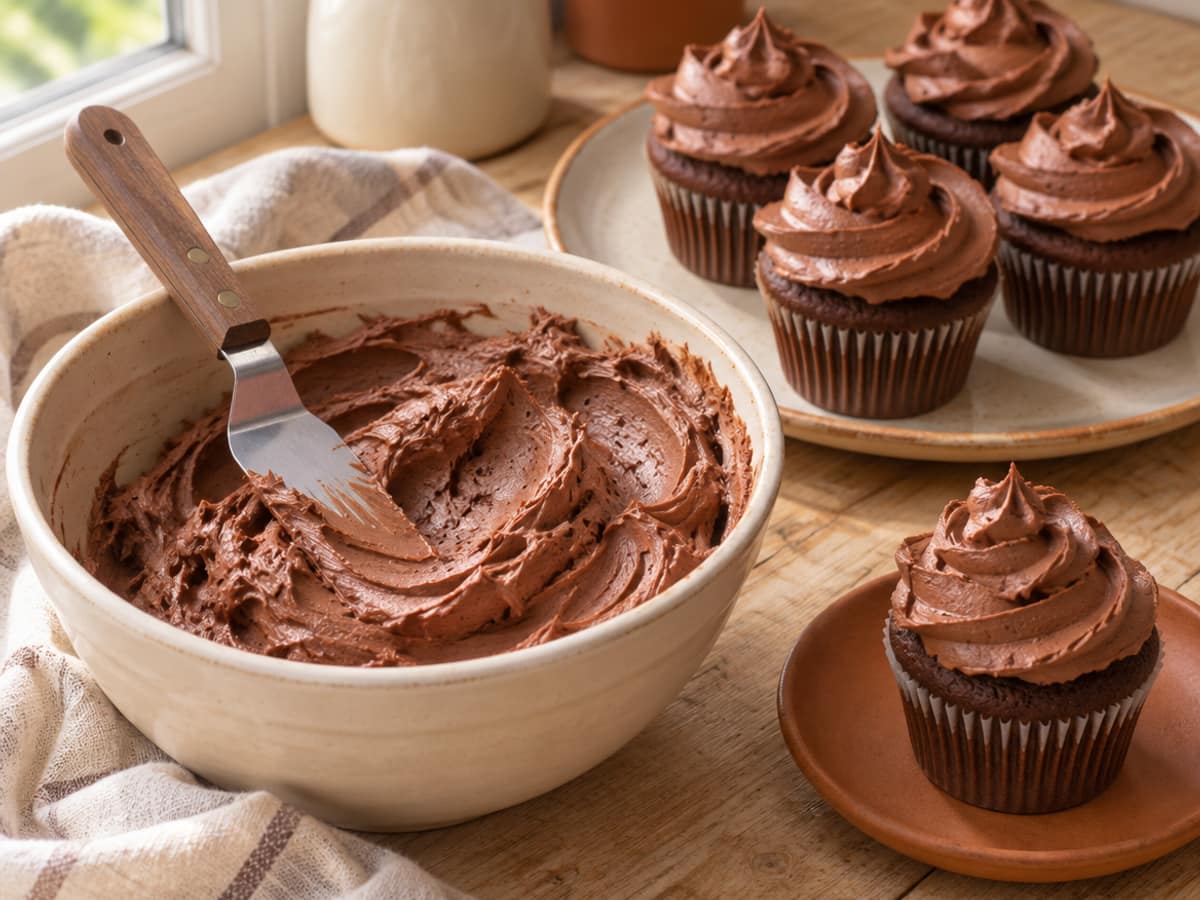
Chocolate buttercream is butter beaten with powdered sugar, cocoa, a little cream and vanilla. This American-style recipe makes about 3 cups from 1 cup (226 g) of butter, 3 cups (360 g) of powdered sugar and 1/2 cup (43 g) of cocoa. That is enough to frost 12 cupcakes or fill and coat a two-layer 8-inch cake, and it takes 15 minutes with no cooking. Use it on the one-bowl chocolate cake, the chocolate cake with cocoa powder or any cake from the 15 easy chocolate cake ideas. More chocolate recipes are in the chocolate desserts hub.
Recipe
Chocolate Buttercream Frosting
- YieldAbout 3 cups (about 700 g), enough for 12 cupcakes or the filling and thin coat of a two-layer 8-inch cake
- Prep15 min
- Cook0 min
- Total15 min
Ingredients
Frosting
- 1 cup (2 sticks)226 g unsalted butter, softened until a finger leaves a dent, 68 to 72°F (20 to 22°C)
- 3 cups360 g powdered sugar, sifted
- 1/2 cup43 g unsweetened cocoa powder, natural or Dutch-process, sifted
- 1/4 cup60 ml heavy cream or whole milk, plus up to 2 tablespoons (30 ml) more as needed
- 2 tsp10 ml vanilla extract
- 1/4 tsp1.5 g fine salt, skip if you use salted butter
Method
- Beat the butter in a large bowl on medium speed for 2 to 3 minutes, until it looks pale and creamy. Scrape the bowl.
- Sift the powdered sugar and cocoa together into a second bowl to remove lumps.
- Turn the mixer to low and add the sugar and cocoa mixture in three parts, mixing until each part disappears before adding the next.
- Add the cream, vanilla and salt. Beat on medium-high for 2 minutes, until the frosting is smooth, fluffy and a little lighter in color.
- Check the texture. If it is too stiff to spread, beat in more cream 1 tablespoon (15 ml) at a time. If it is too soft, beat in powdered sugar 2 tablespoons (15 g) at a time.
- Use the frosting right away, or cover it with plastic wrap pressed on the surface.
Notes
- Measure powdered sugar by weight (120 g per cup). A packed cup can hold much more.
- Cold butter makes lumpy frosting, and melted butter makes greasy frosting. Soft but still cool is right.
- For a darker color and deeper flavor, use Dutch-process cocoa.
Why this ratio works
Butter gives American buttercream its body, and powdered sugar sweetens it and thickens it. The ratio here is about 1.6 parts powdered sugar to 1 part butter by weight (360 g to 226 g), plus cocoa. Cocoa is dry like sugar, so it also thickens the frosting, and the cream thins it back to a spreadable texture.
Start with butter that is soft but still cool (see how to soften butter). Beating the butter first matters. It adds air, so the frosting is lighter and paler than butter simply stirred with sugar. Adding the sugar in parts keeps it from flying out of the bowl and helps it blend smoothly.
How much frosting for what
| Use | Amount | Notes |
|---|---|---|
| 12 cupcakes, generous swirl | 1 batch (about 3 cups) | About 1/4 cup (about 58 g) per cupcake |
| Two-layer 8-inch cake, filling and thin coat | 1 batch | Smooth with an offset spatula |
| Two-layer 9-inch cake with piping | 1 1/2 batches | Make 1 1/2 batches in one bowl |
| 9x13 sheet cake, one layer | 1 batch | Spread thinly |
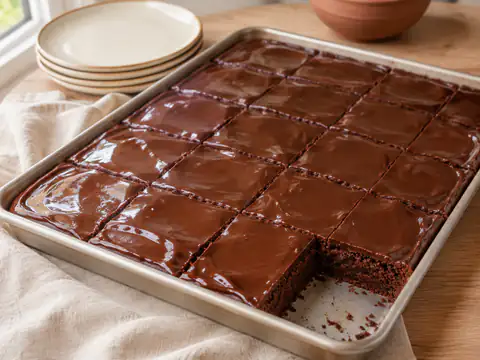
These are typical amounts. A thicker coat uses more frosting. A large thin cake usually gets a poured icing instead of buttercream, as in chocolate sheet cake.
Consistency table
The base recipe is soft and spreadable. Change it with small additions.
| You want | Change | Result |
|---|---|---|
| Spreadable (as written) | Nothing | Soft peaks, smooth on a cake |
| Pipeable, holds its shape | Use 2 tablespoons (30 ml) of cream and add 1/4 cup (30 g) more powdered sugar | Stiffer, holds a star tip |
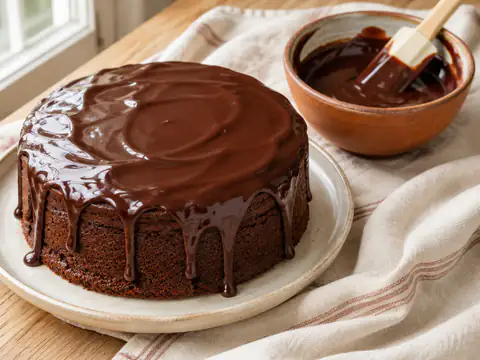
| Pourable glaze | Beat in 2 to 4 tablespoons (30 to 60 ml) more cream | Thin enough to pour over a cake; it sets soft |
Why buttercream tastes gritty, greasy or too sweet
Gritty: powdered sugar and cocoa form lumps, and lumps do not always beat out. Sift both. If the frosting is already made and gritty, beat it for another 2 minutes, or add a tablespoon of cream.
Greasy or soupy: the butter was too warm, or the kitchen is. Chill the whole bowl for 15 to 20 minutes, then beat it again.
Too sweet: a pinch more salt helps, and so does an extra tablespoon of cocoa. If you want a frosting with no added sugar at all, chocolate ganache is a good alternative, because it is made only from chocolate and cream.
Broken or curdled-looking: cold cream added to soft butter can separate. Warm the bowl for a few seconds with your hands or a warm towel, then keep beating.
Fixes at a glance
| Problem | Cause | Fix |
|---|---|---|
| Too stiff | Not enough liquid | Beat in cream 1 tablespoon (15 ml) at a time |
| Too soft | Warm butter or too much cream | Chill 15 minutes, then beat; or add powdered sugar 2 tablespoons (15 g) at a time |
| Grainy | Unsifted sugar or cocoa | Sift next time; beat longer now |
| Pale, not chocolatey | Too little cocoa | Add 1 tablespoon (5 g) cocoa and 1 tablespoon (15 ml) cream |
| Bubbles in the frosting | Too much beating at high speed | Stir with a spatula for a minute to press them out |
Storing and making ahead
Frosting made with butter and cream is perishable. The FDA says perishable food should not stay out of the refrigerator for more than 2 hours, or 1 hour when the room is above 90°F (32°C). Refrigerate the frosting, or the frosted cake, within that time. Keep it covered so it does not pick up fridge smells. Before using cold frosting, let it come to room temperature, then beat it briefly to restore its texture. A frosted cake tastes best after it has sat out for a short while, because the cold butter makes the cake feel firm.
Questions and answers
How much frosting do I need?
One batch, about 3 cups, covers 12 cupcakes with a generous swirl or fills and thinly coats a two-layer 8-inch cake. For a 9-inch layer cake with piping, make 1 1/2 batches.
Can I use butter that is a little cold?
Cold butter does not blend smoothly and leaves lumps. Let it stand on the counter until a finger leaves a dent, or cut it into small pieces to soften faster.
Can I make it ahead?
Yes. Refrigerate it in a covered container, then let it come to room temperature and beat it again before using.
Sources
- Are You Storing Food Safely? — U.S. Food and Drug Administration