Flourless Chocolate Cake
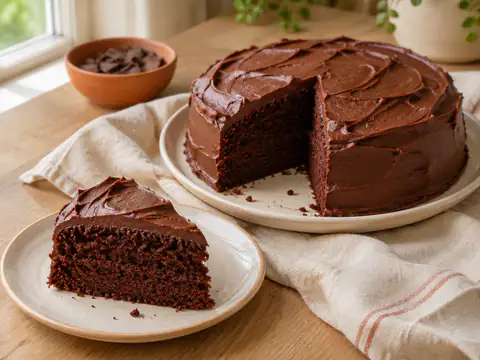
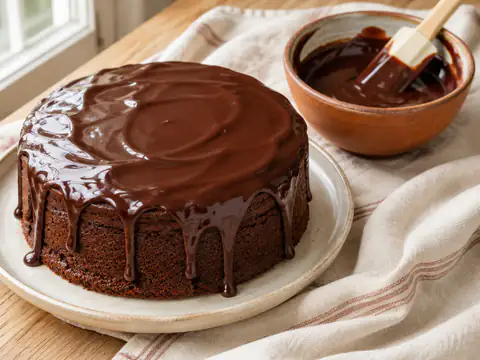
Flourless chocolate cake is made from chocolate, butter, sugar and eggs, with a little cocoa and no flour at all. This version bakes in a 9-inch pan at 350°F (180°C) for 25 to 30 minutes, until a thermometer in the center reads at least 200°F (95°C). It slices into 10 dense, fudgy pieces that taste like a cross between a brownie and a truffle.
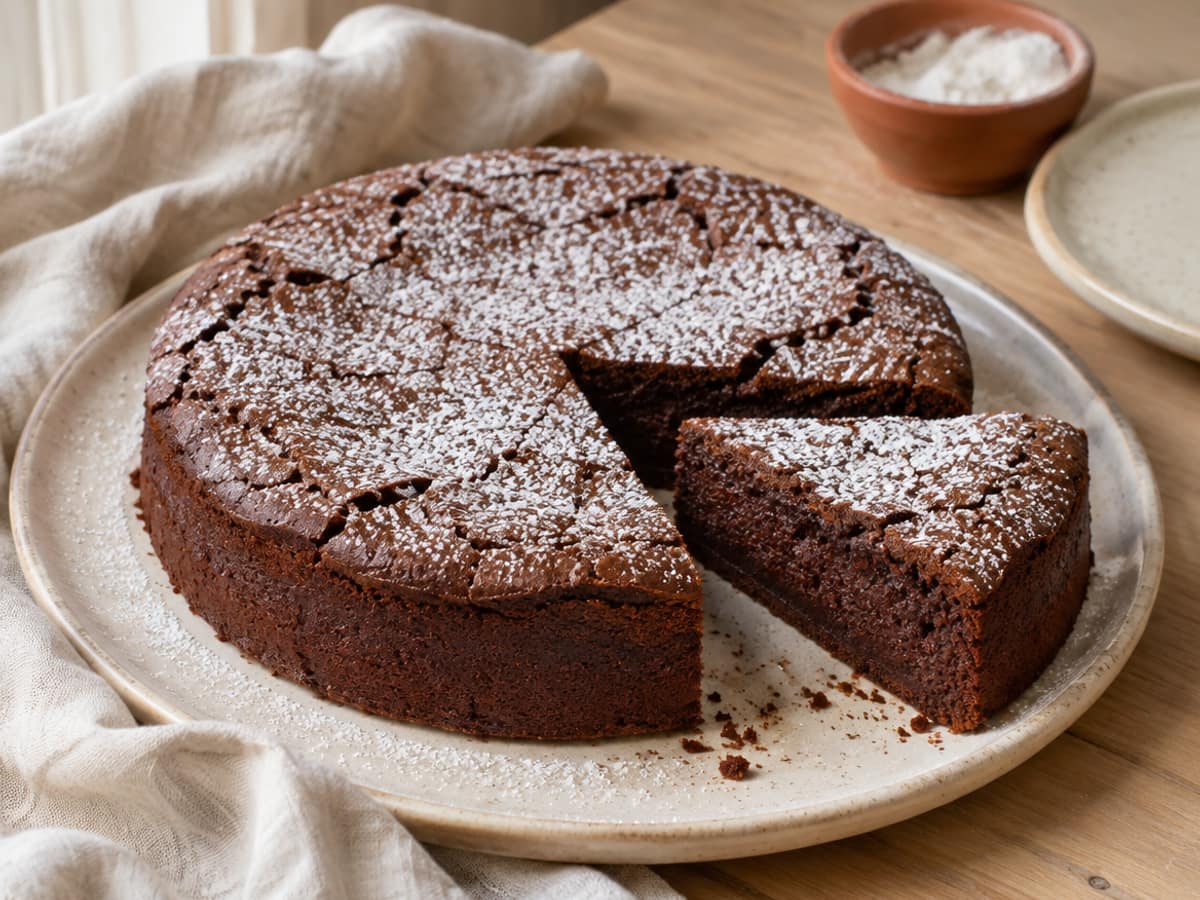
It sits with the other chocolate desserts. The Torta Caprese item in 15 easy chocolate cake ideas uses almond flour; this cake uses cocoa instead, so it has no nuts and no flour.
Recipe
Flourless Chocolate Cake
- YieldOne 9-inch cake, 10 slices (about 72 g of batter each)
- Prep15 min
- Cook28 min
- Chill / rest1 hr
- Total1 hr 43 min
- Oven350°F / 180°C
Ingredients
Cake
- 8 oz (about 1 1/3 cups chips)225 g bittersweet or semisweet chocolate, chopped small
- 1/2 cup (1 stick)113 g unsalted butter, cut in pieces
- 3/4 cup150 g granulated sugar
- 4 largeabout 200 g out of the shell eggs, at room temperature
- 1/4 cup21 g unsweetened cocoa powder, natural or Dutch-process, sifted
- 1/4 tsp1.5 g fine salt
- 1 tsp5 ml vanilla extract, optional
Method
- Heat the oven to 350°F (180°C) with a rack in the center. Grease the pan, line the bottom with parchment and grease the parchment.
- Put the chocolate and butter in a microwave-safe bowl. Heat in short bursts at reduced power, stirring after each, until the butter is melted and the chocolate is soft. Stir until smooth. You can also melt them in a saucepan over very low heat.
- Whisk the sugar, salt and vanilla into the warm chocolate until smooth. The mixture should be warm, not hot, so it does not scramble the eggs.
- Whisk in the eggs one at a time, beating briefly after each until the batter is glossy and smooth.
- Sift the cocoa over the batter and whisk just until no streaks remain.
- Pour the batter into the pan and tap the pan once on the counter. Bake 25 to 30 minutes, until the top has a thin crust and the edges are set.
- Push an instant-read thermometer into the center. It should read at least 200°F (95°C). If the center still sloshes or reads lower, bake 3 to 5 minutes more and check again.
- Cool the cake in the pan on a rack for 10 minutes. Loosen the edge with a knife and cool completely, about 1 hour in all. The cake sinks and cracks a little as it cools; that is normal.
Notes
- The cake has no flour. Check the labels on the chocolate and cocoa if you need to avoid gluten.
How a cake with no flour holds together
In most cakes, flour and leavening build the structure. Here the structure comes from eggs and chocolate. The eggs set as they heat, and the cocoa butter in the chocolate and the butter firm up as the cake cools. That is why the cake is so dense, and why it feels fudgier after a night in the refrigerator.
The ratio is plain: about 2 parts chocolate to 1 part butter by weight, a bit less sugar than chocolate, and 4 large eggs for 9 inches. King Arthur Baking’s flourless chocolate cake uses the same ingredients in an 8-inch pan with 3 eggs; this recipe scales them up.
There is no leavening, so the cake rises only a little. Whisk the batter until smooth and stop, so it stays dense and does not puff and then collapse.
Choosing the chocolate
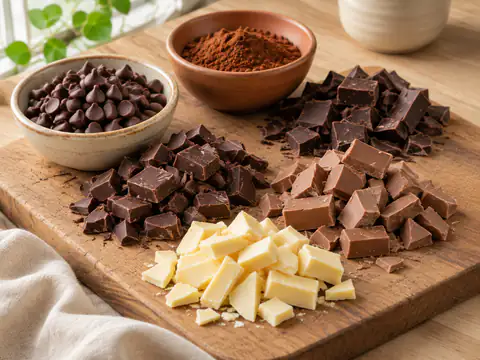
Use a bar or chips you would enjoy eating. With only four main ingredients, the chocolate decides the flavor. Bittersweet, at about 60 to 70 percent cacao, gives a deep, slightly bitter cake. Semisweet makes a sweeter one. Milk chocolate makes a soft, very sweet cake that may not set as firmly. The types of baking chocolate guide explains the differences, and how percentages work.
Chop bars small so they melt evenly. Melt the chocolate and butter gently. King Arthur Baking found that microwaving in short bursts and stirring in between melts chocolate with the least risk of scorching, and that water and other liquids make melted chocolate seize, so keep your bowl and whisk dry.
Doneness and egg safety
The FDA says to cook eggs until the yolks are firm and to cook dishes that contain eggs thoroughly, with casseroles and other egg dishes reaching 160°F (71°C). The cake is not a lava cake: it is baked until it is set.
King Arthur Baking says its version should reach at least 200°F (95°C) in the center, and this recipe uses the same thermometer cue. At that temperature the eggs are fully cooked, well above the FDA’s figure. Three signs agree:
- A thin crust has formed on top.
- The edges are set and slightly puffed.
- The center no longer sloshes when you move the pan. A very slight give while the cake is hot is normal.
A baked-through center is the safe center, so do not pull the cake early. For a softer feel, serve slices at room temperature with whipped cream. The FDA says recipes that call for eggs raw or undercooked when served should use pasteurized eggs. This cake is baked through, so it does not need them, but pasteurized in-shell eggs are an option if you want extra assurance.
Serving ideas and fixes
Dust the cake with cocoa, or serve it with whipped cream or raspberries. For a glossy finish, pour chocolate ganache over the cooled cake. For a cake with flour and a lighter crumb, try one-bowl chocolate cake or fudgy brownies.
| Problem | Likely cause | Fix |
|---|---|---|
| Sloshing center | Underbaked | Bake 3 to 5 minutes more until the thermometer reads at least 200°F (95°C) |
| Dry, crumbly cake | Overbaked | Check at 25 minutes next time and use the thermometer |
| Greasy, separated batter | Chocolate was too hot when the eggs went in | Let the chocolate cool until warm; if it splits, rewarm it gently and whisk until smooth |
| Cracked, sunken top | Normal for a flourless cake | Cover with ganache or whipped cream |
Storing and serving ahead
Cover the cooled cake. If you keep it out for serving, the FDA says perishable food should not sit at room temperature for more than 2 hours, or 1 hour above 90°F (32°C), and its egg safety page says to refrigerate leftover cooked egg dishes and use them within 3 to 4 days. See the FDA storing guide for the rule.
You can bake the cake a day ahead. Refrigerate it covered, and serve it cold or after 20 minutes at room temperature.
Questions and answers
Is flourless chocolate cake safe to eat if the center is soft?
Bake it until the center reads at least 200°F (95°C). The FDA says dishes that contain eggs should be cooked to 160°F (71°C), and cooked until the eggs are firm, so a center that sloshes is not done. The cake is dense and fudgy when it is done, not liquid.
Why did my flourless chocolate cake crack and sink?
It has no flour to hold it up, and the eggs puff in the oven and settle as the cake cools. A cracked, slightly sunken top is normal. A thin chocolate glaze or whipped cream covers it.
Can I make it ahead?
Yes. The cake tastes fudgier after a night in the refrigerator. Bake it, cool it fully, wrap it, and refrigerate it within 2 hours of baking.
Sources
- What You Need to Know About Egg Safety — U.S. Food and Drug Administration
- Are You Storing Food Safely? — U.S. Food and Drug Administration
- Flourless Chocolate Cake Recipe — King Arthur Baking
- We tried every method: This is the best way to melt chocolate — King Arthur Baking