Chocolate Ganache: Ratios for Glaze, Drip and Filling
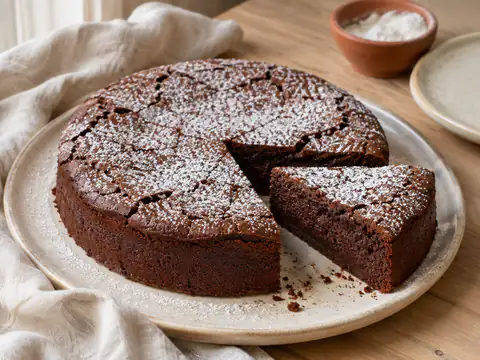
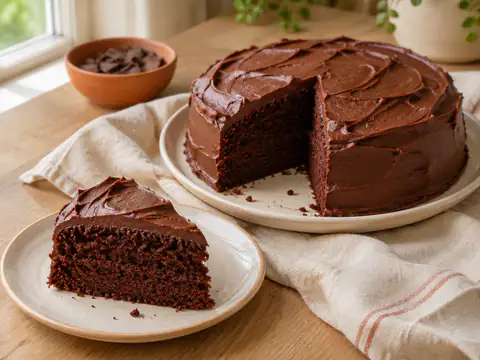
Chocolate ganache is chocolate melted into hot cream, and the ratio of chocolate to cream decides what it can do. A thin ganache pours as a glaze. A thicker one spreads as a filling, and a firm one rolls into truffles. For an all-purpose ganache, King Arthur Baking uses 3 parts semisweet or bittersweet chocolate to 2 parts cream by weight. In cups, that is 2 cups (340 g) of chopped chocolate and 1 cup (240 ml) of heavy cream, which makes about 1 3/4 cups, enough to fill and glaze a two-layer 9-inch cake. Use it on the chocolate cake with cocoa powder, the one-bowl chocolate cake or any cake from 15 easy chocolate cake ideas. More chocolate recipes are in the chocolate desserts hub.
Recipe
All-Purpose Chocolate Ganache
- YieldAbout 1 3/4 cups (about 560 g), enough to fill and glaze a two-layer 9-inch cake
- Prep10 min
- Cook5 min
- Chill / rest1 hr
- Total1 hr 15 min
Ingredients
Ganache
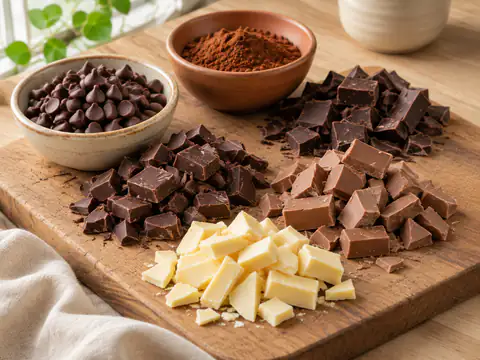
- 2 cups chopped340 g semisweet or bittersweet chocolate, bars or chips, chopped small
- 1 cup240 ml (about 227 g) heavy cream
- 1 pinchunder 1 g fine salt, optional
- 1 tsp5 ml vanilla extract, optional
Method
- Put the chopped chocolate in a heatproof bowl. Small pieces melt evenly, so chop bars into pieces no bigger than a chocolate chip.
- Heat the cream in a small saucepan over medium heat, or in a microwave in 20-second bursts, until it is steaming and tiny bubbles form around the edge. Do not let it boil hard.
- Pour the hot cream over the chocolate, making sure all of it is covered. Leave it alone for 5 minutes.
- Stir slowly from the center outward. The mixture will look split and messy at first, then come together into a smooth, glossy ganache. Stir in the salt and vanilla.
- Use it warm as a pourable glaze, or let it stand at room temperature, stirring now and then, until it thickens to the texture you want.
Notes
- Weigh the chocolate and cream if you can. A cup of chopped chocolate or chips is 170 g, and a cup of heavy cream is about 227 g.
- Ganache thickens as it cools, so a thin ganache is not a failure. Wait, or put it in the fridge to speed things up.
- Whipped ganache adds about 40 percent more volume. Let the ganache cool completely, then beat it with a mixer.
Ganache ratios by use
Ratios are by weight, not volume, because cream and chocolate are different densities. The cup amounts below use 170 g per cup of chopped chocolate and about 227 g per cup of heavy cream.
| Use | Chocolate | Cream | Ratio (chocolate : cream) | Notes |
|---|---|---|---|---|
| Thin glaze or drizzle, dark chocolate | 1 cup (170 g) | 3/4 cup (180 ml, about 170 g) | 1 : 1 | A common variation for a thinner glaze; not from King Arthur |
| All-purpose, dark chocolate (recipe above) | 1 cup (170 g) | 1/2 cup (120 ml, about 114 g) | 3 : 2 | King Arthur’s ratio: pourable warm, spreadable at room temperature, stiff when cold |
| Firm filling or truffles, dark chocolate | 1 cup (170 g) | 6 tablespoons (90 ml, about 85 g) | 2 : 1 | A common variation for a firmer set; not from King Arthur |
| Milk chocolate or white baking chips | 1 cup (170 g) | 1/4 cup (60 ml, about 57 g) | 3 : 1 | King Arthur’s ratio: sweeter chocolate needs less cream |
The reason is sugar. Milk chocolate and white chocolate contain more sugar than dark chocolate, and the sugar stays liquid when warm, so they make a thinner ganache. Use less cream to get the same result. King Arthur also notes that results change with the brand and kind of chocolate, so treat the table as a starting point.
How to use it
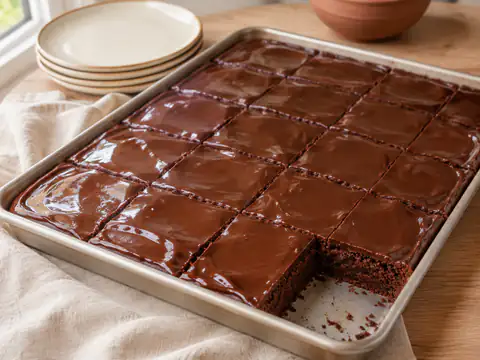
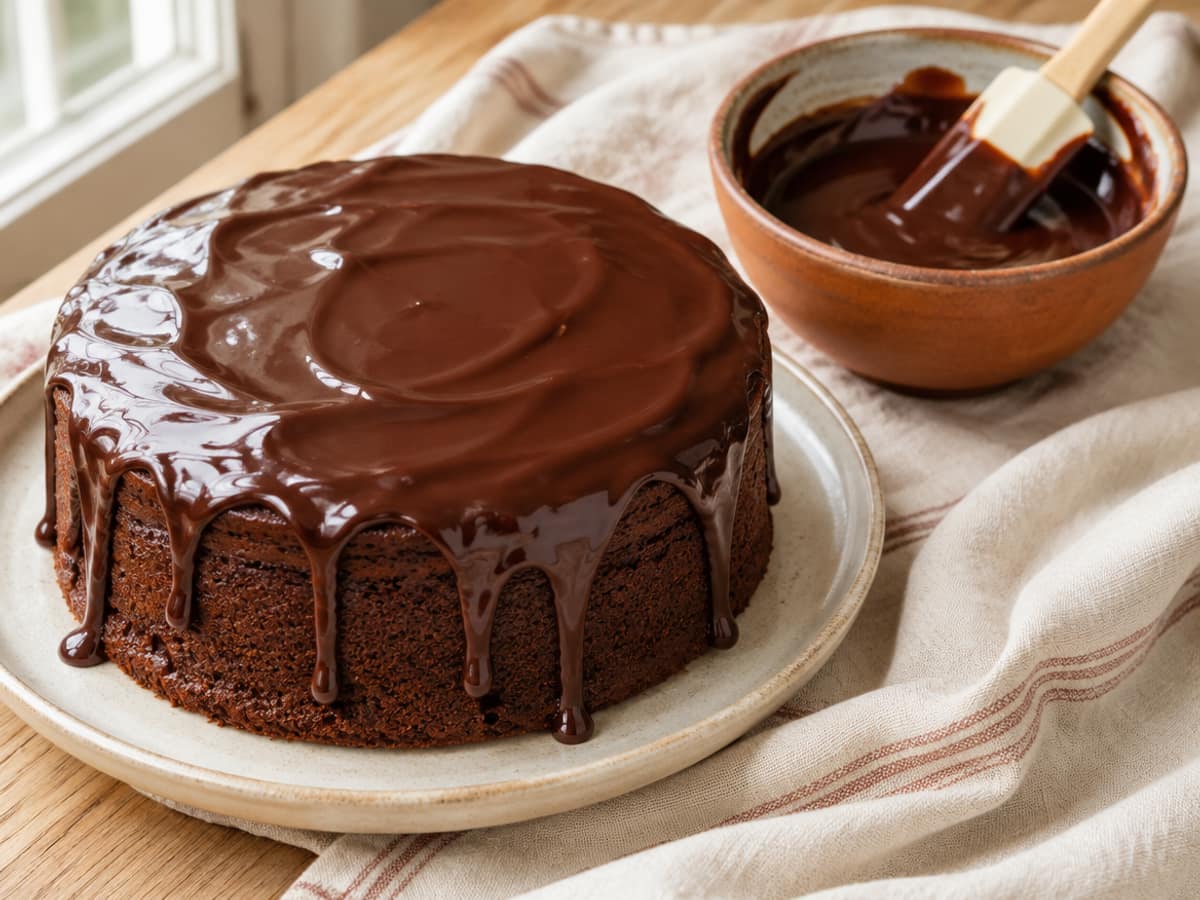
Glaze. Use the ganache soon after the 5-minute rest, while it is still pourable, and pour it over a cooled cake. Spread it to the edges with an offset spatula. It sets to a soft shine.
Drip. Let the ganache stand until it thickens slightly but still runs, then spoon it around the edge of a cold cake and let it drip down the sides. A cold cake slows the drips. If the ganache is too warm it runs all the way to the plate, so wait a few minutes and try again.
Filling. Let the ganache stand at room temperature until it holds its shape on a spoon, stirring occasionally. If you are in a hurry, pour it into a shallow pan and refrigerate it, stirring now and then. For cookies with a layer of chocolate on top, chocolate-topped cookies shows how to spread, dip or drizzle, and ganache works there too. Spread it between cake layers or into the center of cookies, such as chocolate-stuffed cookies.
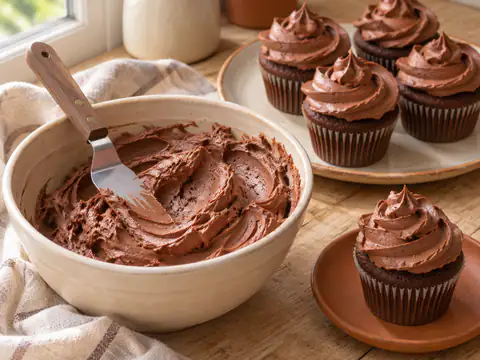
Whipped frosting. Cool the ganache completely, then beat it with a mixer until it lightens in color and holds soft peaks. King Arthur says it gains about 40 percent in volume, so 1 3/4 cups becomes a scant 2 1/2 cups. For a fully frosted layer cake, double the recipe. If you prefer a buttery frosting, see chocolate buttercream frosting.
Truffles. Use the 2 : 1 ratio, chill it until firm, scoop it into small balls and roll them in cocoa.
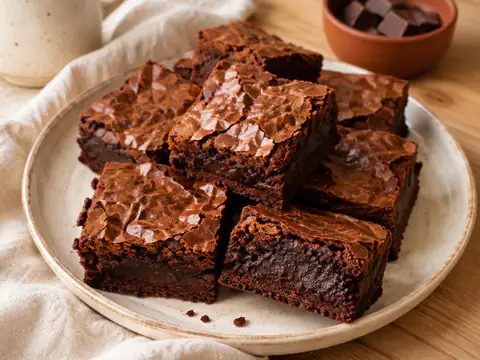
Brownies and bars. A thin layer of warm ganache spread over a pan of fudgy brownies sets into a glossy top, and it also suits a flourless chocolate cake, where it adds a smooth, soft layer to a dense cake.
Topping cookies. A thin ganache sets as a soft glaze on chocolate-topped cookies.
Making it by weight
If you have a scale, the process is simpler. Weigh the chocolate into the bowl, then weigh the cream into the pan. For the 3 : 2 ratio, multiply the weight of the cream by 1.5. For example, 227 g (1 cup) of cream at the 3 : 2 ratio takes 340 g of chocolate. For half a batch, use 113 g of cream and 170 g of chocolate.
Fixes: split, grainy or too thick
| Problem | Cause | Fix |
|---|---|---|
| Split, oily or greasy | Cream too hot, or stirred too fast | Stir in 1 tablespoon of warm cream at a time until glossy |
| Grainy or with unmelted bits | Chunks too large, or cream not hot enough | Warm the bowl over a pan of barely simmering water, or microwave for 10 seconds, then stir |
| Too thin | Not enough chocolate for the use | Wait, or refrigerate it, stirring now and then; it thickens as it cools |
| Too thick | Cooled too long | Warm it gently, or beat it into a soft frosting |
Storing ganache
Ganache is made with cream, so treat it as perishable. The FDA says perishable food should not stay at room temperature for more than 2 hours, or 1 hour above 90°F (32°C). Refrigerate ganache, or a cake finished with it, within that time. Warm refrigerated ganache gently in 15-second microwave bursts, stirring each time, until it is soft enough to use. Do not overheat it, because the fat can separate. A mug cake is a good place to use a spoonful, as in the chocolate mug cake.
Questions and answers
What is the ratio for ganache?
For semisweet or bittersweet chocolate, King Arthur Baking uses 3 parts chocolate to 2 parts cream by weight for an all-purpose ganache. For milk chocolate or white baking chips, it uses 3 parts chocolate to 1 part cream, because they contain more sugar and set softer.
Can I fix ganache that has split?
Usually yes. Stir in 1 tablespoon of warm cream at a time until it comes back together and turns glossy. Gently warming the bowl also helps.
Can I use chocolate chips?
Yes. Chips melt well enough for ganache. Chopped bar chocolate often melts a little more smoothly, because chips are made to hold their shape in the oven.
Sources
- How to make ganache — King Arthur Baking
- Are You Storing Food Safely? — U.S. Food and Drug Administration