Chocolate Cake With Cocoa Powder
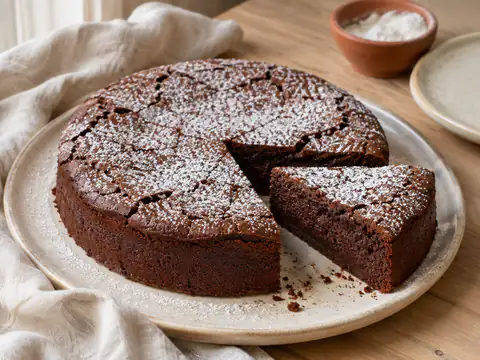
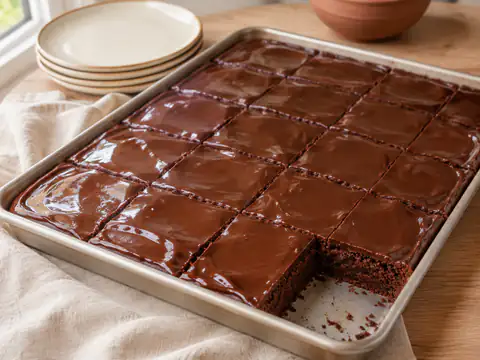
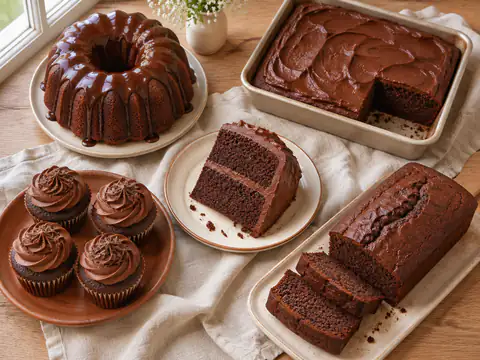
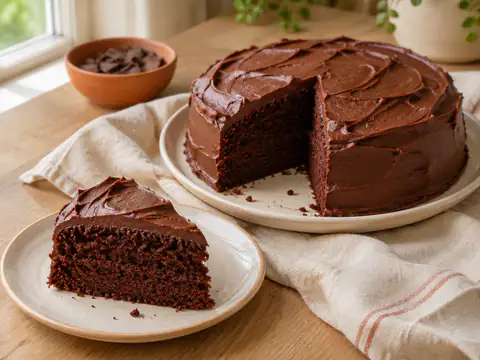
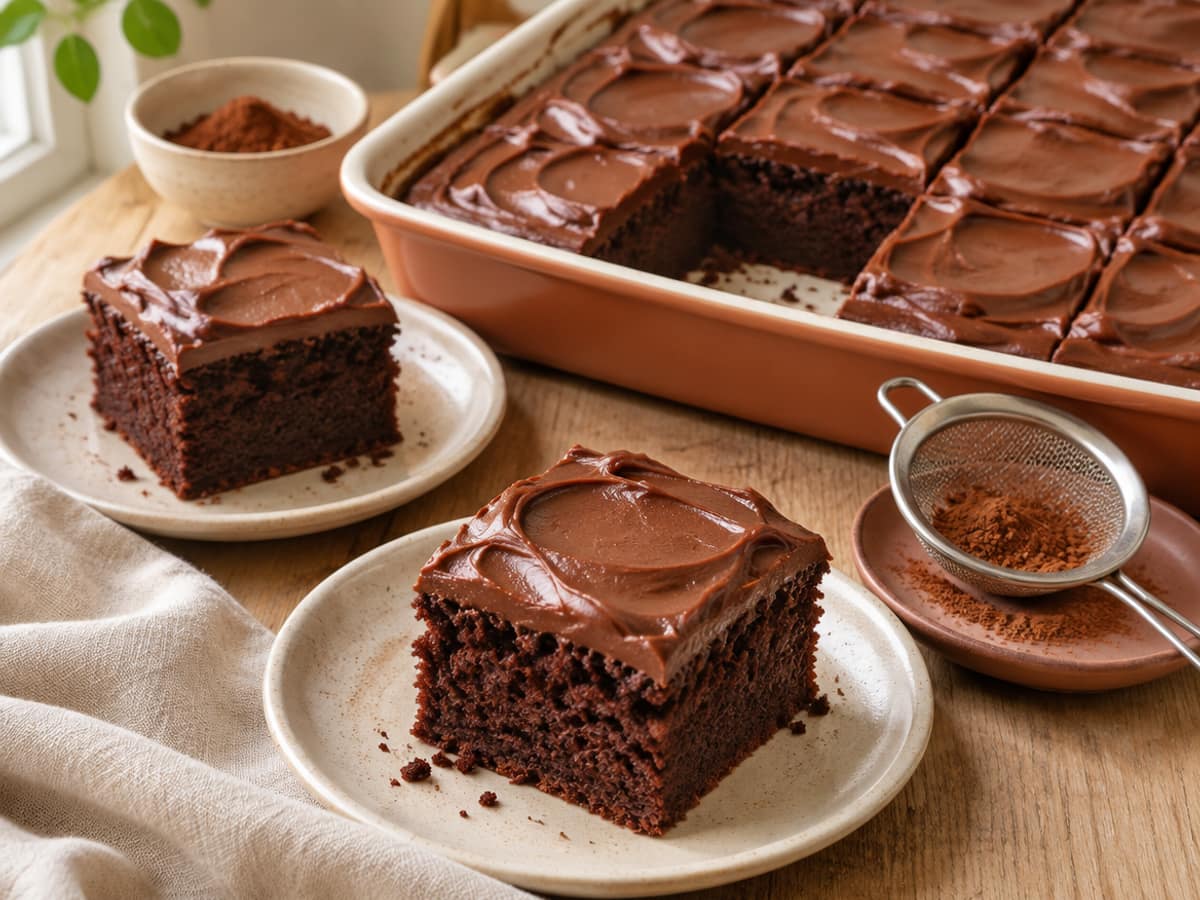
This is a chocolate cake made with cocoa powder, buttermilk, oil and hot coffee, baked in a 9x13-inch pan at 350°F (180°C) for 30 to 35 minutes. You whisk it in two bowls, with no mixer, and the batter is thin on purpose. The result is a moist, tender cake with a deep cocoa flavor that works plain, dusted with powdered sugar or topped with frosting.
It sits in the chocolate desserts collection. If you would rather bake layers, the Classic Cocoa Layer Cake in 15 easy chocolate cake ideas uses a different ratio. For a smaller single layer mixed in one bowl, try the one-bowl chocolate cake, and for a thin cake to feed a crowd in a larger pan, the chocolate sheet cake. Here the focus is one recipe, with what each part does.
Recipe
Buttermilk Cocoa Cake (9x13)
- YieldOne 9x13-inch cake, 12 to 16 squares
- Prep15 min
- Cook35 min
- Chill / rest1 hr
- Total1 hr 50 min
- Oven350°F / 180°C
Ingredients
Dry ingredients
- 2 cups250 g all-purpose flour, spooned into the cup and leveled
- 1 cup200 g granulated sugar
- 1/2 cup, packed105 g light brown sugar
- 3/4 cup64 g unsweetened cocoa powder, natural or Dutch-process, plus 1 tbsp (5 g) for the pan
- 1 1/2 tsp9 g baking soda
- 1 tsp4 g baking powder
- 1/2 tsp3 g fine salt
Wet ingredients
- 1 cup240 ml buttermilk, shaken
- 1/2 cup120 ml neutral oil, such as canola or vegetable
- 2 largeabout 100 g out of the shell eggs
- 2 tsp10 ml vanilla extract
- 1 cup240 ml hot brewed coffee, or hot water
Method
- Heat the oven to 350°F (180°C) with a rack in the center. Grease the pan, line the bottom with parchment, grease the parchment and dust the pan with 1 tablespoon of cocoa, tapping out the extra.
- In a large bowl, whisk the flour, both sugars, 3/4 cup cocoa, baking soda, baking powder and salt. Press out any lumps of brown sugar with your fingers, and sift the cocoa first if it is lumpy.
- In a second bowl, whisk the buttermilk, oil, eggs and vanilla until smooth.
- Pour the wet mixture into the dry and whisk for about 30 seconds, just until no dry streaks remain.
- Pour in the hot coffee a little at a time, whisking after each addition. The batter will be thin, like heavy cream. Scrape the bottom of the bowl once.
- Pour the batter into the pan and tap the pan on the counter twice to pop large bubbles.
- Bake 30 to 35 minutes. Start checking at 28 minutes.
- Cool the cake in the pan on a rack for 15 minutes, then leave it to cool completely, about 1 hour in all, before frosting or cutting.
Notes
- Weigh the flour if you can. A packed cup can hold 20 percent more than a spooned and leveled cup.
- No buttermilk? Stir 1 tablespoon of lemon juice or white vinegar into 1 cup of milk and let it stand for 5 minutes.
- The batter is meant to be thin. Do not add more flour.
Why this recipe works
Cocoa powder gives flavor without fat. Cocoa powder is mostly cocoa solids, with the fat pressed out. It gives strong chocolate flavor without making a cake heavy. This recipe uses 3/4 cup (64 g) of cocoa for 2 cups (250 g) of flour, a high proportion.
Hot liquid helps the cocoa dissolve. Cocoa is a dry powder that can stay in clumps in cold batter. Adding hot coffee or hot water at the end lets it dissolve and spread, and it thins the batter so the crumb stays soft. Many bakers also say hot liquid brings out more chocolate flavor.
Buttermilk adds acid and tenderness. The baking soda needs an acid to make gas. Buttermilk is acidic, and so are brown sugar and natural cocoa powder. If you do not have any, buttermilk substitutes lists the swaps that work in a cake like this. Baking powder adds a little more lift. The combination gives an even rise and a tender crumb.
Oil keeps it moist. Oil is liquid at room temperature, so an oil cake stays soft after it cools.
Two sugars. Granulated sugar sweetens. Brown sugar adds moisture and a hint of molasses.
Natural or Dutch-process cocoa
Natural cocoa is acidic and a little sharp in flavor. Dutch-process cocoa has been treated to neutralize that acid, and it is darker and milder. This recipe works with either one, because the buttermilk supplies the acid that the baking soda needs. Use whichever you have. Check the label: “cocoa processed with alkali” means Dutch-process. The full comparison is in natural vs Dutch-process cocoa powder.
Do not swap in hot chocolate mix. It contains sugar and milk powder, which changes the recipe.
Pan sizes and bake times
The same batter works in other pans. Grease and line each pan with parchment. All times are for 350°F (180°C) and are ranges, because ovens and pans vary.
| Pan | Bake time | Notes |
|---|---|---|
| One 9x13-inch (23x33 cm) pan | 30 to 35 minutes | The recipe as written |
| Two 9-inch (23 cm) round pans | 28 to 33 minutes | Cool in the pans for 10 minutes, then turn out |
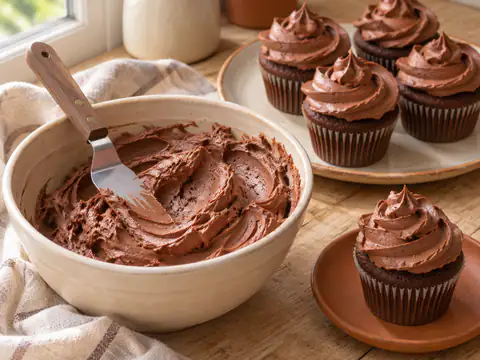
| Cupcakes (about 18), liners filled two-thirds | 18 to 22 minutes | Check early with a toothpick |
Dark metal pans brown faster than light ones, so start checking 3 to 5 minutes early if yours are dark. A glass pan bakes slower and can need a few more minutes.
Frosting and serving
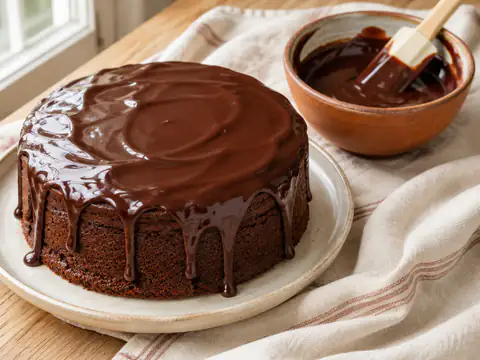
The cake is sweet enough to serve plain or dusted with powdered sugar. If you frost it, wait until it is completely cool, because a warm cake melts frosting. Chocolate buttercream frosting makes enough for the whole pan. Cut squares with a thin knife, wiping it between cuts.
Storing and making ahead
Keep the cooled cake covered at room temperature. A dairy-based frosting, such as cream cheese or whipped cream, makes the cake perishable, and the FDA advises refrigerating perishable food within 2 hours. Wrap unfrosted layers or squares tightly in plastic and then foil to freeze them, and thaw them still wrapped, so they do not dry out.
Fixes: dry, sunken or dense cake
- Dry cake. The usual causes are too much flour (a packed cup can hold 150 g instead of 125 g) and overbaking. Weigh the flour and start testing at 28 minutes.
- Sunken middle. The cake was underbaked, the oven door was opened early, or the oven was too cool. Check the temperature with an oven thermometer and wait until the last 10 minutes before opening the door. Old baking soda or baking powder can also leave a cake that rises and then falls.
- Dense cake. The batter was overmixed after the flour went in, or there was too much flour. Whisk just until smooth. Check that the baking soda and baking powder are still active.
- Cocoa clumps or a floury taste. Sift the cocoa, or whisk the dry ingredients longer, and press out brown sugar lumps.
Questions and answers
Can I use natural or Dutch-process cocoa powder?
Either works in this recipe. The buttermilk supplies the acid for the baking soda, so the cake rises with both. Dutch-process cocoa gives a darker, smoother-tasting cake. Natural cocoa gives a slightly sharper chocolate taste.
Do I have to use coffee?
No. Use hot water instead, in the same amount. Hot liquid of either kind helps the cocoa dissolve and spread evenly through the batter.
Can I make this in two round pans?
Yes. Use two 9-inch (23 cm) round pans, greased and lined with parchment, and bake 28 to 33 minutes at 350°F (180°C).
Can I make it ahead?
Yes. Bake the cake, cool it completely, wrap it well and keep it at room temperature until you frost it. You can also freeze the wrapped layers or squares.
Sources
- Are You Storing Food Safely? — U.S. Food and Drug Administration