Natural vs Dutch-Process Cocoa Powder
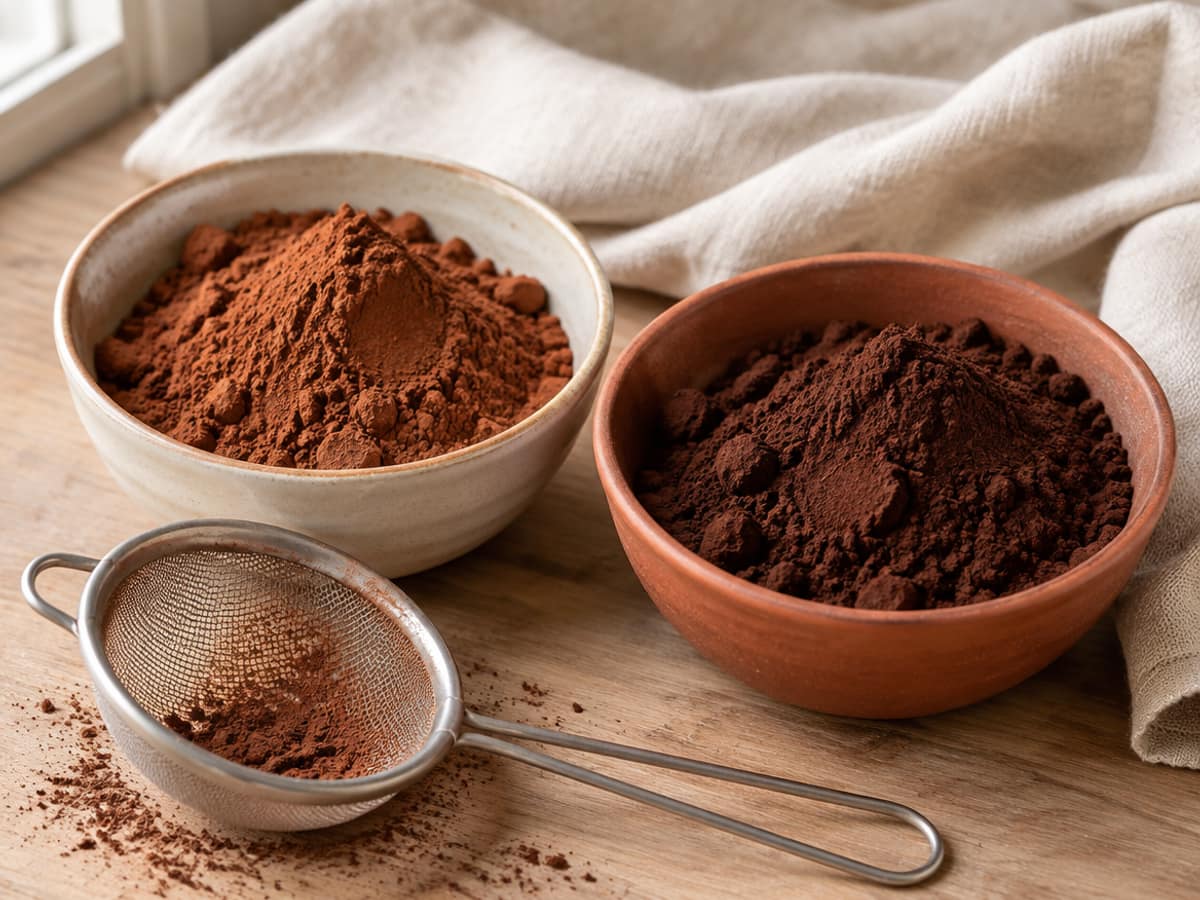
Natural cocoa powder is acidic, with a pH of about 5 to 6, and tastes sharper and fruitier. Dutch-process cocoa has been treated with an alkali to neutralize that acid, so it has a pH of about 7, a darker color and a smoother flavor. The difference matters for rising: natural cocoa reacts with baking soda, while Dutch-process cocoa does not. Many recipes work with either, and a few steps below show when and how to swap.
Side by side
| Natural cocoa | Dutch-process cocoa | |
|---|---|---|
| How it is made | Roasted beans, pressed and ground | Same, plus an alkaline wash that neutralizes the acid |
| Acidity (pH) | Acidic, about 5 to 6 | Neutral, about 7 |
| Color | Light to reddish brown | Darker brown |
| Flavor | Sharper, fruitier, more “old-fashioned chocolate” | Smoother, softer, more bittersweet |
| Works with | Baking soda, because its acid sets off the reaction | Baking powder, which brings its own acid |
| Other names on the label | Unsweetened cocoa, natural cocoa | Dutched, alkalized, European-style, processed with alkali |
| Best for | Recipes that use baking soda; most frostings, according to King Arthur’s bakers | Recipes that use baking powder; a darker color |
Iowa State University Extension gives the pH figures and the names above, and King Arthur Baking describes the flavor and color differences. Both sources agree that natural cocoa provides the acid baking soda needs, and that Dutch-process cocoa is mainly there for flavor and color.
Why it matters for rising
Baking soda is a base. It only makes gas when it meets an acid. Natural cocoa is acidic, so a cake or cookie dough made with natural cocoa and baking soda can rise without extra acid. Dutch-process cocoa has had its acid removed, so recipes that use it normally rely on baking powder, which carries its own acid. Read more in baking soda vs baking powder.
Many recipes sidestep this. If the recipe also has buttermilk, brown sugar or another acid, or if it uses both baking soda and baking powder, either cocoa will work. Iowa State’s guidance is the same: if a recipe calls for baking powder, or mostly baking powder with some baking soda or another acid, either type can be used.
When you can use either
King Arthur says recipes that use neither baking soda nor baking powder can be made with whichever cocoa you like, because the cocoa is there only for flavor and color. Hot cocoa and fudge frosting are examples. Its bakers prefer natural cocoa in most frostings. Both types work in chocolate cake with cocoa powder, because the buttermilk supplies acid, and in double chocolate chip cookies, where the brown sugar helps.
How to swap
King Arthur’s advice for a swap, with the effect to expect:
| You have | Recipe calls for | Change the cocoa | Change the leavener | What to expect |
|---|---|---|---|---|
| Natural cocoa | Dutch-process | 1 to 1 | If the recipe uses more than 3 tbsp cocoa and only baking powder, replace it with half as much baking soda. No change for 3 tbsp or less, or if the recipe already has baking soda | Lighter color, a faint tang |
| Dutch-process cocoa | Natural | 1 to 1 | Replace the baking soda with twice as much baking powder. No change if the recipe already has baking powder or another acid | Darker color; the bake may rise less and taste slightly soapy if you do not adjust |
Iowa State gives a similar rule: substitute natural for Dutch-process 1 to 1 and replace the baking powder with half the amount of baking soda, or go the other way by omitting the baking soda and using an equal to double amount of baking powder. These are adjustments, not guarantees. Expect small differences in color, rise and flavor.
How to tell which one you have
Check the front label and the ingredient list. Cocoa that has been through the alkaline wash often says Dutch-process, Dutched, alkalized or “processed with alkali.” Cocoa sold simply as unsweetened cocoa is natural. If a jar says nothing, assume natural.
Measuring and storing
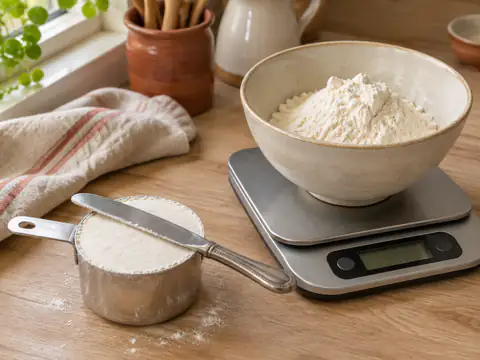
In this site’s recipes, 1 cup of unsweetened cocoa powder is 85 grams, whichever type you use. Spoon it into the cup and level it, as with flour, because cocoa packs down. Keep it in a closed container in a cool, dry place. For a full conversion chart, see baking conversion chart.
Which to use for what
- Chocolate cakes: either, if the recipe has buttermilk, brown sugar or baking powder. See 15 easy chocolate cake ideas.
- Cookies with baking soda: natural is the safer choice, and both work where brown sugar adds acid.
- Hot cocoa and hot chocolate: either, since nothing needs to rise. Dutch-process gives a darker, milder cup. Hot chocolate vs hot cocoa covers the rest, and the 15 hot chocolate recipes use either.
- Frosting and glazes: either works; King Arthur’s bakers prefer natural cocoa in most frostings.
More basics are in baking basics.
Questions and answers
What is the difference between natural and Dutch-process cocoa?
Natural cocoa is acidic, with a pH of about 5 to 6, and has a sharper flavor and reddish-brown color. Dutch-process cocoa is treated with an alkali to bring the pH to about 7, which makes it darker and smoother.
Can I substitute natural cocoa for Dutch-process cocoa?
Often yes. King Arthur Baking says a straight 1 to 1 swap gives decent results, with a lighter color and possibly a slight tang. For better results with more than 3 tablespoons of cocoa, replace the baking powder with half as much baking soda.
Can I use Dutch-process cocoa in a recipe that calls for natural cocoa?
Yes, but the cake may rise less and can taste slightly soapy because the baking soda has less acid to react with. Replacing the baking soda with twice as much baking powder helps.
How do I know which one I have?
Look at the label. Dutch-process cocoa may say Dutch-process, alkalized or processed with alkali. Plain unsweetened cocoa is usually natural.
Sources
- Natural vs Dutch-processed Cocoa — Iowa State University Extension and Outreach
- Dutch-process vs. natural cocoa: can you substitute one for the other? — King Arthur Baking