What Is Cream of Tartar Made Of?
Cream of tartar is potassium bitartrate, a white crystalline salt that forms during winemaking. Its chemical name is potassium acid tartrate, which is the potassium salt of tartaric acid, the main acid in grapes. In the United States, federal food rules describe cream of tartar as a by-product of making wine. The wine industry collects the crystals from tanks and barrels, purifies them and grinds them into the powder sold in the spice aisle. For what it does in the kitchen, see the main guide to cream of tartar.
Why it forms in wine
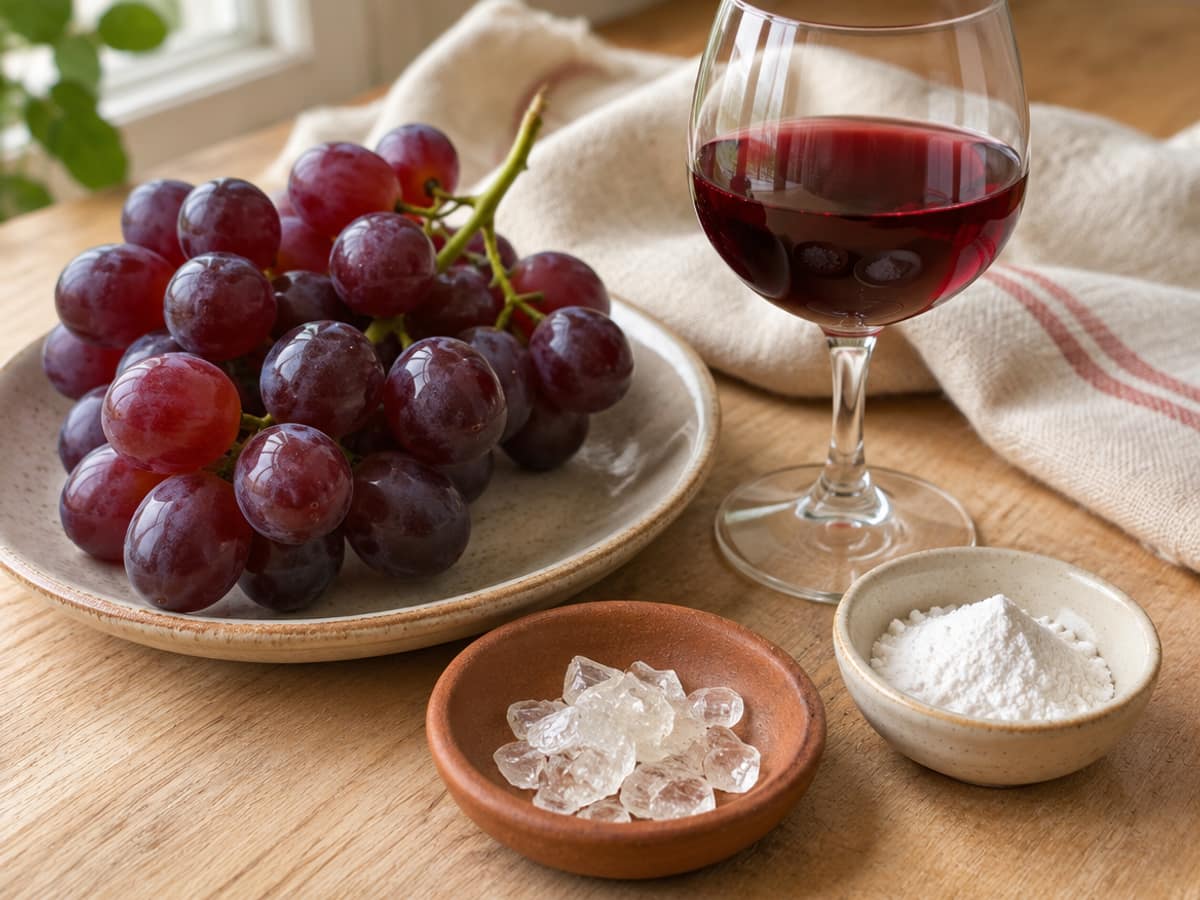
Grapes contain a lot of tartaric acid and a lot of potassium. In grape juice and young wine, these combine into potassium acid tartrate, which dissolves poorly in cold liquid. A USDA technical report says it is prone to crystallizing at several steps of winemaking, even in unfermented grape juice. It dissolves less as the alcohol content rises, so crystals keep dropping out as the wine ferments and ages.
That is why you can find a crust on the inside of wine vats and casks. The crust has old names: argol, which is crude potassium hydrogen tartrate, and tartar. Winemakers also chill some wines to about 30°F (-1°C) before bottling, on purpose, so that these crystals form and can be filtered out. Otherwise they can show up in the bottle as small glassy “wine diamonds.”
How it is made
According to the USDA technical report, the by-products of winemaking are the raw material: press cake (the compressed skins, seeds and stems), lees (the sediment of yeast cells and grape bits) and the crystal crust. The process is simple and uses water as its only solvent.
- Extract. The residues are mixed with hot water. Potassium acid tartrate is only slightly soluble in cold water but dissolves well in hot water, so it moves into the liquid.
- Clean up. Activated charcoal removes colored impurities, and the liquid is filtered.
- Crystallize. As the clear liquid cools, potassium acid tartrate comes back out as crystals. The report says they are more than 99.5 percent pure.
- Separate and dry. The crystals are collected and dried, and the result is sold as a fine white powder.
The report states that no other reagents or solvents are used in this extraction, and that all the potassium and tartrate in the result come from the grapes.
What is in the jar
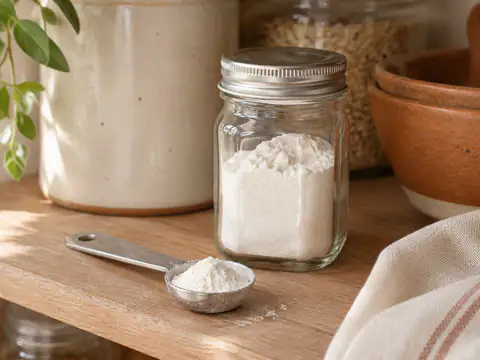
The grocery-store jar of cream of tartar lists one ingredient, potassium acid tartrate. Food-grade potassium acid tartrate must meet the Food Chemicals Codex specification of at least 99 percent, and the USDA report says the cream of tartar sold in grocery stores is likely to be 99.5 percent or higher. There are no anti-caking agents or fillers to look for on the label.
This is different from baking powder, which is a blend. The same report describes baking powder as potassium acid tartrate dry-blended with baking soda, with cornstarch as the usual filler. Ingredients differ by brand, so check the label. The three-way comparison in cream of tartar vs baking powder vs baking soda shows how they relate.
Names to know
- Potassium bitartrate, potassium hydrogen tartrate and potassium acid tartrate are the same compound. U.S. food rules use “potassium acid tartrate” (21 CFR 184.1077).
- Tartaric acid is the acid itself. Cream of tartar is its potassium salt. They are not interchangeable in recipes.
- Argol or tartar is the crude crust from wine vats.
- Tartar sauce and the tartar on teeth have nothing to do with it. The words overlap only by history.
Why that makes it useful in baking
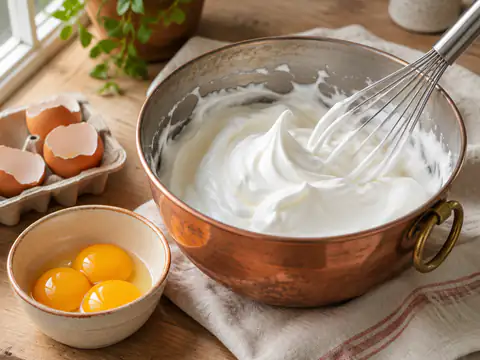
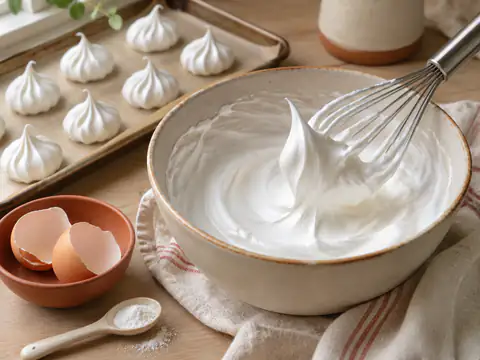
Cream of tartar is a mild acid in dry form. That is why it steadies whipped egg whites, as King Arthur Baking explains, and why it pairs with baking soda to make a leavener. You can read how it behaves in cream of tartar in meringue and egg whites and in what cream of tartar does in cookies. If you are comparing it with another pantry powder, see is cream of tartar the same as meringue powder.
How food rules describe it
The U.S. Code of Federal Regulations defines potassium acid tartrate as the potassium acid salt of L-(+)-tartaric acid, also called potassium bitartrate or cream of tartar, and describes it as a by-product of wine manufacture. The same rule lists what it may do in food: it can act as a leavening agent, a pH control agent and a stabilizer, among other roles. The USDA report adds that the FDA lists it among the direct food substances affirmed as generally recognized as safe.
“Generally recognized as safe” (21 CFR 184.1077) refers to normal food use at the small amounts recipes call for. It does not mean a large amount is harmless, which is why the next section matters.
A note about potassium
Because cream of tartar is a potassium salt, it is rich in potassium. A case report in the Journal of Medical Toxicology, indexed by the NIH, describes dangerously high blood potassium in a person who swallowed a large amount. In baking, you use a pinch to a couple of teaspoons spread across a whole batch. Do not take it by the spoonful as a supplement or remedy, and talk to a doctor before using it for anything other than cooking.
Storage
Keep it in a tightly closed jar in a cool, dry place. Moisture is the main enemy, because damp powder clumps. Does cream of tartar go bad explains how long a jar lasts and how to check one that is old. More guides are in baking basics.
Questions and answers
What is cream of tartar made of?
Cream of tartar is potassium bitartrate, also called potassium acid tartrate. It is the potassium salt of tartaric acid, the main acid in grapes.
Is cream of tartar made from wine?
Yes, indirectly. U.S. food rules describe it as a by-product of winemaking. The crystals come from sediment and crust left in wine tanks and barrels, not from the wine you drink.
Is cream of tartar the same as the tartar on teeth?
No. It is unrelated to the tartar on teeth. The two share a name only because early chemists called the wine crust tartar.
Does cream of tartar have anything added to it?
Store-bought cream of tartar lists only potassium acid tartrate on the label. Baking powder is a different product: it blends cream of tartar or another acid with baking soda and a starch.
Sources
- 21 CFR 184.1077 Potassium acid tartrate — U.S. Code of Federal Regulations (Cornell LII)
- Potassium Acid Tartrate Technical Report (National Organic Program) — USDA Agricultural Marketing Service
- Life-Threatening Hyperkalemia from Cream of Tartar Ingestion (J Med Toxicol, 2013) — NIH National Library of Medicine (PubMed Central)
- What is cream of tartar? And do I really need it to whip egg whites? — King Arthur Baking