What Does Cream of Tartar Do in Cookies?
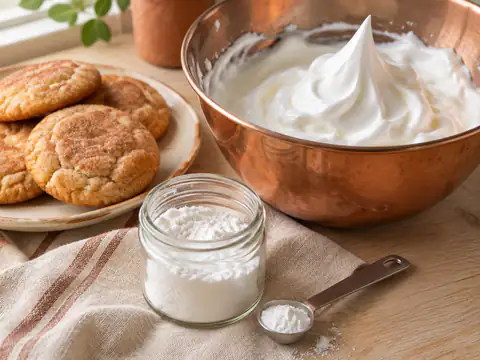
In cookies, cream of tartar is an acid. It reacts with baking soda to make carbon dioxide, which puffs the dough, and it leaves a mild tang behind. That pairing is what makes a snickerdoodle puffy, soft and slightly tangy. Most other cookies do not need it. The full recipe is classic snickerdoodles.
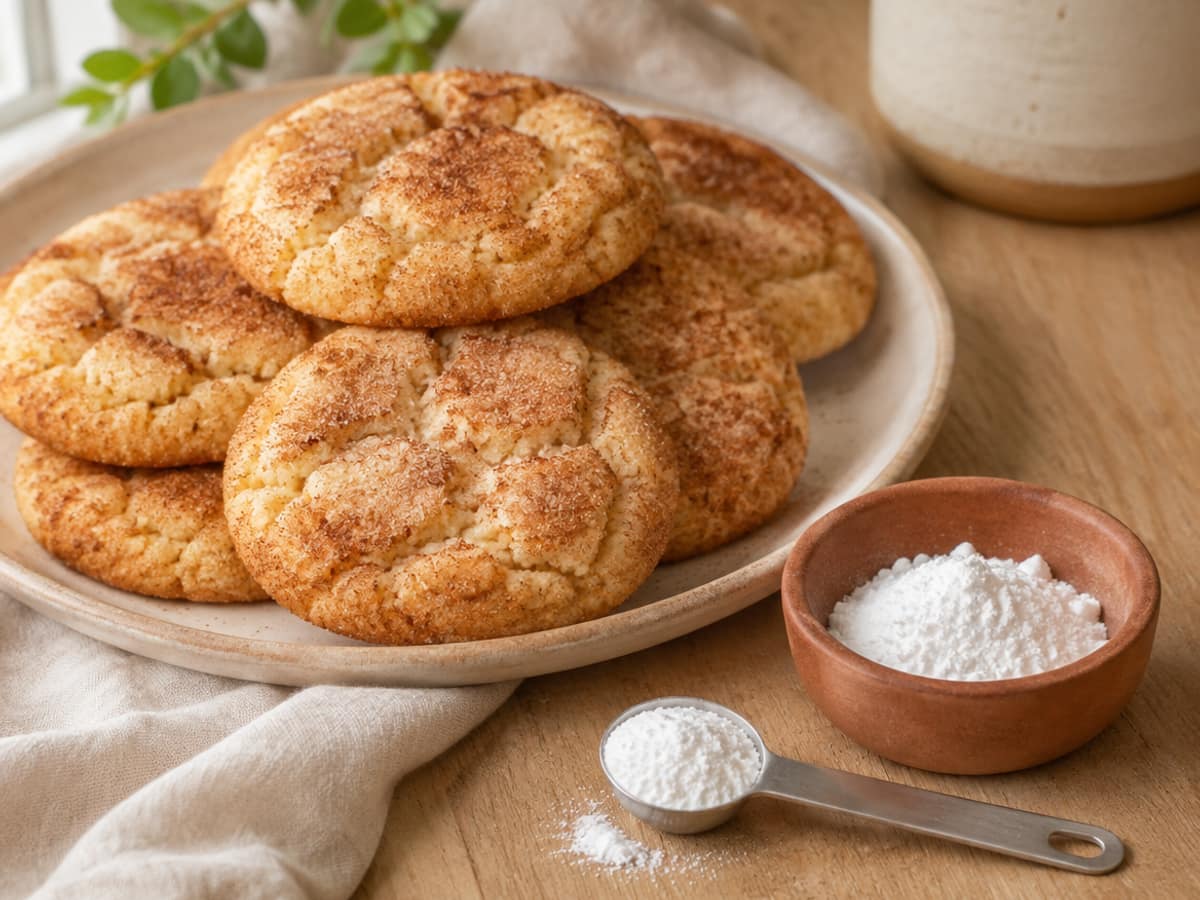
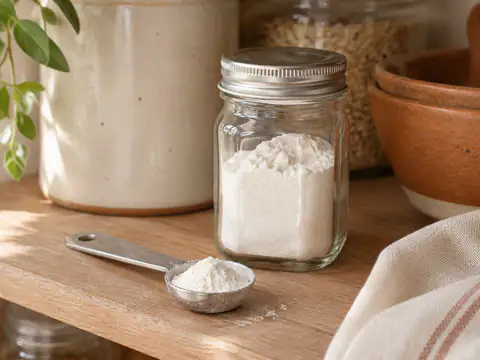
Cream of tartar is potassium acid tartrate, a powder left over from winemaking and listed in the U.S. food regulations as a direct food substance affirmed as generally recognized as safe. For the full story on what it is and what else it does, read cream of tartar: what it is and how to use it. The focus here is cookies.
How cream of tartar and baking soda work together
Baking soda is a base. By itself it needs an acid to react with, otherwise it leaves a soapy, metallic taste and the cookie browns too much. When the soda meets an acid in a wet dough, the two react and give off carbon dioxide gas. The gas expands in the heat of the oven and lifts the cookie.
Cream of tartar is a dry acid. Stirring it into the dry ingredients with the soda gives the soda something to react with, even in a dough that has no other acid. A few things follow from that:
- Lift. The reaction produces gas as soon as the dough is wet, and again when it heats, so the dough puffs.
- Tang. The extra acid leaves a gentle sour note, which is the signature of a snickerdoodle.
- Texture. Acidic dough sets quickly and browns less, so cookies stay pale, soft and a little cakey in the middle.
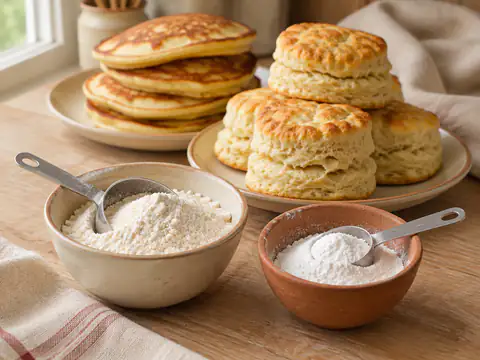
The usual ratio is about 2 parts cream of tartar to 1 part baking soda by volume. Mixed in that proportion, the two balance each other, so the finished cookie tastes neither sour nor soapy. The same pair, plus a little cornstarch, is how baking powder is made. If you want to compare all three, see cream of tartar vs baking powder vs baking soda; the two-way swap rules are in baking soda vs baking powder.
Cream of tartar in snickerdoodles
Snickerdoodles are the one cookie where cream of tartar is the star. A classic dough uses these proportions:
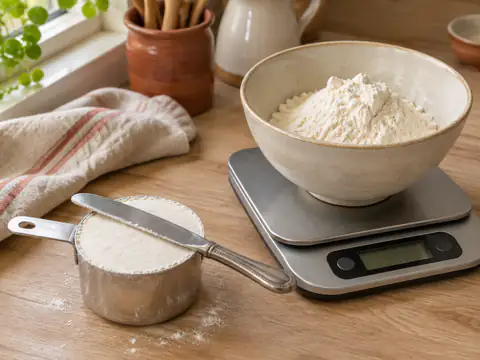
| For about 2 3/4 cups (345 g) flour | Amount |
|---|---|
| Cream of tartar | 2 tsp |
| Baking soda | 1 tsp |
| Fine salt | 1/4 tsp |
The dough is rolled in cinnamon sugar before baking, and the cookies puff and crack into the familiar crinkled surface as they bake. A snickerdoodle made with baking powder instead of cream of tartar and soda will still rise, but it loses some of the tang. If you ran out, see substitutes for cream of tartar for swaps and amounts.
Cream of tartar in other cookies
| Cookie | Does it need cream of tartar? | What it does |
|---|---|---|
| Snickerdoodles | Yes | Tang, lift and a soft, puffy texture |
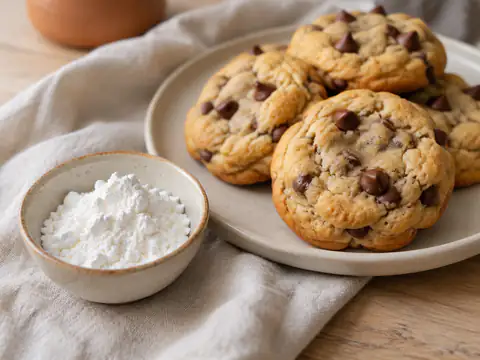
| Chocolate chip cookies | No | Brown sugar already supplies the acid, so the soda works without it |
| Sugar cookies | Sometimes | Some recipes use it with soda in place of baking powder for a softer, slightly tangy cookie |
| Meringue cookies | Often | Steadies the whipped egg whites so they hold their shape |
| Shortbread and gingersnaps | Rarely | Usually not part of the recipe |
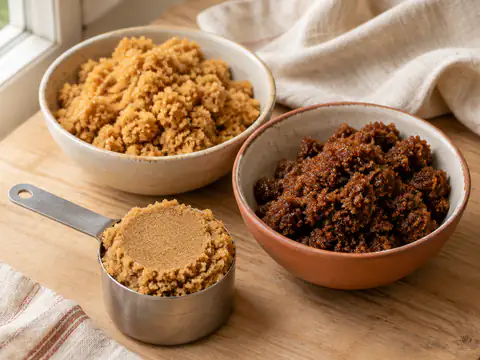
For the chocolate chip dough, the acid comes from brown sugar and the molasses in it, which is why chocolate chip cookie ingredients lists baking soda alone. Swapping in baking powder or adding cream of tartar changes the cookie, and the usual result is a paler, cakier one.
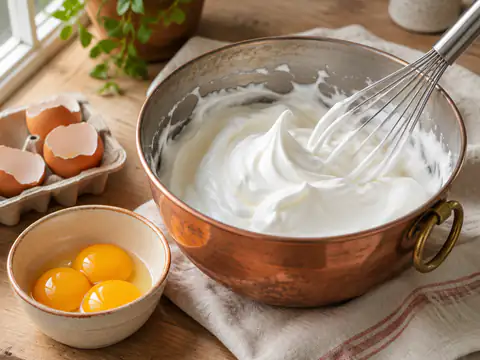
Meringue cookies work for a different reason. In whipped egg whites, the acid helps the protein bubbles stay stable instead of collapsing. The details, with amounts and peak stages, are in cream of tartar in meringue and egg whites. Meringue powder is a different product; see cream of tartar vs meringue powder.
When to add it
Whisk cream of tartar into the dry ingredients along with the baking soda, flour and salt. This spreads the acid evenly through the dough, so the gas forms evenly instead of in pockets.
Once the wet and dry ingredients meet, the reaction starts. Bake the dough soon after mixing, or follow the chill time the recipe gives.
What happens if you leave it out
- Leave out both cream of tartar and soda: the cookies stay flat and dense.
- Leave out only the cream of tartar: the dough may have more soda than the acid in it can use. The cookies can taste soapy and brown quickly, and they puff less.
- Use baking powder instead: the cookies rise, but they will be less tangy than a snickerdoodle should be.
The simplest fix is to follow the recipe. Do not add cream of tartar to a recipe that does not call for it, because it will change both the flavor and the rise.
Does cream of tartar change how sugar behaves?
Cream of tartar is also used in candy and syrups, where it helps keep sugar from forming crystals. Some bakers credit the same effect with keeping cookies soft. In a cookie dough the amount is small and the effect is not well documented, so treat the softness as a result of the acid and the high sugar content, not a guarantee.
What cream of tartar does in other recipes
Outside cookies, the same acid does three jobs:
- Whipped egg whites: it helps the foam hold its shape and makes it harder to over-whip. This is the most common use after snickerdoodles.
- Syrups, candy and frosting: it helps keep sugar from forming crystals, so the result stays smooth.
- Baking powder: it is the acid half of homemade baking powder.
The full guide to uses covers each of these.
How to store it
Keep cream of tartar in a sealed container in a cool, dry cupboard, away from moisture. If it clumps, it has taken on water. Check the best-by date on the package.
More from Baking Basics
Browse the rest of the baking basics and ingredients guides, or put the theory to work in the cookie recipes hub.
Questions and answers
What does cream of tartar do in cookies?
It is an acid. It reacts with baking soda to make carbon dioxide, which lifts the dough, and it gives snickerdoodles their mild tang and soft, chewy texture.
Do chocolate chip cookies need cream of tartar?
No. Brown sugar supplies the acid that chocolate chip cookie dough needs to react with baking soda, so cream of tartar is not required.
How much cream of tartar do you use in cookies?
Classic snickerdoodle dough uses about 2 teaspoons of cream of tartar with 1 teaspoon of baking soda for roughly 2 3/4 cups (345 g) of flour. Always follow the recipe you are using.
What happens if you leave cream of tartar out of snickerdoodles?
The cookies turn into plain cinnamon-sugar cookies. They lose the tang and some of the puffy, soft texture, and if you also leave out the soda, they will not rise.
Sources
- 21 CFR 184.1077 Potassium acid tartrate — Code of Federal Regulations, via Cornell Legal Information Institute