Classic Snickerdoodles
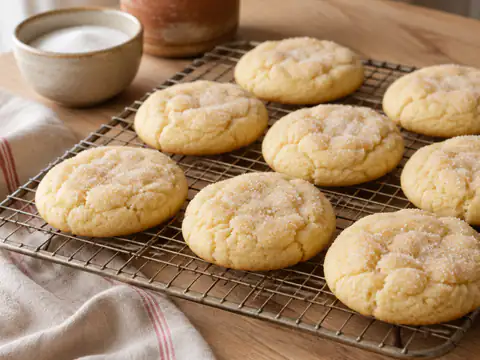
Snickerdoodles are soft, puffy cookies with a crinkled top and a mild tang, rolled in cinnamon sugar. This recipe makes about 30 cookies. It uses 2 teaspoons of cream of tartar and 1 teaspoon of baking soda for 2 3/4 cups (345 g) of flour, and bakes at 375°F (190°C) for 9 to 11 minutes. The cream of tartar is what makes them snickerdoodles and not plain cinnamon sugar cookies. If you are new to the ingredient, what cream of tartar is and does explains it. What cream of tartar does in cookies covers the chemistry. For a cookie with no tang, see the classic chocolate chip cookie recipe. More cookies are in the cookie recipes hub.
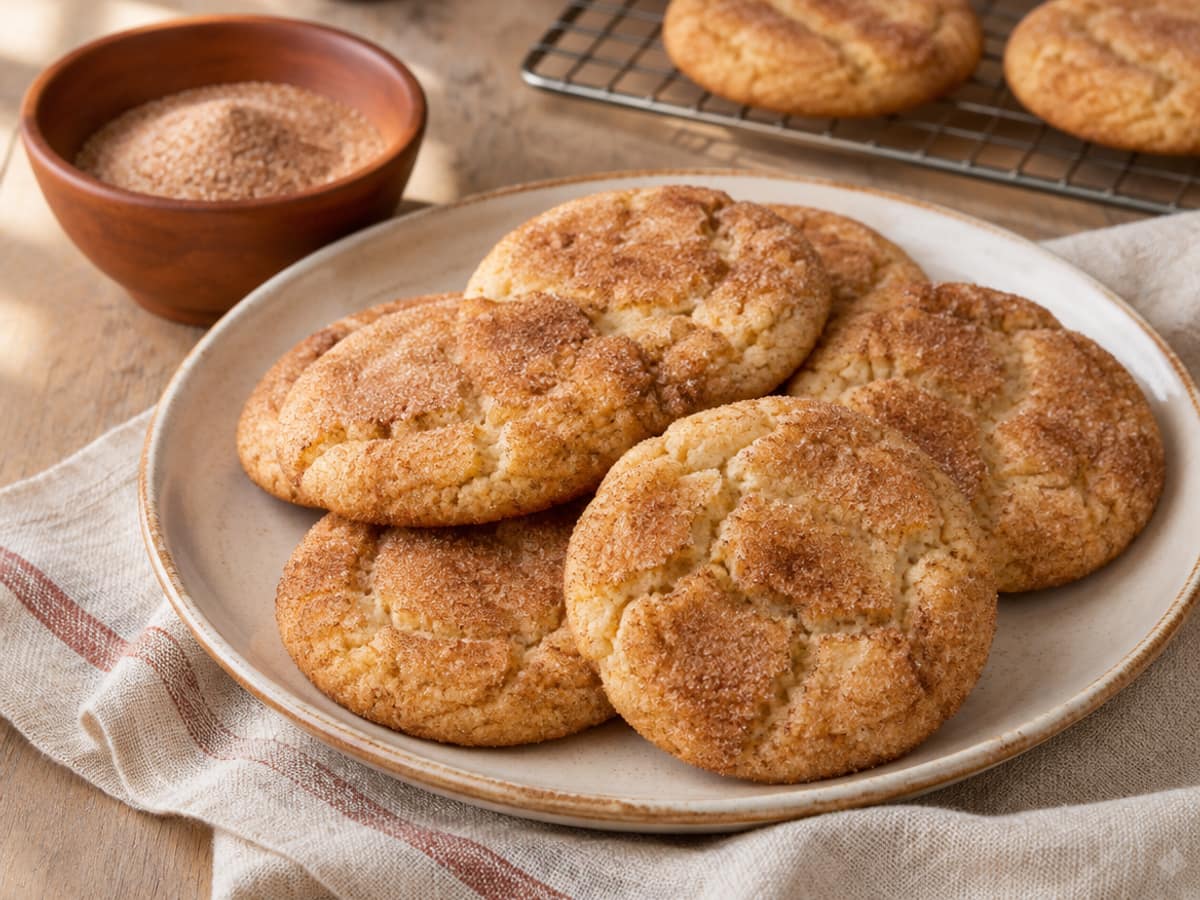
What makes a snickerdoodle
Three things set a snickerdoodle apart from a plain sugar cookie:
- Cream of tartar plus baking soda. The acid and the base react in the wet dough and make gas, which puffs the cookie. The leftover acid gives the tang.
- A cinnamon sugar coating. The dough balls are rolled in it, and the sugar bakes into a thin, crackled crust.
- A soft center. The cookies are pulled while the middle is still pale, then settle as they cool, which leaves them tender and slightly chewy.
Recipe
Classic Snickerdoodles
- YieldAbout 30 cookies (a heaping 2 tablespoons / 33 g dough each)
- Prep20 min
- Cook30 min
- Chill / rest30 min
- Total1 hr 20 min
- Oven375°F / 190°C
Ingredients
Dough
- 2 3/4 cups345 g all-purpose flour, spooned into the cup and leveled
- 2 tsp6 to 8 g cream of tartar, the weight varies by brand, so measure by spoon
- 1 tsp6 g baking soda
- 1/2 tsp3 g fine salt
- 1 cup (2 sticks)226 g unsalted butter, softened until it dents when pressed
- 1 1/2 cups300 g granulated sugar
- 2 largeabout 100 g out of the shell eggs, at room temperature
- 2 tsp10 ml vanilla extract
Cinnamon sugar
- 1/4 cup50 g granulated sugar
- 1 tbspabout 8 g ground cinnamon
Method
- Whisk the flour, cream of tartar, baking soda and fine salt in a medium bowl.
- Beat the butter and the 1 1/2 cups (300 g) of sugar on medium speed for 2 minutes, until pale and fluffy. Scrape the bowl. Beat in the eggs one at a time, then the vanilla.
- Add the flour mixture and mix on low just until no dry streaks remain. The dough will be soft. Cover and chill for 30 minutes if your kitchen is warm or the butter was very soft.
- Heat the oven to 375°F (190°C) with a rack in the center. Line two pans with parchment.
- Stir the 1/4 cup (50 g) of sugar and the cinnamon together in a shallow dish.
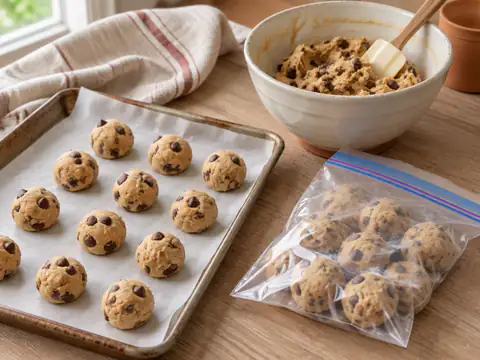
- Scoop the dough into balls of a heaping 2 tablespoons (33 g). Roll each ball in the cinnamon sugar until it is coated all over.
- Set the balls 2 inches (5 cm) apart on the pans, about 12 per pan.
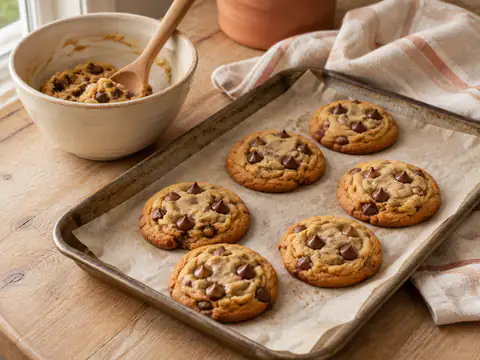
- Bake one pan at a time for 9 to 11 minutes, until the tops are puffed and cracked, the edges are set and the centers still look soft and pale.
- Leave the cookies on the pan for 5 minutes. They will settle and wrinkle as they cool. Move them to a rack.
Notes
- This recipe uses 2 teaspoons of cream of tartar with 1 teaspoon of baking soda for about 2 3/4 cups of flour. That ratio is what gives the cookies their tang. Do not swap in baking powder one for one.
- For a bake at 350°F (180°C), allow 10 to 12 minutes. The cookies come out paler and a little softer.
- The dough contains raw flour and raw eggs. Do not eat it raw.
Why cream of tartar and baking soda go together
Baking soda needs an acid to make gas. Most cookie recipes get that acid from brown sugar or buttermilk. This dough has only white sugar, so the acid comes from cream of tartar. Two parts cream of tartar to one part baking soda is the usual snickerdoodle ratio, and King Arthur Baking’s own snickerdoodle recipe uses the same proportions: 2 teaspoons of cream of tartar and 1 teaspoon of baking soda with 2 3/4 cups of flour.
Use level spoons. Too much cream of tartar makes the cookies taste sharp and metallic, and too little leaves them flat and bland. If you do not have cream of tartar, the substitutes guide gives swaps and amounts, and cream of tartar vs baking powder vs baking soda shows how the three differ. Homemade baking powder is built from the same two ingredients plus cornstarch: see homemade baking powder.
How to know they are done
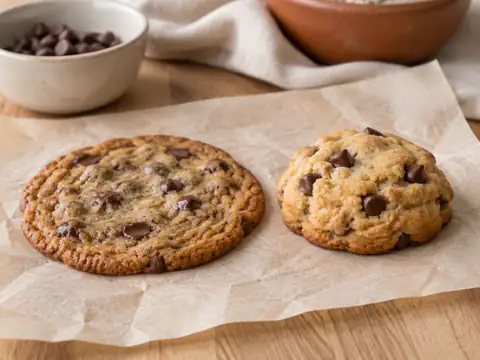
Snickerdoodles should not brown on top. Pull them when the tops are puffed and cracked, the edges are set, and the centers still look pale and a little soft. They keep baking on the hot pan, then fall and wrinkle as they cool. Wait until the middle looks dry in the oven and they will be hard once cool.
Do you have to chill the dough?
No, but the dough is soft. A 30-minute chill makes the balls easier to roll and the cookies a little thicker. If the butter was very soft or your kitchen is warm, chill it. See chilling and freezing cookie dough for how long it keeps.
Fixing common problems
- Flat cookies. Warm butter, old baking soda or a cool oven. Chill the dough, check the date on the baking soda, and see why cookies go flat.
- Dry, hard cookies. Overbaked or too much flour. Weigh the flour at 125 g per cup, as in how to measure flour.
- A sharp or metallic taste. Too much cream of tartar or baking soda. Measure with level spoons.
- No crinkled tops. The dough was not puffing. Check that the baking soda and cream of tartar are fresh and the oven is at 375°F (190°C).
- Too pale and bland. Roll the balls in the cinnamon sugar more heavily, or bake 1 minute longer.
A note on raw dough
The dough contains raw flour and raw eggs. The FDA warns that raw flour can carry bacteria and that raw eggs can carry Salmonella. Baking kills them, so do not taste the dough.
Questions and answers
What does cream of tartar do in snickerdoodles?
Cream of tartar is an acid. It reacts with the baking soda to make gas that lifts the dough, and it leaves the mild tang that makes a snickerdoodle taste like one.
Can I make snickerdoodles without cream of tartar?
Yes, with baking powder. King Arthur Baking says baking powder can replace the cream of tartar and baking soda together in its snickerdoodle recipe. The cookies still rise but lose most of their tang. Amounts are in the guide to cream of tartar substitutes.
Why are my snickerdoodles flat?
Warm butter, an old baking soda or an oven that is too cool are the usual causes. Chill the dough for 30 minutes, check the date on the baking soda, and bake on a cool pan.
Sources
- Snickerdoodle Cookies Recipe — King Arthur Baking
- Handling Flour Safely, What You Need to Know — U.S. Food and Drug Administration
- What You Need to Know About Egg Safety — U.S. Food and Drug Administration