Why Are My Cookies Flat? Causes and Fixes
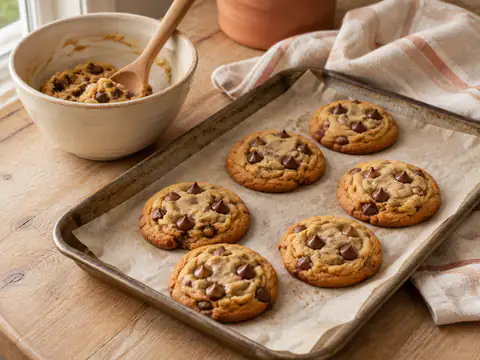
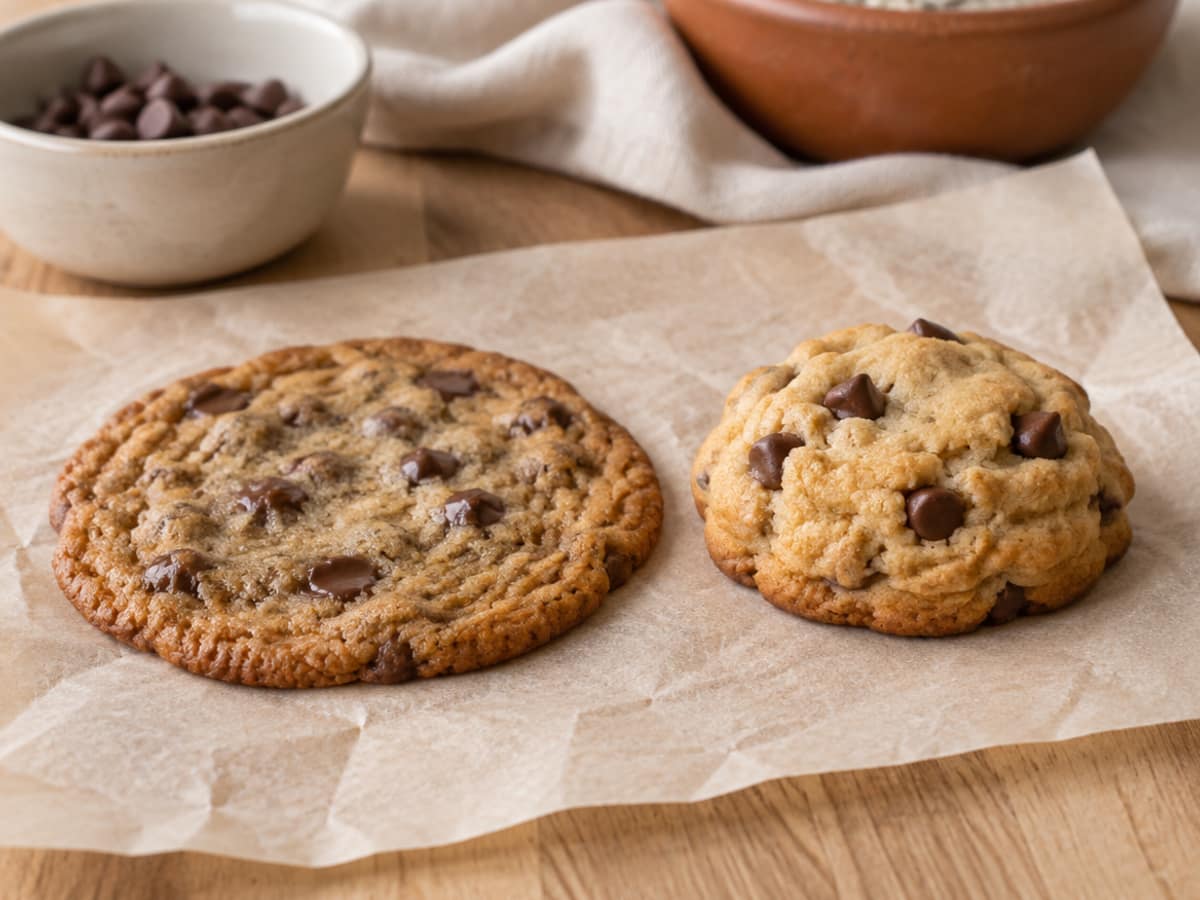
Cookies go flat when the fat melts before the structure sets. The usual causes are butter that is too warm, over-creaming, too little flour, too much sugar, dough that was not chilled, a warm or greased pan, an oven that is too cool, or old baking soda or baking powder. Find your symptom in the table below, make one change, and bake a test cookie before the whole tray. This page builds on the short note in the classic chocolate chip cookie recipe and applies to any cookie in the cookie recipes hub.
Cause-and-fix table
| Cause | What you see | Fix |
|---|---|---|
| Butter too warm or partly melted | Shiny, greasy dough; cookies spread before they set | Use butter that is cool and only dents when pressed. Chill the dough 30 to 60 minutes |
| Creaming too long | Flat, greasy cookies; fat pooling on the pan | Cream the butter and sugar only until light and fluffy, about 2 to 3 minutes |
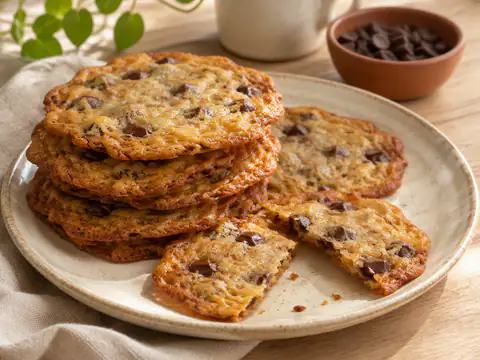
| Too little flour or a poorly measured cup | Thin, lacy cookies that spread past the dough ball | Weigh the flour at 125 g per cup. See how to measure flour |
| Too much sugar | Thin, crisp cookies with dark, caramelized edges | Weigh the sugar. Cut it by about 30 g (2 tablespoons) |
| Eggs larger than the recipe expects | Wet, loose dough that spreads | Use large eggs, which weigh about 50 g without the shell |
| Dough not chilled | Cookies that melt outward in the first minutes | Chill the dough at least 30 minutes, or overnight. See make ahead, chill and freeze |
| Warm or greased pan | Spread on the first tray is worse on the second | Let pans cool between batches. Use ungreased parchment or a silicone mat |
| Foil-lined pan | Thin, flat cookies | Switch to parchment or a silicone mat |
| Oven too cool | Cookies spread, then set slowly and pale | Preheat fully and check with an oven thermometer |
| Old baking soda or baking powder | Cookies spread so far that they bake together, with little rise | Replace it. Read baking soda vs baking powder |
| Dough balls too close | Cookies fuse into one sheet | Set them 2 inches (5 cm) apart, about 12 on a half-sheet pan |
| Recipe is meant to be thin | Wide, crisp cookies from a dough with lots of white sugar | Use a thick-cookie recipe instead, such as bakery-style cookies |
The sections below explain the causes that need more than a line.
Butter temperature
Butter that is too warm melts in the oven before the cookies set. King Arthur Baking gives a simple test: room-temperature butter should be pliable but cool to the touch, and should take a dent from your finger while still pushing back a little. If it feels greasy or soft, it is too warm. Put it back in the fridge for 10 minutes, or chill the finished dough.
Over-creaming
Creaming mixes air into butter and sugar. Cream it too long and, as King Arthur explains, the butter can come out of emulsion: the fat and water separate, and the fat leaks out as the cookies bake. Beat only until the mixture looks paler and fluffy. 2 to 3 minutes with a mixer is enough.
Flour, sugar and eggs
Flour gives the dough its structure, so too little flour lets cookies spread. Sugar melts as the cookies bake and acts as a liquid, so too much sugar does the same. Measure both by weight. A loosely filled or short cup of flour weighs less than the 125 g this site counts per cup, and the cookies spread. King Arthur also notes that larger eggs than the recipe calls for add moisture and can cause spreading.
If a recipe you love always spreads a little, King Arthur suggests cutting the sugar by about 10 percent by weight.
Pans, parchment and the oven
Grease on the pan gives the dough a slippery base to spread on. A hot pan starts melting the butter before the oven does. King Arthur tested baking surfaces and found a foil-lined sheet produced the flattest cookies, while parchment or a silicone mat gave thicker cookies.
Many ovens signal that they are ready several minutes before they have reached the temperature. An oven that is too cool lets the fat melt before the cookie sets. A thermometer in the oven tells you the truth. If you bake with a fan, see baking cookies in a convection oven, and for temperatures by cookie size see the bake time chart.
Old leaveners
Baking soda and baking powder lose strength as they age. Without lift, the cookies have nowhere to go but out. Check the date on the container, and replace it if it is past that date or has been open for a long time.
What to do in the middle of a batch
- Stop and bake a test. Put one dough ball on a cool pan and see what it does.
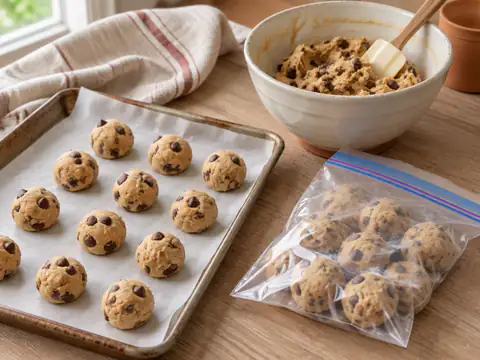
- Chill the dough. Put the bowl, or the scooped balls, in the fridge for 30 minutes.
- Cool the pan. Run the pan under cold water and dry it, or switch to a second pan. Line it with parchment.
- Add a little flour. If the dough still spreads, mix in 1 to 2 tablespoons (8 to 16 g) of flour for the rest of the batch.
- Make the balls taller. A taller, narrower ball spreads less than a flat one.
What to do with flat cookies
Flat cookies are still good to eat. King Arthur suggests chopping them into ice cream, or grinding them in a food processor with butter, oil and brown sugar to make cookie butter.
Prevention checklist
- Weigh the flour and sugar. The measuring guide has the weights.
- Use cool butter and cream it for 2 to 3 minutes.
- Chill the dough, and chill it longer if it is warm in your kitchen.
- Use parchment or a silicone mat on a cool pan.
- Check the oven with a thermometer.
- Check the date on the baking soda and baking powder.
- For thick cookies by design, follow bakery-style chocolate chip cookies or chewy chocolate chip cookies.
Questions and answers
What is the most common reason cookies come out flat?
King Arthur Baking's Baker's Hotline names over-creaming the butter and sugar as the number one reason. Warm butter, too little flour, too much sugar and skipping the chill are the next most common causes.
Can I fix dough that is already making flat cookies?
Often, yes. Chill the rest of the dough for 30 minutes, bake on a cool pan lined with parchment, and bake one test cookie before the whole tray. If it still spreads, mix in 1 to 2 tablespoons (8 to 16 g) of flour.
Does baking powder or baking soda go bad?
Yes, they lose strength over time. King Arthur says out-of-date baking powder or baking soda can make cookies spread so much that they bake together. Check the date before you bake.
Should I grease the pan for cookies?
No. A greased pan encourages spreading. Use parchment paper or a silicone baking mat instead. King Arthur's pan-lining test found foil gave the flattest cookies.
Sources
- Why are my cookies spreading? — King Arthur Baking
- Why did my cookies come out flat? — King Arthur Baking
- Cookies spreading? It might be your pan lining. — King Arthur Baking