Brown Butter Chocolate Chip Cookies
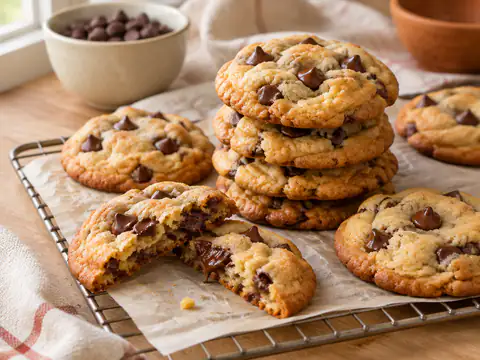
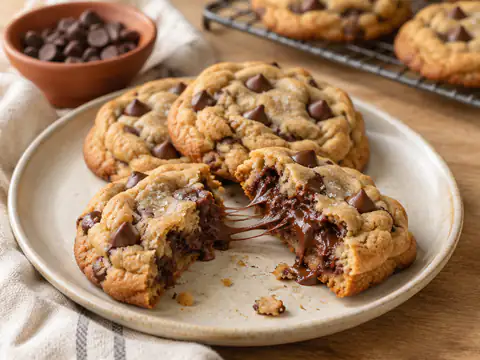
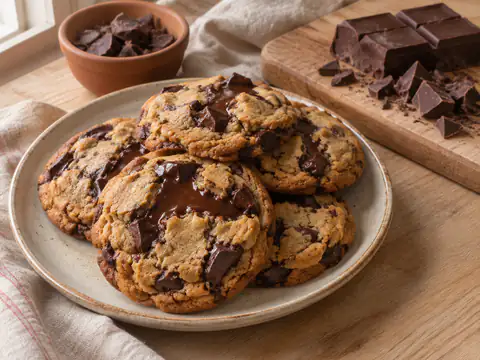
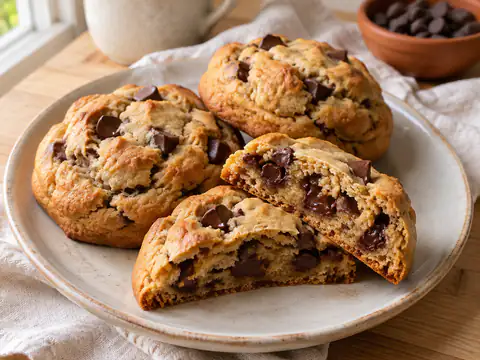
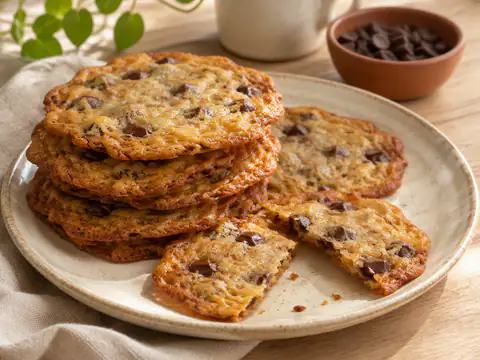
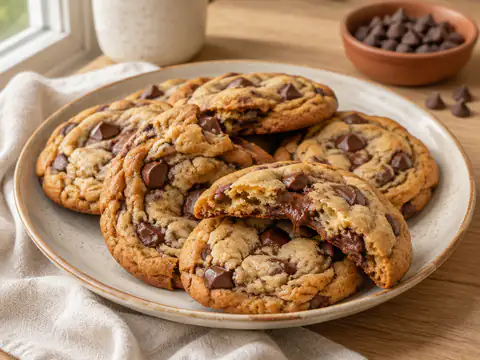
These brown butter chocolate chip cookies start with a cup (226 g) of unsalted butter cooked in a skillet until it is golden and smells like toasted nuts. The butter then cools to a soft paste and goes into a dough with brown sugar, an extra yolk and chopped chocolate. The recipe makes about 24 cookies, baked at 350°F (180°C) for 11 to 13 minutes. Browning the butter takes about 10 minutes and gives the cookies a nutty, toffee-like flavor. For the same cookie with plain softened butter, use the classic chocolate chip cookie recipe.
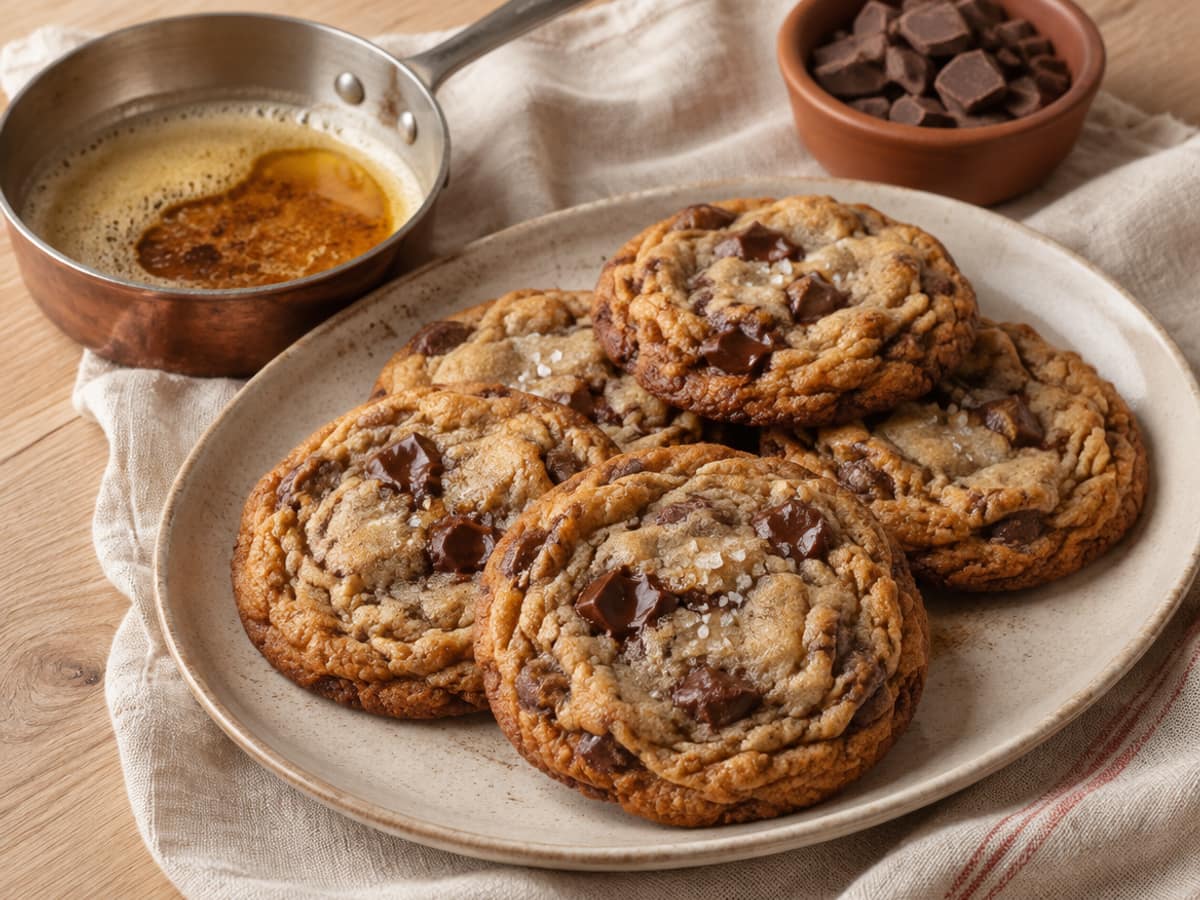
What browning does to butter
Butter is mostly fat, with some water and a small amount of milk solids. USDA FoodData Central lists unsalted butter at about 16 percent water. When you heat it, the water cooks off first, which is the sputtering. Once the water is gone, the milk solids, which make up only about 1 to 2 percent of the butter, toast and brown. That toasting makes the nutty flavor.
Two things follow from this for the recipe:
- The butter weighs less. A cup of butter, 226 g, holds roughly 37 g of water. After browning you have about 190 g. The recipe puts back 2 tablespoons (30 ml) of milk to replace that water, so the dough keeps its moisture.
- The brown flecks are the flavor. Do not strain them out. Scrape them all into the bowl.
King Arthur Baking adds that cooled browned butter helps prevent spread, because the water has been removed.
Recipe
Brown Butter Chocolate Chip Cookies
- YieldAbout 24 cookies (3 tablespoons / 46 g dough each)
- Prep25 min
- Cook24 min
- Chill / rest1 hr 5 min
- Total1 hr 54 min
- Oven350°F / 180°C
Ingredients
Brown butter
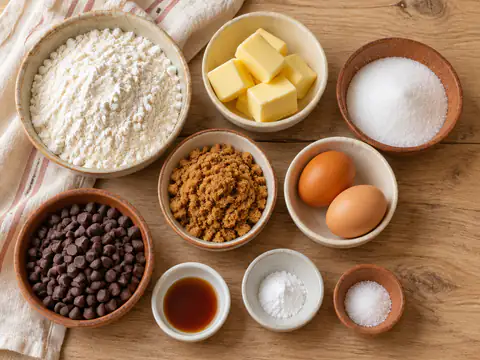
- 1 cup (2 sticks)226 g unsalted butter, cut into pieces; it browns down to about 190 g
- 2 tbsp30 ml milk, added to the dough to replace the water that cooks off
Dry ingredients
- 2 1/4 cups280 g all-purpose flour, spooned into the cup and leveled
- 1 tsp6 g baking soda
- 1 tsp6 g fine salt
Wet ingredients and mix-ins
- 3/4 cup, packed160 g light brown sugar
- 1/2 cup100 g granulated sugar
- 1 largeabout 50 g out of the shell egg
- 1 largeabout 18 g egg yolk
- 2 tsp10 ml vanilla extract
- 1 1/2 cups255 g semisweet chocolate chips or chopped chocolate
- 1/2 tspabout 2 g flaky salt, optional, for the tops
Method
- Put the butter pieces in a light-colored skillet over medium heat. Stir often as it melts, foams and sputters. The sputtering is the water cooking off, and it takes 5 to 8 minutes.
- When the sputtering quiets, keep swirling. The milk solids at the bottom turn from pale to amber and the butter smells nutty. Take the pan off the heat when the flecks are the color of toasted hazelnuts, because the butter keeps darkening in the hot pan.
- Pour all of the butter, brown flecks included, into a heatproof bowl. Weigh it. You should have about 190 g. Chill it in the refrigerator for 30 to 40 minutes, stirring every 10 minutes, until it is opaque and as soft as softened butter.
- Whisk the flour, baking soda and fine salt in a medium bowl.
- Beat the cooled brown butter with the brown sugar and granulated sugar for 1 to 2 minutes, just until combined and slightly lighter. Beat in the egg, egg yolk, milk and vanilla.
- Add the flour mixture and mix on low until no dry streaks remain. Stir in the chocolate. Cover and chill the dough for 30 minutes.
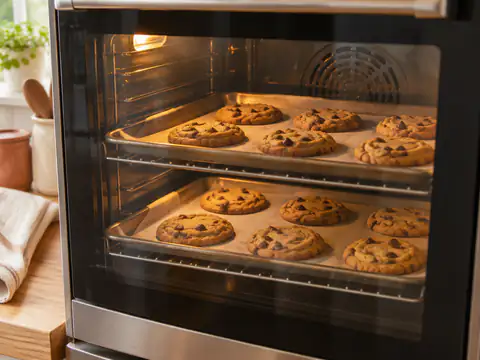
- Heat the oven to 350°F (180°C) with a rack in the center. Scoop 3-tablespoon (46 g) balls onto the lined pans, 2 inches (5 cm) apart, 12 to a pan.
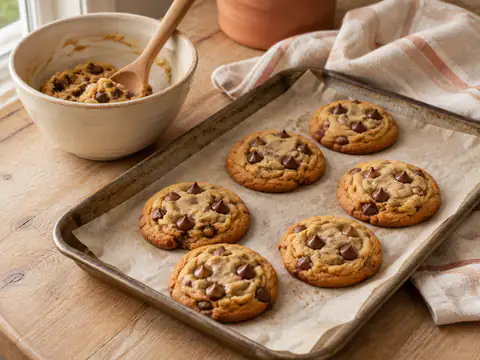
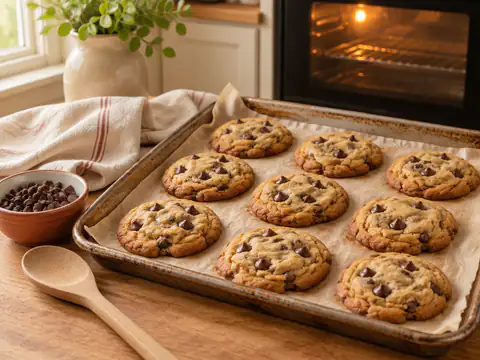
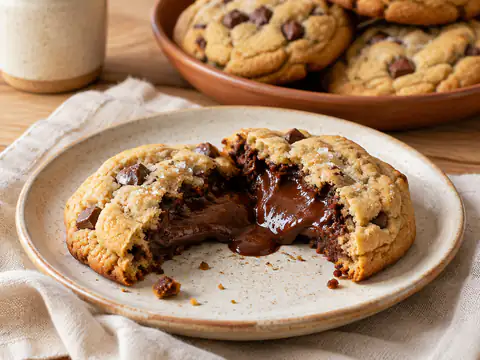
- Bake one pan at a time for 11 to 13 minutes, until the edges are golden and set and the centers look puffed and a little underdone. Sprinkle with flaky salt right away.
- Leave the cookies on the pan for 5 minutes, then move them to a rack.
Notes
- Browning butter removes water, so the browned butter weighs less than the butter you started with. This recipe starts with 226 g and ends with about 190 g, then puts back 2 tablespoons of milk. King Arthur Baking advises starting with a few extra tablespoons if a recipe calls for a set amount of browned butter, and weighing it once cooled.
- The dough contains raw flour and raw eggs. Do not eat it raw.
How to tell when the butter is browned
| Stage | What you see and hear | What to do |
|---|---|---|
| Melted | Clear yellow, quiet | Keep stirring |
| Foaming | Loud sputtering, thick foam | The water is cooking off; keep swirling |
| Quieting | Foam settles, sputtering slows | Watch the bottom of the pan closely |
| Browned | Amber flecks, nutty smell | Take it off the heat and pour it out |
| Burnt | Black specks, sharp smell | Throw it out and start again |
Use a light-colored pan so you can see the flecks change color. Pour the butter out as soon as it is done. The pan stays hot enough to keep cooking the butter, and it can go from brown to burnt in seconds.
Why the butter must cool first
Hot brown butter would melt the sugar and leave the dough greasy, and the cookies would spread. Chill the butter until it is opaque and as soft as softened butter. If it sets too hard, let it stand at room temperature for 10 minutes. The dough is also chilled for 30 minutes, which keeps the cookies thick. For more on why dough rests, see chilling and freezing cookie dough.
How to bake them
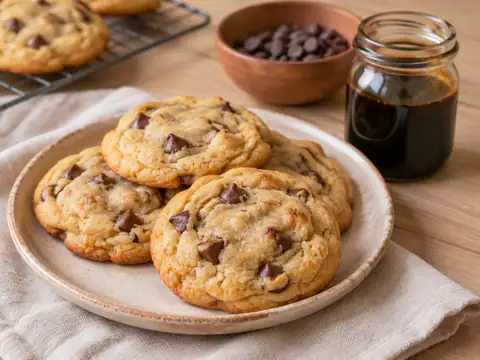
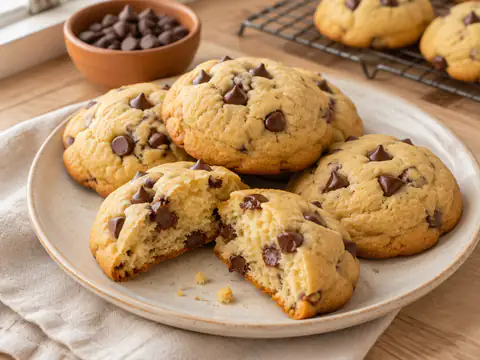
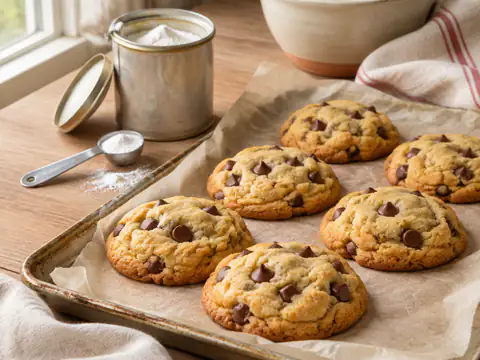
Scoop 3-tablespoon (46 g) balls and bake them one pan at a time on the center rack. The cookies are ready when the edges are set and golden and the centers still look a little puffed and soft. They finish on the hot pan. A pinch of flaky salt on top, added while the cookies are hot, balances the sweetness.
Fixing common problems
- Burnt flecks and a bitter taste. The butter went past brown. Black flecks and a sharp smell mean you should start again.
- Greasy, loose dough. The butter was too warm when you mixed it. Chill the dough for 30 more minutes before scooping.
- The cookies spread flat. The butter was too warm, the oven was too cool, or the flour was under-measured. See why cookies go flat and weigh the flour at 125 g per cup, as in how to measure flour.
- Dry, crumbly cookies. The milk was left out, or the butter browned further than the recipe expects. Weigh the browned butter before you use it.
- Not nutty enough. The butter came off the heat too early. Brown it a little longer next time, until the flecks are amber.
A note on raw dough
The dough contains raw flour and raw eggs. The FDA warns that raw flour can carry bacteria and that raw eggs can carry Salmonella. Baking kills them, so do not taste the dough.
Questions and answers
Do I have to add the milk?
The milk replaces the water that cooked off, so the cookies stay soft and a little chewy. If you leave it out, the cookies spread less and bake a bit crisper and denser.
Can I brown the butter ahead of time?
Yes. Brown it, pour it into a bowl, and refrigerate it. It will set hard in the fridge, so let it stand at room temperature until it is soft but still cool before you mix the dough.
Sources
- Wait, why is everyone toasting their milk powder now? — King Arthur Baking
- Why are my cookies spreading? — King Arthur Baking
- Butter, without salt (FoodData Central) — U.S. Department of Agriculture
- Handling Flour Safely, What You Need to Know — U.S. Food and Drug Administration
- What You Need to Know About Egg Safety — U.S. Food and Drug Administration