Chocolate Chip Cookies With Baking Powder
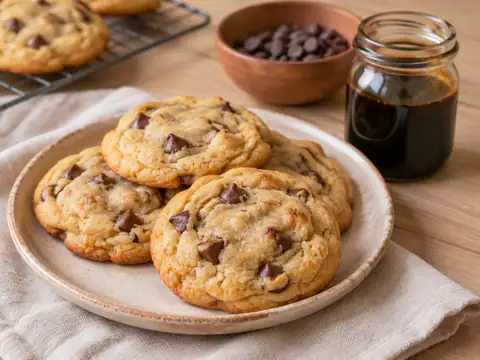
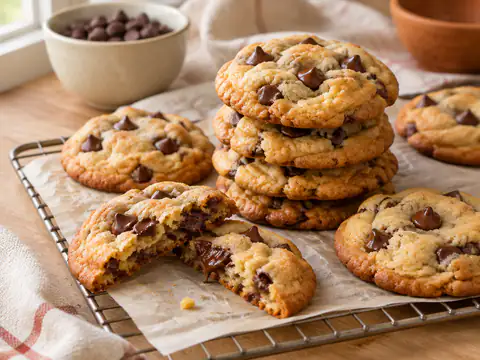
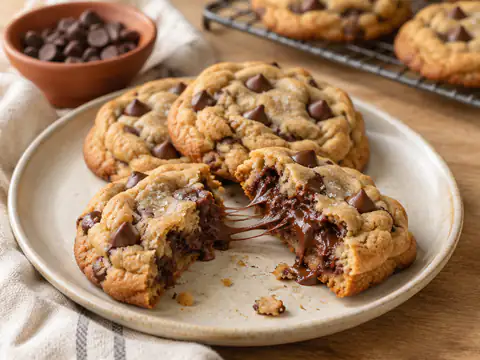
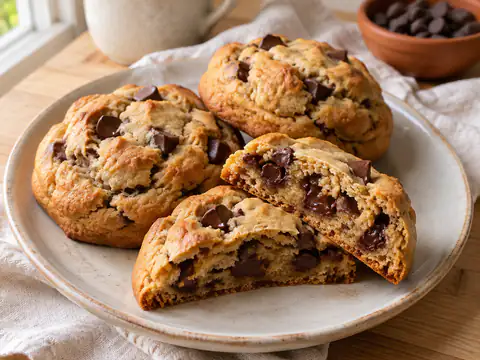
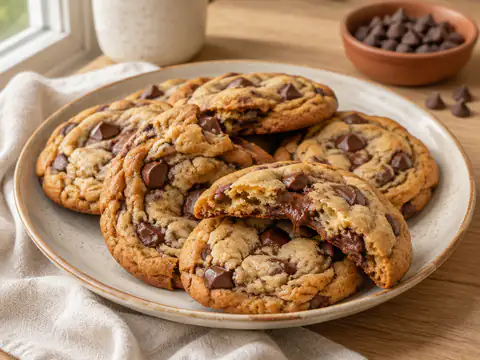
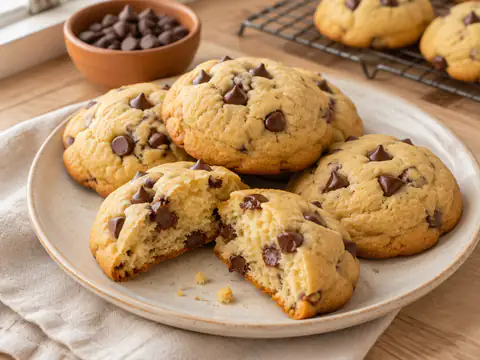
You can make chocolate chip cookies with baking powder and no baking soda. Use 2 1/2 teaspoons (10 g) of baking powder for 2 1/4 cups (280 g) of flour, cream the butter and sugars as usual, chill the dough for 30 minutes and bake at 350°F (180°C) for 12 to 14 minutes. The cookies come out puffier, paler and softer than the soda version. For the classic, see the chocolate chip cookie recipe. More ideas are in the cookie recipes hub.
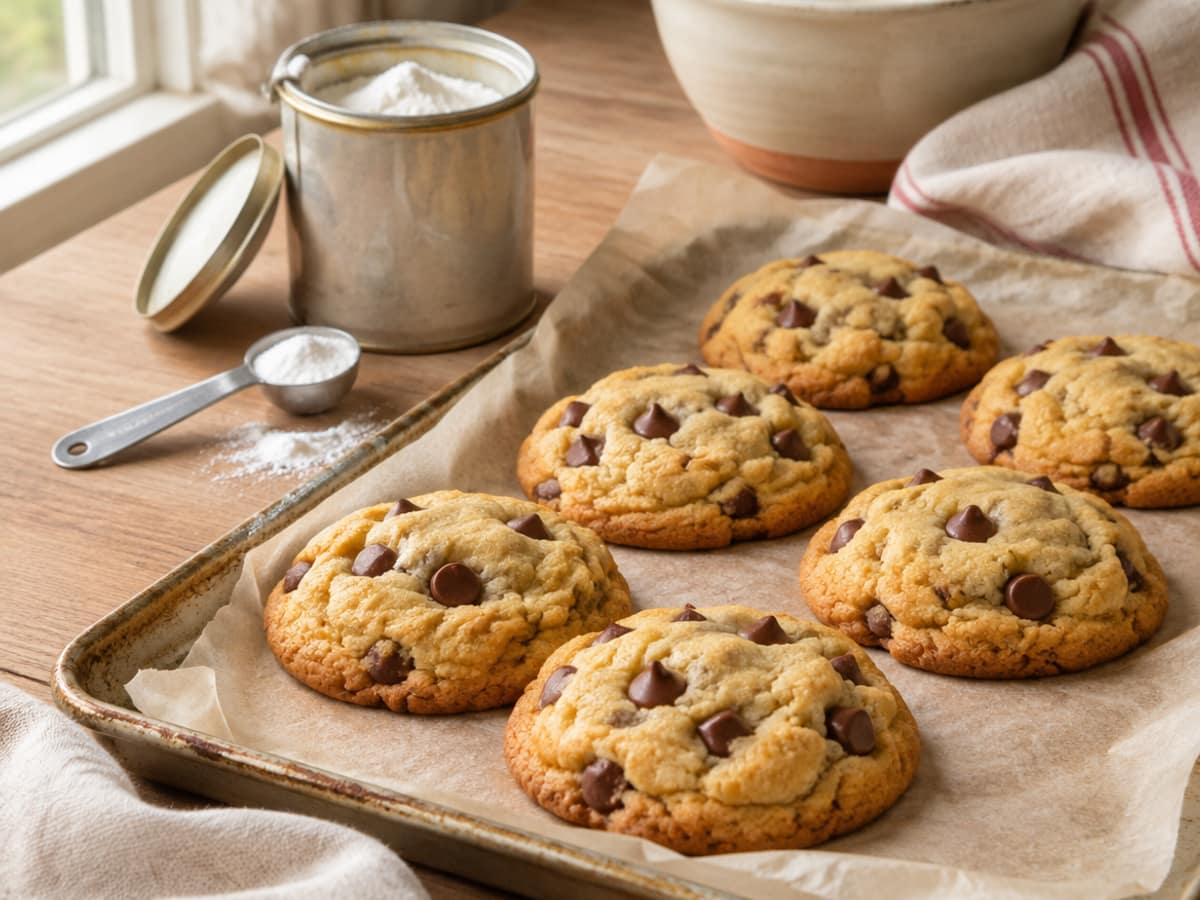
How baking powder changes a cookie
Baking soda is a base that needs an acid to react. In a classic cookie the acid comes from brown sugar, and the reaction helps the dough spread and brown. Baking powder is a ready-made mix of baking soda and dry acids, so it works without any acid in the dough. Here is what that changes:
| Baking soda cookie | Baking powder cookie | |
|---|---|---|
| Spread | More | Less |
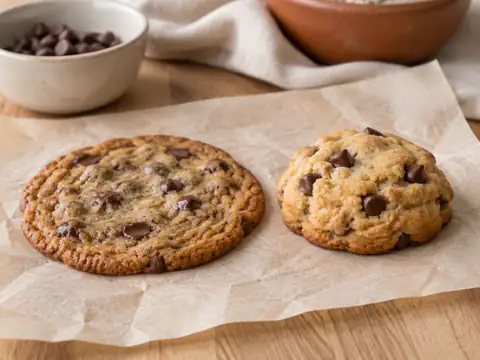
| Height | Lower, flatter | Puffier |
| Color | Deeper golden brown | Paler |
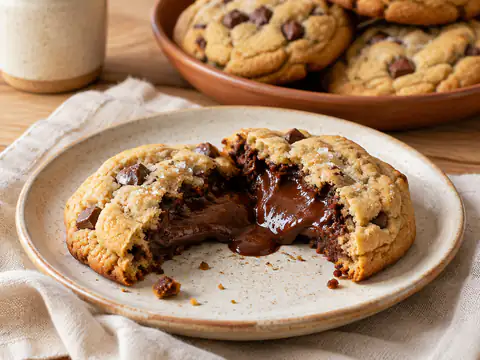
| Crumb | Dense, chewy | Soft, tender |
| Flavor | Caramel notes from browning | Milder |
If you want the full comparison of the two, including how each works, read baking soda vs baking powder. For how cream of tartar fits in, see cream of tartar vs baking powder vs baking soda.
The swap rule for any cookie recipe
If a recipe calls for baking soda and you only have baking powder, use about 2 1/2 to 3 times as much baking powder. King Arthur Baking gives about three times the amount, so 1 teaspoon of baking soda becomes about 3 teaspoons of baking powder. This recipe uses 2 1/2 teaspoons of baking powder where the classic recipe uses 1 teaspoon of baking soda. King Arthur warns that using that much powder can leave a slightly bitter taste, which is why this recipe stays at 2 1/2 teaspoons.
Expect the cookie to change: less spread, a higher top and a paler color. The swap works best in recipes that are not very acidic. In a dough with buttermilk, yogurt or a lot of brown sugar, the original soda was balancing that acid, and powder may leave the cookie a little tangy.
The recipe
Recipe
Chocolate Chip Cookies With Baking Powder
- YieldAbout 24 cookies (3 tablespoons / 45 g dough each)
- Prep15 min
- Cook26 min
- Chill / rest30 min
- Total1 hr 11 min
- Oven350°F / 180°C
Ingredients
Dry ingredients
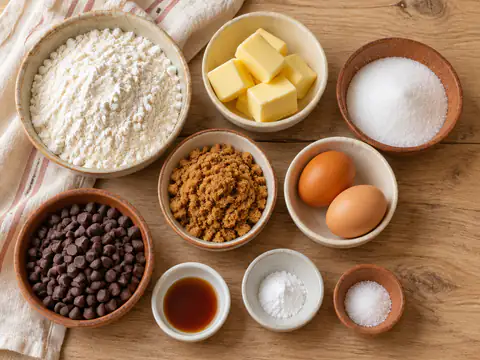
- 2 1/4 cups280 g all-purpose flour, spooned into the cup and leveled (125 g per cup)
- 2 1/2 tsp10 g baking powder, no baking soda
- 1 tsp6 g fine salt
Wet ingredients
- 3/4 cup (1 1/2 sticks)170 g unsalted butter, softened until it dents when pressed
- 3/4 cup150 g granulated sugar
- 1/2 cup, packed105 g light brown sugar
- 2 largeabout 100 g out of the shell eggs, at room temperature
- 1 tbsp15 ml whole milk
- 2 tsp10 ml vanilla extract
Mix-ins
- 1 1/2 cups255 g semisweet chocolate chips
Method
- Whisk the flour, baking powder and salt in a medium bowl until evenly mixed.
- Beat the softened butter, granulated sugar and brown sugar on medium speed for 2 minutes, until pale and fluffy. Scrape the bowl.
- Beat in the eggs one at a time, then the milk and vanilla, until smooth.
- Add the flour mixture and mix on low just until no dry streaks remain. Stir in the chocolate chips by hand.
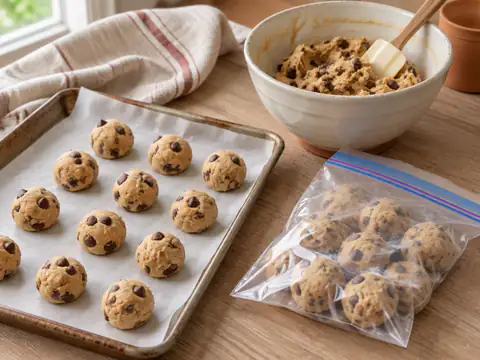
- Cover the bowl and chill the dough for 30 minutes. This keeps the cookies from spreading too far before the powder sets them.
- Heat the oven to 350°F (180°C) with a rack in the center. Line two pans with parchment.
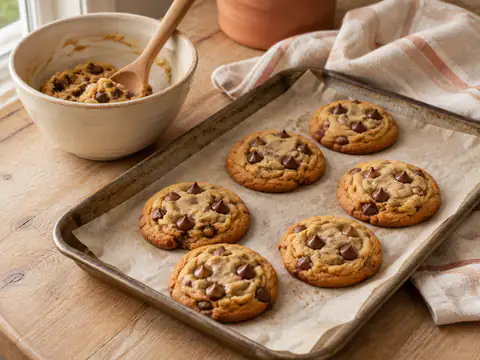
- Scoop 3-tablespoon (45 g) balls, about 12 per pan and 2 inches (5 cm) apart.
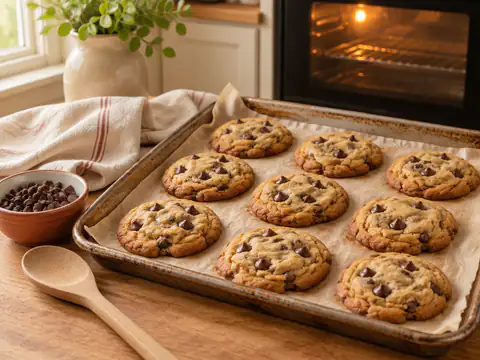
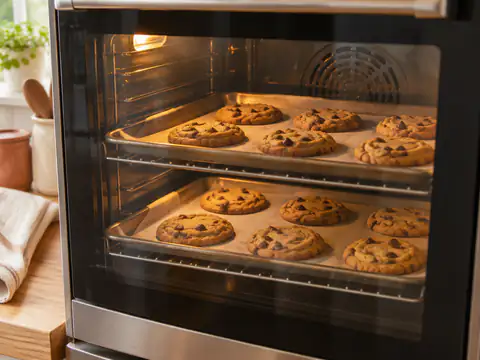
- Bake one pan at a time for 12 to 14 minutes, until the edges are light gold and the tops look set and puffed. These cookies stay paler than baking soda cookies, so judge by the edges.
- Cool on the pan for 5 minutes, then move the cookies to a wire rack.
Notes
- Measure the baking powder with a level spoon. Even a little extra gives a bitter, metallic taste.
- For a convection (fan) oven, bake at 325°F (160°C) and start checking at 10 minutes.
- Do not eat the raw dough. Raw flour and raw eggs can carry harmful bacteria (see the FDA links in the sources).
Why this dough is built the way it is
The dough has 280 g of flour, 170 g of butter and 255 g of sugar, with two eggs and a spoonful of milk. That is about a quarter less butter than the classic recipe’s 226 g. The chill matters more here than in a soda cookie: powder starts working as soon as the dough is wet and again when it is hot, so cold dough lets the cookie rise before it spreads.
Fixing baking powder cookies
| Problem | Likely cause | Fix |
|---|---|---|
| Bitter or metallic taste | Too much baking powder | Level the spoon, and do not use more than 3 teaspoons per 1 teaspoon of soda you are replacing. |
| Too puffy and cakey | Dough packed with flour, or no chill | Weigh the flour, and chill for 30 minutes. For a cookie that is meant to be cakey, see cakey chocolate chip cookies. |
| Pale and bland | The powder keeps browning down | Bake 1 minute longer and keep the salt. A little more brown sugar adds color. |
| Flat and spread | Old baking powder, or warm butter | Check the date on the tin, and see why cookies go flat. |
A note on raw dough
Do not taste the dough. Raw flour and raw eggs can carry bacteria, and baking is what makes the cookies safe. The FDA explains why raw flour needs cooking and how to handle eggs safely.
Questions and answers
Can I make chocolate chip cookies with baking powder instead of baking soda?
Yes. Use about 2 1/2 to 3 times as much baking powder as the baking soda in the recipe. The cookies come out puffier, paler and softer, with less spread.
How much baking powder replaces 1 teaspoon of baking soda?
About 3 teaspoons, according to King Arthur Baking. This recipe uses 2 1/2 teaspoons per 280 g of flour, a little under the full three times, because extra powder tastes bitter.
Why do my baking powder cookies taste bitter?
Too much baking powder leaves a bitter, metallic taste. Level the spoon and do not heap it.
Do I need brown sugar in a baking powder cookie?
Not for the rise. Baking soda needs an acid such as brown sugar to react, but baking powder carries its own acid. This recipe still uses brown sugar for moisture and flavor.
Sources
- What's the difference between baking soda and baking powder? And can you substitute one for the other? — King Arthur Baking
- Handling Flour Safely, What You Need to Know — U.S. Food and Drug Administration
- What You Need to Know About Egg Safety — U.S. Food and Drug Administration