Cream of Tartar vs Baking Powder vs Baking Soda
These three ingredients all help baked goods rise or hold their shape, but they are not interchangeable. Baking soda is a base that needs an acid to work. Cream of tartar is an acid. Baking powder is a ready-made mix of baking soda and acid, so it works on its own. Here they are side by side.
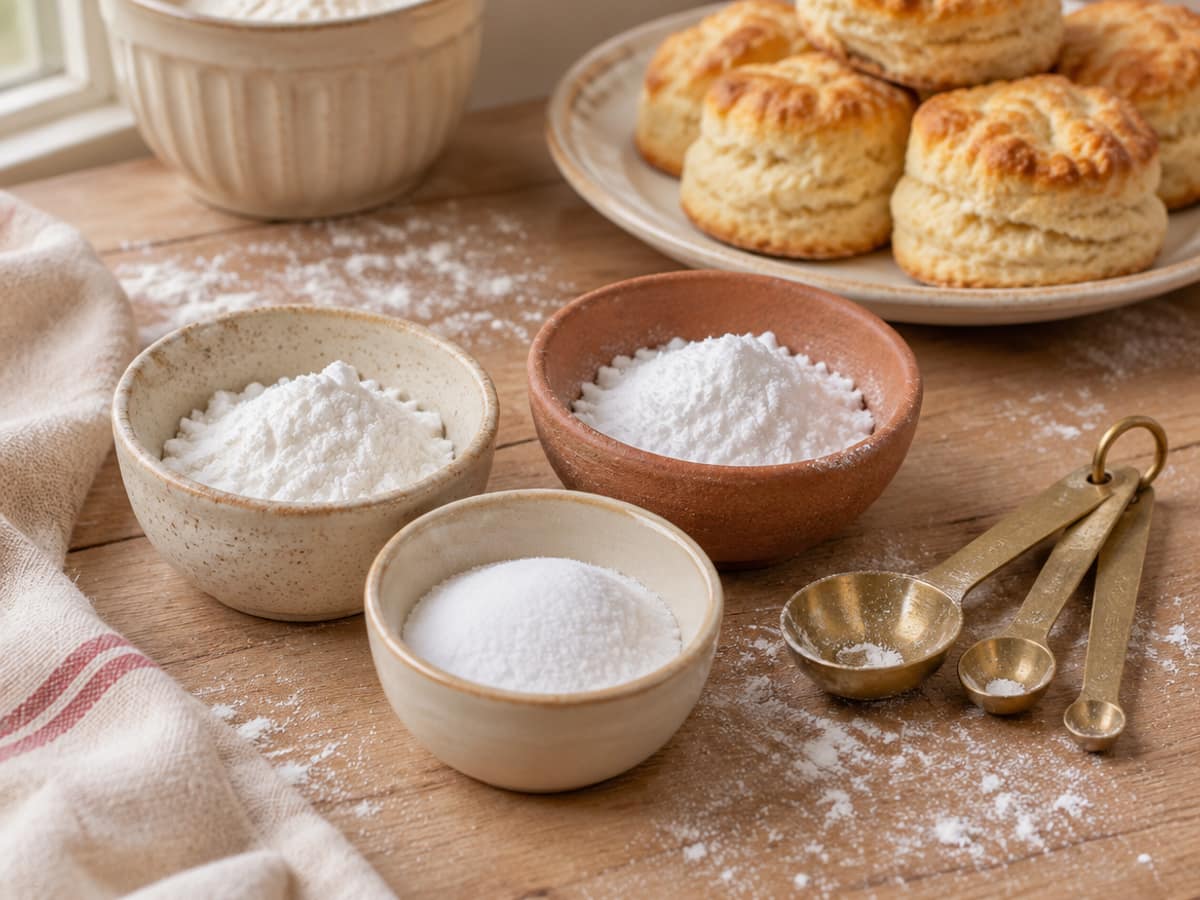
| Baking soda | Baking powder | Cream of tartar | |
|---|---|---|---|
| What it is | Sodium bicarbonate, a base | Baking soda, dry acid(s) and a starch | Potassium bitartrate, a dry acid from winemaking |
| Needs an acid? | Yes, from the recipe | No, it brings its own | It is the acid |
| What it does | Makes gas when it meets an acid; helps browning and spread | Makes gas when wet and again when heated | Steadies egg whites; reacts with baking soda; keeps syrups smooth |
| Typical use | Cookies, buttermilk and cocoa cakes | Cakes, biscuits, pancakes, quick breads | Meringue, snickerdoodles, angel food cake |
| Can it stand alone? | No | Yes | No, not as a leavener |
| Can it replace the others? | Not by itself | Replaces baking soda plus an acid | Replaces nothing alone; pairs with soda |
For the plain-language overview of each ingredient, see what cream of tartar is and what it is used for. More guides are in baking basics.
How they work together
Baking soda makes carbon dioxide gas only when it meets an acid and a liquid. The gas forms bubbles in the batter, and heat sets them in place. Recipes pair baking soda with acidic ingredients such as buttermilk, yogurt, brown sugar, lemon juice, vinegar or natural cocoa powder. For a two-way look at soda and powder alone, see baking soda vs baking powder.
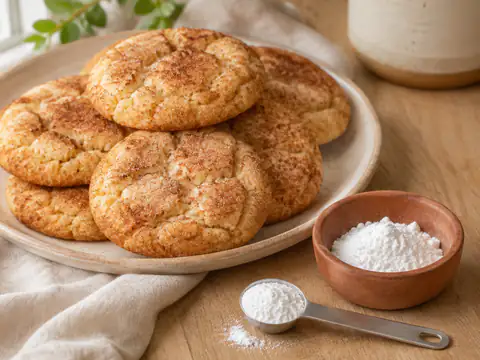
Cream of tartar is one of those acids, in dry form. It is the acid in many baking powders. When you mix baking soda with cream of tartar and add liquid, they react and make gas. This pair is the base of snickerdoodles.
Baking powder packs both parts in one jar, with a little starch to keep the mix dry and stable. That is why it can raise a batter that has no acid in it, such as plain milk and flour.
Baking powder, built from the other two
King Arthur Baking gives a homemade recipe: for each teaspoon of baking powder, mix 1/4 teaspoon of baking soda, 1/2 teaspoon of cream of tartar and 1/4 teaspoon of cornstarch. This tells you how the three relate. The acid is twice the soda by volume, and the starch is a filler. The full recipe, with a spoon chart and a batch size, is in homemade baking powder.
The homemade mix reacts fast, as soon as it is wet. Bake the batter right away.
What double-acting means
Most store-bought baking powder is double-acting. The first reaction happens when the powder meets liquid, at room temperature, as you mix. The second happens in the oven, when heat triggers a slower acid. This gives bakers a bit more room between mixing and baking. Single-acting powder, and the homemade mix above, does all its work at the first stage.
Check the can. If it does not say, assume it is double-acting.
Which one to use
- A recipe has acid (buttermilk, yogurt, brown sugar, natural cocoa) and wants spread and browning: baking soda, as written.
- A recipe has little or no acid: baking powder.
- A recipe lists both soda and powder: keep both. The soda neutralizes the acid that is there, and the powder supplies the extra lift.
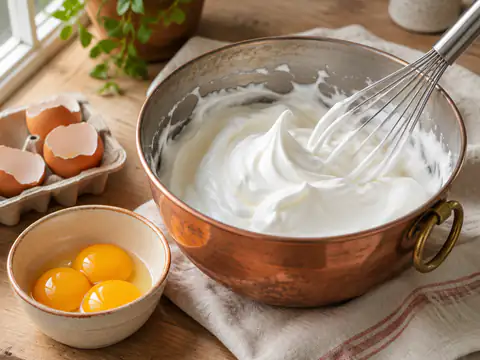
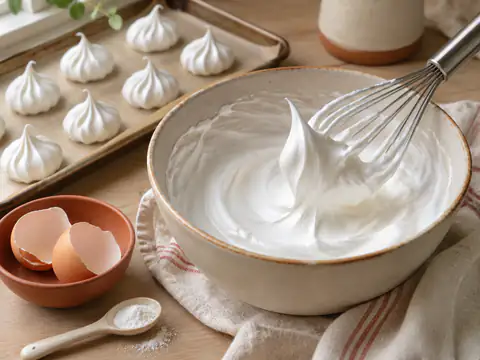
- Whipped egg whites or meringue: cream of tartar, not the other two. Details are in cream of tartar in meringue and egg whites.
- Snickerdoodles: cream of tartar with baking soda, or baking powder in place of both.
Swapping between them
Do not swap 1 to 1. They differ in strength and in what else they need.
| You have | Recipe wants | Try | Note |
|---|---|---|---|
| Baking powder | 1 tsp baking soda | About 3 tsp baking powder | Per King Arthur Baking. Taste may change. |
| Baking soda and cream of tartar | 1 tsp baking powder | 1/4 tsp soda, 1/2 tsp cream of tartar, 1/4 tsp cornstarch | Single-acting, so bake right away |
| Baking powder | Baking soda and cream of tartar (snickerdoodles) | About 3 to 4 tsp baking powder for 1 tsp soda and 2 tsp cream of tartar | Milder flavor |
| Baking soda alone | Baking powder | Not recommended | No acid, so no lift and a soapy taste |
| Lemon juice or vinegar | Cream of tartar | 1/8 to 1/4 tsp per egg white | For whipped whites only |
More swaps and amounts are in cream of tartar substitutes that work.
Check that yours still work
Two quick home checks:
- Baking soda: stir about 1/4 teaspoon into a tablespoon (15 ml) of vinegar. It should fizz right away.
- Baking powder: stir about 1/2 teaspoon into 1/4 cup (60 ml) of hot water. It should bubble.
If there is no reaction, replace it. These checks are not exact, but they catch a jar that has lost its strength.
Cream of tartar has no reaction to test on its own. Check its best-by date, and keep it dry.
Storage
Keep all three in a cool, dry place in tightly closed containers, away from the steam over the stove. Moisture is the main enemy of baking powder, because it triggers the reaction in the jar. Look at the best-by date on the baking soda and baking powder, and replace them when it passes.
Write the date you opened the can on the lid, so you know how old it is.
Questions and answers
Is cream of tartar the same as baking powder?
No. Cream of tartar is only an acid. Baking powder is baking soda, one or more dry acids and a starch, so it can raise a batter on its own.
Can I use baking powder instead of baking soda?
Sometimes, but not 1 to 1. Baking powder is weaker, so a recipe needs about three times as much baking powder as baking soda, and the taste changes. It works best when the recipe also has little acid to react with.
Can I use baking soda instead of baking powder?
Not by itself. Baking soda needs an acid. You can pair 1/4 teaspoon of baking soda, 1/2 teaspoon of cream of tartar and 1/4 teaspoon of cornstarch to replace 1 teaspoon of baking powder.
What does double-acting mean?
Double-acting baking powder reacts twice: a little when it gets wet, and more when the batter heats in the oven. Most baking powder sold in stores is double-acting.
Sources
- What's the difference between baking soda and baking powder? And can you substitute one for the other? — King Arthur Baking
- 21 CFR 184.1077 Potassium acid tartrate — U.S. Code of Federal Regulations (Cornell LII)