How to Whip Egg Whites to Stiff Peaks
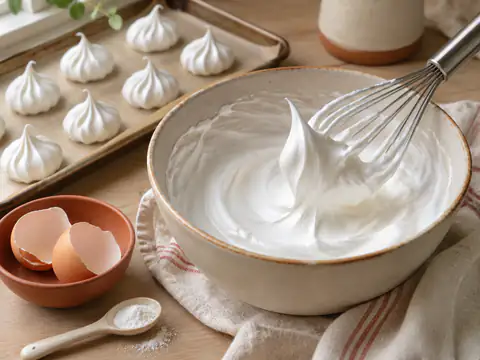
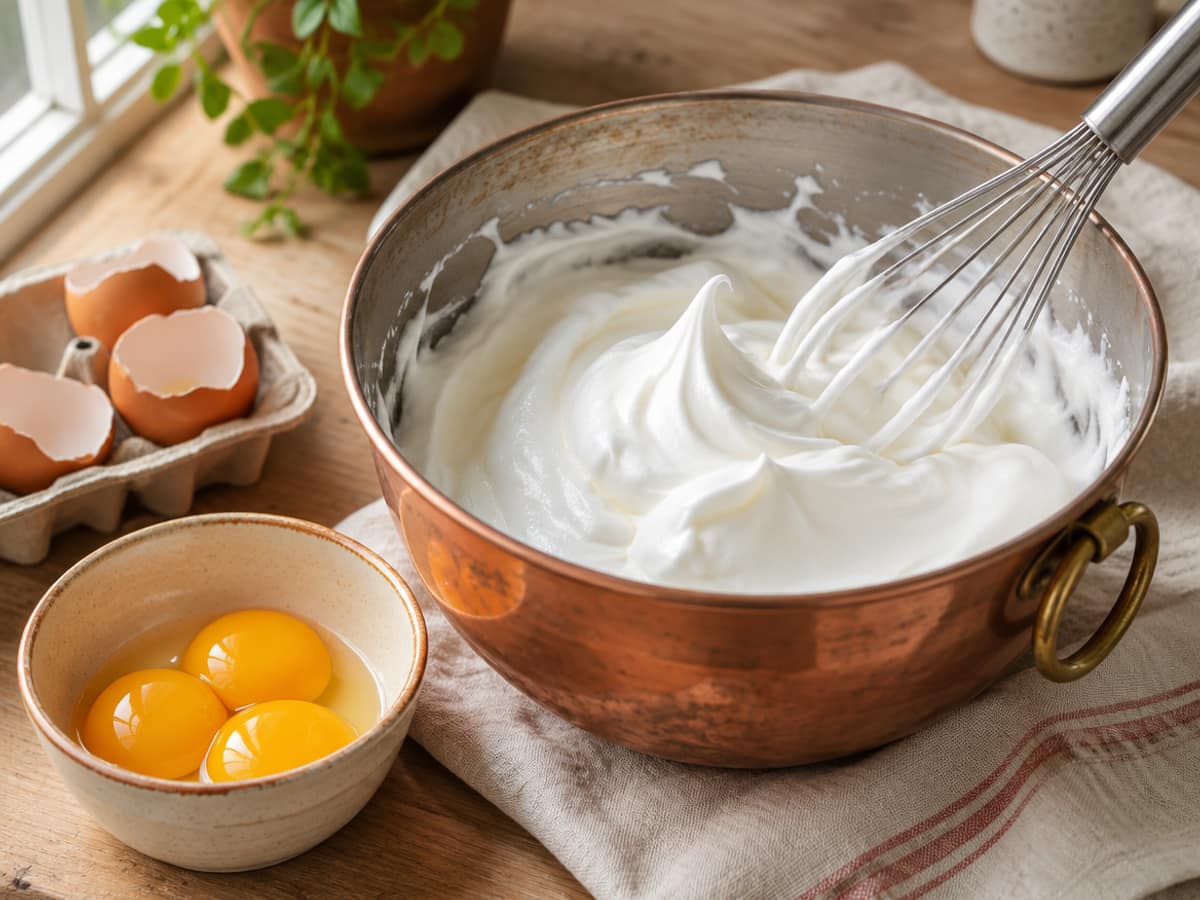
To whip egg whites to stiff peaks, start with a clean, grease-free bowl and whites with no trace of yolk. Whip on medium speed until foamy, add acid, raise the speed, and add sugar a spoonful at a time once the whites hold soft peaks. Stop when the peaks stand straight up and the foam is smooth and glossy, usually a few minutes after the sugar goes in.
This guide is about technique: the bowl, the eggs, the timing and the fixes. For how much cream of tartar to add and what it does, see cream of tartar in meringue and egg whites. The ingredient itself is covered in the main guide to cream of tartar. More basics are in baking basics.
What you need
- A metal, glass or ceramic bowl. King Arthur Baking says to avoid plastic, because plastic bowls and tools tend to develop a thin film of oil over time that is hard to scrub off. Yolks and oils are fat, and fat makes it almost impossible for the proteins in egg whites to unravel and form bubbles.
- Clean beaters or a whisk. Wash everything in hot soapy water, rinse and dry it.
- A mixer, or a lot of patience. You can whip by hand with a balloon whisk, but a hand or stand mixer is faster and easier on the wrist.
- A small extra bowl. You will use it to separate the eggs.
Separate the eggs cleanly
Crack each egg over the small bowl and let the white drop in, then tip each clean white into the main bowl. If a yolk breaks, you throw out one white, not the whole batch. King Arthur recommends this for exactly that reason.
Cold eggs separate more cleanly than warm ones. King Arthur’s advice is to separate them while cold and let the whites come to room temperature in the bowl if you want faster whipping. A large white is 30 to 35 g, so 4 whites weigh about 130 g.
Cold whites or room-temperature whites?
King Arthur calls this rule one to “let slide.” Room-temperature whites (68°F to 72°F (22°C), or 20°C to 22°C) whip faster. Cold whites straight from the refrigerator also whip, but more slowly. In its test, cold whites took 22 minutes to reach stiff peaks. King Arthur adds one exception: for meringue-based buttercream, such as Italian buttercream, use room-temperature whites, because a colder mixture can make the soft butter seize.
Step by step
- Start slowly. Put the whites in the clean bowl and whip on low to medium speed until they turn cloudy and foamy, like bubble bath.
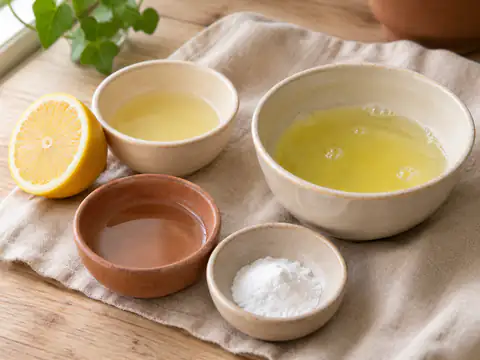
- Add the acid when the whites are foamy. Cream of tartar, lemon juice or white vinegar steadies the foam. King Arthur says an acid helps the meringue whip up and aerate more quickly and keeps it stable. The amounts are in the cream of tartar guide linked above.
- Raise the speed to medium-high and whip until the whites hold soft peaks, which droop at the tip.
- Add the sugar gradually. Add it about 1 tablespoon at a time with the mixer running, or stream it in slowly. Details are below.
- Whip to the stage you need. Check often once the sugar is in. For stiff peaks, stop when the peak stands straight up and the meringue is glossy.
- Rub a little between your fingers. If it feels gritty, the sugar has not dissolved, so whip a little longer.
- Use it right away. Whipped whites start to deflate as they sit.
Reading the stages
The look in the bowl tells you more than the clock does. The times in the table are planning ranges for room-temperature whites in a stand mixer. A hand mixer takes longer, and so does a whisk, and cold whites take much longer.
| Stage | In the bowl | Tilt the bowl | Planning time | Next step |
|---|---|---|---|---|
| Foamy | Cloudy bubbles, loose and wet | The whites slide freely | 1 minute | Add the acid |
| Soft peaks | Glossy and creamy | The peak flops over | 2 to 3 minutes in total | Start adding sugar |
| Medium peaks | Smooth and shiny | The peak keeps its shape with a curled tip | 3 to 5 minutes in total | Keep adding sugar for pie topping or folding |
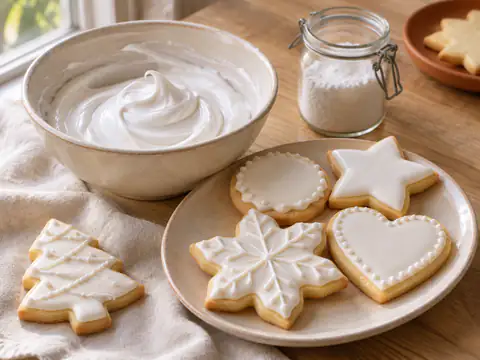
| Stiff peaks | Thick, white and very glossy | The foam stays in the bowl and the peak stands straight | 4 to 8 minutes in total with sugar | Pipe, bake or fold in |
| Overwhipped | Dull, grainy, clumpy, like shaving cream | Liquid pools below | After stiff, any longer | Stop; start again with fresh whites |
King Arthur describes the same idea this way: if you let the mixer run on and on, the foamy bubbles begin to resemble shaving cream and eventually collapse.
Adding the sugar
King Arthur’s bakers tested several ways and found that nearly all of them eventually work. The options they list:
- Add the sugar 1 tablespoon at a time as the whites whip.
- Stream it in slowly after the whites have whipped for about 10 seconds.
- Add it in thirds: one third when the whites are pale yellow-white, one third when they foam, and one third just before soft peaks.
- Add it all at once. King Arthur does not recommend this because the whites take much longer to whip up, but they do get there.
Their verdict is to add it slowly, which saves time and frustration. Superfine sugar dissolves best and gives a smoother meringue. Regular granulated sugar also works, but it can leave a bumpy surface. King Arthur says to give granulated sugar a quick buzz in a food processor if you want to make your own superfine.
A few teaspoons of cornstarch mixed into the sugar helps a baked meringue stay dry. King Arthur says cornstarch soaks up liquid left in the meringue, which stops weeping, and that it helps most in hot, humid weather or in a soft pie topping.
Baking and using whipped whites
Most meringues bake between 200°F and 250°F (95°C and 120°C) for about 2 hours, King Arthur says. They dry out rather than brown, and they often rest in the oven after it is turned off. Bake them low and slow, since higher heat can crack and brown them.
When you fold whipped whites into a batter, fold gently. Stirring knocks out the air you just whipped in.
Troubleshooting
| Problem | Likely cause | What to do |
|---|---|---|
| The whites will not foam | Fat from yolk, a greasy or plastic bowl or beaters | Start over with a clean bowl and fresh whites; separate each egg over a small bowl |
| They whip very slowly | Cold whites, or sugar added too early | Wait; cold whites took 22 minutes in King Arthur’s test. Add sugar later |
| The foam looks grainy or clumpy | Overwhipped | Stop earlier next time; the foam does not recover |
| The meringue feels gritty | The sugar has not dissolved | Keep whipping and add the sugar more slowly next time |
| Beads of liquid appear after baking | Humidity, or sugar not dissolved | Add a few teaspoons of cornstarch to the sugar; bake low and slow |
| The meringue cracks and browns | The oven is too hot | Bake at 200°F to 250°F (95°C to 120°C) |
Is it safe?
Raw egg whites carry the same risks as other raw eggs. The FDA advises cooking eggs until the white and yolk are firm. A meringue baked until set is cooked. For recipes where the whites stay raw or are barely cooked, such as mousse, some frostings and soft meringue, the FDA says to use pasteurized eggs or egg products. See also cream of tartar vs meringue powder if you want a dried-white option for icing.
Questions and answers
Why won't my egg whites whip?
Fat is the usual cause. King Arthur Baking says even a little yolk stops the proteins from forming bubbles, and plastic bowls and tools can carry a thin film of oil. Use a clean metal, glass or ceramic bowl and separate each egg over a small bowl.
Do egg whites have to be at room temperature?
No. King Arthur Baking says room-temperature whites (68°F to 72°F (22°C), or 20°C to 22°C) whip faster, but cold whites also work and separate more cleanly. In its test, cold whites took 22 minutes to reach stiff peaks.
When do I add sugar to egg whites?
Gradually, once the whites hold soft peaks, about 1 tablespoon at a time with the mixer running. King Arthur Baking says adding it slowly saves time and frustration, and that adding it all at once still works but takes much longer.
Is it safe to whip raw egg whites?
Only if the whites will be cooked until firm. For a recipe where the whites stay raw or lightly cooked, such as mousse or soft frosting, the FDA advises pasteurized eggs or egg products.
Sources
- Meringue rules: What to abide and what to let slide — King Arthur Baking
- What You Need to Know About Egg Safety — U.S. Food and Drug Administration
- Ingredient Weight Chart — King Arthur Baking