Homemade Baking Powder (and Cream of Tartar in Biscuits)
Homemade baking powder is cream of tartar, baking soda and cornstarch mixed in the ratio of 2 to 1 to 1 by volume. Use 1 teaspoon of the mix wherever a recipe calls for 1 teaspoon of baking powder, and bake right away, because the homemade mix is single-acting. The recipe takes 2 minutes and makes about 1/4 cup.
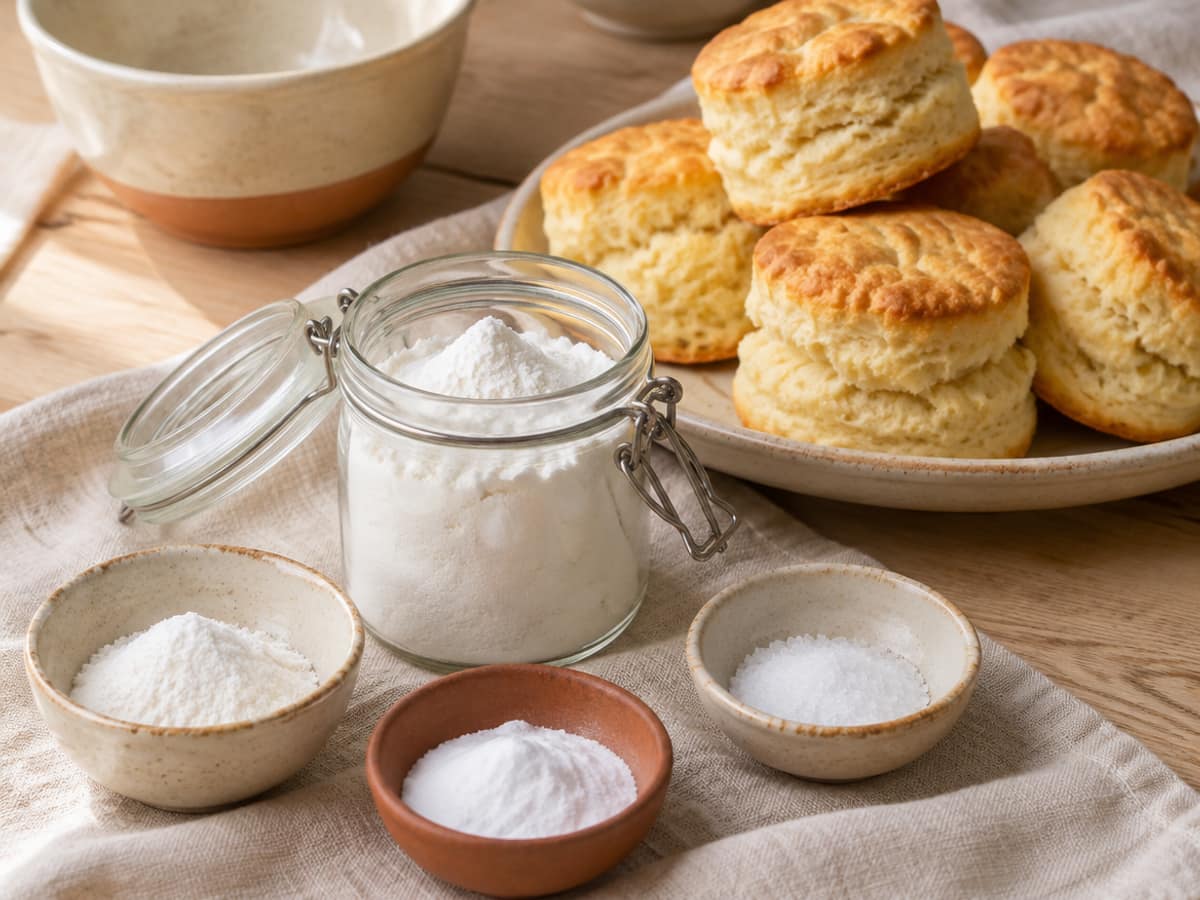
In biscuits, the cream of tartar is the acid that sets off the baking soda. The two react in the wet dough and make the gas that lifts the biscuits. More on the ingredient itself is in what cream of tartar is and how it is used, and more baking guides are in baking basics.
Recipe
Homemade Baking Powder
- YieldAbout 1/4 cup (4 tablespoons), equal to 12 teaspoons of store-bought baking powder
- Prep2 min
- Cook0 min
- Total2 min
Ingredients
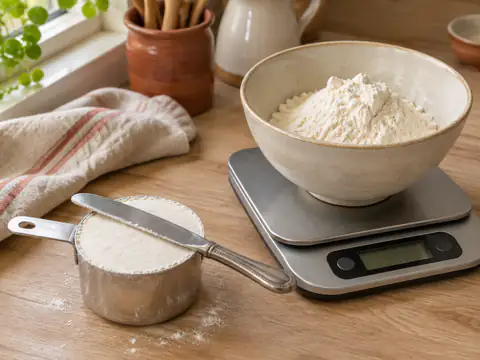
- 2 tbspabout 20 g cream of tartar, the weight varies by brand, so measure by spoon
- 1 tbsp18 g baking soda
- 1 tbsp7 g cornstarch
Method
- Put the cream of tartar, baking soda and cornstarch in a small, dry bowl.
- Whisk or stir with a fork for about 1 minute, pressing out any lumps, until the powder is one even white color with no streaks.
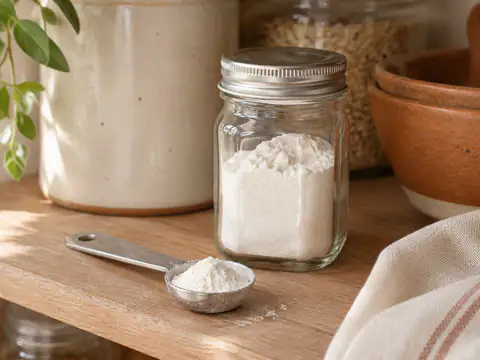
- Spoon the mix into a clean, dry jar with a tight lid. Label it with the date.
- To use it, measure the mix 1 teaspoon for 1 teaspoon wherever a recipe calls for baking powder.
Notes
- The mix is single-acting. It releases most of its gas as soon as it gets wet, so bake the batter without delay.
- The ratio is King Arthur Baking's: for each 1 teaspoon of baking powder, 1/2 teaspoon cream of tartar, 1/4 teaspoon baking soda and 1/4 teaspoon cornstarch. The batch above is that ratio times 12.
- University of Illinois Extension and Utah State University Extension list a version with no starch: 1/4 teaspoon of baking soda and 5/8 teaspoon of cream of tartar for each teaspoon of baking powder.
How the mix works
Baking soda is a base. It needs an acid to make gas. King Arthur Baking describes baking powder as baking soda plus an acid (cream of tartar) that is already in the jar, so it works on its own. Homemade baking powder is that same pairing. The cornstarch is only there to keep the powders dry and apart until they meet liquid.
Store-bought baking powder is usually double-acting. It reacts once when it gets wet and again in the oven, which gives you a little more time between mixing and baking. The homemade mix is single-acting. It gives off most of its gas as soon as it meets liquid. That makes it less forgiving about waiting, not worse.
How much to use in a recipe
The mix is 1 to 1 with baking powder by volume, so measure it with the same spoon. If you would rather not make a batch, measure the three ingredients for each teaspoon of baking powder the recipe needs.
| Baking powder called for | Cream of tartar | Baking soda | Cornstarch |
|---|---|---|---|
| 1/2 tsp | 1/4 tsp | 1/8 tsp | 1/8 tsp |
| 1 tsp | 1/2 tsp | 1/4 tsp | 1/4 tsp |
| 2 tsp | 1 tsp | 1/2 tsp | 1/2 tsp |
| 1 tbsp (3 tsp) | 1 1/2 tsp | 3/4 tsp | 3/4 tsp |
Other ratios exist. University of Illinois Extension and Utah State University Extension both give 1/4 teaspoon of baking soda and 5/8 teaspoon of cream of tartar for each teaspoon of baking powder, with no starch. That is a little more acid than King Arthur’s 1/2 teaspoon. Both work. This site uses King Arthur’s ratio so that it lines up with the amounts in cream of tartar vs baking powder vs baking soda.
What cream of tartar does in biscuits
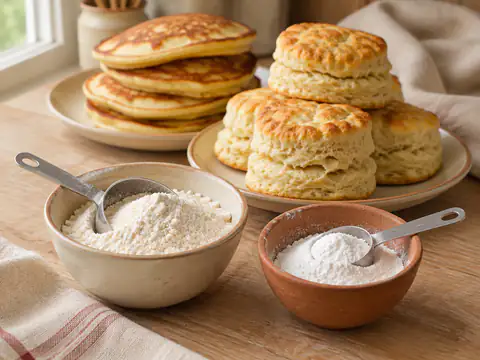
“Biscuits” here means the American kind: a soft, flaky quick bread, not a cookie. Biscuits rise without yeast, so the leavener does the lifting. Cooks used baking soda with an acid before ready-made baking powder was common. Buttermilk was one acid, and cream of tartar was the other.
Cream of tartar is a dry acid, so unlike buttermilk it adds no liquid. In a biscuit dough, it reacts with the baking soda the moment the dough gets wet. That reaction makes the gas that puffs the dough in the oven.
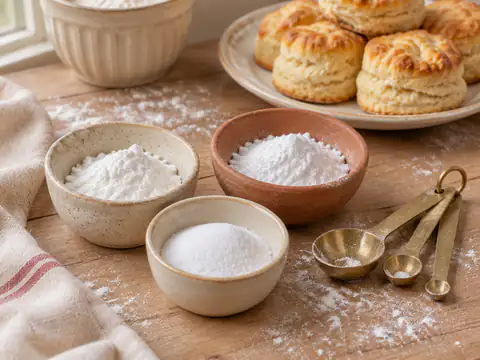
King Arthur’s buttermilk biscuits use 1 tablespoon of baking powder for 3 cups (375 g) of flour, with butter worked into the flour and cold buttermilk or milk to bind it. To use homemade baking powder, measure 3 teaspoons of the mix for that 1 tablespoon. Or measure the parts: 1 1/2 teaspoons of cream of tartar, 3/4 teaspoon of baking soda and 3/4 teaspoon of cornstarch. Whisk them through the flour first so the leavener is spread evenly.
Two habits help with a single-acting mix:
- Get the cut biscuits into a hot oven as soon as they are shaped. King Arthur’s recipe allows a 20 to 30 minute chill on the pan while the oven preheats. With homemade mix, keep that wait short, since the reaction has already started in the wet dough.
- If the recipe uses buttermilk, keep it. The mix replaces only the baking powder, so leave any baking soda in the recipe as written.
When to use store-bought and when to make your own
| Use | Best choice | Why |
|---|---|---|
| Batter that sits before baking, such as a big cake batter or a pancake batter you rest | Store-bought, double-acting | The second reaction happens in the oven |
| Biscuits, scones, quick cookies, anything baked within minutes of mixing | Homemade works well | The batter does not wait |
| A recipe developed with baking powder where you are out | Homemade | King Arthur gives this ratio as the substitute |
For a first try, make the recipe once with the mix and see how it rises.
How to test and store it
To check whether a white powder is baking powder or baking soda, King Arthur suggests stirring 1 teaspoon into 1 tablespoon of water. Baking powder fizzes. Baking soda alone does not.
Keep the mix in a dry jar with a tight lid, in a cool, dry place. Moisture is what ends it. No source gives a time limit for the homemade mix, so make a small batch, date the jar and test it before you use it in a recipe that matters. King Arthur says to check the dates on store-bought baking powder and baking soda for freshness.
For other swaps that use the same pantry items, see cream of tartar substitutes and baking soda vs baking powder. To see baking powder at work in a cookie, try snickerdoodles.
Questions and answers
Can I use the homemade mix 1 for 1 in place of baking powder?
Yes. The mix is made so that 1 teaspoon of it replaces 1 teaspoon of baking powder. King Arthur Baking notes that a substitute will not perform exactly like the original, so bake the batter right away.
Does homemade baking powder work in biscuits?
Yes. A recipe that calls for 1 tablespoon of baking powder takes 3 teaspoons of the mix. Keep the time between mixing and baking short, because the mix is single-acting.
Why does the recipe have cornstarch?
Cornstarch is a filler that keeps the mix dry and stable, and King Arthur Baking lists it in its homemade ratio. Two university extension services list a version with no starch, so it is optional if you mix only what you will use at once.
How long does homemade baking powder keep?
No source gives a number. Make a small batch, keep it dry and test it before you use it in a recipe that matters.
Sources
- Baking soda vs baking powder: what's the difference and how to substitute — King Arthur Baking
- Buttermilk Biscuits — King Arthur Baking
- Ingredient Weight Chart — King Arthur Baking
- Recipe Substitutions — University of Illinois Extension
- List of Ingredient Substitutions for Cooking and Baking — Utah State University Extension