Does Cream of Tartar Go Bad?
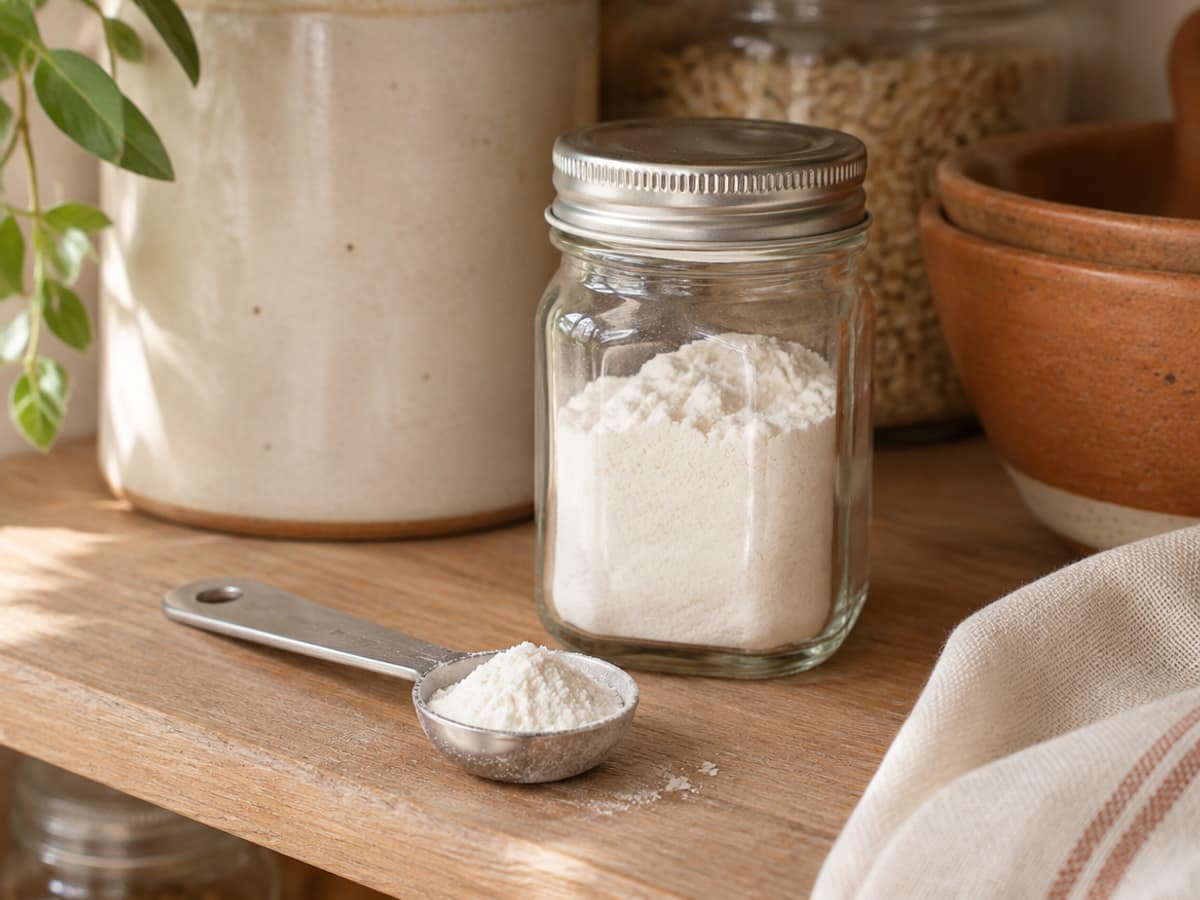
Cream of tartar does not spoil the way fresh food does. It is a dry mineral salt, so a jar kept closed and dry stays usable for a long time. The one thing that hurts it is moisture, which makes it clump and can weaken it. Use the best-by date on the jar as your guide, and if the powder looks or smells wrong, replace it. A quick fizz test, described below, shows whether an old jar still works.
How long it lasts
Published shelf lives for cream of tartar vary, and there is no government rule for home jars. No USDA, FDA or extension source gives a shelf life, so the best-by date on the jar is the guide. That date marks quality, so a jar a little past its date is not an emergency. It is still worth checking before you use it in a recipe where it matters, such as meringue.
The reason it lasts is its chemistry. It is potassium acid tartrate, a stable crystalline salt. A USDA technical report notes that a dry mix of potassium acid tartrate and sodium bicarbonate is stable, and that baking powder made from them stays potent as long as it is kept dry. Cream of tartar on its own follows the same rule: dry is the key. Where it comes from is covered in what cream of tartar is made of.
How to store it
- Keep it airtight. Close the lid tightly after every use, or move it to a jar with a good seal.
- Keep it dry. Store it in a cupboard, not above the stove or next to the dishwasher or kettle, where steam reaches it.
- Keep it cool. A pantry shelf is fine. The refrigerator is not needed, and the cold and condensation can add moisture when you open the jar.
- Use a dry spoon. A wet measuring spoon in the jar is the fastest way to cause clumps.
- Write the date you opened it on the lid, so you know how old it is.
Signs that it has gone off
Cream of tartar can lose quality over time. Look for these signs.
| Sign | What it likely means | What to do |
|---|---|---|
| Dry, loose powder | Normal | Use it |
| Soft clumps that break up easily | A little moisture got in | Break them up with a fork, then test it |
| Hard lumps or a damp, pasty feel | Moisture has soaked in | Throw it out |
| Yellow or brown color, or spots | Contamination or age | Throw it out |
| Sour, musty or any off smell | Contamination | Throw it out |
The fizz test
This test checks that the acid still reacts. It is a simple home check, not a lab measurement.
- Stir a pinch of baking soda into 2 to 3 tablespoons of warm water.
- Add 1/2 teaspoon of the cream of tartar and stir.
- If it fizzes right away, it still reacts and is fine to use.
- If there is no fizz, replace the jar, but first make sure your baking soda is fresh. A quick way to check it is to stir a little into vinegar, as described in cream of tartar vs baking powder vs baking soda.
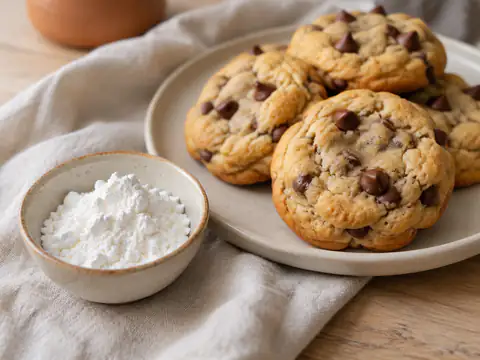
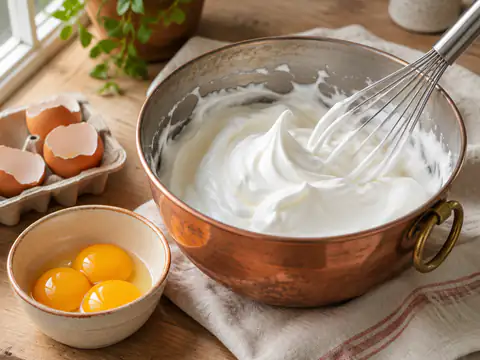
For meringue, the test matters less, because a weak jar only makes the foam a little less stable. For snickerdoodles and other recipes that pair cream of tartar with baking soda, a dead jar means the dough will not rise properly and may taste soapy.
If it has clumped
Clumping happens when a little moisture gets in and the crystals bind together. If the lumps are soft and the powder is otherwise dry, press them apart with the back of a spoon or a fork and pass the powder through a fine sieve. Then run the fizz test. If the lumps are hard, or the powder feels wet or sticks to the jar, the moisture has gone too far to fix and the jar should be replaced. Do not dry it in the oven or microwave to rescue it; a new jar costs very little.
Buying tips
Check the best-by date in the store and pick the jar with the latest date. If you open the jar often, a container with a tight lid keeps moisture out better than a loose shaker top. If you only use cream of tartar for the occasional meringue, a single small jar can last for several batches of cookies and meringues before it runs out.
Is baking powder the same?
No. Baking powder is a blend that starts reacting once it gets wet, so a jar of it can lose strength over time even when it looks fine. Check its best-by date and replace it when the date passes. Cream of tartar has no leavening reaction to lose on its own, which is why it keeps better.
What to do with an old jar
If it passes the look, smell and fizz checks, use it. If you rarely bake, buy the smallest jar so you finish it before the date. If you have none or only a little left, remember that you can substitute for cream of tartar in many recipes, so you do not need a fresh jar for a single batch. For the full overview, including the uses that make a jar worth keeping, read the main guide to cream of tartar. More guides live in baking basics.
Questions and answers
Does cream of tartar expire?
It does not spoil like fresh food. It is a dry mineral salt, and the main problem is moisture, which makes it clump. The date on the jar is a best-by date for quality, so follow it as a guide.
How long does cream of tartar last?
No government or extension source gives a shelf life for cream of tartar, so use the best-by date printed on the jar and keep it dry.
How can I tell if cream of tartar is still good?
Look for clumps, damp spots or a change in color, then try the fizz test: stir 1/2 teaspoon with a pinch of baking soda into a little warm water. It should fizz right away.
Can I use clumpy cream of tartar?
If it is dry and the clumps break apart easily, yes. If it is damp, hard, discolored or smells off, throw it out.
Sources
- Potassium Acid Tartrate Technical Report (National Organic Program) — USDA Agricultural Marketing Service