Cream of Tartar Substitutes That Work
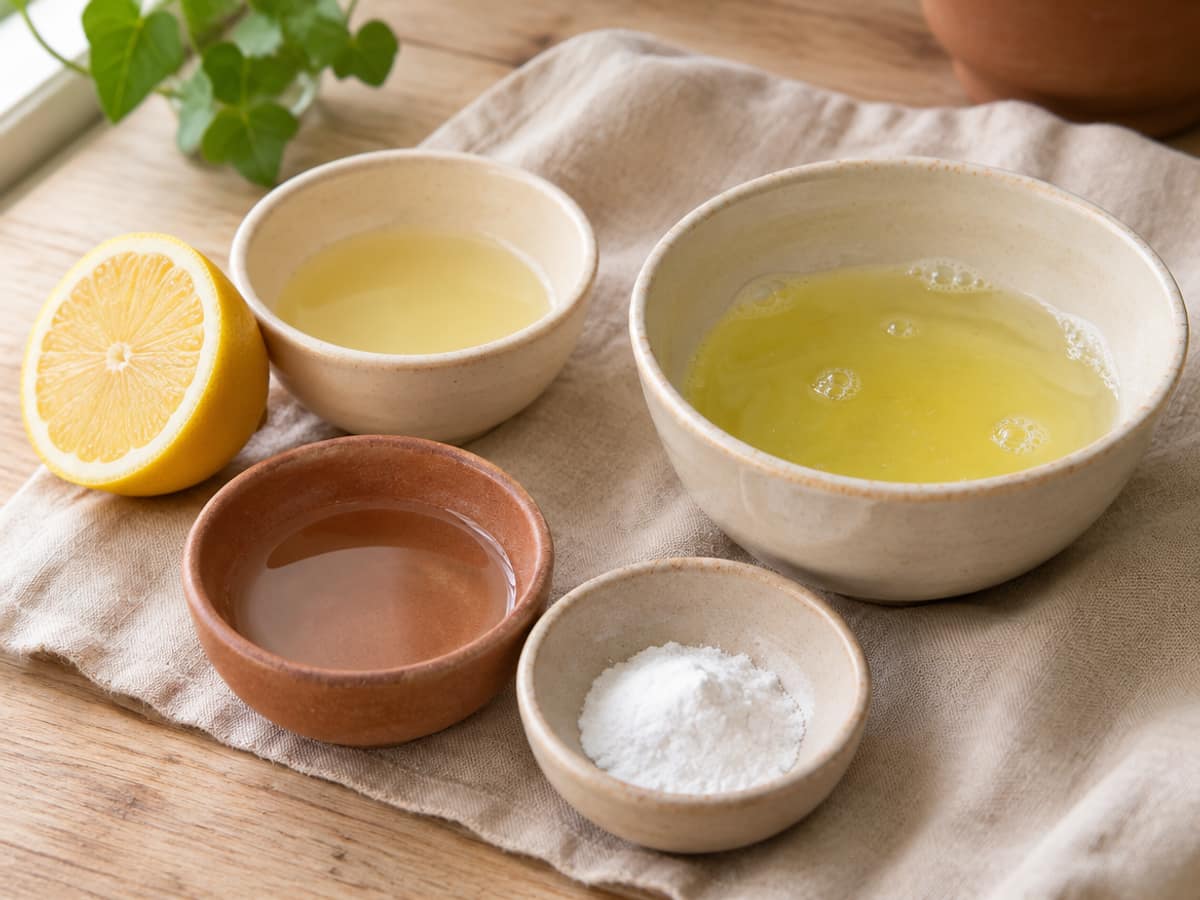
The best substitute for cream of tartar depends on what it is doing in the recipe. In meringue and whipped egg whites, use 1/8 to 1/4 teaspoon of lemon juice or white vinegar per egg white. In snickerdoodles and other recipes that pair it with baking soda, replace both with baking powder. In syrups and candy, use a little lemon juice.
The table below gives each swap. Details, and what each one changes, follow it. For background on the ingredient itself, see what cream of tartar is and what it is used for. The rest of the series is in baking basics.
| If the recipe uses it for | Swap | What changes |
|---|---|---|
| Whipped egg whites, meringue | 1/8 to 1/4 tsp lemon juice or white vinegar per egg white | Foam is slightly less stable; a faint tang if you use too much |
| Snickerdoodles (with baking soda) | Baking powder in place of both | Milder flavor, less tang |
| Baking powder (you have cream of tartar, not baking powder) | Baking soda and cream of tartar, mixed | Single-acting, so bake right away |
| Sugar syrup, candy, frosting | Lemon juice | Slight lemon taste |
| Anything where it is a pinch | Leave it out | Possibly less stable or less tangy |
For meringue and whipped egg whites
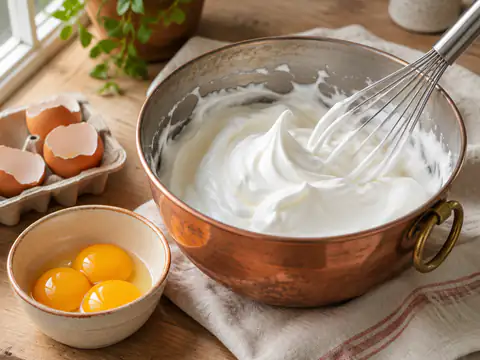
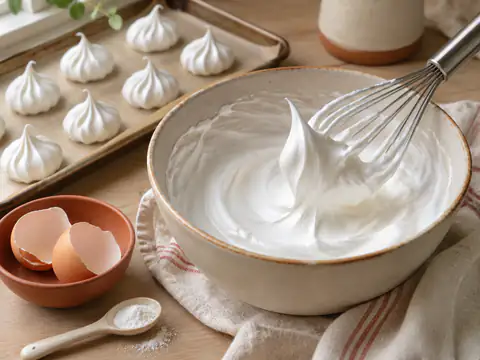
Cream of tartar’s job here is to lower the pH of the whites, which makes the foam steadier. Any food-safe acid does that. King Arthur Baking suggests 1/8 to 1/4 teaspoon of lemon juice or white vinegar per egg white to start, and going light, because a strong acid can leave a taste.
Add the acid when the whites are foamy, the same point you would add cream of tartar. Use a clean bowl, because fat does more harm to a foam than anything a substitute can fix. Full instructions are in cream of tartar in meringue and egg whites.
Baking powder and baking soda are not substitutes here. Neither one steadies a foam, and baking soda is a base, so it works against the acid you need.
For snickerdoodles and other recipes that pair it with baking soda
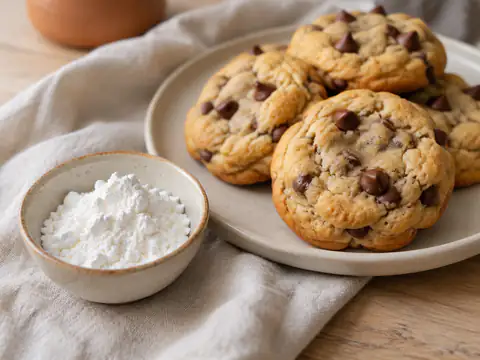
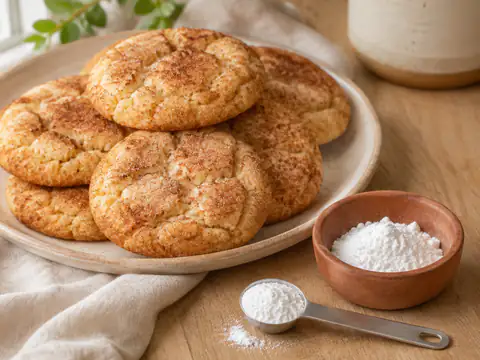
Many snickerdoodle recipes list cream of tartar and baking soda together, typically about 2 teaspoons of cream of tartar to 1 teaspoon of baking soda. The two react and make gas that lifts the dough, and the cream of tartar also adds the tang that snickerdoodles are known for.
Baking powder already contains baking soda and an acid in one jar, so it can replace both. Remove both ingredients and add baking powder instead. King Arthur Baking says that baking powder can replace baking soda at about three times the amount, so a recipe with 1 teaspoon of baking soda would use about 3 teaspoons of baking powder. Chemically, the full pair is closer to 4 teaspoons, because baking powder holds about 1/4 teaspoon of soda and 1/2 teaspoon of cream of tartar per teaspoon. For the general swap rule, see baking soda vs baking powder. Start at 3 teaspoons for a batch with about 2 3/4 cups (345 g) of flour, and do not go above 4 teaspoons, since too much baking powder can leave a bitter, metallic taste.
Expect the cookie to taste milder. The tang of snickerdoodles comes largely from the cream of tartar, and baking powder does not give the same effect. The cinnamon-sugar coating carries the flavor.
How the cream of tartar changes cookies in general is in what cream of tartar does in cookies.
For homemade baking powder
If you have cream of tartar and baking soda but no baking powder, you can make it. For each teaspoon of baking powder, mix 1/4 teaspoon baking soda, 1/2 teaspoon cream of tartar and 1/4 teaspoon cornstarch, per King Arthur Baking. The starch keeps the mix dry and stable. A batch recipe with a spoon chart is in homemade baking powder.
The homemade mix is single-acting, meaning it releases most of its gas as soon as it gets wet. Mix the batter, then bake it without delay. Store-bought baking powder is usually double-acting, so it has more of a margin.
You cannot go the other way and make cream of tartar from baking powder. When a recipe calls for cream of tartar and you have none, replace it as described above.
For syrups, candy and frosting
In sugar syrups, candy and some frostings, cream of tartar keeps the sugar from forming large crystals, so the result stays smooth. Lemon juice supplies an acid too, and corn syrup gets in the way of crystals. Candy is sensitive, so keep to a recipe that has been written for lemon juice if you can.
When you can just skip it
- Meringue and egg whites: possible, if your equipment is spotless and you serve the meringue soon. It will be a little less stable and more likely to weep.
- Recipes that call for a pinch for stability: often fine without it.
- Recipes that pair it with baking soda: do not skip. The soda needs an acid to react with, or the result is flat and tastes soapy. Swap for baking powder instead.
What not to use
- Baking soda alone, because it is a base and works against the acid you need.
- Baking powder in egg whites, because it does not steady a foam.
- Large amounts of vinegar or lemon juice anywhere, because the taste shows.
More guides on leaveners, including cream of tartar vs baking powder vs baking soda, are in baking basics.
Questions and answers
What is the best substitute for cream of tartar in meringue?
Lemon juice or white vinegar. Use 1/8 to 1/4 teaspoon per egg white. Both are acids, so they steady the foam the same way cream of tartar does.
Can I use baking powder instead of cream of tartar?
Only where the recipe pairs cream of tartar with baking soda, as in snickerdoodles. Replace both with baking powder. Do not add baking powder to egg whites in place of cream of tartar; it does not stabilize a foam.
Can I use baking soda in place of cream of tartar?
No. Baking soda is a base, and cream of tartar is an acid, so they do opposite jobs. Baking soda alone would make a meringue taste soapy and would not steady it.
Can I leave cream of tartar out?
In meringue, you can if your bowl is spotless and you serve it soon. In a recipe that pairs it with baking soda, you cannot, because the soda needs the acid to rise.