Baking Cookies in a Convection Oven
To bake cookies in a convection oven, lower the temperature by 25°F (about 15°C) from the recipe and start checking 2 to 3 minutes early. A cookie that bakes 11 to 13 minutes at 350°F (180°C) bakes in about 9 to 11 minutes at 325°F (160°C) on convection. The fan moves hot air around the cookies, so they brown faster and more evenly. The chart below gives temperatures and times for the main kinds of cookie. For the sizes and times of chocolate chip cookies specifically, see the bake time chart, and for the base recipe, see the chocolate chip cookie recipe. More ideas are in the cookie recipes hub.
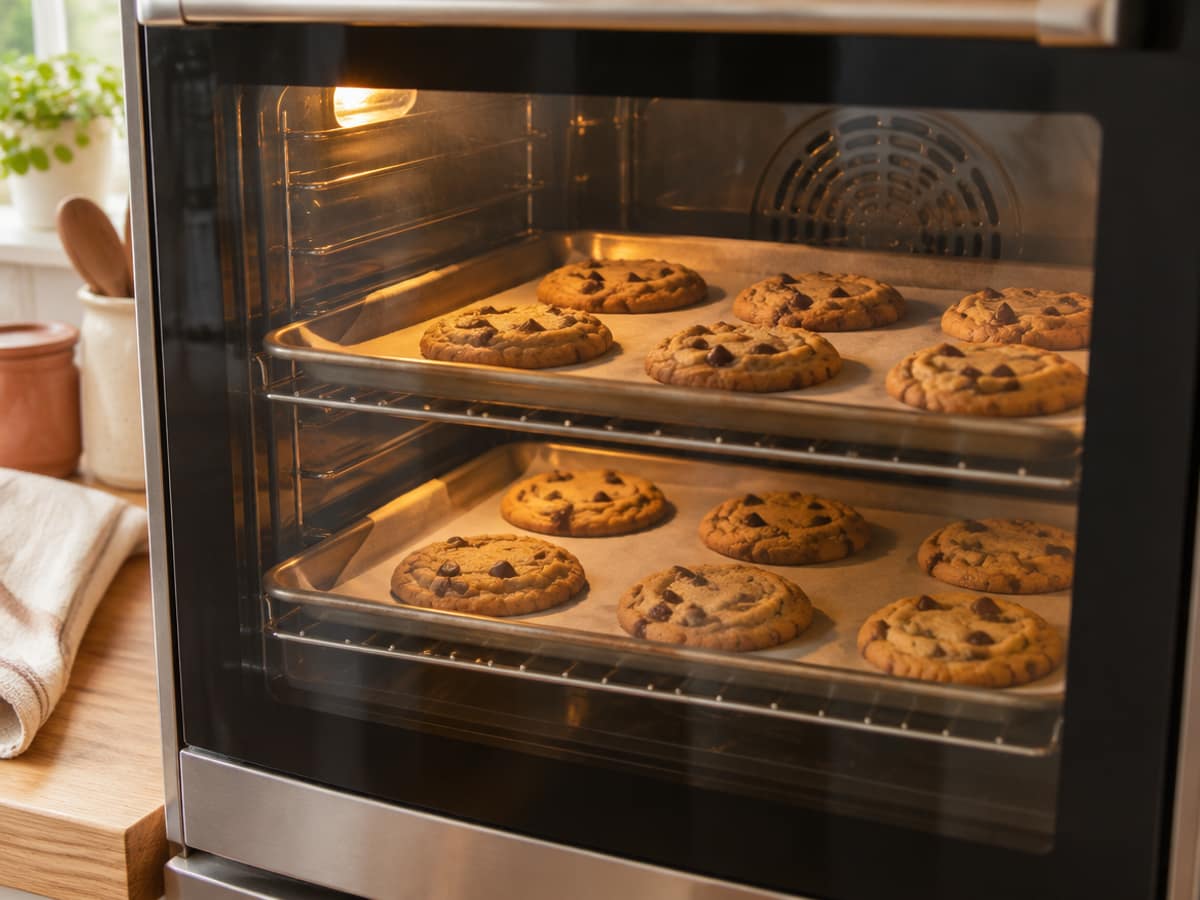
What convection does to cookies
A convection oven has a fan in the back that circulates hot air. King Arthur Baking describes the effect as even, consistent heat that reaches the bake from all sides, so cookies brown evenly. That air also dries the surface faster and speeds up cooking, and King Arthur notes that recipes written for a standard oven can bake more quickly in convection mode.
That is why the rule exists. King Arthur’s long-standing advice is to reduce the oven temperature by 25°F (15°C), and a baker on its staff says 25°F less works for most things. Without the lower temperature, the edges brown and dry out before the middle has set.
The rule: lower the heat, check early
- Lower the temperature by 25°F (about 15°C). Use 325°F (160°C) for a recipe that says 350°F (180°C), and 350°F (180°C) for one that says 375°F (190°C).
- Check early. King Arthur’s rule of thumb for a full-length recipe is to make the first check 10 minutes earlier than the recipe says. Cookies bake in 10 to 20 minutes, so that is too much; start checking 2 to 3 minutes early and add time in 1-minute steps.
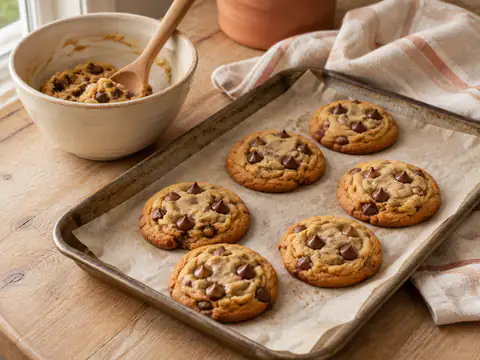
- Go by the cues. Edges set and golden, tops no longer shiny. Convection can brown the outside before the center is done, so look and touch, not just the clock.
If your oven lowers the temperature for you when you press the convection button, you do not need to subtract 25°F again. Check the manual.
Convection time and temperature chart
These are planning ranges built on the 25°F rule and on the chocolate chip chart on this site. Ovens vary, so treat them as a starting point.
| Cookie type | Standard oven | Convection oven |
|---|---|---|
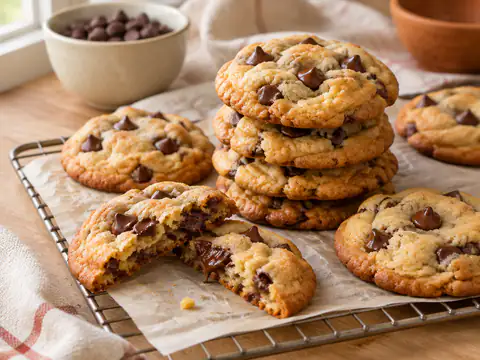
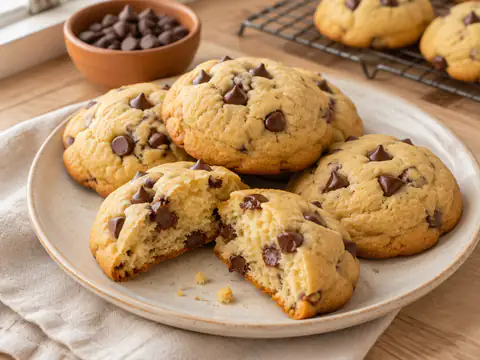
| Chocolate chip, 3 tablespoons (45 g) | 350°F (180°C), 11 to 13 min | 325°F (160°C), 9 to 11 min |
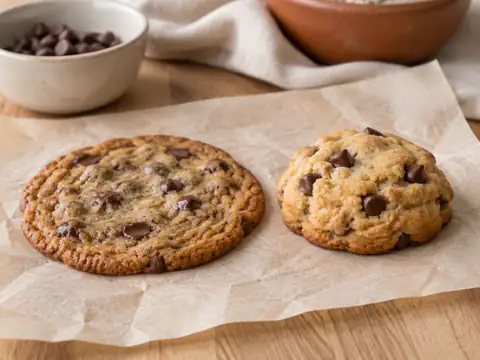
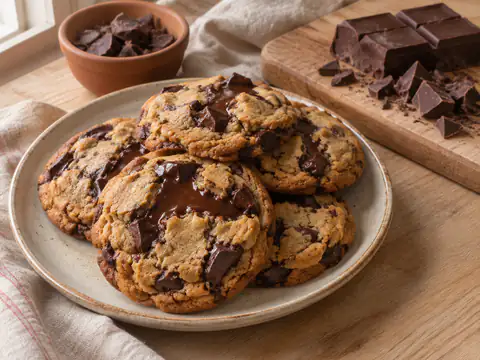
| Bakery-style, 113 g (4 oz) | 350°F (180°C), 18 to 20 min | 325°F (160°C), 15 to 18 min |
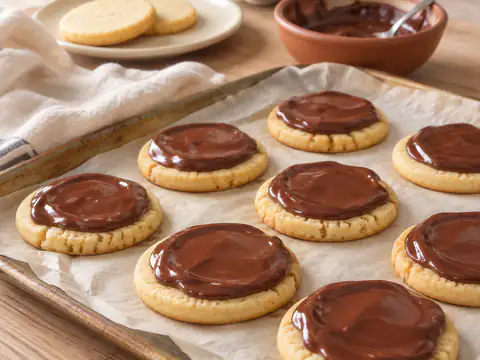
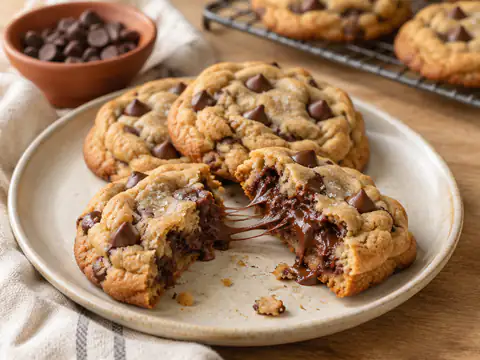
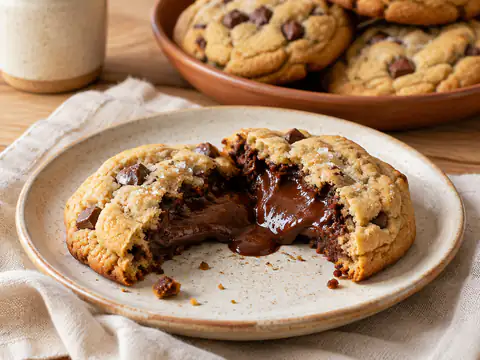
| Stuffed cookie, about 77 g | 350°F (180°C), 14 to 16 min | 325°F (160°C), 12 to 14 min |
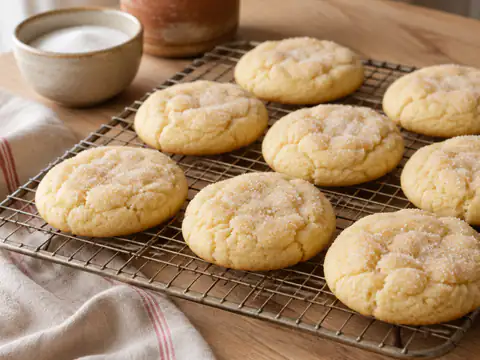
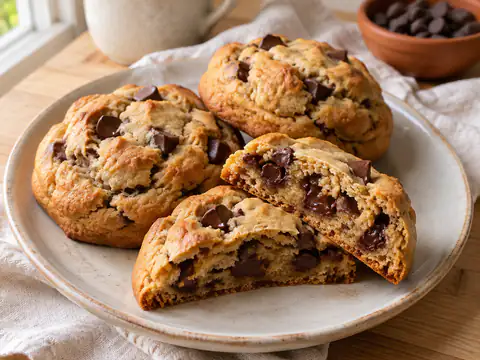
| Cakey cookie, 45 g | 350°F (180°C), 11 to 13 min | 325°F (160°C), 9 to 11 min |
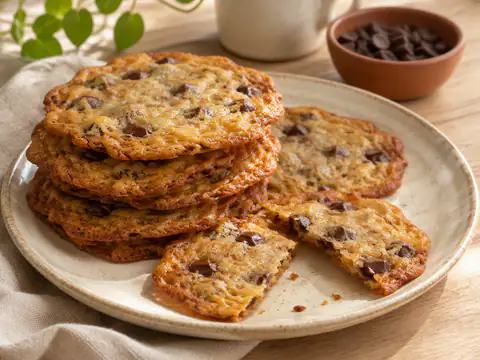
| Thin and crispy, 30 g | 325°F (160°C), 15 to 18 min | 300°F (150°C), 13 to 16 min |
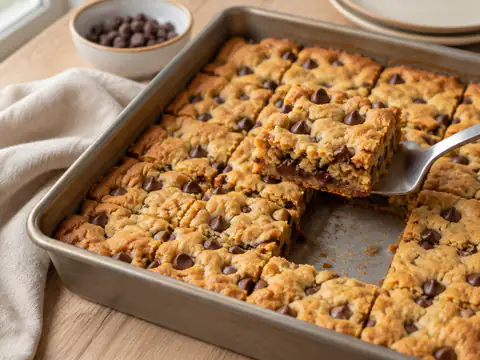
| Cookie bars, 9 x 13-inch (23 x 33 cm) pan | 350°F (180°C), 22 to 26 min | 325°F (160°C), 20 to 24 min, or fan off |
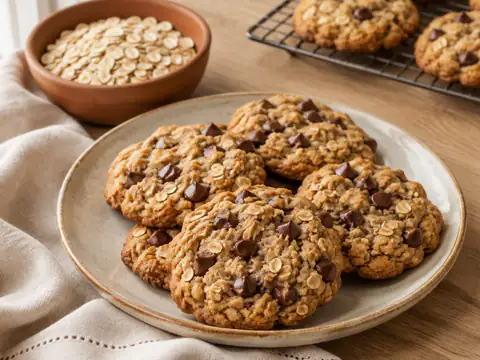
The recipes behind these rows are the bakery-style cookies, chocolate-stuffed cookies, cakey cookies, crispy cookies and cookie bars.
Oven settings: bake, convection bake and convection roast
King Arthur points out that many ovens offer three modes: regular bake, convection bake with a lower fan speed, and convection roast with a higher fan speed. For cookies, pick convection bake. The higher fan speed of convection roast can push light cookies around on the pan, and King Arthur has seen it blow wet batters sideways. If your oven only has one convection setting and it is strong, turn the fan off for bars and soft, cakey doughs, and keep it on for drop cookies.
Racks, pans and parchment
- Use the center rack for one pan. Use two racks, evenly spaced, for two pans. Because the heat is more even, you usually need to swap them less often, but if one pan browns faster, swap them top to bottom and turn them around halfway through.
- Do not crowd the pan. Leave 2 inches (5 cm) between cookies so air can move around each one.
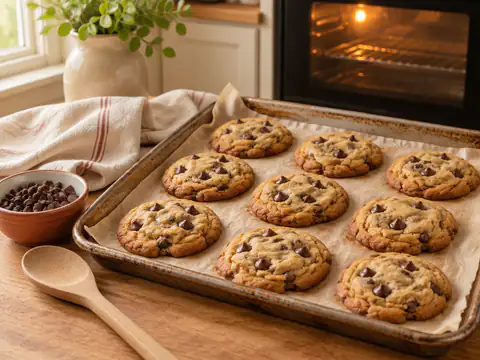
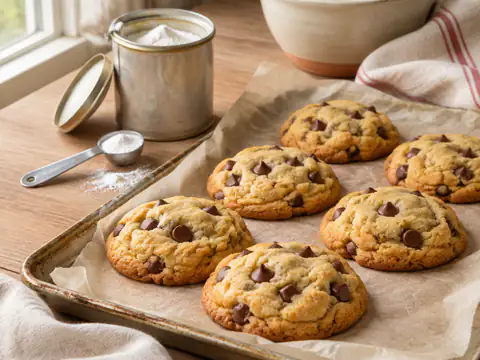
- Weigh down the parchment. King Arthur notes that the fan can lift parchment paper, and suggests small weights or clips to hold it in place, or placing a cookie on each corner of the sheet. With a small batch, a cookie on each corner does the same job.
- Use light-colored pans. Dark pans absorb more heat and darken the bottoms faster. See the pan notes in the bake time chart.
When convection helps and when it hurts
| Cookie or bake | Convection works well? | Why |
|---|---|---|
| Drop cookies, several trays at once | Yes | Even browning, fewer swaps |
| Thick, bakery-style cookies | Yes, with 325°F (160°C) | The outside sets before the center dries |
| Thin, crispy cookies | Yes | The moving air helps dry them |
| Cakey cookies and wet doughs | Use the low fan or fan off | A strong fan can tilt or shift soft dough |
| Cookie bars | Optional | A thick batter can brown on top before the middle sets, so use the lower fan or turn it off |
| Delicate shaped cookies | Check them early | They are small and brown fast |
Fixing problems in a convection oven
| Problem | Likely cause | Fix |
|---|---|---|
| Dark bottoms | Dark pan, or the rack too low | Use a light-colored pan on the center rack. Take 1 to 2 minutes off. |
| Dry, hard cookies | Baked too long, or temperature not lowered | Lower by 25°F (15°C) and check 2 to 3 minutes early. |
| Burnt edges, raw center | Heat too high for a thick cookie | Drop another 10 to 15°F (5 to 8°C), or try the fan off. |
| Cookies browning unevenly | A hot spot, or crowded trays | Rotate the pans halfway, and leave space between cookies. |
| Cookies spread thin | Oven too cool, or dough too warm | Chill the dough first. See why cookies go flat. |
| Cookies slid across the pan | Fan speed too high | Use convection bake, not roast, or weigh down the parchment. |
Quick summary
Lower the heat by 25°F (15°C), bake on convection bake, check 2 to 3 minutes early and rely on the cues. If you only remember one row from the chart, remember that 350°F (180°C) becomes 325°F (160°C).
Questions and answers
Do I lower the temperature for cookies in a convection oven?
Yes. King Arthur Baking suggests lowering the temperature by 25°F (about 15°C) when you use convection for a recipe written for a standard oven, and checking the cookies earlier than the recipe says.
Do I need to rotate cookie sheets in a convection oven?
Often less. The moving air heats the oven more evenly, so cookies brown more evenly on each rack. If you still see one side or one rack browning faster, rotate and swap the pans halfway through.
What is the difference between convection bake and convection roast?
Many ovens have both. Convection bake uses a lower fan speed, which is the setting to choose for cookies. Convection roast uses a higher fan speed and suits meat and vegetables.
Should I use convection for every kind of cookie?
It works well for drop cookies, bakery-style cookies and large batches. For soft, wet doughs and bars, use the lower fan setting, or turn the fan off if your oven lets you.
Sources
- Convection oven baking: Why this baker is a fan — King Arthur Baking
- Convection conundrum — King Arthur Baking