Snow Crab vs King Crab vs Dungeness
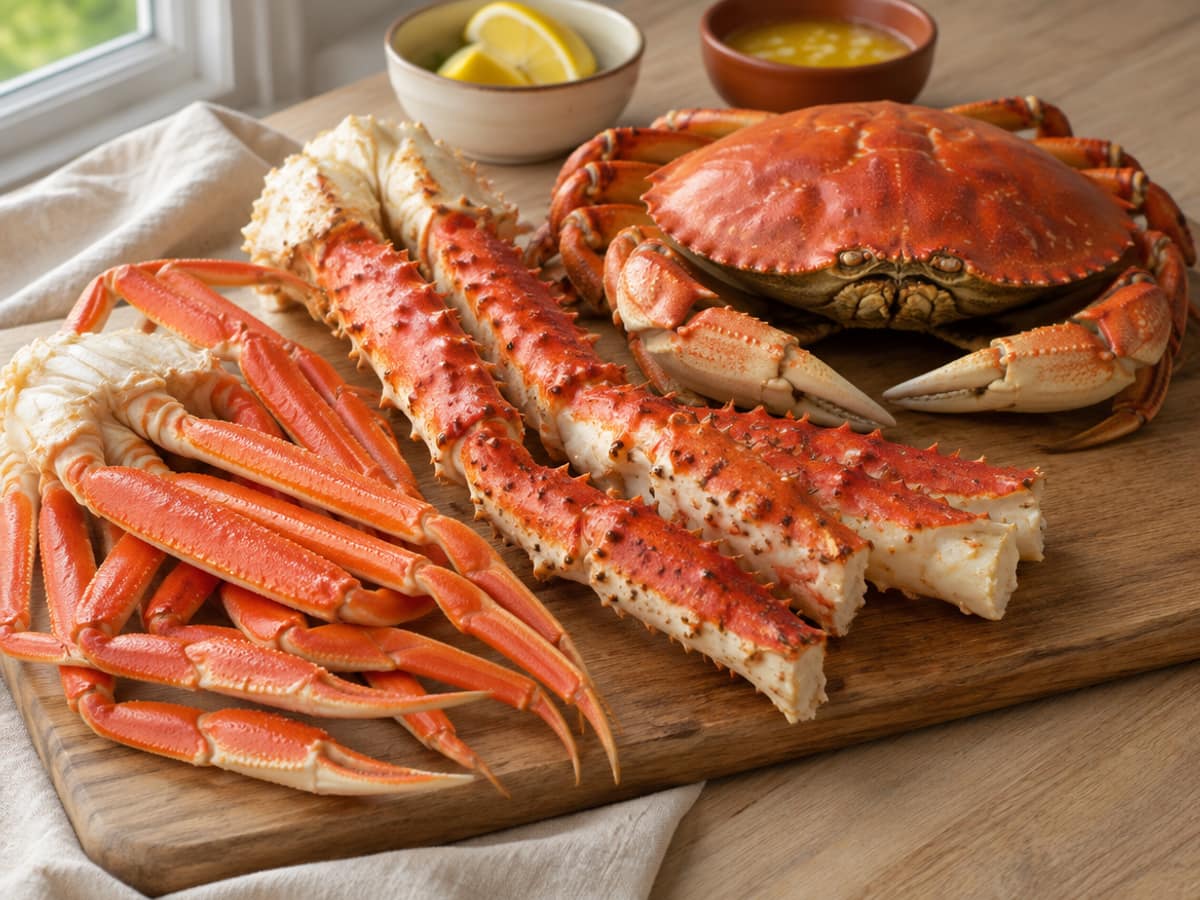
Snow crab, red king crab and Dungeness crab are all sweet, but they differ in size, texture and how they are sold. Snow crab is small and delicate and usually arrives as frozen clusters. King crab is the giant, with thick, meaty legs. Dungeness is a broad crab that is usually sold whole, and California Sea Grant says it is sweeter than snow or king crab. The table sets them side by side. For cooking times, see how to cook crab legs, and for a party menu see 10 garlic butter crab dinners.
| Snow crab | Red king crab | Dungeness crab | |
|---|---|---|---|
| Species | Chionoecetes opilio | Paralithodes camtschaticus | Metacarcinus magister |
| Where it is caught | Alaska, wild-caught | Alaska, wild-caught | Aleutian Islands in Alaska to Point Conception, California |
| Size | Males up to 6 inches (15 cm) across the shell; females seldom larger than 3 inches (7.5 cm) | Up to 24 pounds (11 kg) with a leg span of 5 feet (1.5 m) | Shell typically under 8 inches (20 cm); up to 4 pounds (1.8 kg) |
| Taste | Sweet | Rich and sweet | Sweeter than snow or king crab |
| Texture | Delicate and flaky | Tender | Tender body meat; slightly firmer leg and claw meat |
| Season | Generally harvested January to April, available year-round | Generally harvested October to January, available year-round | Fresh from late fall until mid-summer |
| How it is usually sold | Legs and clusters | Legs | Whole crab, live, fresh or frozen; also picked meat |
Snow crab
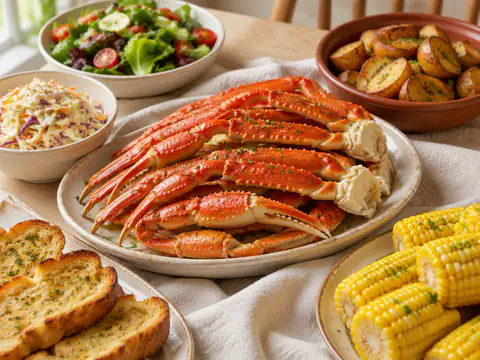
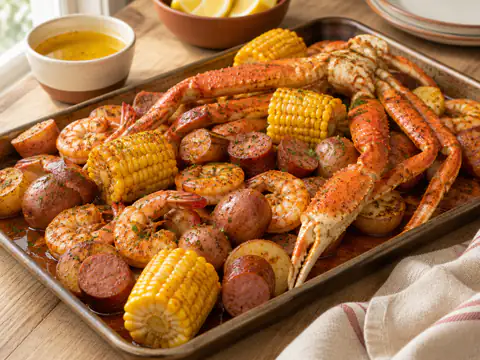
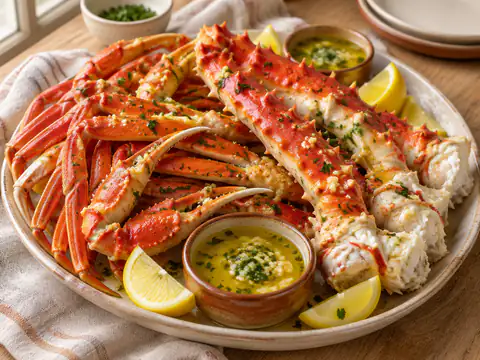
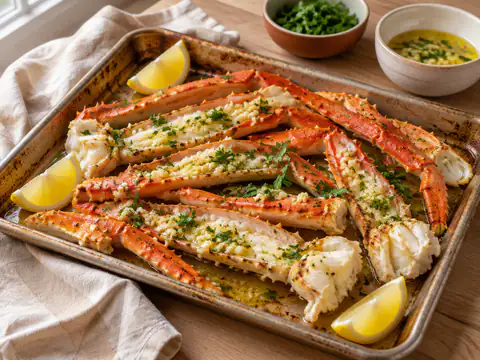
Snow crab is the one most people buy as “crab legs.” NOAA Fisheries describes the meat as sweet, delicate and flaky, with snow-white color. The legs are slimmer than king crab legs and are usually sold as frozen clusters, so they suit casual dinners and boils and can go on a platter whole. The garlic butter crab legs recipe uses snow or king crab, and the seafood boil uses snow crab clusters.
King crab
NOAA Fisheries says red king crab meat has a distinctive rich, sweet flavor and a tender texture, and that the animals can reach 24 pounds (11 kg). The legs are thick and long, and the meat comes out in big pieces. The shells are thick, so many cooks cut them open with kitchen shears. King crab suits a special dinner where the crab is the main course.
Dungeness crab
California Sea Grant says Dungeness has a sweeter flavor than snow or king crab, and that about 1/4 of the weight of a crab is meat. One whole crab yields around 1/2 pound (225 g) of meat. The claws hold the largest section of meat and crack more easily than those of other commonly eaten crabs, and the body meat is reached by cracking the shell in half lengthwise. It is sold live, fresh or frozen as a whole crab, and as picked meat. It can be steamed, chilled or roasted, and used in soups, crab cakes and salads.
One safety point applies to Dungeness. California Sea Grant says domoic acid from harmful algal blooms can be found in the guts of crabs during blooms. It advises avoiding eating crab during bloom periods, removing the viscera before cooking and checking for warnings. If you cook a whole crab, clean it first.
Cooking each one
Most crab legs sold frozen in the US are already cooked, so cooking them means heating them until they are hot all the way through. These thawed-cluster times come from the chart in how to cook crab legs, and they are planning ranges, not rules:
| Crab, thawed | Steam | Boil | Bake at 400°F (200°C) |
|---|---|---|---|
| Snow crab clusters | 6 to 8 minutes | 4 to 5 minutes | 10 to 14 minutes |
| King crab legs | 8 to 10 minutes | 5 to 7 minutes | 12 to 15 minutes |
| Dungeness clusters | 6 to 8 minutes | 5 to 6 minutes | 10 to 14 minutes |
Thaw frozen crab overnight in the refrigerator, which is the way the FDA says to thaw seafood gradually. If a crab is raw rather than cooked, the FDA says the flesh should turn firm, pearly and opaque, and most seafood should reach 145°F (63°C).
Which one to buy
| For | Pick | Why |
|---|---|---|
| A casual dinner or boil | Snow crab clusters | Slimmer legs, and widely sold frozen |
| A special-occasion main | King crab legs | Big pieces of meat from thick legs |
| Cracking a whole crab at the table | Dungeness | Sold whole, with sweet meat in the claws and body |
| Soup, crab cakes or salad | Dungeness, picked meat | The meat is already out of the shell; see crab cakes |
For main-course amounts, plan on about 1 to 1 1/2 pounds (450 to 680 g) of legs per person, and about half that when crab is one of several dishes. Those are planning amounts, as on the crab dinners page. For sides, see what to serve with crab legs.
Leftover crab
Refrigerate cooked crab within 2 hours, or within 1 hour when the air is above 90°F (32°C), and use it within 3 to 4 days, as the FDA and USDA FSIS advise for cooked leftovers. Reheat it to 165°F (74°C). The full limits are in how to store and reheat leftover crawfish, and they apply to crab as well.
Questions and answers
Which is sweeter, snow crab or king crab?
NOAA Fisheries calls snow crab meat sweet, with a delicate, flaky texture, and calls red king crab meat rich and sweet, with a tender texture. California Sea Grant says Dungeness has a sweeter flavor than snow or king crab.
Are snow crab and king crab legs already cooked?
Most crab legs sold frozen in the US are already cooked, so cooking them means heating them until they are hot all the way through. Check the label for the words cooked or pre-cooked, and if you cannot tell, ask the seafood counter.
Is the inside of a Dungeness crab safe to eat?
California Sea Grant says domoic acid, which comes from harmful algal blooms, can be found in the viscera (the guts) of crabs during blooms. It advises avoiding eating crab during bloom periods, removing the viscera before cooking and checking for local warnings.
Sources
- Alaska Snow Crab — NOAA Fisheries
- Red King Crab — NOAA Fisheries
- Dungeness Crab — California Sea Grant
- Selecting and Serving Fresh and Frozen Seafood Safely — U.S. Food and Drug Administration