Crawfish vs Shrimp vs Lobster: Taste and Uses
Crawfish, shrimp and lobster are all sweet, mild shellfish, and the sources that describe them use almost the same words. Texas A&M AgriLife Extension says the meat of the two commercial crawfish species is similar in taste and that crawfish can replace shrimp in most recipes, so shrimp is the closest everyday comparison. Lobster is firmer and sold in much bigger pieces. The table below sets all three side by side. For cooking crawfish, start with the stovetop crawfish recipe, and find more in the seafood hub.
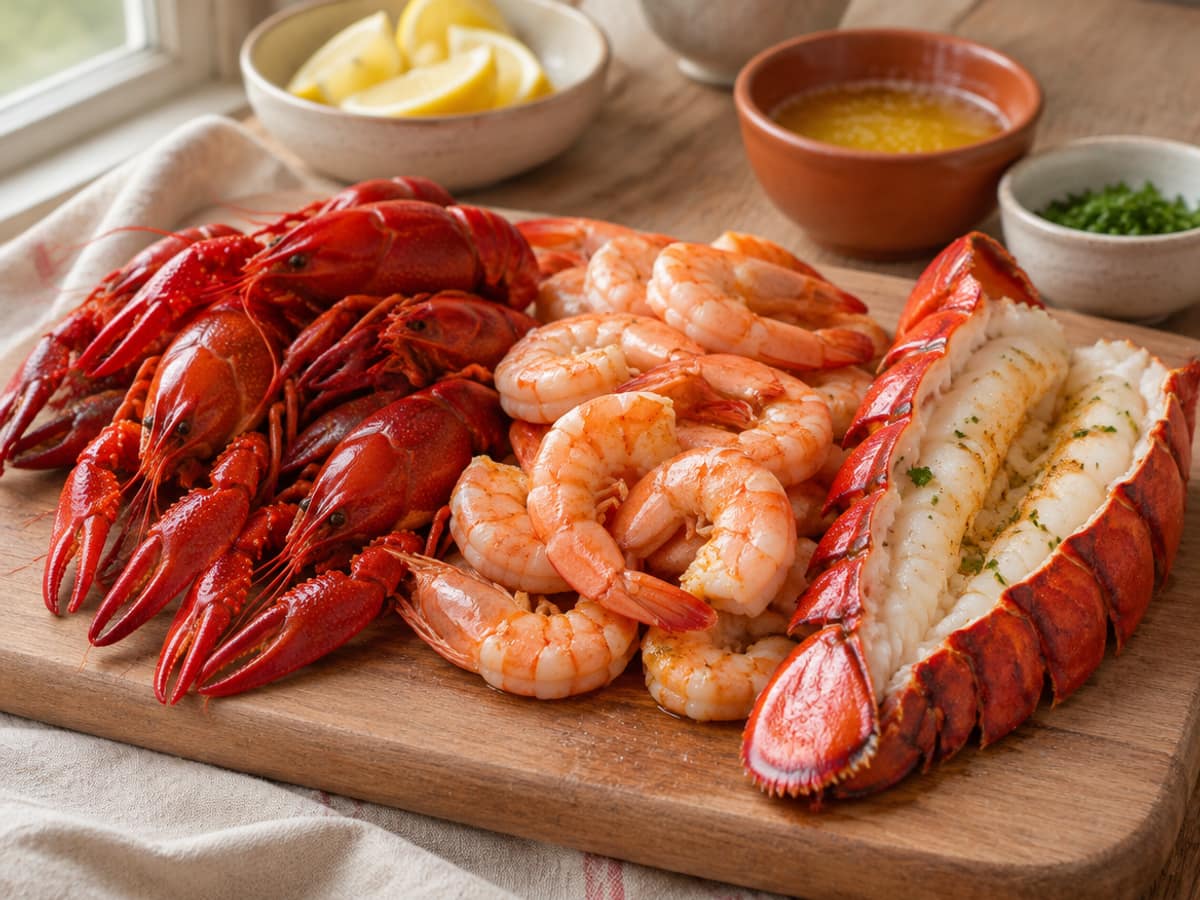
| Crawfish | Shrimp (white shrimp) | Lobster (American) | |
|---|---|---|---|
| What it is | Freshwater crustacean; the red swamp and white river species are the two that are sold commercially | Saltwater shrimp; white shrimp are wild-caught from North Carolina to Texas | Saltwater lobster; wild-caught from Maine to North Carolina |
| Taste | The meat of both species is similar in taste; the orange fat has a rich flavor | Flavorful and sweet | Mild and sweet |
| Texture | Tough and hard to peel if overcooked | Slightly more tender than other shrimp, with softer shells that are easier to peel | Firm and somewhat fibrous; tail meat is firmer than claw meat |
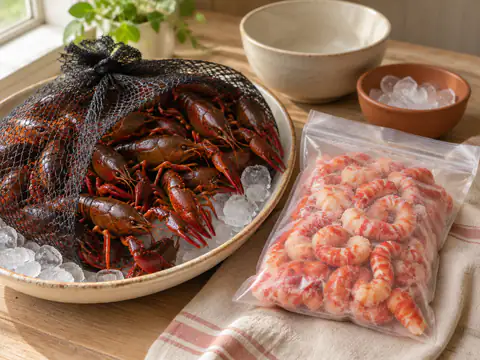
| How it is sold | Live in 35 to 45 pound (16 to 20 kg) sacks, cooked whole, or as 1 pound bags of peeled tails | Usually raw or cooked, with the shell on or off | Whole, or as tails and claws |
| When it is in season | Harvest begins in November, with the most in March to May | Year-round, with peaks in the fall | Harvest runs from May to November |
| How it is done | Boil about 3 minutes, then soak; peeled tails only need heating | Cook 2 to 3 minutes, until pearly and opaque | Cook until the meat is opaque; follow your recipe or package for time |
| Best uses | Boils, etouffee, bisque, pasta, dips | Sautes, boils, pasta, skewers | Steamed or boiled whole, with butter; rolls |
What crawfish taste like
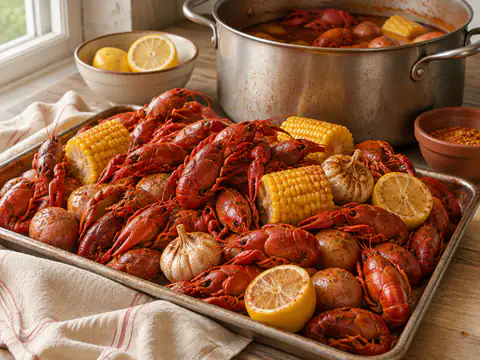
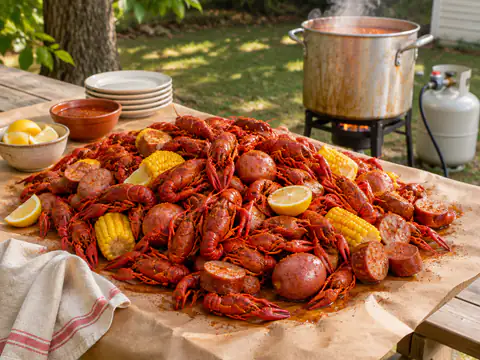
Texas A&M AgriLife Extension says red and white crawfish meat is similar in taste, that the orange “fat” in the head has a rich flavor, and that crawfish can be used in most recipes that call for shrimp. In practice, that makes shrimp the nearest taste, and the sweet note NOAA Fisheries describes for white shrimp is the one to expect in the tails. Much of the flavor of a boil also comes from the seasoning, which the shell holds in and the soak carries into the meat. See Louisiana crawfish boil for a crowd for how a boil works.
Size and meat yield
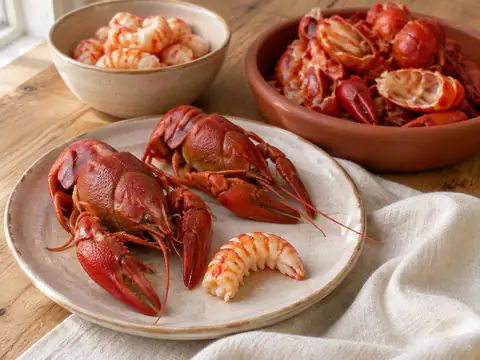
Crawfish are small, and most of a crawfish is shell. Texas A&M AgriLife Extension puts the tail meat at about 15 percent of live weight, and says yield can be as high as 20 percent for small to medium crawfish and as low as 8 percent for very large ones. At 15 percent, it takes 6 to 7 pounds (2.7 to 3.2 kg) of live crawfish to make 1 pound (450 g) of peeled tails. That is why a boil calls for 3 to 4 pounds (1.4 to 1.8 kg) of live crawfish per person, and why how much crawfish per person has a planning chart.
Shrimp and lobster are different. NOAA Fisheries says American lobsters can weigh up to 44 pounds (20 kg), though the ones you buy are much smaller. A lobster gives a few large pieces of meat, while crawfish and shrimp give many small ones.
Cooking differences
All three are done when the flesh turns firm, pearly and opaque. The FDA gives 145°F (63°C) as the internal temperature for most seafood.
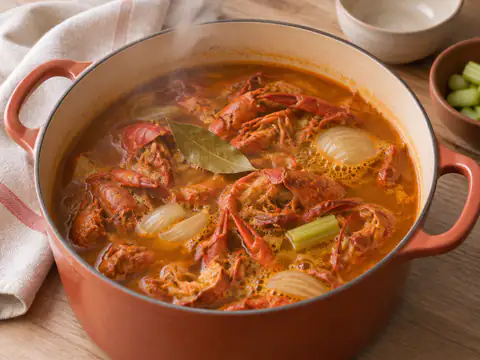
- Crawfish: In the recipe on this site, live crawfish boil for 3 minutes and then soak. Overcooked crawfish turn tough and are hard to peel, which Texas A&M AgriLife Extension also warns about. Peeled tail meat is already cooked, so it only needs to be heated for 3 to 5 minutes.
- Shrimp: Large shell-on shrimp take 2 to 3 minutes in a boil, as in the seafood boil. They go in last for that reason.
- Lobster: Lobster is sold in many forms and sizes, so time depends on the weight. Follow the recipe or the package, and look for opaque meat.
Swapping one for another
Because Texas A&M AgriLife Extension says crawfish can replace shrimp in most recipes, the swap works both ways with a few adjustments.
| If the recipe calls for | Use | What to change |
|---|---|---|
| Raw peeled shrimp, cooked in the sauce | Cooked peeled crawfish tails, the same weight | Add them at the end and heat for 3 to 5 minutes, because they are already cooked |
| Crawfish tails | Peeled raw shrimp, the same weight | Add them 2 to 3 minutes before the end, until firm, pearly and opaque |
| Lobster meat | Shrimp or crawfish tails | The pieces will be smaller and softer; keep them whole and do not simmer long |
The same-weight swap is a starting point, not a measured rule. Taste the dish and adjust the seasoning, because tail meat from a boil already carries salt. What to make with crawfish tail meat has eight dishes that use tails.
Which one to buy
- For a boil with a crowd: Crawfish, for the experience. Plan on 3 to 4 pounds (1.4 to 1.8 kg) of live crawfish per person, per Texas A&M AgriLife Extension.
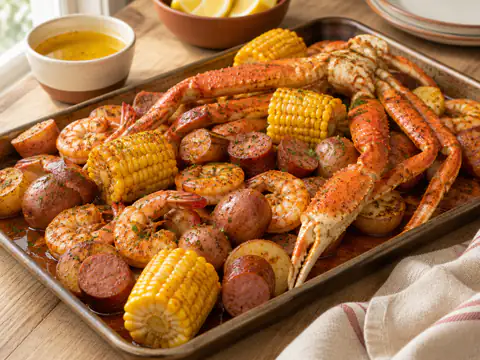
- For a mixed boil on the stove: Shrimp, with crab, as in the seafood boil.
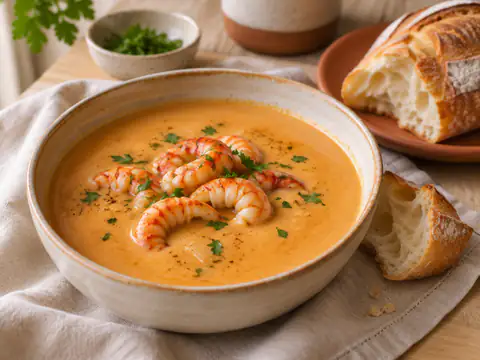
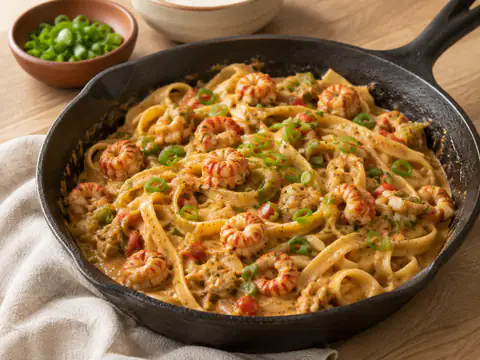
- For a creamy sauce or soup: Cooked crawfish tails or shrimp, as in crawfish etouffee or Cajun crawfish pasta.
- For a special dinner: Lobster, boiled or steamed and served with melted butter. Leave out the tomalley, the light-green material, which the FDA advises against eating, according to NOAA Fisheries.
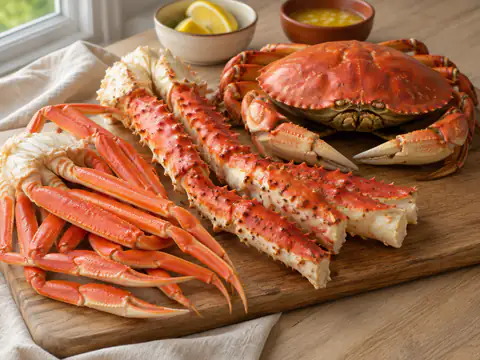
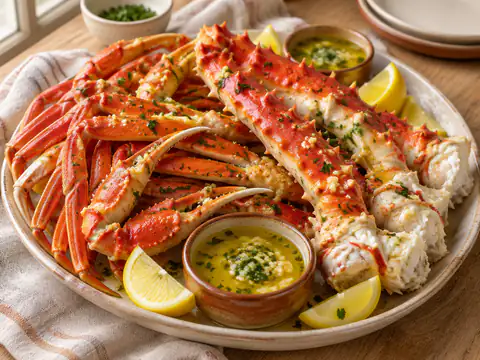
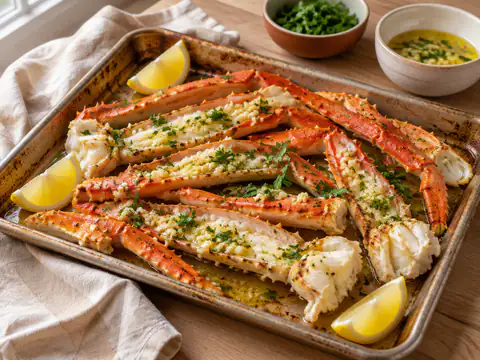
For crab, compare snow crab, king crab and Dungeness, and see how to cook crab legs.
Questions and answers
What does crawfish taste like?
Texas A&M AgriLife Extension says the meat of the two commercial species is similar in taste and that the orange fat has a rich flavor. It also says crawfish can be substituted in most recipes that call for shrimp, so shrimp is the closest everyday comparison. NOAA Fisheries describes white shrimp as flavorful and sweet and American lobster as mild and sweet.
Can I use crawfish tails instead of shrimp?
Yes. Texas A&M AgriLife Extension says crawfish can be substituted in most shrimp recipes. Tail meat is sold cooked, so add it at the end and heat it for 3 to 5 minutes instead of cooking it from raw.
Is it safe to eat the green material in a lobster?
NOAA Fisheries notes that the FDA advises consumers not to eat the tomalley, the light-green substance found in the lobster. Leave it out.
Sources
- Enjoying Louisiana Crawfish — Texas A&M AgriLife Extension
- White Shrimp — NOAA Fisheries
- American Lobster — NOAA Fisheries
- Selecting and Serving Fresh and Frozen Seafood Safely — U.S. Food and Drug Administration