Fish With Crawfish Cream Sauce
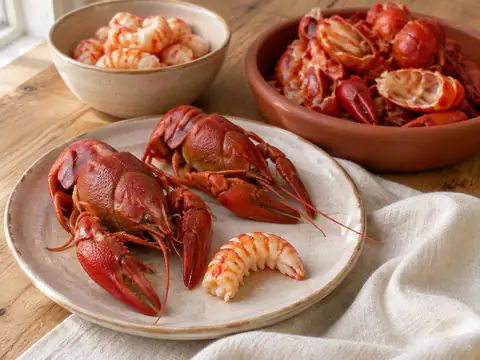
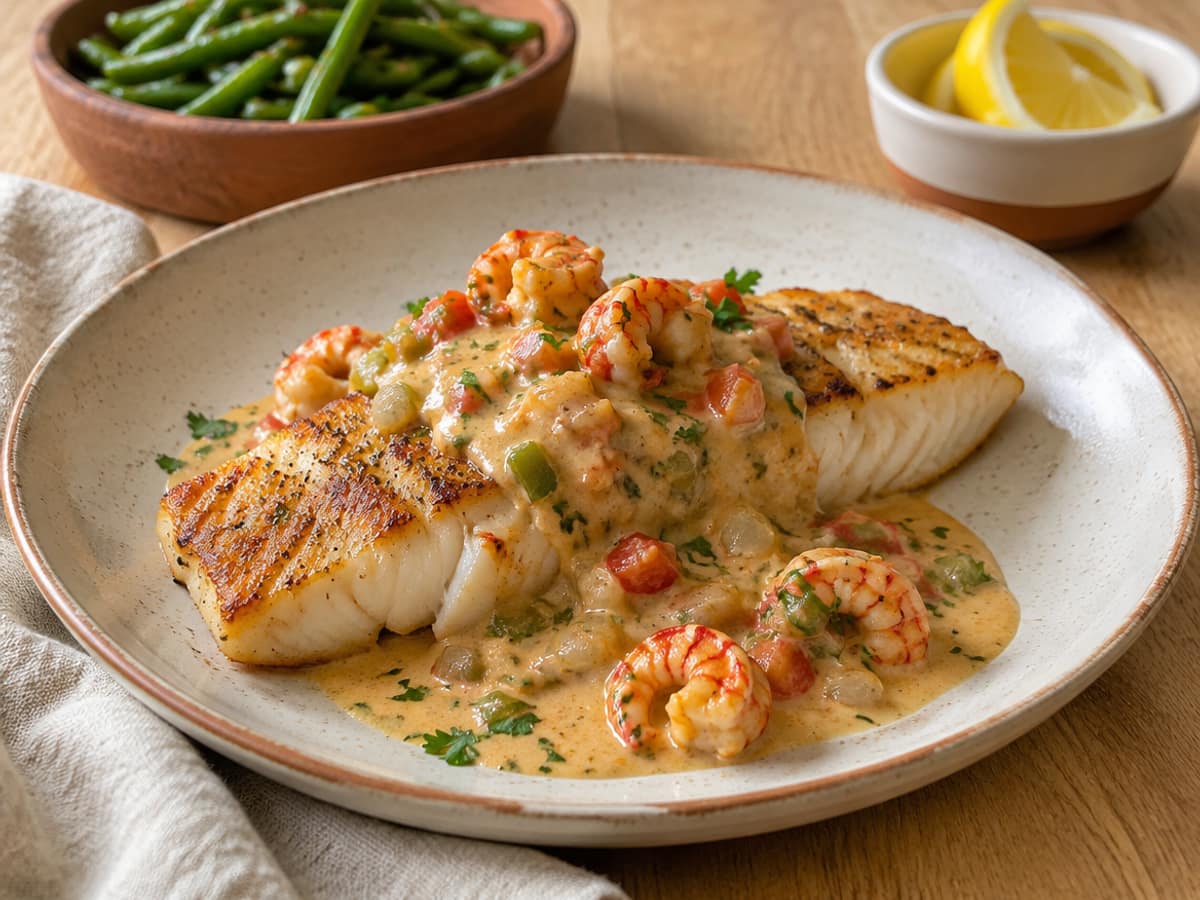
Fish with crawfish cream sauce is a skillet-seared fillet under a Cajun cream sauce full of tail meat. Sear four 6-ounce fillets 3 to 4 minutes per side, then use the same pan for a sauce of shallot, garlic, stock, cream and 1/2 pound (225 g) of cooked crawfish tails. It takes about 40 minutes and uses one skillet. If you have leftover tails from a boil, this is a good use for them; see how to make crawfish on the stove for the boil, and the seafood hub for more recipes.
Recipe
Fish With Crawfish Cream Sauce
- Yield4 servings (4 fillets of 6 oz / 170 g and about 2 1/2 cups of sauce)
- Prep15 min
- Cook25 min
- Total40 min
Ingredients
Fish
- 4680 g firm white fish fillets, 6 oz (170 g) each and about 1 inch thick, such as catfish, redfish, drum, snapper or cod
- 1 tsp3 g Cajun seasoning
- 1/2 tsp3 g fine salt
- 1 tbsp15 ml neutral oil
- 1 tbsp14 g butter
Crawfish cream sauce
- 2 tbsp28 g butter
- 1/4 cup40 g finely chopped shallot or onion
- 2 cloves6 g garlic, minced
- 1 tbsp8 g all-purpose flour
- 1/2 cup120 ml crawfish stock or seafood stock
- 1 cup240 ml heavy cream
- 1/2 lb225 g cooked crawfish tail meat
- 1/2 tsp1.5 g Cajun seasoning
- 1 tbsp15 ml lemon juice
- 2 tbsp12 g sliced green onions
Method
- Pat the fillets very dry with paper towels. Season both sides with the 1 tsp Cajun seasoning and the salt.
- Heat the oil and 1 tbsp butter in the skillet over medium-high heat until the butter foams. Add the fillets and cook, without moving them, 3 to 4 minutes, until golden underneath. Flip and cook 3 to 4 minutes more, until the thickest part reaches 145°F (63°C) and the flesh separates easily with a fork. Move the fish to a plate and tent loosely with foil.
- Pour off any burned bits but leave the browned flavor. Lower the heat to medium and melt the 2 tbsp butter. Cook the shallot 2 minutes, add the garlic for 30 seconds, then stir in the flour for 1 minute.
- Whisk in the stock, scraping up the browned bits, then the cream. Simmer gently, not boiling hard, for 4 to 5 minutes, until the sauce coats a spoon.
- Add the tail meat, the 1/2 tsp seasoning and the lemon juice. Heat 2 minutes, only until the tails are hot. Taste and add salt if needed.
- Spoon the sauce over the fish and scatter with green onions. Serve right away.
Notes
- Fillets thinner than 1 inch need 2 to 3 minutes per side. Thicker fillets need 5 to 6 minutes per side. Use the thermometer, not the clock.
- Frozen fillets should be thawed in the refrigerator overnight and patted dry, or they will steam instead of sear.
Why this method works
- Dry fish sears. Water on the surface turns to steam and keeps the fish from browning. Patting the fillets dry and starting in a hot pan gives a golden crust in a few minutes.
- Leave the fillet alone. The crust releases from the pan when it is ready. If it sticks, wait another 30 seconds.
- A little flour steadies the cream. One tablespoon of flour cooked in the butter holds the sauce together, so it does not separate when it simmers. The 1 cup of cream reduces to a sauce that coats a spoon in 4 to 5 minutes.
- The tails go in last. They are already cooked. A couple of minutes in the sauce warms them without making them tough.
Choosing and cooking the fish
Pick fillets that are the same thickness so they cook evenly. If one end is thin, tuck it under. The FDA says most seafood should reach an internal temperature of 145°F (63°C), and that cooked fish separates easily with a fork.
| Fillet thickness | Time per side | What to look for |
|---|---|---|
| 1/2 inch (1.3 cm) | 2 to 3 minutes | Golden crust, flakes at the thickest point |
| 1 inch (2.5 cm) | 3 to 4 minutes | Reaches 145°F (63°C) in the center |
| 1 1/2 inches (3.8 cm) | 5 to 6 minutes | Reaches 145°F (63°C); cover the pan for the last 2 minutes if the crust is dark |
Times are planning ranges for a medium-high stove. Burners and pans vary, so check the temperature.
Making the sauce
Stock gives the sauce backbone. If you have crawfish shells, crawfish stock is the best choice, but chicken stock or seafood stock works. Do not boil the sauce hard once the cream goes in. A gentle simmer thickens it without splitting it. If it does look grainy or oily, take the pan off the heat and whisk in a spoonful of cream or cold water.
Season with care. The tail meat, the stock and the Cajun seasoning all carry salt, so wait until the end to taste.
What to serve with it
Rice is the traditional partner, and it soaks up the sauce. Green beans, roasted potatoes or a simple salad round out the plate. A squeeze of lemon on the fish at the table wakes up the cream. For other dishes that use the tails, see crawfish etouffee and what to make with crawfish tail meat.
Fixes for common problems
- Soggy skin or no crust: The fish was wet or the pan was not hot. Dry the fillets and wait for the butter to foam.
- Fish sticks to the pan: It is not ready to flip. Give it another 30 seconds, then slide the spatula under.
- Overcooked, dry fish: Take it off the heat at 145°F (63°C). Tent it and it keeps cooking a little as it rests.
- Thin sauce: Simmer 2 to 3 minutes longer, uncovered.
- Split sauce: Whisk in a spoonful of cream off the heat.
Storing leftovers
Refrigerate leftovers within 2 hours, or 1 hour above 90°F (32°C). The USDA Food Safety and Inspection Service lists 3 to 4 days in the refrigerator for cooked fish and shellfish, and Rutgers Cooperative Extension advises heating leftovers to 165°F (74°C) throughout and notes that sauces and other wet foods can be reheated to a boil. For a cream sauce, heat it gently and stir often, so it does not separate. For crawfish handling in detail, see how to store and reheat leftover crawfish.
Questions and answers
What fish works best?
Use a firm, mild white fish that holds together in a skillet: catfish, redfish, drum, snapper or cod. Thin, flaky fillets such as sole break apart and need a shorter, gentler cook.
How do I know the fish is done?
The FDA gives 145°F (63°C) as the internal temperature for most seafood. Without a thermometer, the flesh should separate easily with a fork.
Can I make the sauce ahead?
Yes. Make it through step 4, cool and refrigerate it, then reheat gently and add the tail meat just before serving.
Sources
- Selecting and Serving Fresh and Frozen Seafood Safely — U.S. Food and Drug Administration
- Handling Leftovers Safely — Rutgers Cooperative Extension
- Leftovers and Food Safety — USDA Food Safety and Inspection Service