How to Peel and Eat Crawfish (Tails and Claws)
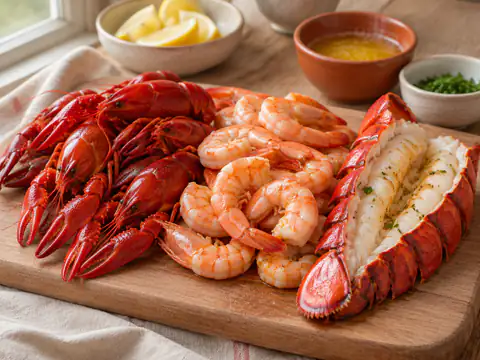
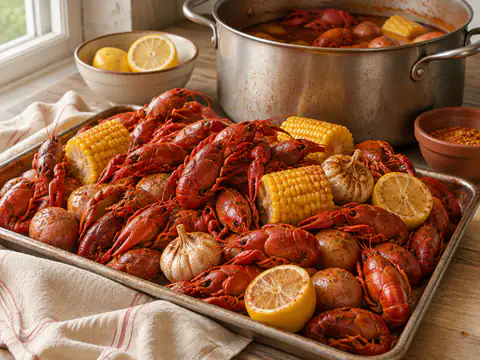
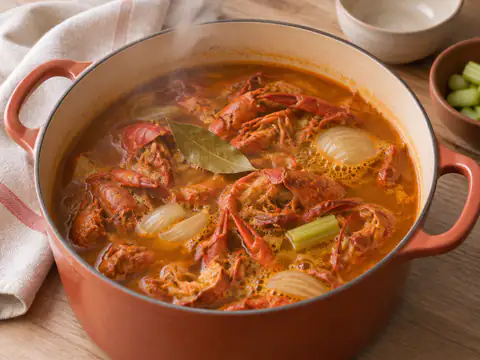
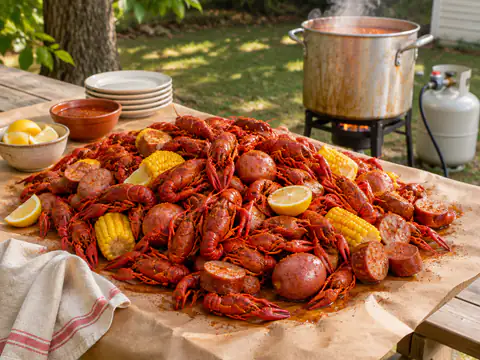
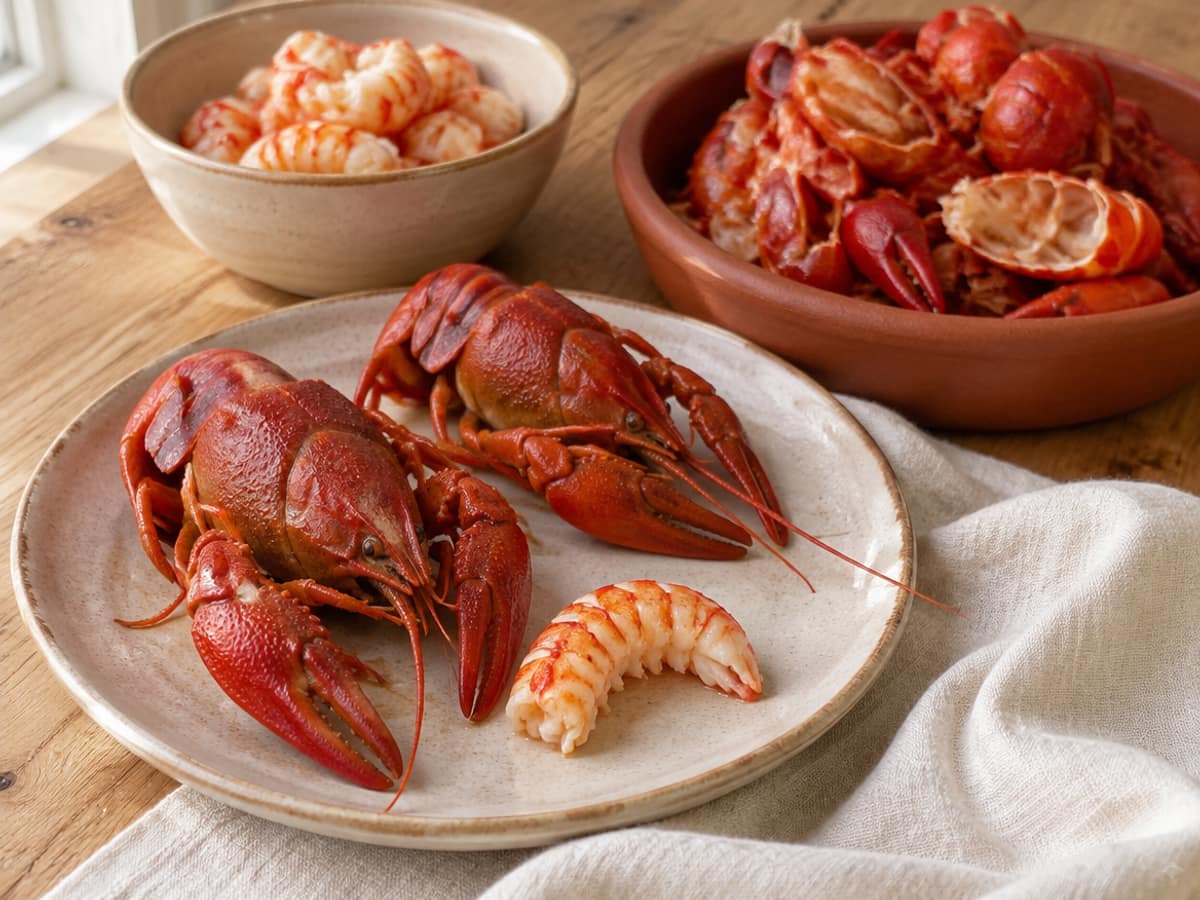
To peel and eat a boiled crawfish, twist the tail away from the head, peel off the first one or two rings of shell, pinch the end of the tail, and pull out the meat. Eat the tail meat, skip the head and legs unless you want to suck the head, and crack only the large claws. Peeling gets faster with practice. For the full recipe, see the stovetop crawfish boil or the outdoor boil for a crowd. More recipes are in the seafood hub.
What you need
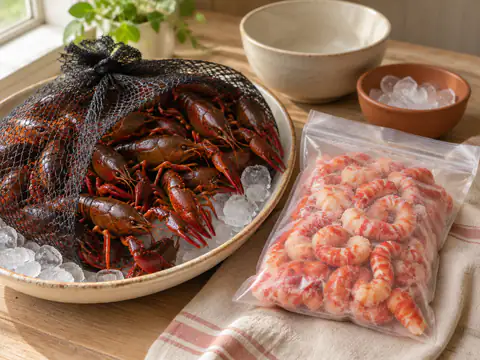
- A pile of boiled crawfish, still warm.
- Newspaper or butcher paper over the table, and a bowl or bucket for shells.
- Paper towels or wet wipes. Boil seasoning is hot and sticks to hands, so keep it away from your eyes.
- Lemon wedges, hot sauce or melted garlic butter, if you like.
- A nutcracker, for large claws. Teeth work too.
How to peel a crawfish tail
- Twist off the tail. Hold the head in one hand and the tail in the other. Twist and pull them apart. A bit of orange or yellow fat may come out of the head.
- Optional: suck the head. In Louisiana many people suck the juices from the head. The fat there is the hepatopancreas. Texas A&M AgriLife Extension notes it is orange and rich in red crawfish, and greenish and slightly less tasty in white crawfish. It is entirely optional, and it will be salty and spicy from the boil.
- Peel the first rings. Hold the tail with the underside facing you. Pinch and peel off the first one or two segments of shell, like opening a shrimp.
- Pinch and pull. Squeeze the tail fin firmly, then pull the meat out of the shell with your other hand. The tail meat comes out in one piece. Some people bite the end and pull it with their teeth.
- Check the vein. A dark line along the top of the meat is the intestinal tract. Pulling it off is optional. The LSU AgCenter notes that a short wash does little to empty it, so some peelers remove it and others do not.
How to eat the claws
Only large claws are worth the effort. They hold a small piece of meat.
- Pull the claw off the body where it meets the head.
- Bend the pincer back and forth until the thin outer piece snaps off, then pull the small piece free.
- Crack the main part of the claw with a nutcracker or your back teeth, and pick out the meat with a fork or your fingers.
Small claws do not have enough meat to bother. Leave them in the shell pile.
What to eat and what to skip
| Part | Eat or skip | Notes |
|---|---|---|
| Tail meat | Eat | Most of the meat. About 15 percent of a crawfish’s weight, according to Texas A&M. |
| Fat in the head | Optional | Rich and salty from the boil. Many people skip it. |
| Vein in the tail | Optional | Preference. Pull it off or leave it. |
| Large claws | Eat | Crack, then pick out the small piece of meat. |
| Small claws | Skip | Too little meat. |
| Head shell, legs, tail shell | Skip | Keep for stock. |
Etiquette and setup
- Start with the tail. Peel and eat a few before you reach for more.
- Keep the pile moving. Put shells in the bowl as you go. A full pile of shells slows everyone down.
- Warm crawfish are better. Food that sits out cools, and the FDA says perishable food should not sit at room temperature for more than two hours, or one hour above 90°F (32°C). If the boil runs long, refrigerate what is left.
- Wash your hands and wipe your phone. The seasoning transfers to everything.
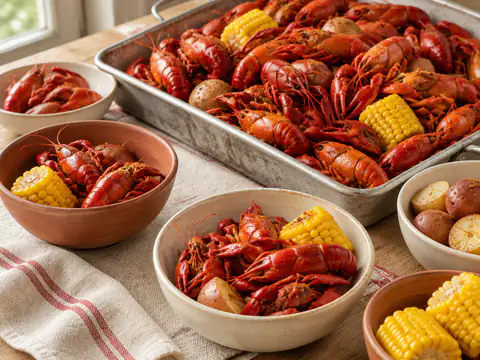
- Serve sides to slow the heat. Corn, potatoes and bread help balance the spice.
What if a crawfish looks or smells wrong
Eat only crawfish that smell clean and taste like seafood. If tail meat is mushy, falls apart or smells off, throw it away, as the FDA advises for cooked seafood that smells off. A straight tail alone is not a reason to discard a crawfish. The LSU AgCenter found that tail curl in cooked crawfish was not significantly different between crawfish that were alive when cooked and those that had been dead for five days in a cooler beforehand. The study did not look at safety or quality, so use your nose and the texture of the meat rather than the shape of the tail.
Common mistakes
- Pulling the tail meat out too hard. It breaks. Peel the first rings, then squeeze the end.
- Cracking claws too early. Wait until you have a pile of tails. Claws are the slow part.
- Throwing out the shells. Keep heads and shells for crawfish stock. Rinse them, chill them within 2 hours, and use or freeze them.
- Peeling for a dish too slowly. For etouffee or pasta, peel while the crawfish are warm, since they come apart more easily than when cold. Texas A&M notes the same for blanched crawfish.
How many to buy
The per-person chart shows how many pounds to buy for 2 to 50 people. As a rule of thumb, plan on about 3 lb of live crawfish per person when crawfish is the whole meal. If you are peeling a pile for a dish instead of eating them at the table, crawfish etouffee and what to make with crawfish tail meat show where the tails go, and how to store and reheat leftover crawfish covers keeping them safely.
Questions and answers
Do you eat the whole crawfish?
No. You eat the tail meat and the meat in large claws. The head, legs and shell are not eaten. Sucking the head is an optional Louisiana tradition.
What is the yellow stuff in a crawfish head?
It is the hepatopancreas, usually called the fat. In red crawfish it is orange with a rich flavor, according to Texas A&M AgriLife Extension. It is optional, and many people skip it.
Should I remove the vein in the tail?
It is a matter of preference. The dark line along the top of the tail meat is the intestinal tract. Many people pull it off, and others leave it.
Is a crawfish with a straight tail bad?
Not necessarily. LSU AgCenter research found that tail curl in cooked crawfish was not significantly different between crawfish alive when cooked and those dead for five days beforehand. Judge by smell and texture instead.
Sources
- Selecting and Serving Fresh and Frozen Seafood Safely — U.S. Food and Drug Administration
- Are You Storing Food Safely? — U.S. Food and Drug Administration
- Enjoying Louisiana Crawfish — Texas A&M AgriLife Extension
- Myths persist about saltwater purges, tail curl for cooking crawfish — LSU AgCenter