Crawfish Stock
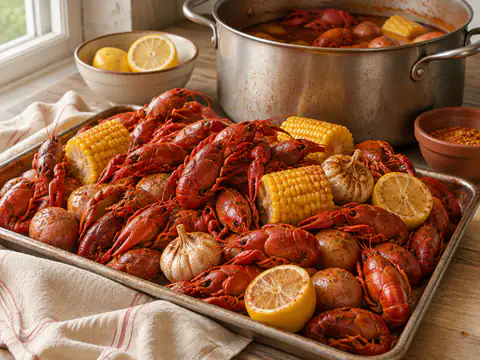
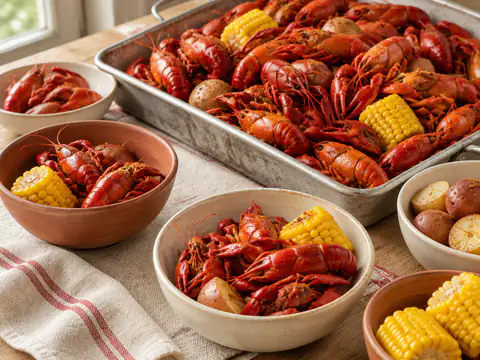
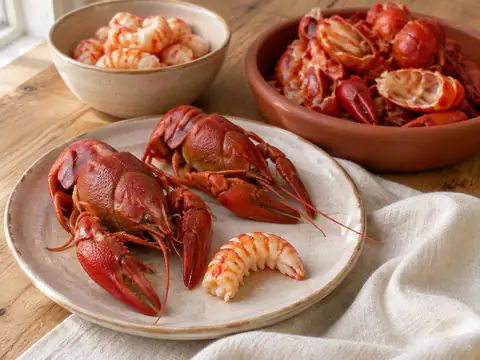
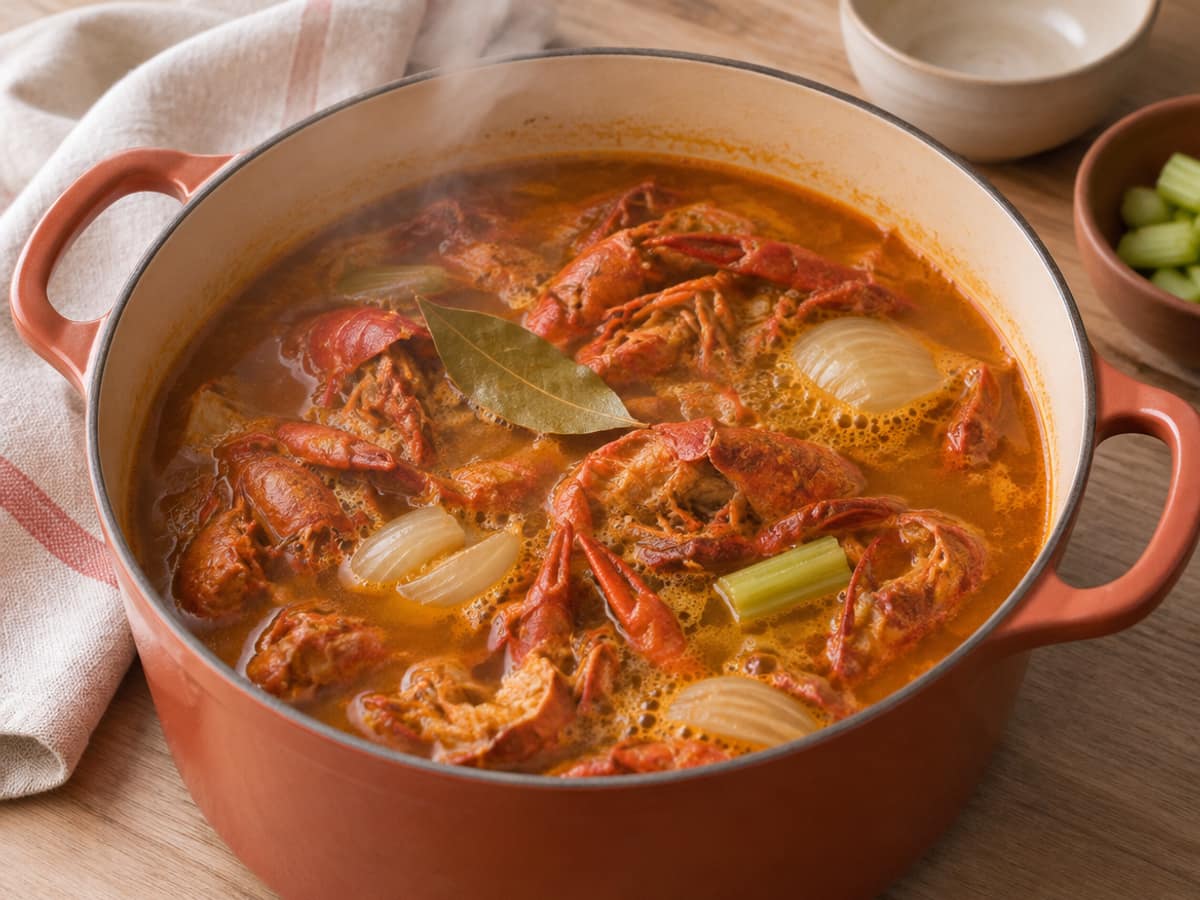
Crawfish stock is made by toasting boiled crawfish shells and heads in oil, adding onion, celery and bell pepper, covering everything with cold water, and simmering gently for 45 minutes. This recipe turns the shells from one 5 lb boil into about 3 1/2 quarts of orange-red stock, the base for etouffee, bisque, gumbo and seafood rice. The shells come from the stovetop crawfish boil or from a crowd-size outdoor boil. More seafood recipes live in the seafood hub.
Recipe
Crawfish Stock
- YieldAbout 3 1/2 quarts (3.3 liters)
- Prep15 min
- Cook1 hr 5 min
- Total1 hr 20 min
Ingredients
Stock
- Shells and heads from 5 lb of boiled crawfishabout 1.5 kg boiled crawfish shells and heads, tails already peeled; rinsed in cold water
- 2 tbsp28 ml neutral oil, such as canola
- 1 largeabout 300 g yellow onion, peeled and quartered
- 2 stalksabout 100 g celery, cut in 2-inch (5 cm) pieces
- 1about 150 g green bell pepper, seeded and quartered
- 4 clovesabout 12 g garlic, smashed
- 2 tbsp32 g tomato paste, optional, for color and depth
- 2 bay leaves
- 1/2 tsp1 g dried thyme
- 1/2 tsp1 g whole black peppercorns
- 4 quarts3.8 liters cold water, enough to cover the shells by about 1 inch
Method
- Rinse the shells and heads in a colander under cold running water for about a minute, tossing them, to wash off loose boil seasoning. Drain well.
- Heat the oil in the stockpot over medium-high heat. Add the shells and cook, stirring often, for 3 to 4 minutes, until they smell toasty and the oil turns orange.
- Add the onion, celery, bell pepper and garlic. Cook for 4 to 5 minutes, stirring, until the onion edges look glossy. Stir in the tomato paste, if using, and cook 1 minute.
- Add the bay leaves, thyme, peppercorns and the water. Bring to a boil over high heat, which takes 10 to 15 minutes.
- As soon as it boils, lower the heat until the surface barely trembles, with a bubble breaking every second or two. Skim off the foam with the ladle.
- Simmer uncovered for 45 minutes, skimming once or twice. Do not stir the shells; stirring crushes them into cloudy bits.
- Set the strainer over the large bowl and pour the stock through it. Press the shells gently with a ladle to release the liquid, then discard the solids.
- Taste the stock before salting. Cool it quickly, in shallow containers or an ice bath, and refrigerate or freeze within 2 hours.
Notes
- The shells already carry salt from the boil, so this recipe adds none. Salt the dish you make with the stock, not the stock.
- Raw heads and shells from live crawfish work the same way. Skip the rinse in step 1 and cook them a minute longer in step 2.
- For a darker stock, roast the shells on a rimmed sheet pan at 400°F (200°C) for about 15 minutes before step 2.
Why this method works
Most of a crawfish’s flavor sits in the shells and heads, not in the small amount of tail meat. Texas A&M AgriLife Extension puts tail meat at about 15 percent of a live crawfish’s weight, so the rest, which you would otherwise throw away, is where the stock comes from.
Three steps matter most:
- Toasting the shells in oil for a few minutes drives off moisture and deepens the flavor before any water goes in.
- Starting in cold water pulls flavor out slowly and lets proteins rise to the top, where you can skim them off.
- A gentle simmer keeps the stock clear. A hard boil breaks the shells into small pieces and clouds the liquid.
The onion, celery and bell pepper are the Louisiana base that goes into most gumbos and etouffees. Here they sweeten the stock and balance the briny shells.
Shells from a boil: rinse, then taste
Shells from a boil come coated in salt, cayenne and other seasoning. Rinse them well and add no salt of your own. After straining, taste the stock. If it is too salty or spicy, thin it with water to taste. If it is bland, simmer it down a little. Salt only the dish you make with it, because stock concentrates as it cooks down.
If you have shells from crawfish that you peeled raw, or from peeled tails you bought, you can skip the rinse and add a pinch of salt at the end.
Fresh, frozen or leftover shells
Use shells the day of the boil if you can. Boiled shells left on the table are food too: the FDA says that perishable food should not sit at room temperature for more than 2 hours, or 1 hour if the air is above 90°F (32°C). So pull the shells and heads into a bowl as you eat, and chill that bowl within 2 hours. Discard shells that sat out longer, or that were scraped from plates with other food on them.
For later, freeze the rinsed shells in a zip-top bag, with the air pressed out. Texas A&M AgriLife notes that crawfish fat can turn rancid in the freezer in as little as 2 to 6 months, so use frozen shells inside that window.
Why a gentle simmer
Keep the heat low enough that the liquid barely moves. Skim the gray foam in the first 10 minutes, then leave it. Shells are thin and brittle: boiling hard breaks them into grit that clouds the stock and can make it taste bitter. Stirring does the same thing. Forty-five minutes is enough. If the stock tastes thin after straining, reduce it rather than simmering the shells longer.
Storing the stock
Cool the stock fast, since a big hot pot takes hours to cool on its own. Pour it into shallow containers or set the pot in an ice bath, and get it into the refrigerator within 2 hours. For the freezer, use 2-cup (480 ml) containers or zip-top bags laid flat, leaving room for the liquid to expand.
Texas A&M AgriLife says prepared crawfish dishes keep high quality for several months when properly packaged and frozen at 0°F (-18°C). Refrigerate the stock within 2 hours and use it within 3 to 4 days, the limit USDA FSIS gives for leftovers (USDA FSIS), and freeze the rest.
What to make with it
- Crawfish etouffee: use it in place of water to cook the roux and vegetables.
- Crawfish bisque: use it as the base; the soup is thickened with a light roux and blended with half the tails.
- Gumbo: use it as the liquid. Because it is mild, it works with sausage or chicken as well as seafood.
- Rice, pasta and tail meat: cook rice or orzo in the stock for a deep crawfish flavor, then stir in peeled tails. What to make with crawfish tail meat has eight ideas.
Common problems
- Cloudy stock: it boiled hard or was stirred. Strain through a coffee filter or a cloth-lined strainer for a clearer result.
- Bitter: the shells were simmered too long or scorched in step 2. Keep the heat at medium-high, not high.
- Weak flavor: too much water. Cover the shells by only about 1 inch, and reduce the strained stock.
Questions and answers
How long do you simmer crawfish stock?
Simmer for 45 minutes. Shells give up most of their flavor in that time, and a longer simmer turns the stock bitter and chalky rather than richer.
Can I make stock from frozen shells?
Yes. Put the frozen shells straight into the hot oil in step 2, or thaw them in the refrigerator overnight. Use them soon: Texas A&M AgriLife says crawfish fat can turn rancid in the freezer in as little as 2 to 6 months.
Why is my stock too salty?
Boiled shells hold the salt and spice from the boil. Rinse them well, skip added salt, and thin the stock with water if it is still too salty.
Sources
- Leftovers and Food Safety — USDA Food Safety and Inspection Service
- Are You Storing Food Safely? — U.S. Food and Drug Administration
- Enjoying Louisiana Crawfish — Texas A&M AgriLife Extension