Crawfish Etouffee
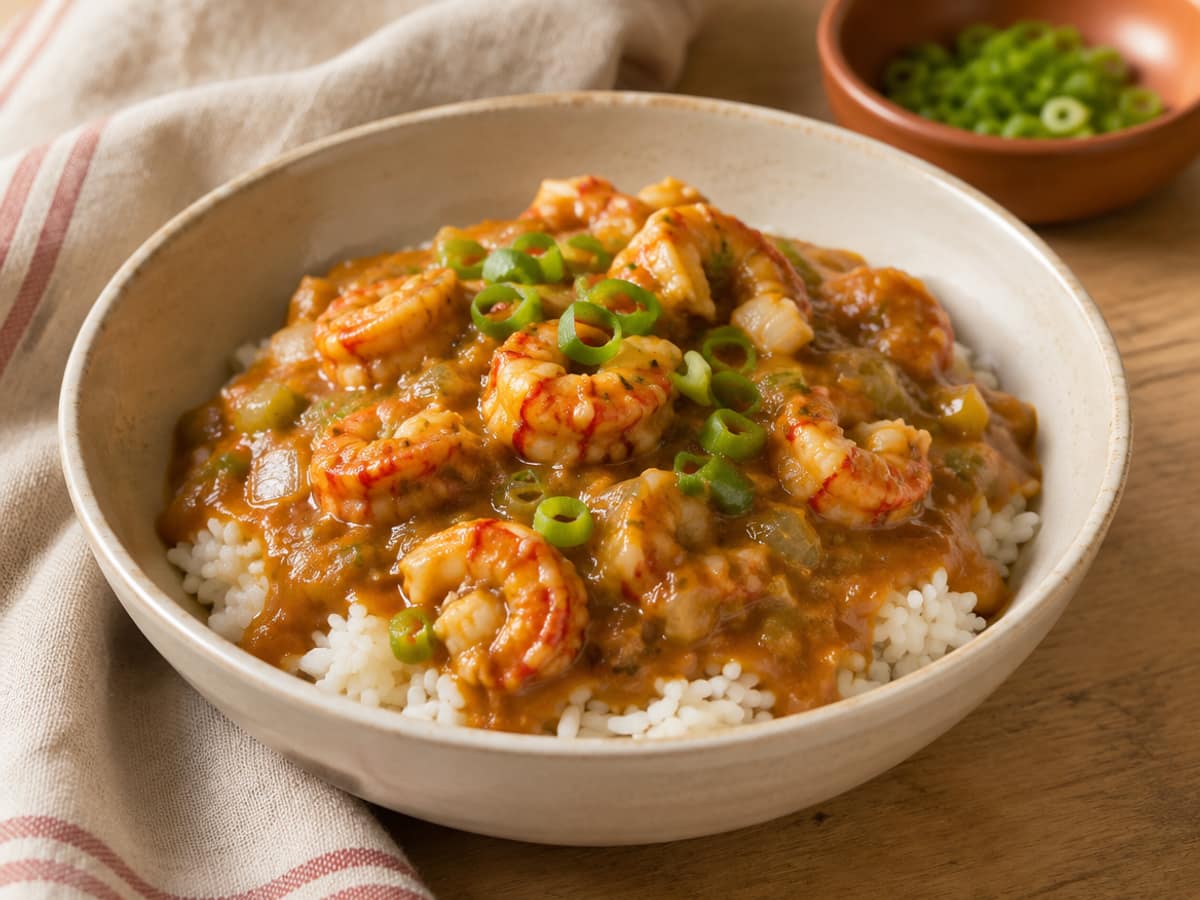
This crawfish etouffee is a thick, golden sauce built on a peanut-butter roux, onion, celery and bell pepper, simmered with stock and finished with 1 pound (450 g) of crawfish tail meat. It serves four over rice and takes about an hour. The sauce is the work: the tails only need a few minutes to heat through. For a full boil that gives you the tails and shells, see the stovetop crawfish recipe, and find more dishes in the seafood hub.
Recipe
Crawfish Etouffee
- Yield4 servings, about 4 cups of etouffee over 4 cups of cooked rice
- Prep20 min
- Cook40 min
- Total1 hr
Ingredients
Roux
- 1/2 cup120 ml neutral oil
- 1/2 cup63 g all-purpose flour
Vegetables
- 1 cup150 g finely chopped yellow onion
- 1/2 cup75 g finely chopped celery
- 1/2 cup75 g finely chopped green bell pepper
- 3 cloves9 g garlic, minced
Sauce
- 1 1/2 cups360 ml crawfish stock or seafood stock, warm
- 1 bay leaf
- 1 tsp3 g Cajun seasoning
- 1/4 tsp0.5 g cayenne pepper, optional
Finish
- 1 lb450 g cooked peeled crawfish tail meat, with the fat if you have it
- 2 tbsp28 g butter
- 1/4 cup25 g sliced green onions
- 2 tbsp8 g chopped parsley
- 4 cupsabout 630 g cooked long-grain rice, for serving
Method
- Heat the oil in the pot over medium heat for 1 minute. Whisk in the flour and cook, stirring constantly, for 10 to 15 minutes, until the roux is the color of peanut butter. Do not walk away. A roux that burns smells acrid and has to be started again.
- Add the onion, celery and bell pepper all at once. The vegetables cool the roux and stop it from darkening. Cook, stirring, for 6 to 8 minutes, until soft. Add the garlic and cook 1 minute.
- Stir in the warm stock a little at a time so the sauce stays smooth. Add the bay leaf, Cajun seasoning and cayenne. Simmer over low heat for 15 minutes, stirring now and then, until the sauce is thick enough to coat a spoon.
- Stir in the tail meat and butter. Heat only until the tails are hot, 3 to 5 minutes. A hard boil toughens them.
- Remove the bay leaf and stir in the green onions and parsley. Taste before adding salt, because the stock and the tails both carry salt.
- Spoon over hot rice and serve.
Notes
- Make it ahead through step 3. Cool and refrigerate the sauce, then reheat it and add the tails just before serving.
- For a hotter etouffee, add cayenne a pinch at a time at the end.
Why this method works
Etouffee comes from a French word for smothered. The roux thickens the sauce, and the onion, celery and bell pepper, often called the trinity, give it body and flavor. The recipe keeps to a few steady ratios:
- Roux: 1/2 cup of oil to 1/2 cup of flour, equal parts by volume. That is enough to thicken 1 1/2 cups of stock plus the juices from the vegetables into a sauce that clings to rice.
- Stock: 1 1/2 cups for 1 pound of tail meat. More makes a soup. Less makes a paste.
- Tail meat: 1 pound for four servings. Texas A&M AgriLife Extension plans on 1 pound of tails to feed three people, so four servings here are a little lean; use 1 1/2 lb (680 g) for bigger portions.
The roux, step by step
Stirring is the whole job. Keep the heat at medium, scrape the bottom of the pot, and watch the color change from pale to straw to peanut butter. When it gets there, add the cold vegetables right away. They drop the temperature and stop the roux from going darker. If you see black flecks, start again. A burnt roux tastes bitter and cannot be rescued.
Using stock
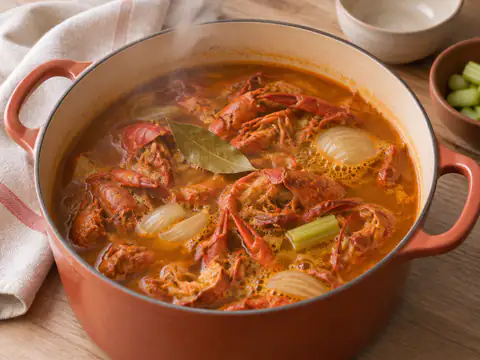
Crawfish stock gives the sauce its deep, sweet shellfish flavor. If you have shells from a boil, crawfish stock makes about 3 1/2 quarts, and the extra freezes well. Warm the stock before you add it, so the roux does not seize into lumps. If you have no stock, a store-bought seafood stock works, and so does water with an extra pinch of seasoning, such as Cajun seasoning mixed at home.
Cooking the tail meat
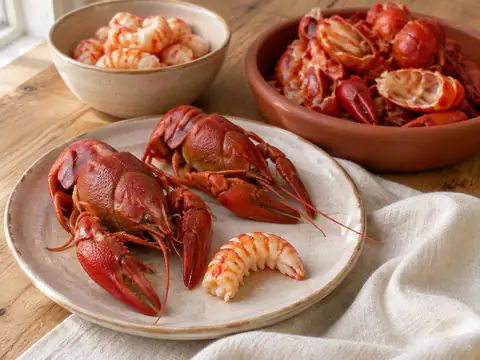
Tail meat is already cooked. Heat it for 3 to 5 minutes and no more. If you cook it longer, the tails turn rubbery. If you are using leftover tails from a boil, make sure they are hot all the way through, to 165°F (74°C), the reheating target Rutgers Cooperative Extension gives for leftovers. Leave the yellow-orange fat on the tails if you have it, because it adds flavor to the sauce.
What to serve with it
Serve etouffee over plain long-grain rice. A green salad, sliced tomatoes or French bread for the sauce all go well. A few drops of hot sauce at the table lets everyone set their own heat. For other ways to use the tails, see what to make with crawfish tail meat, or make fish with crawfish cream sauce.
Fixes for common problems
- Lumpy sauce: Stir the warm stock in slowly. Whisk hard, then strain if needed.
- Too thin: Simmer 5 to 10 minutes longer with the lid off.
- Too thick: Stir in warm stock or water a tablespoon at a time.
- Too salty: Add unsalted stock or a splash of water and a squeeze of lemon. Rice absorbs a lot of salt, so taste with rice.
- Rubbery tails: The sauce boiled after the tails went in. Add them off the boil next time.
Storing and reheating
Cool the etouffee quickly and refrigerate it within 2 hours (1 hour above 90°F (32°C)), in shallow containers. The USDA Food Safety and Inspection Service lists 3 to 4 days for leftovers, and Rutgers says to never keep them longer than four days. Texas A&M AgriLife Extension lists crawfish dishes such as etouffee as good for freezing, with high quality for several months at 0°F when packed airtight in shallow containers with 1/2 inch of headspace. Reheat on the stove over low heat, stirring, until it reaches 165°F (74°C). The full set of times is in how to store and reheat leftover crawfish.
Questions and answers
How dark should the roux be?
Etouffee uses a lighter roux than gumbo. Cook it to the color of peanut butter, which takes 10 to 15 minutes over medium heat, and stop there so the sauce stays golden.
Can I use water instead of stock?
Yes, but the flavor is thinner. Crawfish stock from the shells is the best base, and a seafood stock works too. If you use unsalted stock or water, add more seasoning and salt at the end.
Is etouffee the same as gumbo?
No. Etouffee is a thick sauce served over rice, made with a lighter roux. Gumbo is a soup-like stew with a darker roux.
Sources
- Enjoying Louisiana Crawfish — Texas A&M AgriLife Extension
- Handling Leftovers Safely — Rutgers Cooperative Extension
- Leftovers and Food Safety — USDA Food Safety and Inspection Service