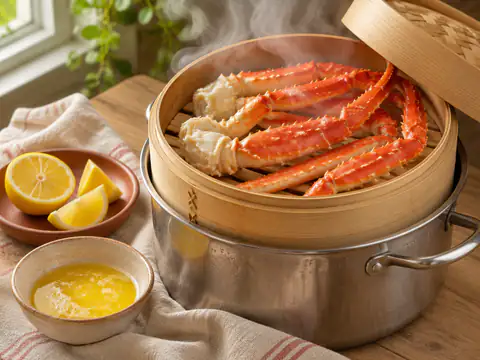
Garlic Butter Seafood Sauce
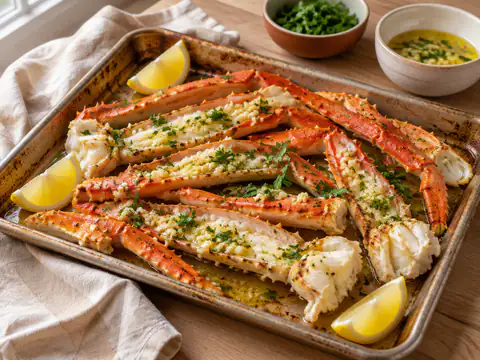
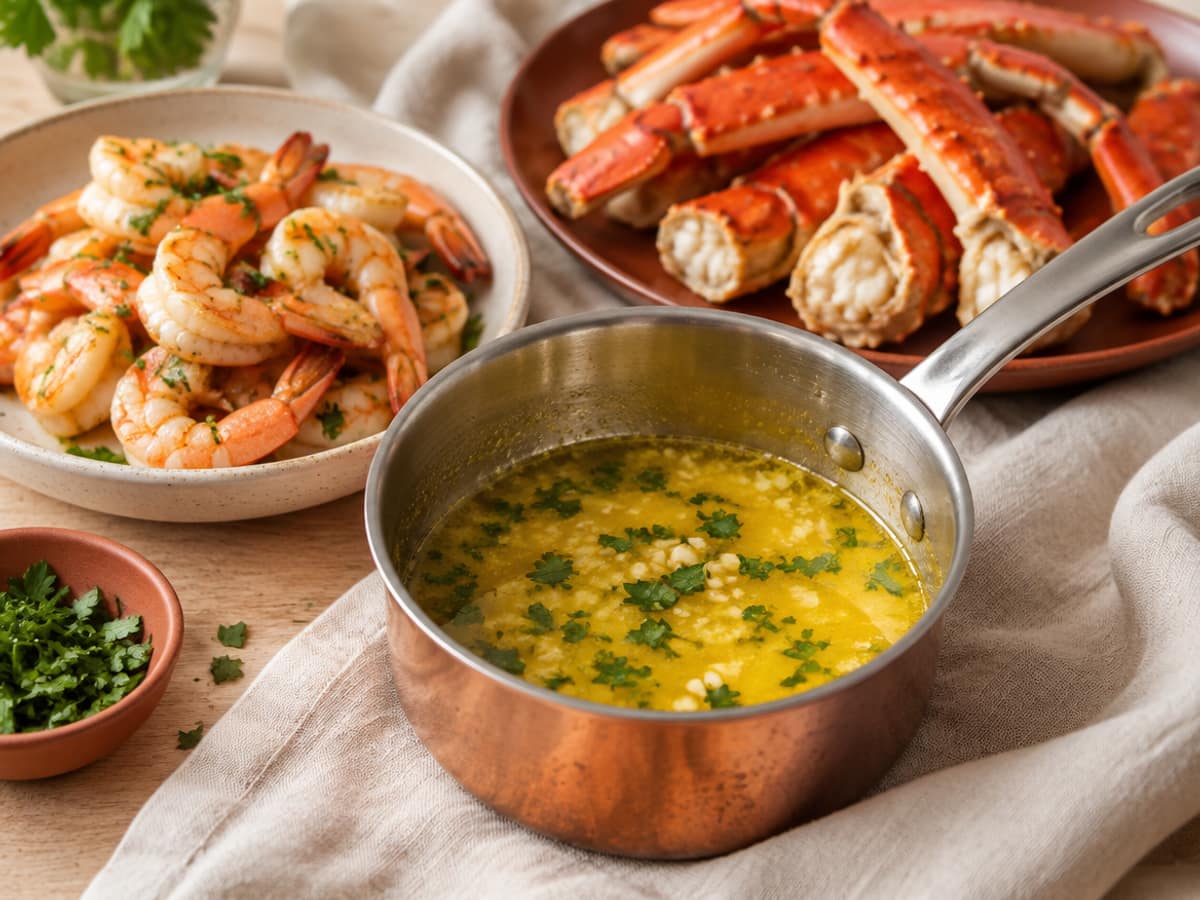
This garlic butter seafood sauce is a quick pan sauce: garlic, white wine and lemon are reduced, then cold butter is whisked in until the sauce turns pale and creamy. It makes about 2/3 cup (160 ml), enough for 1 pound (450 g) of shrimp, scallops or fish, and takes 15 minutes. It is not the melted garlic butter used for garlic butter crab legs or the base butter in 10 garlic butter crab dinners. Those are poured or dipped. This one is built in a pan so it clings. Browse more recipes in the seafood hub.
Recipe
Garlic Butter Seafood Sauce
- YieldAbout 2/3 cup (160 ml) of sauce, enough for 1 lb (450 g) of seafood and 4 servings
- Prep5 min
- Cook10 min
- Total15 min
Ingredients
- 1 tbsp14 g unsalted butter, for the pan
- 4 cloves12 g garlic, minced fine
- 1/2 cup120 ml dry white wine, or seafood or chicken stock
- 1 tbsp15 ml lemon juice
- 5 tbsp70 g cold unsalted butter, cut into 1/2-inch cubes
- 1 tbsp4 g chopped parsley
- 1/4 tsp1.5 g fine salt, to taste
Method
- Melt the 1 tbsp butter in the skillet over medium-low heat. Add the garlic and cook 30 to 60 seconds, stirring, until it smells sweet. It should not brown.
- Pour in the wine or stock. Raise the heat to medium-high and simmer 3 to 4 minutes, until it has reduced by about half, to roughly 1/4 cup.
- Add the lemon juice. Lower the heat to its lowest setting, or take the pan off the burner for a moment.
- Whisk in the cold butter, two cubes at a time, adding the next cubes as the last ones melt. Keep the pan barely warm. The sauce turns pale and creamy and thickens slightly.
- Stir in the parsley and salt. Taste, adjust and spoon over the cooked seafood right away.
Notes
- For a steadier sauce, add 2 tablespoons of heavy cream with the lemon juice.
- Keep the sauce warm for a few minutes by setting the pan in a bowl of hot tap water, not over a flame.
Why this method works
- Reducing the wine first removes some water and concentrates the flavor, so the sauce is not thin.
- Cold butter, added slowly, makes an emulsion. Whisking small cubes into a barely warm liquid keeps the butter fat suspended in tiny droplets, which gives a creamy, glossy sauce instead of a puddle of oil.
- Heat is the enemy. If the pan gets too hot, the butter separates. That is why the heat goes low before the butter goes in.
- Lemon last keeps the sauce bright, and a little acid also makes the sauce taste lighter.
What to cook it with
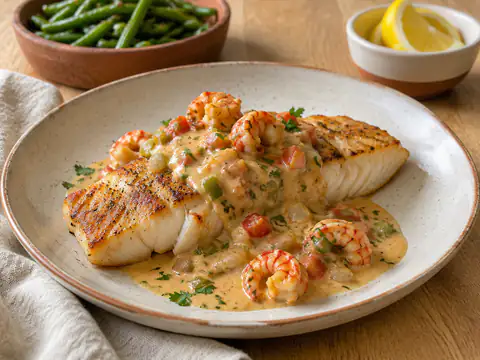
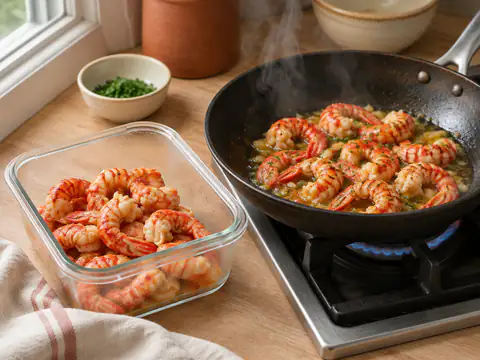
Cook the seafood first, set it aside, and make the sauce in the same pan. The FDA says most seafood should be cooked to an internal temperature of 145°F (63°C); shrimp, scallops and crab turn firm, pearly and opaque, and fish separates easily with a fork.
| Seafood | How to cook it first | Time (planning range) |
|---|---|---|
| Large shrimp, peeled, 1 lb (450 g) | Hot skillet, 1 tbsp oil | 2 to 3 minutes per side |
| Sea scallops, 1 lb (450 g), patted dry | Hot skillet, 1 tbsp oil | 1 1/2 to 2 minutes per side |
| Firm white fish fillets, 1 inch thick | Medium-high skillet, 1 tbsp oil | 3 to 4 minutes per side |
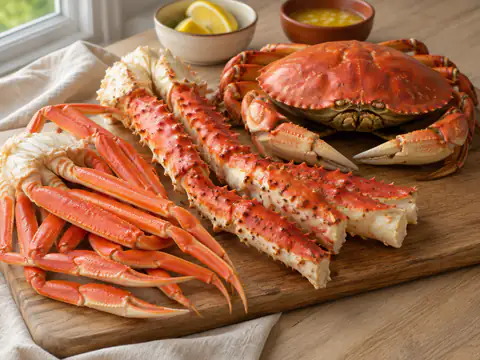
| Cooked crab legs | Heated by steaming or baking, see how to cook crab legs | 6 to 14 minutes |
The times are planning ranges. Use the 145°F (63°C) target and the visual cues. Rinse and dry shrimp and scallops so they sear.
Variations
| Version | Add to the sauce |
|---|---|
| Cajun | 1 tsp Cajun seasoning and a pinch of cayenne |
| Herb | 1 tbsp chopped tarragon or chives in place of the parsley |
| Spicy | 1/4 tsp red pepper flakes with the garlic |
| Creamy | 2 tbsp heavy cream with the lemon juice |
| Lemon pepper | 1 tsp lemon zest and 1/2 tsp black pepper |
Fixes for common problems
- Oily or split sauce: Take the pan off the heat. Whisk in 1 tbsp of cold water or cream until it comes back together.
- Bitter garlic: The garlic browned. Start again; burnt garlic cannot be hidden.
- Too sharp: Whisk in one more cube of butter.
- Too salty: Crab, shrimp and stock can already carry salt. Taste the seafood and the sauce together.
- Thin sauce: Reduce the wine for another minute next time, before the butter goes in.
Serving and storing
Serve right away, with crusty bread or rice to catch the sauce. For a full dinner, pair it with sides from what to serve with crab legs. A butter sauce does not hold well, so make it just before you eat. If you have leftovers, refrigerate them within 2 hours, or 1 hour above 90°F (32°C), as the FDA advises. Rutgers Cooperative Extension says never to keep leftovers longer than four days. Reheat gently, stirring, and heat leftover seafood to 165°F (74°C) throughout.
Questions and answers
How is this different from garlic butter for crab legs?
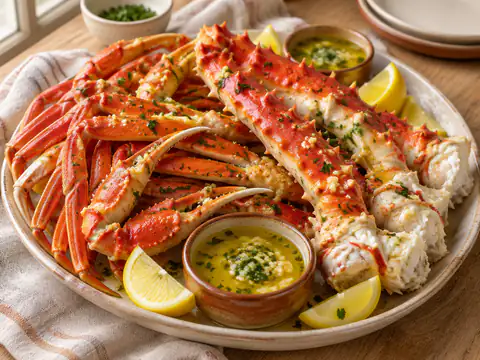
Garlic butter for crab is melted and spooned over or served for dipping. This is a pan sauce: the wine reduces first, then cold butter is whisked in off the heat so it turns creamy and clings to shrimp, scallops and fish.
Why does my sauce turn oily?
It got too hot, so the butter separated. Take the pan off the heat and whisk in 1 tablespoon of cold water or cream, then keep it barely warm.
How do I know the seafood is cooked?
The FDA says most seafood should reach 145°F (63°C), that shrimp, scallops and crab turn firm, pearly and opaque, and that fish separates easily with a fork.
Sources
- Selecting and Serving Fresh and Frozen Seafood Safely — U.S. Food and Drug Administration
- Are You Storing Food Safely? — U.S. Food and Drug Administration
- Handling Leftovers Safely — Rutgers Cooperative Extension