Refreshing 15 Green Juice Ideas for Energy
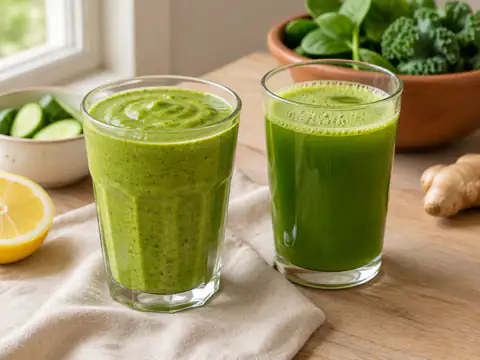
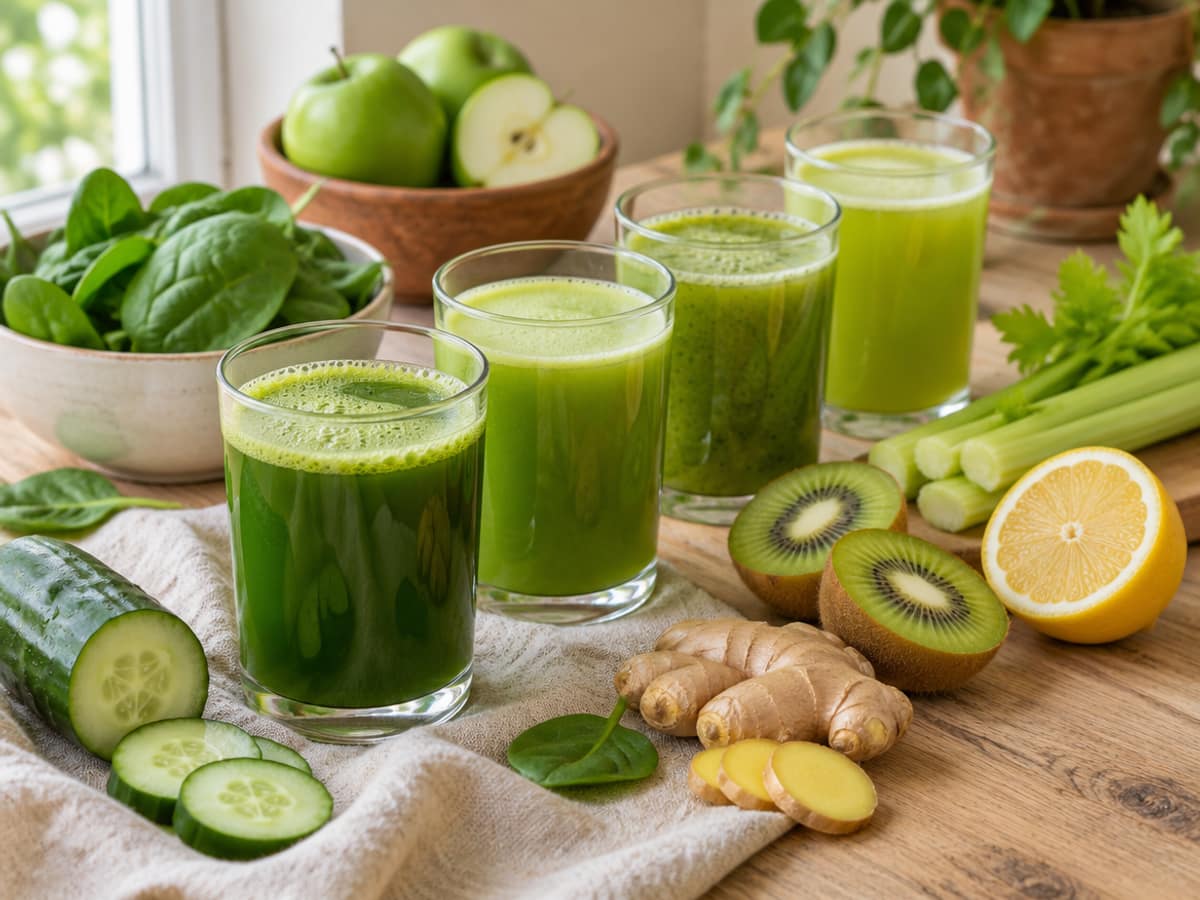
Here are 15 green juice recipes, each with exact amounts, a juicer method, a blender method and a note on how it tastes. Most make one glass of about 1 1/4 to 1 3/4 cups (300 to 400 ml). Start with the classic green juice or the spinach and pineapple if you have not made green juice before; both are mild and sweet. Move on to kale, chard or parsley once you like the taste of greens.
Juice is a drink, not an energy supplement. What these recipes offer is a cold, fresh drink that tastes good. More drinks live in the juices and drinks hub.
How to balance a green juice
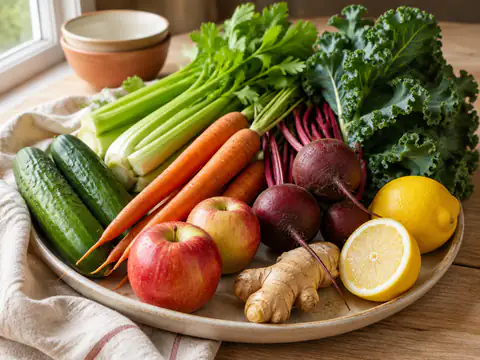
The juices on this page follow the same pattern:
- A watery base for volume: cucumber, celery, romaine or melon. These make up about half the produce by weight.
- Something sweet to balance the greens: apple, pear, pineapple, grapes or kiwi.
- Greens for color and flavor: spinach (mild), romaine (very mild), chard (earthy), kale (strong), parsley (sharp).
- Acid to keep it bright: lemon or lime. Without it, green juice tastes flat.
- An accent, if you like: ginger, mint or basil. A strong dose of ginger on its own is ginger lemon shots.
If a juice tastes too grassy, add more apple or lemon. If it is too sweet, add cucumber; low-sugar green juice builds that into the recipe. For a guide to which produce juices well and how to prepare each kind, see best vegetables and fruits for juicing, and for juices made from one main ingredient, see celery juice, cucumber juice and kale apple juice.
The 15 juices at a glance
| Juice | Greens | Sweetness | Strength of green taste |
|---|---|---|---|
| Classic green | Celery, cucumber | Medium | Medium |
| Cucumber, mint and lime | Cucumber, mint | Low | Mild |
| Kale, apple and lemon | Kale | Medium | Strong |
| Spinach and pineapple | Spinach | High | Very mild |
| Spinach, pear and ginger | Spinach, celery | Medium-high | Mild |
| Celery and green apple | Celery | Medium | Medium |
| Pineapple, cucumber and mint | Cucumber, mint | High | Mild |
| Romaine, pear and lime | Romaine | Medium | Very mild |
| Kiwi, cucumber and spinach | Spinach | Medium, tart | Mild |
| Honeydew, mint and lime | Mint | High | Very mild |
| Fennel, apple and lemon | Fennel, celery | Medium | Medium |
| Swiss chard and green apple | Chard | Medium | Strong |
| Parsley, cucumber and lemon | Parsley, celery | Low | Strong |
| Zucchini, cucumber and lime | Zucchini | Low | Mild |
| Green grape, basil and lime | Basil | High | Mild |
-
Classic Green Juice
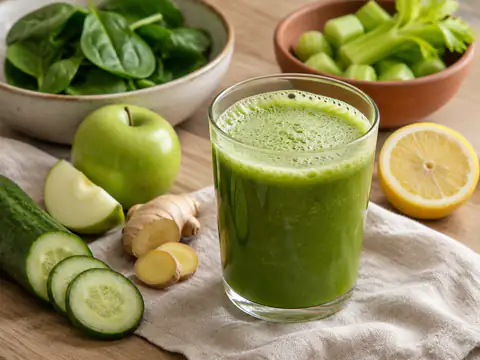
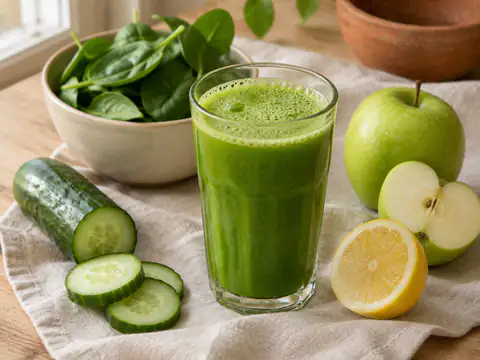
Cucumber, celery, green apple, lemon and ginger. The apple sweetens, the lemon sharpens, and the ginger adds a little heat at the end. A good first green juice.
Ingredients
- 1 mediumabout 300 g cucumber
- 3 stalksabout 150 g celery
- 1 mediumabout 180 g green apple, cored
- 1/2about 40 g lemon, peeled
- 1-inch (2.5 cm) pieceabout 10 g fresh ginger
Steps
- Juicer: cut everything to fit the chute and feed the ginger and lemon between the cucumber and celery so the watery produce pushes them through.
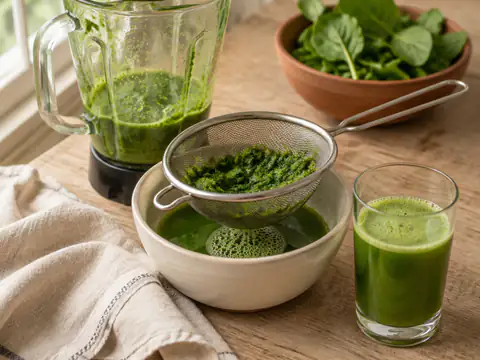
- Blender: chop everything, add 1/2 cup (120 ml) cold water and blend on high 60 seconds.
- Strain the blended mix through a fine-mesh sieve or nut-milk bag, pressing hard on the pulp.
- Stir and drink straight away, over ice if you like.
Taste: bright, lightly sweet, clean. Use less ginger if you are new to it.
-
Cucumber, Mint and Lime
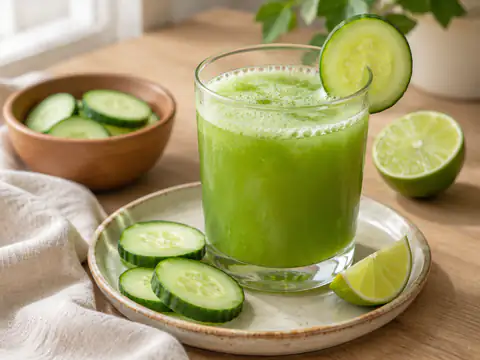
The mildest juice on the list. Cucumber is mostly water, so this tastes like a cold, minty limeade without much sweetness.
Ingredients
- 2 mediumabout 600 g cucumbers
- 1/4 cup leavesabout 5 g fresh mint
- 1about 60 g lime, peeled
- 1 tsp7 g honey, optional
Steps
- Juicer: roll the mint into a tight bundle and feed it between cucumber pieces, then juice the lime.
- Blender: chop the cucumber, add mint and lime, and blend 45 seconds. Cucumber has enough water that you rarely need extra.
- Strain blended juice through a fine sieve.
- Stir in honey if you want it sweeter.
Taste: cool, grassy, sharp. Very little sweetness.
-
Kale, Apple and Lemon
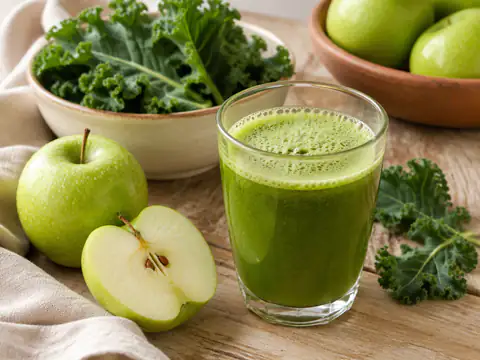
Kale gives a deep green color and a slightly bitter, peppery taste. Two apples balance it.
Ingredients
- 4 large leaves (about 2 cups loosely packed)about 60 g kale, stems on
- 2 mediumabout 360 g apples, cored
- 1/2about 40 g lemon, peeled
- 1/2 mediumabout 150 g cucumber
Steps
- Juicer: roll each kale leaf tightly and feed it between apple pieces. Slow (masticating) juicers usually get more juice from leaves than fast centrifugal ones.
- Blender: tear the kale, chop the rest, add 1/2 cup (120 ml) cold water and blend 60 to 90 seconds until no flecks of leaf remain.
- Strain blended juice through a nut-milk bag and squeeze well.
- Taste and add more lemon if it is flat.
Taste: earthy and slightly bitter, softened by apple. Lacinato (Tuscan) kale is milder than curly kale.
-
Spinach and Pineapple
Spinach is the mildest leafy green, and pineapple covers it completely. The pineapple masks the spinach.
Ingredients
- 2 cups60 g baby spinach
- 1 1/2 cups chunksabout 250 g fresh pineapple
- 1/2 mediumabout 150 g cucumber
- 1/2about 30 g lime, peeled
Steps
- Juicer: alternate handfuls of spinach with pineapple chunks so the fruit pushes the leaves through.
- Blender: add pineapple and cucumber first, then spinach and lime, and blend 60 seconds. No water needed.
- Strain through a fine sieve. Pineapple pulp is fibrous, so press it well.
- Serve cold.
Taste: tropical and sweet, with only a faint green edge.
-
Spinach, Pear and Ginger
Ripe pear gives a softer, rounder sweetness than apple. Ginger keeps it from tasting too sweet.
Ingredients
- 2 cups60 g baby spinach
- 2 mediumabout 360 g ripe pears, cored
- 2 stalksabout 100 g celery
- 1/2-inch (1 cm) pieceabout 5 g fresh ginger
Steps
- Juicer: feed spinach between pear pieces, then the celery and ginger.
- Blender: chop everything, add 1/4 cup (60 ml) cold water and blend 60 seconds.
- Strain and press the pulp.
- Stir before pouring; pear juice settles quickly.
Taste: mellow, floral, gently spicy. Very ripe pears make it thick.
-
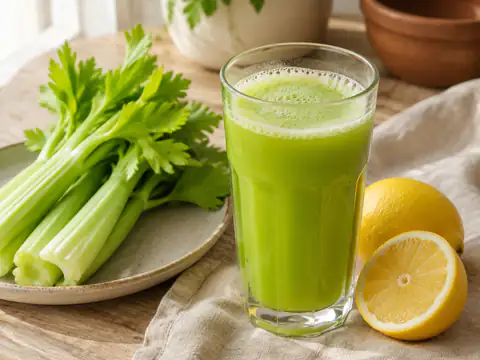
Celery and Green Apple
Two ingredients. The apple takes the edge off celery's salty, herbal taste, so this is easier to drink than straight celery juice.
Ingredients
- 6 stalksabout 300 g celery
- 1 largeabout 220 g green apple, cored
Steps
- Juicer: cut celery into 3-inch (7 cm) lengths so the stringy fibers do not wrap around the blade, then juice with the apple.
- Blender: chop both finely, add 1/4 cup (60 ml) cold water and blend 60 seconds.
- Strain well; celery pulp holds a lot of juice.
- Drink cold.
Taste: savory-sweet and very fresh. Add a squeeze of lemon if you like it sharper.
-
Pineapple, Cucumber and Mint
Pineapple and mint are a classic pair. Cucumber stretches the juice and keeps it light.
Ingredients
- 1 cup chunksabout 165 g fresh pineapple
- 1 mediumabout 300 g cucumber
- 1/4 cup leavesabout 5 g fresh mint
- 1/2about 30 g lime, peeled
Steps
- Juicer: bundle the mint and feed it between pineapple and cucumber pieces, then the lime.
- Blender: blend everything for 45 to 60 seconds without extra water.
- Strain through a fine sieve.
- Pour over ice.
Taste: sweet, minty and very refreshing on a hot day.
-
Romaine, Pear and Lime
Romaine lettuce is mostly water and tastes of very little, so it gives volume and a pale green color without bitterness.
Ingredients
- 4 large leavesabout 100 g romaine lettuce
- 1 mediumabout 180 g ripe pear, cored
- 1/2 mediumabout 150 g cucumber
- 1about 60 g lime, peeled
Steps
- Juicer: fold each romaine leaf in half and feed it between pear and cucumber.
- Blender: tear the romaine, chop the rest and blend 45 seconds. Romaine is watery enough that no extra water is needed.
- Strain.
- Taste and add more lime if it needs lifting.
Taste: light, sweet and citrusy. A good choice if kale is too strong for you.
-
Kiwi, Cucumber and Spinach
Kiwi is green and tart, so it adds color and sourness at the same time. Peel it for the juicer; the blender can handle the skin, but it tastes fuzzy.
Ingredients
- 3about 210 g peeled ripe kiwi
- 1 mediumabout 300 g cucumber
- 1 cup30 g baby spinach
- 1 tsp7 g honey, optional
Steps
- Juicer: peel the kiwi and juice it with the cucumber and spinach.
- Blender: blend everything 45 seconds. Do not blend much longer, or the black seeds crack and turn the juice gritty and bitter.
- Strain through a fine sieve.
- Sweeten with honey if the kiwi was very tart.
Taste: tangy and bright, like a sour green lemonade.
-
Honeydew, Mint and Lime
Ripe honeydew melon juices easily and gives a pale green, sweet juice. It is closer to an agua fresca than a vegetable juice.
Ingredients
- 2 cups cubesabout 340 g ripe honeydew melon, rind removed
- 1/2 mediumabout 150 g cucumber
- 8 to 10 leavesabout 3 g fresh mint
- 1/2about 30 g lime, peeled
Steps
- Scrub the melon rind with a clean brush before cutting so dirt is not carried into the flesh.
- Juicer: juice the melon, cucumber, mint and lime.
- Blender: blend everything 30 to 45 seconds; melon needs no water.
- Strain if you want it smooth, or drink it as is.
Taste: sweet, floral and mild. A ripe honeydew smells sweet at the blossom end.
-
Fennel, Apple and Lemon
Raw fennel has a light anise flavor that turns gentle and sweet in juice. Apple and lemon round it out.
Ingredients
- 1/2 bulbabout 120 g fennel, fronds included
- 2 mediumabout 360 g green apples, cored
- 1/2about 40 g lemon, peeled
- 1 stalkabout 50 g celery
Steps
- Juicer: cut fennel into wedges and juice with the apples, lemon and celery.
- Blender: slice fennel thinly, chop the rest, add 1/2 cup (120 ml) cold water and blend 60 seconds.
- Strain through a nut-milk bag.
- Serve cold; the anise note is strongest when the juice is warm.
Taste: sweet with a soft licorice finish.
-
Swiss Chard and Green Apple
Chard is earthier than spinach but softer than kale. Use green or white-stemmed chard; red stems turn the juice brown.
Ingredients
- 3 large leavesabout 120 g green Swiss chard, stems on
- 2 mediumabout 360 g green apples, cored
- 1/2about 40 g lemon, peeled
- 1/2-inch (1 cm) pieceabout 5 g fresh ginger
Steps
- Juicer: roll the chard leaves and feed them between apple pieces, then the lemon and ginger.
- Blender: chop everything, add 1/2 cup (120 ml) cold water and blend 60 to 90 seconds.
- Strain well and press the pulp.
- Drink straight away.
Taste: earthy, tart and lightly spiced.
-
Parsley, Cucumber and Lemon
A sharp, herbal juice with no fruit except lemon. Parsley is strong; a handful is plenty.
Ingredients
- 1 1/2 mediumabout 450 g cucumbers
- 1/2 cup loosely packedabout 15 g flat-leaf parsley, stems included
- 2 stalksabout 100 g celery
- 1about 80 g lemon, peeled
Steps
- Juicer: bundle the parsley and feed it between cucumber pieces, then the celery and lemon.
- Blender: chop everything and blend 60 seconds. Cucumber provides the liquid.
- Strain through a fine sieve.
- Pour over ice and add a pinch of salt if you like savory drinks.
Taste: very fresh and green, sour, not sweet. Closer to a savory drink.
-
Zucchini, Cucumber and Lime
Raw zucchini is mild and slightly nutty and gives a smooth body. With cucumber and lime this is a light juice.
Ingredients
- 1 mediumabout 200 g zucchini
- 1 mediumabout 300 g cucumber
- 1about 60 g lime, peeled
- 1/2 smallabout 70 g green apple, cored, optional, for sweetness
Steps
- Juicer: cut zucchini and cucumber into spears and juice with the lime and apple.
- Blender: chop everything and blend 45 to 60 seconds. Add a splash of water only if the blender stalls.
- Strain.
- Taste. Without the apple it is barely sweet; add it if you want more fruit.
Taste: soft, mild and limey.
-
Green Grape, Basil and Lime
Green grapes juice very easily and make a sweet base. Basil gives a peppery, summery smell.
Ingredients
- 2 cupsabout 300 g seedless green grapes
- 1/2 mediumabout 150 g cucumber
- 1/4 cup leavesabout 6 g fresh basil
- 1/2about 30 g lime, peeled
Steps
- Juicer: feed basil between handfuls of grapes, then the cucumber and lime.
- Blender: blend everything 30 to 45 seconds.
- Strain through a fine sieve to remove grape skins.
- Serve very cold.
Taste: sweet, fragrant and grape-forward. Add more cucumber to make it less sweet.
Juicer or blender: which method to use
A juicer separates the juice from the pulp for you. Centrifugal juicers spin fast and work well with hard produce like apples, cucumbers and celery. Slow (masticating) juicers press the produce and usually get more juice out of leafy greens and herbs. With either, feed leaves between pieces of firm produce so they get pushed through.
A blender works for every recipe here. Chop the produce, add a little cold water only if the recipe calls for it, and blend on high until completely smooth, usually 30 to 90 seconds. Then pour it through a fine-mesh sieve, or better, a nut-milk bag, and squeeze out as much liquid as you can. Expect to strain for a couple of minutes. If you skip straining, you have a green smoothie rather than a juice: thicker, with the fiber left in, as set out in green smoothie vs green juice. How to make green juice without a juicer has the full method and a tool-by-tool table. If you are new to green juice, green juice for beginners gives one mild base recipe with swaps.
Prep and food safety
Juice is made from raw produce that is not cooked, so cleanliness matters. The FDA’s advice for juice made at home is to wash your hands for at least 20 seconds before and after preparing it, cut away damaged or bruised spots, throw away anything rotten, and wash all produce under running water before cutting, even if you plan to peel it. Scrub firm produce such as cucumbers and melons with a clean produce brush, then dry it with a clean towel. The FDA does not recommend washing produce with soap, detergent or commercial produce wash (FDA juice safety).
The same FDA page explains that juice which has not been pasteurized or otherwise treated can carry harmful bacteria, and that children, older adults, pregnant women and people with weakened immune systems risk serious illness from drinking untreated juice. If you or the person you are making it for is in one of those groups, choose pasteurized juice instead. The FDA also covers choosing and storing fresh produce safely.
Storing fresh juice
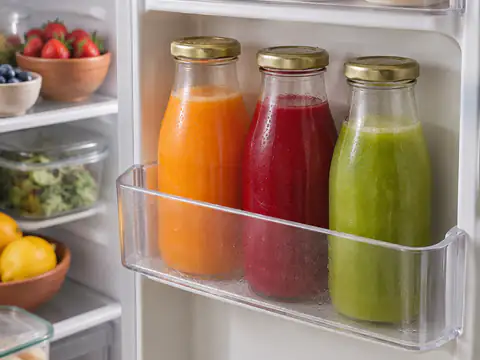
Fresh juice tastes best right after it is made. As it sits it separates, darkens and loses its fresh flavor, so stir it before drinking. If you need to keep it, pour it into a clean jar filled to the top, seal it and keep it in the fridge; the FDA says untreated juice should be kept refrigerated. Drink it as soon as you can. No FDA or extension page gives a number of days for homemade juice, so there is no honest number to give here; how long fresh juice lasts lists what those sources do say about refrigeration, the 2-hour limit at room temperature and signs that juice should be thrown out. The FDA says perishable food should not sit at room temperature for more than 2 hours.
Common problems
- Foamy juice: normal with apples and pineapple in fast juicers. Skim it or let the juice sit for a minute.
- Gritty juice: strain blended juice twice, or through a nut-milk bag instead of a sieve.
- Bitter juice: too many strong greens. Halve the kale or parsley and add apple or lemon.
- Brown juice: red chard stems, overripe fruit or juice left sitting. Use green-stemmed chard and drink it fresh.
- Too little juice: leafy greens yield little in fast juicers. Use a blender for leaf-heavy recipes.
Questions and answers
Will green juice give me energy?
No. Juice is a drink, not an energy supplement. Drink it because it tastes good cold and fresh.
Can I make green juice without a juicer?
Yes. Blend the chopped produce, with a little cold water if the recipe calls for it, for 30 to 90 seconds, then strain it through a fine-mesh sieve or nut-milk bag and press out the liquid. Every recipe on this page gives a blender method.
Which green juice is least bitter?
Spinach and pineapple, honeydew and mint, and romaine with pear are the mildest. Kale, chard and parsley juices taste the most green.
Is homemade green juice safe for everyone?
The FDA notes that untreated, unpasteurized juice can make children, older adults, pregnant women and people with weakened immune systems seriously ill. Those groups should choose pasteurized juice. Wash all produce well and keep fresh juice refrigerated.
Sources
- What You Need to Know About Juice Safety — U.S. Food and Drug Administration
- Selecting and Serving Produce Safely — U.S. Food and Drug Administration