How Long Does Fresh Juice Last?
Drink fresh homemade juice soon after you make it, and keep it cold until then. No FDA or extension page cited here gives a number of days for homemade juice, so the advice is to keep it cold and drink it soon. The sections below give what they do say, and how to store juice so it stays as safe and fresh as it can.
What the sources say
- The FDA says juice sold fresh that has not been pasteurized or otherwise treated should be kept under refrigeration. It does not give a time limit.
- The FDA’s storing food safely page says never to let perishable food sit at room temperature for more than two hours, or one hour when the air is above 90°F (32°C), and that food that looks or smells suspicious should be thrown out.
- Illinois Extension lists 40°F (4°C) as the safe refrigerator temperature and 2 hours as the most time to leave food unrefrigerated.
None of these gives a day count for fresh juice. Blogs and juicer makers give numbers, but they are not food-safety sources.
Is it pasteurized?
Look at the label before you buy. The FDA says untreated juice sold in stores must carry a warning that it has not been pasteurized and may contain harmful bacteria. Pasteurized or otherwise treated juice is usually sold refrigerated, in the frozen food case, or in boxes, bottles and cans on a shelf. Juice you press at home, and juice a juice bar presses for you, is untreated unless the bar says otherwise. Ask if you are unsure.
Who should be careful
The FDA says untreated juice can make anyone ill, and that the illness can be serious in children, older adults, pregnant women and people with weakened immune systems. If you are in one of those groups, or you are feeding a child, ask whether pasteurized juice is the better choice. Store-bought juice that is not pasteurized or treated must carry a warning label.
How to store fresh juice
- Wash the produce first. Rinse everything under running water, as the FDA advises, and dry it with a clean towel. Skip soap and produce wash.
- Use clean equipment. Wash the juicer parts, strainer and jar in hot soapy water before each batch.
- Pour into a clean jar. Fill it to the top so there is little air, then close the lid tightly.
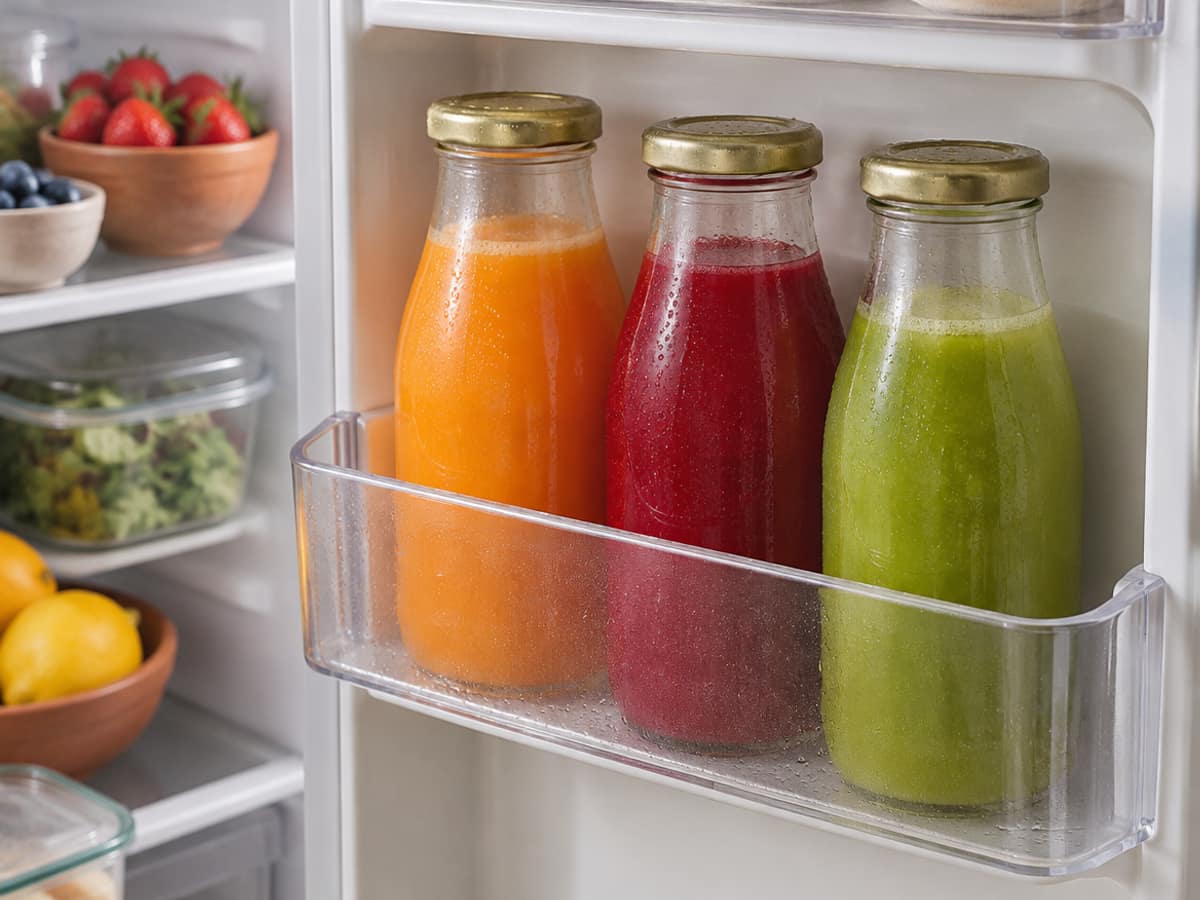
- Refrigerate within 2 hours. Put it in the back of the fridge, not the door, where the temperature changes. Keep the refrigerator at 40°F (4°C) or below.
- Drink it soon. Pour only what you plan to drink and leave the rest sealed. Shake or stir before drinking, because juice separates.
- Throw out leftovers you are unsure about. Do not top up an old jar with fresh juice.
Signs to throw it out
| What you notice | What to do |
|---|---|
| Sour, fermented or yeasty smell | Throw it out |
| Fizzing, bubbles or a bulging lid | Throw it out |
| Mold on the surface or at the rim | Throw it out |
| Slimy texture or off taste | Throw it out |
| Left out more than 2 hours (1 hour above 90°F (32°C)) | Throw it out |
| Only separated, with a darker color | A quality change; stir it, but the flavor is past its best |
When you are unsure, throw it out. The FDA’s advice is that food that looks or smells suspicious should not be eaten.
Make less, waste less
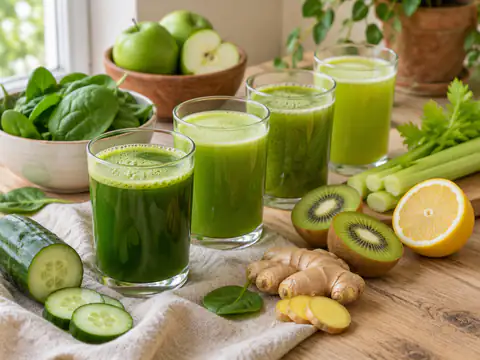
The simplest storage plan is to make only what you will drink in one sitting. A single glass is about 1 1/2 cups (350 ml), which comes from roughly 580 g (1 1/4 lb) of produce. If you want to juice for two people, double the produce and pour two glasses right away instead of storing one.
If you do keep some, treat it as a leftover:
- Cool it in the fridge, not on the counter.
- Keep it in a clean, covered glass jar.
- Smell it before you pour it. A sour or fermented smell means it is finished.
- Pour only what you will drink now, so the jar is opened as few times as possible.
Why juice changes in the fridge
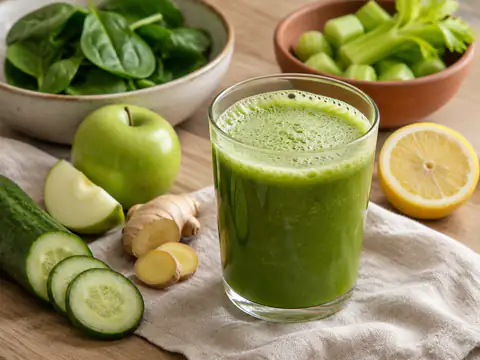
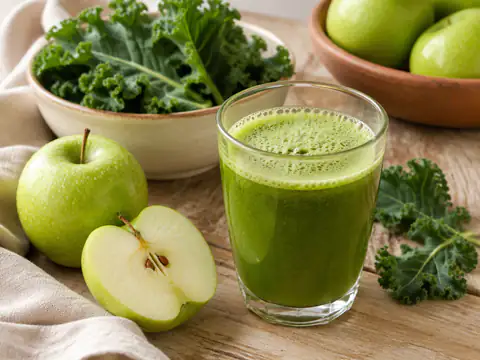
Separation and darkening are quality changes, not safety signs. Juice made from leafy greens and cucumber tends to separate into a clear layer and a cloudy layer. Apple and pear juice darkens when it meets air. A squeeze of lemon juice slows the darkening a little, but it does not make juice safe to keep longer.
Fresh flavor fades the longer juice sits, so the best plan is to make only what you will drink. If you want a smaller batch, scale the recipe down: half the produce makes about 3/4 cup (175 ml).
Juice from a juice bar or shop
Juice made on site at a bar or market is often untreated, and the FDA says it is required to carry the warning label if it has not been pasteurized or otherwise treated. Treat it the same way as homemade juice: keep it cold, drink it soon and do not leave it in a warm bag or car. If you buy a bottle to drink later, check the label and keep it in the refrigerator until you open it.
Freezing
The FDA and extension pages cited here give no freezing guidance for fresh homemade juice, so this page gives none.
More on juice
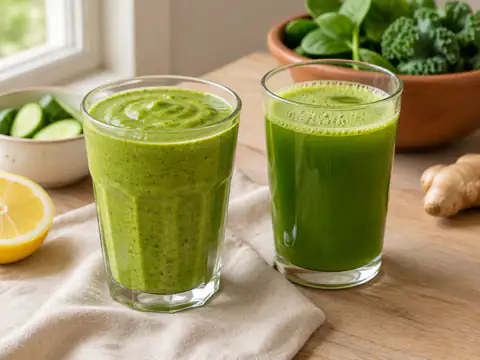
Green juice without a juicer shows a small-batch method. The 15 green juice ideas has a storage section, and the juices and drinks hub lists every juice page. Green smoothie vs green juice compares the two drinks.
Questions and answers
How long does homemade juice last in the fridge?
The FDA says untreated juice should be kept under refrigeration, and it does not give a number of days. Extension pages on refrigerator storage give 40°F (4°C) and a 2-hour limit at room temperature, also without a juice time. Drink fresh juice soon after making it.
Can I leave fresh juice out on the counter?
Not for long. The FDA says perishable food should not sit at room temperature for more than 2 hours, or 1 hour when the air is above 90°F (32°C).
Is store-bought juice different?
Yes. Most store-bought juice is pasteurized or otherwise treated. Untreated juice sold refrigerated must carry a warning label, so check for it.
Sources
- What You Need to Know About Juice Safety — U.S. Food and Drug Administration
- Are You Storing Food Safely? — U.S. Food and Drug Administration
- Refrigerator Storage — University of Illinois Extension
- Selecting and Serving Produce Safely — U.S. Food and Drug Administration