Best Vegetables and Fruits for Juicing
Good produce for juicing is watery, firm and mild: cucumber, celery, apple and pear as a base, with a handful of leafy greens, a little lemon and a small piece of ginger for flavor. Soft, starchy produce like banana and avocado belongs in a blender, not a juicer. This guide groups common produce by how it tastes and juices, with a few prep tips and safety notes.
Mild and juicy: your base
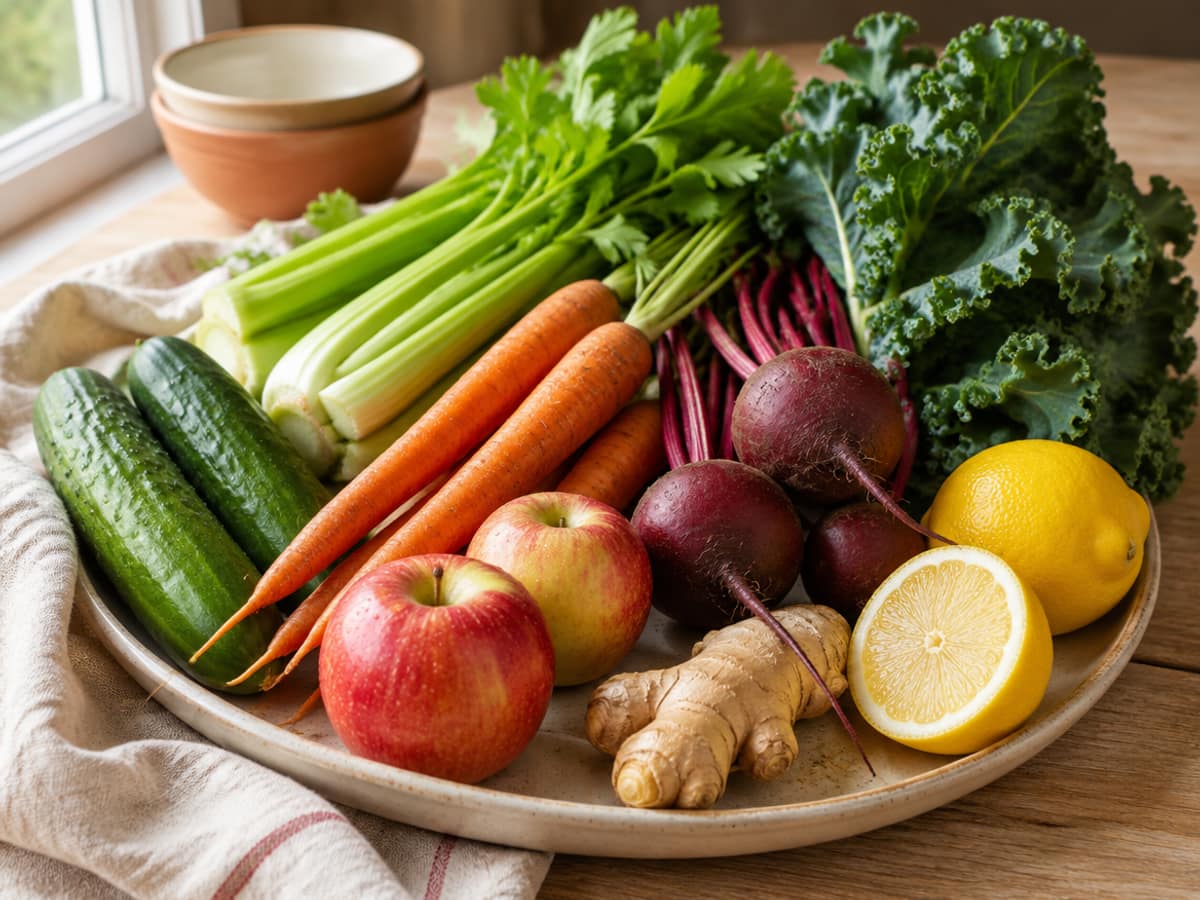
These make up most of the volume in a green juice. They are mild, so they carry stronger flavors without taking over.
| Produce | Taste and use | Prep tip |
|---|---|---|
| Cucumber | Clean, cool and watery. The easiest base. | Leave the peel on if it is thin; peel if it is waxed or bitter. |
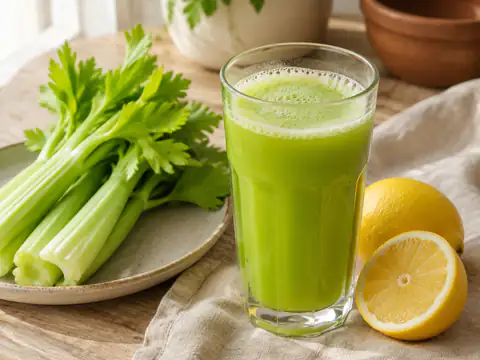
| Celery | Salty and herbal. Gives plenty of juice. | Cut into 3-inch (7 cm) lengths so strings do not wind around the blade. See celery juice. |
| Green apple | Tart and sweet. Balances greens. | Core it if your juicer does not handle seeds well. |
| Pear | Soft and sweet. Milder than apple. | Use ripe but firm pears; mushy pears clog. |
| Pineapple | Sweet and sharp. Works with mint. | Remove the skin and core. |
| Melon (honeydew) | Very sweet and mild. Pairs with cucumber and lime. | Remove the rind and seeds. |
Leafy greens and herbs
Greens give color and a grassy taste. Use them in small amounts at first.
| Produce | Taste and use | Prep tip |
|---|---|---|
| Baby spinach | Almost no taste. The mildest beginner green. | Sandwich leaves between firm produce so they get pushed through. |
| Romaine | Mild and slightly sweet. | Chop; use the crisp inner leaves. |
| Kale | Earthy and a little bitter. Pairs with apple and lemon. | Remove the thick stem, then bunch the leaves. |
| Swiss chard | Earthy and mild. | Use the leaves and chopped stems. |
| Parsley, mint, basil | Fresh and strong. Use a small handful. | Pack the leaves between pieces of cucumber. |
Strong flavors: use sparingly
| Produce | Taste and use | Prep tip |
|---|---|---|
| Ginger | Hot and spicy. A piece the size of a thumbnail is enough. | Scrub; peel only if the skin is tough. |
| Lemon and lime | Sharp. One half is plenty for a glass. | Peel off the rind; the white pith is bitter. |
| Beet | Earthy and sweet. Turns the juice deep red. | Scrub well and cut small; it is hard. |
| Fennel | Mild licorice. Pairs with apple. | Use the bulb, trimmed. |
| Carrot | Sweet and earthy. | Cut into short lengths. |
What to blend instead
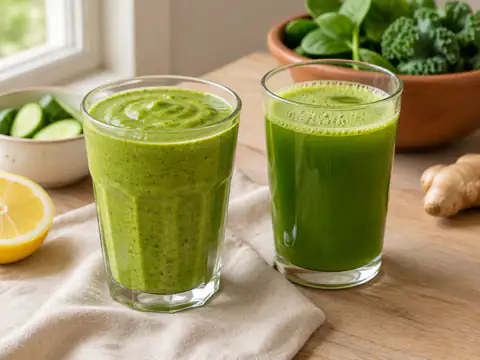
Banana, avocado, mango, papaya and ripe berries are too soft or too low in water to juice well. They are better in a smoothie, where the whole fruit goes in. Green smoothie vs green juice explains the difference.
Choosing and prepping produce
Pick firm, crisp produce with no soft spots. The FDA says to cut away damaged or bruised areas before you prepare produce and to throw away anything that looks rotten (FDA). Limp celery and soft apples give much less juice and a flatter taste. Cut produce into pieces that fit your juicer’s chute, usually 1 to 2 inches (2.5 to 5 cm), and keep the cut pieces cold until you juice them.
How much produce for one glass
Plan on about 580 g (1 1/4 lb) of mixed produce for one glass of about 1 1/2 cups (350 ml). That is roughly one medium cucumber, one medium apple, two loosely packed cups of baby spinach and half a lemon. Juicy produce like cucumber, celery and pineapple gives more than leaves, ginger or lemon, so a juice heavy in greens needs more produce per glass. These are estimates and vary by produce and machine.
Hard produce and soft produce: how to feed a juicer
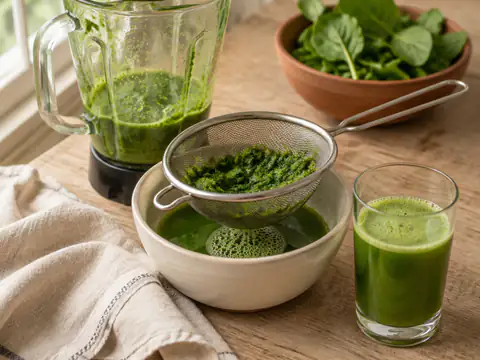
Alternate. Put in a piece of hard produce such as apple or cucumber, then a handful of leaves, then more hard produce. The firm pieces push the leaves down. If you use a blender and strainer, green juice without a juicer has the full method and a table of tools.
Safety notes
- Wash everything. The FDA says to wash all produce under running water before you cut it, even if you will peel it, and not to use soap or produce wash. Dry it with a clean towel (FDA).
- Do not juice rhubarb leaves. Illinois Extension says the leaf blades contain large amounts of oxalic acid and should not be eaten. Only the stalks are used (Illinois Extension).
- Oxalate. NCCIH notes that some juices are made from foods high in oxalate, such as leafy green vegetables and beets, and that people prone to kidney stones should limit high-oxalate foods (NCCIH). Ask your doctor if this applies to you.
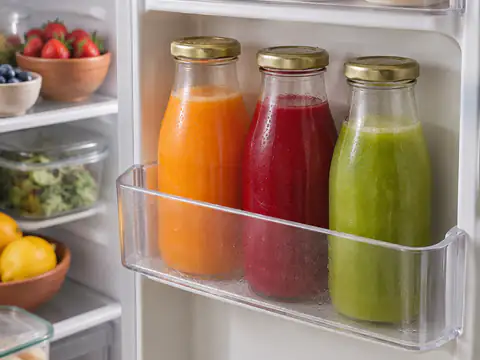
- Untreated juice. Juice you make at home is not pasteurized. The FDA says untreated juice can make children, older adults and people with weakened immune systems seriously ill (FDA). Drink it soon; how long fresh juice lasts covers storage.
Starter combinations
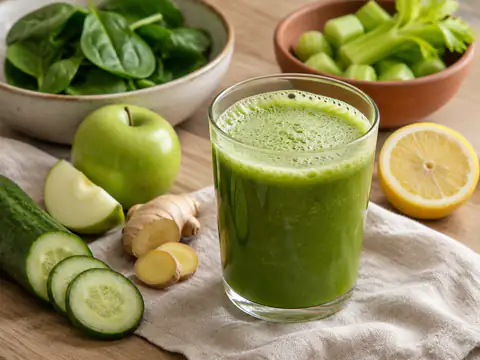
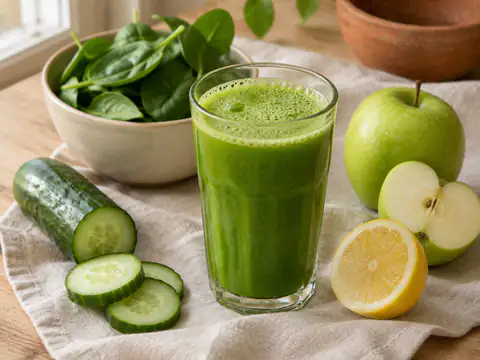
A balanced glass is roughly half a mild base, a third something sweet, and a small amount of greens and sharp flavor. The beginner green juice uses about 50 percent cucumber, 30 percent green apple, 10 percent spinach and 7 percent lemon by weight. From there:
- Mild: cucumber, pear and romaine.
- Fresh: celery, green apple and mint.
- Sharper: cucumber, kale, lemon and ginger.
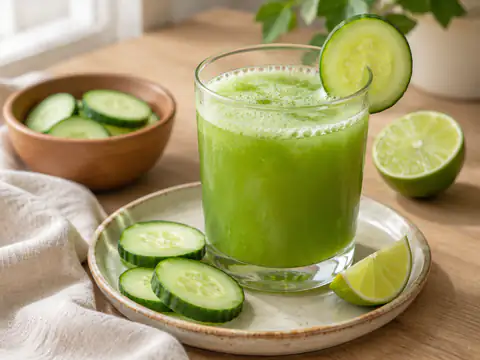
- Sweet: honeydew, cucumber and lime.
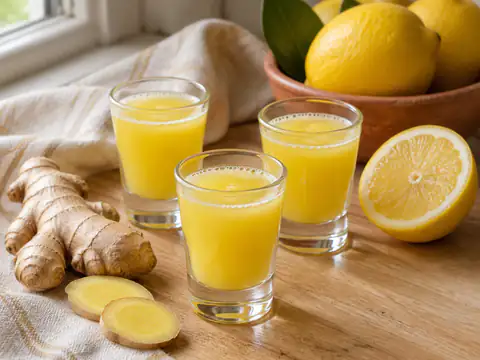
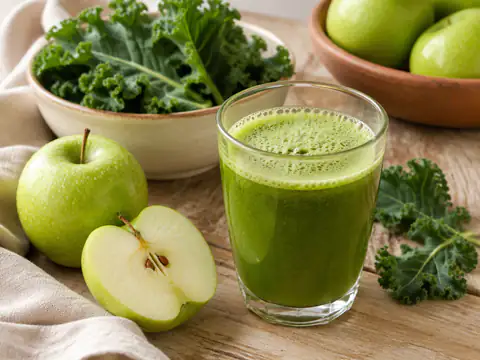
Simple juices work too. Cucumber juice on its own is the mildest option. A low-sugar green juice leans on cucumber, celery and lemon and uses little apple or pear. Kale apple juice is a classic pairing of a bitter green with a sweet fruit. Ginger lemon shots use lemon and ginger, with a little water, in small amounts.
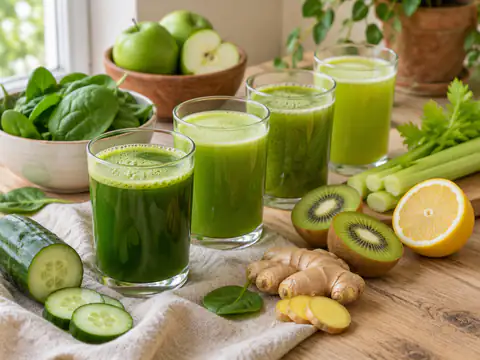
The 15 green juice ideas turn combinations like these into full recipes, and the juices and drinks hub lists the other juice guides.
Questions and answers
What are the easiest vegetables to juice?
Cucumber and celery are the easiest. They are watery, mild and give plenty of juice from a small amount of work. Apples and pears pair well with both.
Which produce should not go in a juicer?
Soft, low-water produce such as banana and avocado clogs a juicer and gives almost no juice. Blend them into a smoothie instead.
Can I juice the leaves and stems?
Rhubarb leaves are the one thing not to juice. Illinois Extension says they contain large amounts of oxalic acid and should not be eaten.
Sources
- Selecting and Serving Produce Safely — U.S. Food and Drug Administration
- What You Need to Know About Juice Safety — U.S. Food and Drug Administration
- Detoxes and Cleanses - What You Need To Know — National Center for Complementary and Integrative Health (NIH)
- Rhubarb — University of Illinois Extension