Green Juice for Beginners: One Simple Base Recipe
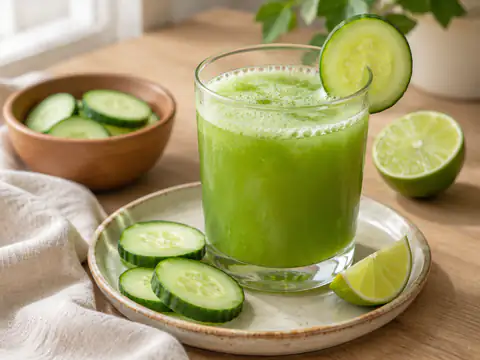
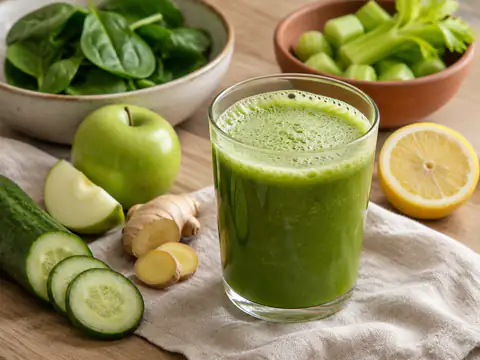
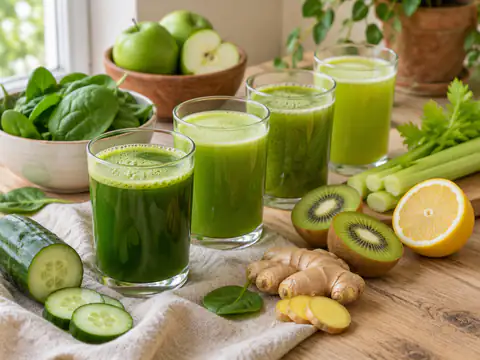
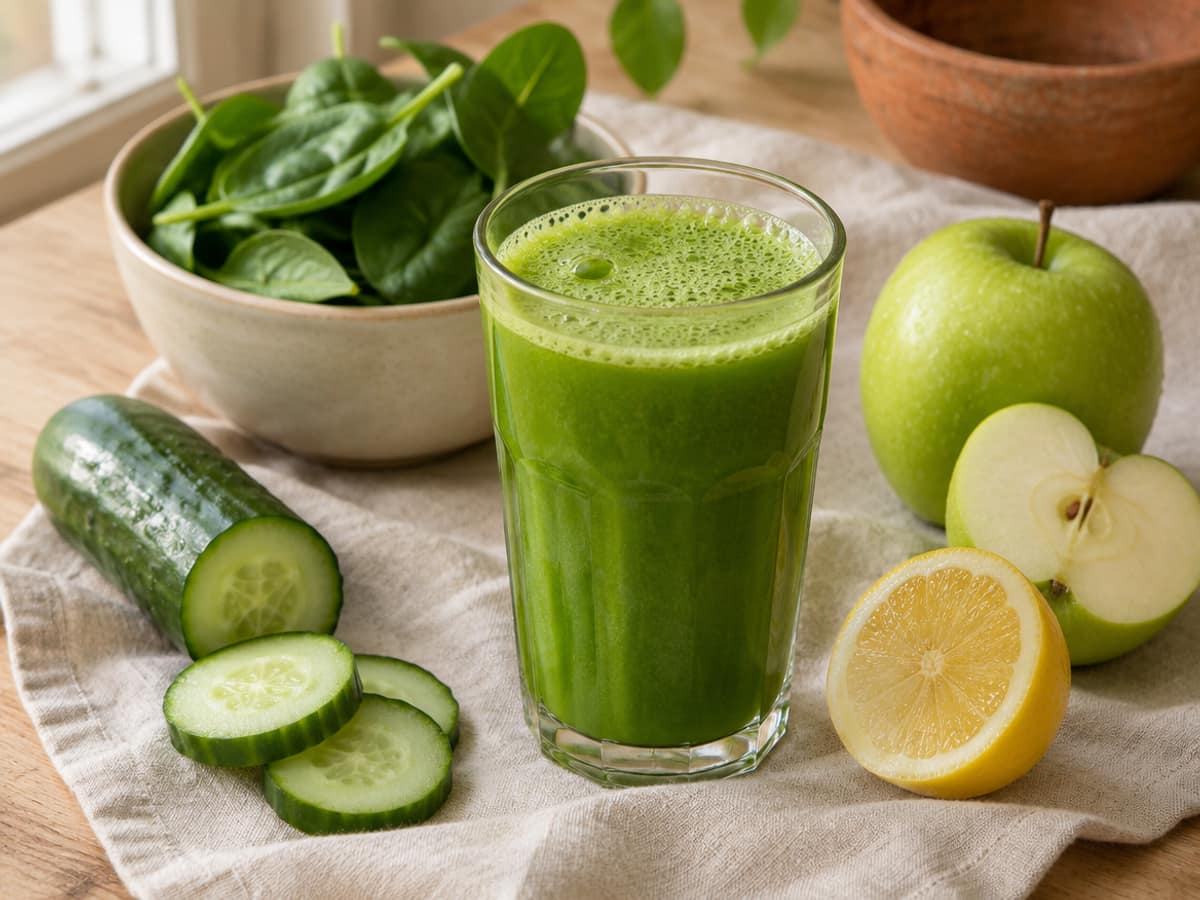
This beginner green juice uses four mild ingredients: cucumber, green apple, baby spinach and lemon. It makes about 1 1/2 cups (350 ml) in 10 minutes with a juicer, or with a blender and a strainer. The cucumber gives volume, the apple sweetens, the spinach adds color without much flavor and the lemon keeps it bright.
If you want more flavors, the 15 green juice ideas cover kale, pineapple, fennel and more. If you do not own a juicer, read how to make green juice without a juicer. More drinks are in the juices and drinks hub.
Recipe
Beginner Green Juice
- Yield1 large glass, about 1 1/2 cups (350 ml)
- Prep10 min
- Cook0 min
- Total10 min
Ingredients
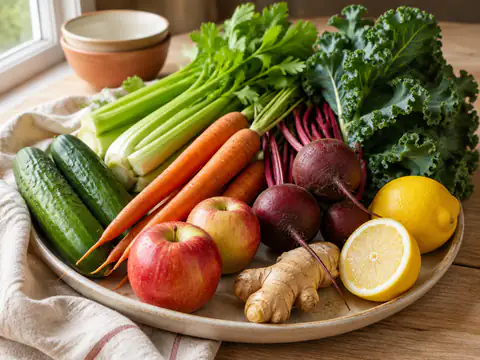
- 1 mediumabout 300 g cucumber, scrubbed, cut to fit your juicer chute
- 1 mediumabout 180 g green apple, cored and cut in wedges
- 2 cups, loosely packedabout 60 g baby spinach, rinsed and dried
- 1/2about 40 g lemon, peeled, seeds removed
- 1/2-inch (1 cm) pieceabout 5 g fresh ginger, optional
- 1/2 cup120 ml cold water, blender method only
Method
- Wash your hands, then wash all of the produce under running water. Scrub the cucumber with a clean brush and dry everything with a clean towel.
- Juicer: push the spinach into the chute between pieces of cucumber and apple so the watery produce carries the leaves through. Add the lemon and ginger last.
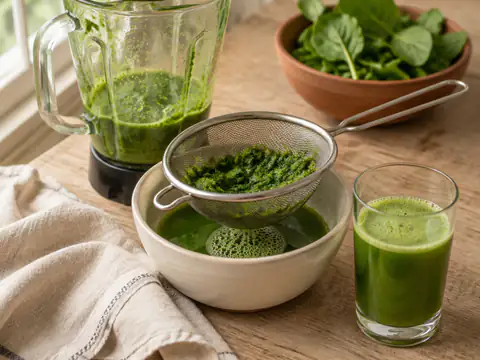
- Blender: add the water, then the spinach, lemon, ginger, apple and cucumber, and blend on high for 60 to 90 seconds, until no flecks of leaf remain.
- Blender: pour the blend into a fine-mesh strainer or a nut milk bag set over a bowl. Press or squeeze until the pulp is nearly dry.
- Stir, taste and add a squeeze more lemon if it tastes flat. Pour over ice and drink right away.
Notes
- Yield varies with the produce, the juicer and how hard you press.
- Double every amount for two glasses. The ratio matters more than the exact weights.
The ratio behind the recipe
This recipe follows these proportions. Weigh the produce and aim for these shares of the total:
| Part | Share of produce by weight | Its job | In this recipe |
|---|---|---|---|
| Mild, watery base | About half | Volume and a clean taste | 300 g cucumber |
| Sweet fruit | About 30 percent | Balances the greens | 180 g green apple |
| Greens | About 10 percent | Color and a little flavor | 60 g baby spinach |
| Acid | About 7 percent | Keeps it bright | 40 g lemon |
| Accent | A few grams | Heat or freshness | 5 g ginger |
The whole mix weighs about 580 g before ginger. To make more, keep the shares and scale the weights. To make a bigger glass without changing the taste, add cucumber, which is mostly water and has the mildest taste.
How to taste and adjust
Taste before you pour and fix one thing at a time:
- Too grassy or bitter: add more apple and a squeeze of lemon.
- Too sweet: add cucumber, or use less apple; low-sugar green juice takes this further.
- Flat: add lemon. Acid is what makes green juice taste fresh.
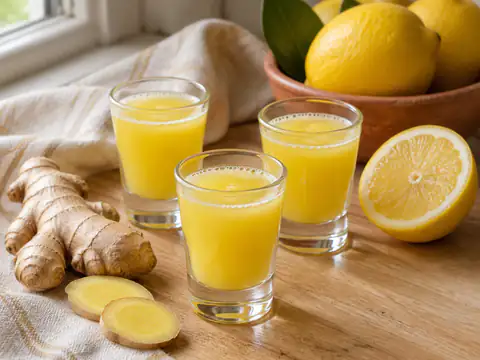
- Too sharp: add a few more apple wedges, or use less ginger and lemon. If you like the ginger, ginger lemon shots are the strong version.
Start with spinach, which is the mildest leaf you can buy. When you are used to it, try the swaps below.
Swaps and what they change
| Swap this | For this | What changes |
|---|---|---|
| Baby spinach (60 g) | Romaine, about 1 1/4 cups chopped (60 g) | Milder and more watery |
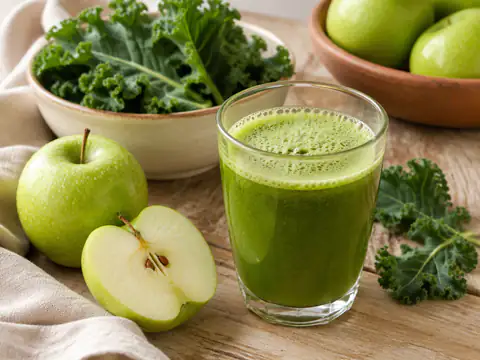
| Baby spinach (60 g) | Kale, stems removed, about 2 leaves (30 g) | Stronger, a little bitter and peppery |
| Green apple (180 g) | Ripe pear (180 g) | Softer, rounder sweetness and less tart |
| Green apple (180 g) | Pineapple chunks, about 1 cup (165 g) | Sweeter and more tropical |
| Lemon | Lime, same amount | A slightly different citrus note |
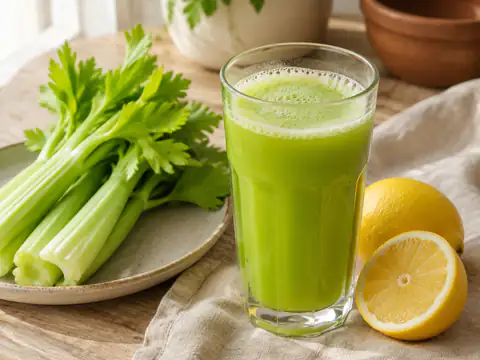
| 100 g of the cucumber | 2 celery stalks (100 g) | A savory, slightly salty edge |
| Nothing | 1/4 cup mint leaves (5 g) | Cooler and fresher |
| Half the apple (90 g) | 90 g more cucumber | Less sweet, which is the idea behind a low-sugar green juice |
Change one thing at a time so you can tell what each swap does.
Beginner tips
- Start mild. A first juice with a lot of kale is hard to like. Build up to it.
- Wash everything. The FDA advises washing hands for at least 20 seconds before and after preparing juice, cutting away damaged or bruised areas, washing all produce under running water, scrubbing firm produce such as cucumbers with a clean brush and drying it, even if you plan to peel it. It does not recommend washing produce with soap, detergent or produce wash (FDA juice safety).
- Juice when you want to drink it. Juice separates and loses its fresh taste as it sits. Stir it before drinking.
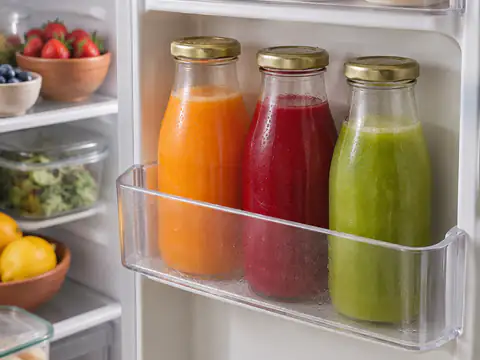
- Keep leftovers cold. Put any extra in a sealed jar in the refrigerator.
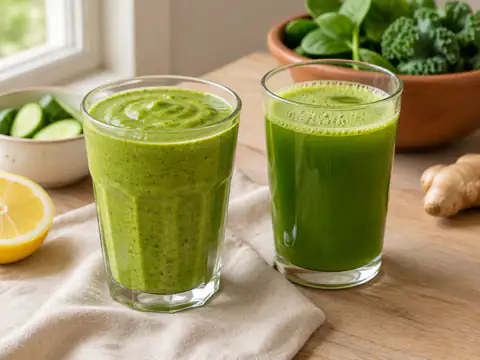
- Straining a blender juice matters. If you skip the strainer, you have a green smoothie, which is thicker because the pulp stays in; green smoothie vs green juice compares the two.
A word on juice safety
The FDA explains that fresh juice which has not been pasteurized or otherwise treated can carry harmful bacteria. Children, older adults, pregnant women and people with weakened immune systems are at higher risk of serious illness from untreated juice. If that describes you or the person you are making it for, choose pasteurized juice instead. For more on handling produce, see the FDA’s guide to selecting and serving produce safely.
Questions and answers
What are the best greens for a first green juice?
Baby spinach and romaine are the mildest. Both have a clean, light taste that cucumber and apple hide easily. Kale, chard and parsley are stronger, so move to them once you like the taste of spinach juice.
Why does my green juice taste like grass?
There are too many greens, or not enough sweet and sharp produce to balance them. Cut the greens by a third, or add more apple and a squeeze of lemon.
Do I need a juicer?
No. A blender and a strainer or nut milk bag make the same drink. The steps are in the recipe above, and a full guide to making green juice without a juicer covers tools and tips.
Sources
- Are You Storing Food Safely? — U.S. Food and Drug Administration
- What You Need to Know About Juice Safety — U.S. Food and Drug Administration
- Selecting and Serving Produce Safely — U.S. Food and Drug Administration