How to Make Green Juice Without a Juicer
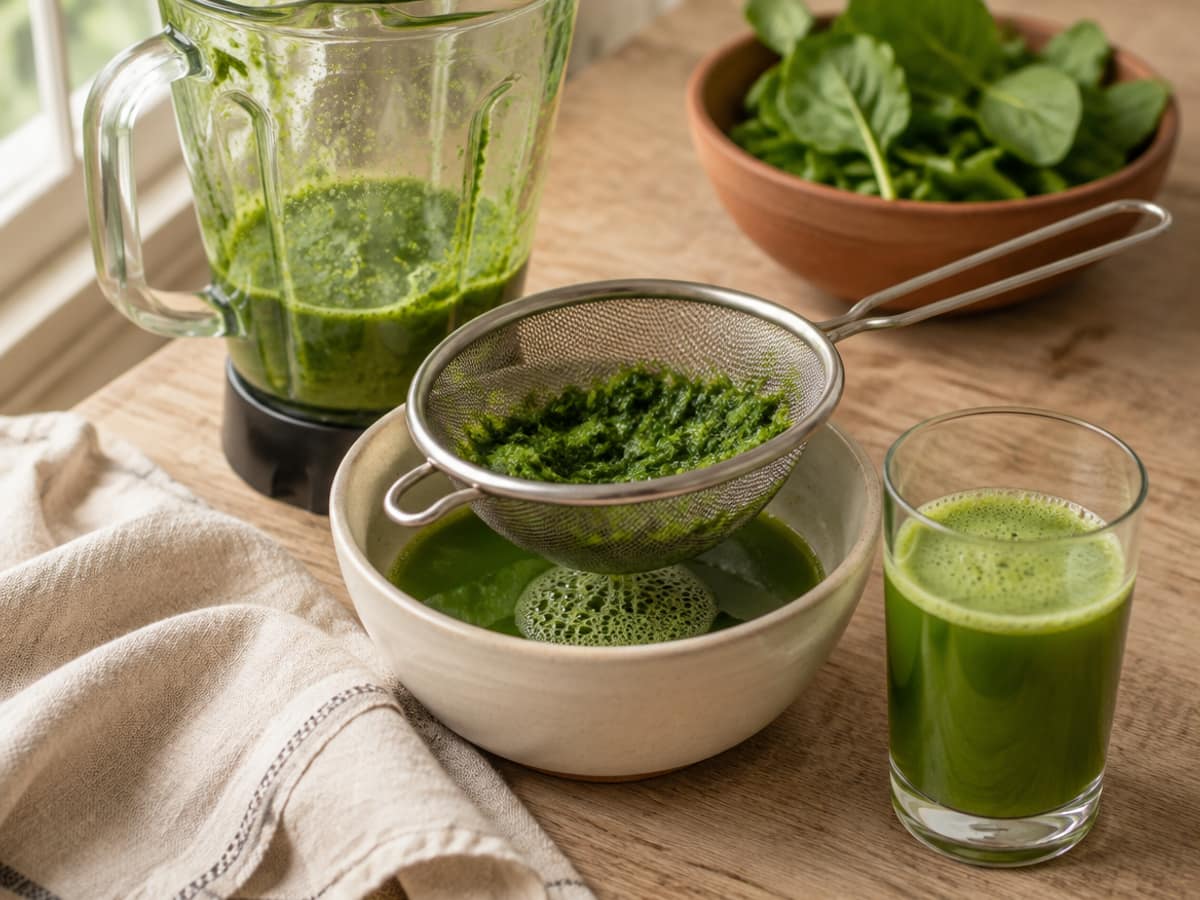
You can make green juice without a juicer with a blender and a fine-mesh strainer or a nut milk bag. Chop about 580 g (1 1/4 lb) of produce, blend it with 1/2 cup (120 ml) of cold water until smooth, then strain it and press the pulp until it is nearly dry. It takes about 10 minutes and makes roughly 1 1/2 cups (350 ml). The steps below use the produce from the beginner green juice recipe, so you can follow both pages together. More ideas to try are in the 15 green juice recipes, and the juices and drinks hub lists the rest.
What you need
- A blender, any kind that gets leaves smooth
- A fine-mesh strainer, or a nut milk bag (a bag with a very fine weave), set over a bowl or a wide jug
- A spoon or ladle, to press the pulp
- A clean cutting board and knife
Step by step
The amounts below make one large glass.
- Wash your hands and the produce. Wash everything under running water, scrub the cucumber with a clean brush, cut away damaged spots and dry it with a clean towel. This is the FDA’s advice for juice made at home.
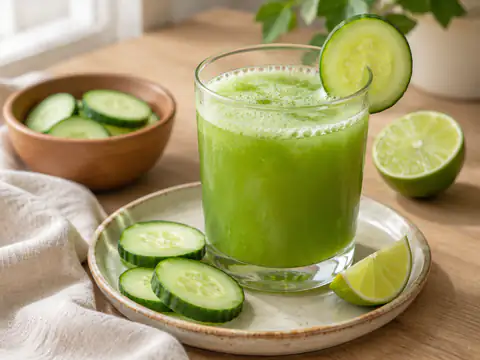
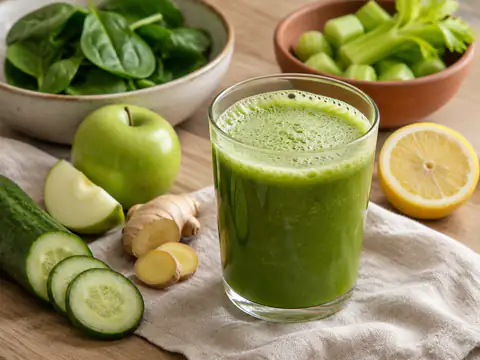
- Chop small. Cut 1 medium cucumber (300 g) and 1 green apple (180 g, cored) into 1-inch (2.5 cm) pieces. Peel 1/2 lemon (40 g) and remove the seeds. Smaller pieces blend faster and more evenly.
- Load the blender in this order. Pour in 1/2 cup (120 ml) of cold water first, then 2 cups loosely packed baby spinach (60 g), the lemon, and the cucumber and apple on top. Liquid at the bottom helps the blades pull the produce down.
- Blend on high for 60 to 90 seconds. Stop when you can no longer see flecks of leaf. If the blades spin without pulling anything down, add 1 to 2 tablespoons (15 to 30 ml) more water.
- Strain. Pour the blend into the nut milk bag or strainer over a bowl. With a bag, twist the top and squeeze firmly. With a strainer, press the pulp against the mesh with the back of a spoon or ladle.
- Press until the pulp is crumbly and almost dry. Squeezing for another minute is the easiest way to get more juice.
- Stir, taste and add a squeeze more lemon if it is flat. Drink it right away, over ice if you like.
Yield varies with the produce, how long you blend and how hard you press.
Tools and methods compared
| Tool | How it works | Effort | Texture |
|---|---|---|---|
| Blender and nut milk bag | Blend, then squeeze the whole mix in the bag | Low to medium | Smoothest, little pulp |
| Blender and fine-mesh strainer | Blend, then press through the mesh with a spoon | Medium | Slightly more pulp |
| Food processor and nut milk bag | Process with a little water to a fine mash, then squeeze | Medium | More pulp than a blender, because a processor grinds less finely |
| Box grater and cheesecloth | Grate firm produce, then wring it in the cloth | High | Thin, with a little pulp; it works for apple, cucumber and ginger, but not for leaves |
| Blender, no straining | Blend with water and drink as is | Lowest | A green smoothie, thick |
A nut milk bag gives the most juice for the least work. If you only own a strainer, press slowly and in small amounts, since the pulp clogs the mesh quickly.
Without a blender
A food processor works if you add water and process for a minute or two until the leaves are very fine, then squeeze the mash through a bag or a double layer of cheesecloth. For firm produce, a box grater and a cloth also works: grate the apple, cucumber or ginger over a bowl, gather it in the cloth and wring. Leafy greens are hard to juice this way, so chop them as small as you can and mix them in, or use a blender for them if you can borrow one. Expect less juice and more effort than with a blender.
Juice versus a green smoothie
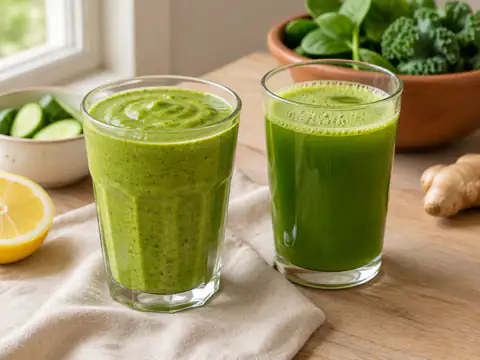
Both start in the blender. The difference is the strainer. A smoothie keeps all of the pulp, so it is thick and filling. Juice removes the pulp, which is where the fibrous part of the produce sits, so it is thin and smooth. Straining always leaves some liquid behind in the pulp, so a smoothie gives you more volume from the same produce. If you are choosing between them, a green smoothie is the easier one to make; green smoothie vs green juice sets out the differences.
What blends well and what is tough
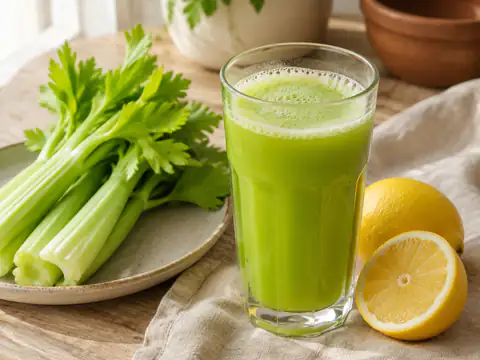
Blends easily: cucumber, celery, apple, pear, spinach, romaine, melon, pineapple, grapes, mint and basil. Soft or watery produce turns to liquid fast.
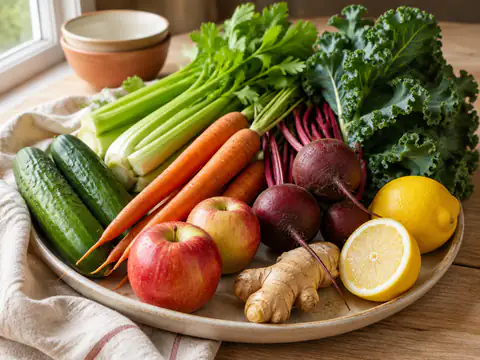
Takes more effort: carrots, beets and fresh ginger. Cut them into pieces no bigger than 1/2 inch (1 cm), add an extra 1/4 cup (60 ml) of water and blend longer, up to 2 minutes. Ginger is better grated or sliced thinly, and a little goes a long way. These are tough vegetables for juicing in a blender, because the fibers wrap around the blades. Best vegetables and fruits for juicing lists how to prepare each one.
Peel and seed: peel citrus and remove the seeds first. The white pith and seeds taste bitter.
What to do with the pulp
Stir the pulp into muffin batter or soup, or add it to a compost pile.
Cleaning up
Rinse the nut milk bag or cheesecloth in cold water right after you use it, before the pulp dries on. Turn the bag inside out, wash it with warm, soapy water, rinse well and hang it to dry fully. A damp bag in a drawer gets a sour smell.
Safe handling
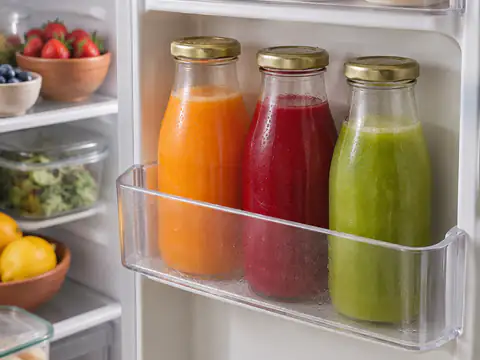
Juice is made from raw produce that is not cooked, so cleanliness matters. The FDA explains that juice which has not been pasteurized or otherwise treated can carry harmful bacteria, and that children, older adults, pregnant women and people with weakened immune systems risk serious illness from drinking untreated juice. If that applies to you, choose pasteurized juice instead (FDA juice safety). For the basics of washing and storing produce, see the FDA’s page on selecting and serving produce safely. Keep any leftover juice in a sealed jar in the refrigerator and drink it soon.
Common problems
- Gritty juice: blend longer, or strain twice, or use a nut milk bag instead of a strainer.
- Thick, pulpy juice: you used too little water, or the strainer mesh is too coarse. Add water and strain again.
- Very little juice: press harder and longer, and use more watery produce such as cucumber.
- Foamy juice: blending adds air. Let it sit a minute and skim the foam, or pour it through the strainer twice.
- Bitter juice: too many strong greens, or citrus pith or seeds got in. Add apple and use less kale or parsley.
Questions and answers
Is blended and strained juice the same as juicer juice?
It is close. Both separate the liquid from the pulp. A juicer does it in one step, while a blender breaks the produce down first and the strainer removes the pulp. Blended and strained juice is often a little cloudier.
Do I have to add water?
For leafy greens and firm fruit, yes. About 1/2 cup (120 ml) per 580 g of produce gives the blades something to move. Very watery produce, such as cucumber and melon, needs less.
Can I skip the straining?
You can, but then you have a green smoothie, not juice. It is thicker because the pulp stays in.
Sources
- What You Need to Know About Juice Safety — U.S. Food and Drug Administration
- Selecting and Serving Produce Safely — U.S. Food and Drug Administration