Green Smoothie vs Green Juice
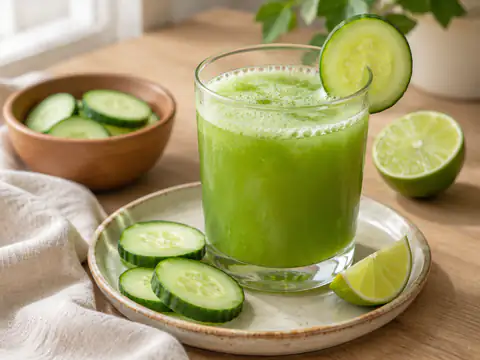
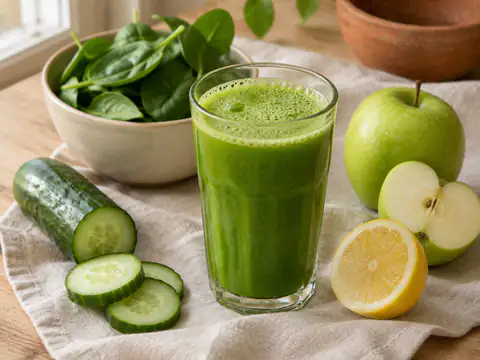
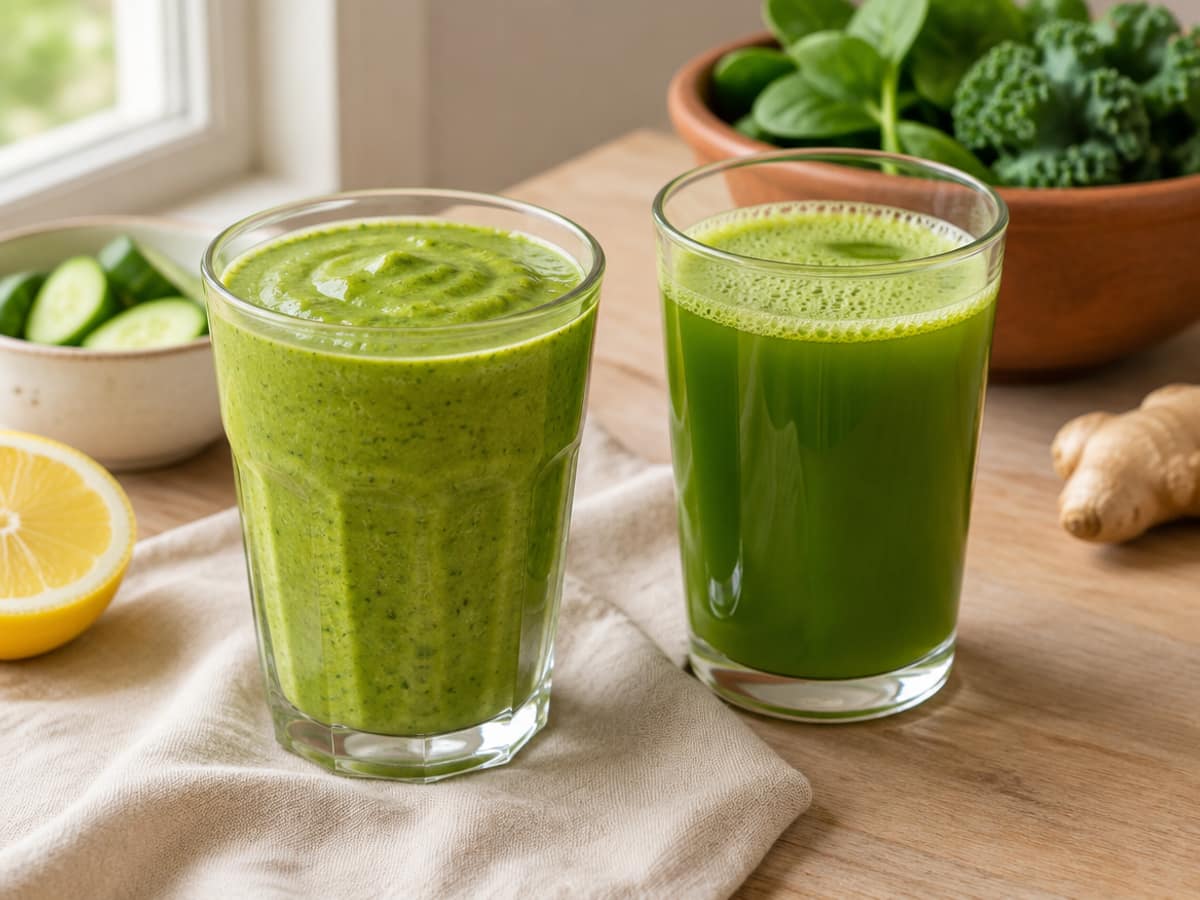
A green smoothie is whole produce blended with water, so the pulp stays in the glass and the drink is thick. A green juice has most of the pulp removed, so it is thin and clear. Both can start from the same cucumber, apple, spinach and lemon. The difference is whether you strain.
| Green smoothie | Green juice | |
|---|---|---|
| How it is made | Whole produce blended with water | Produce juiced, or blended and strained |
| Texture | Thick, like a thin milkshake | Thin, like a light drink |
| Pulp and fiber | Stays in the drink | Mostly removed |
| Equipment | A blender | A juicer, or a blender plus a fine strainer or nut milk bag |
| Yield from about 580 g (1 1/4 lb) produce | About 2 1/2 to 3 cups (600 to 700 ml) with 1 cup (240 ml) water | About 1 1/2 cups (350 ml) |
| Time | 5 minutes | 10 to 15 minutes |
| Cleanup | One blender jar | Juicer parts, or a strainer and bag |
| Flavor | Milder and rounder; leafy greens blend in | Brighter and cleaner; greens stand out |
| Best served | Cold, soon after blending | Cold, soon after juicing |
The yield figures are estimates. They shift with the produce and the equipment.
How each one is made
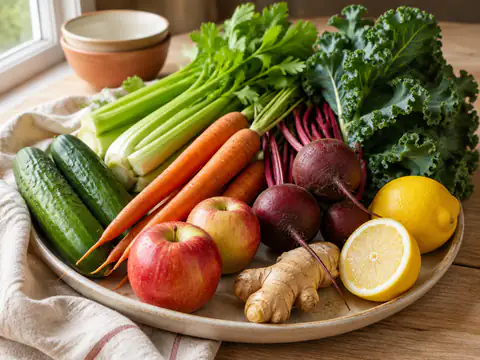
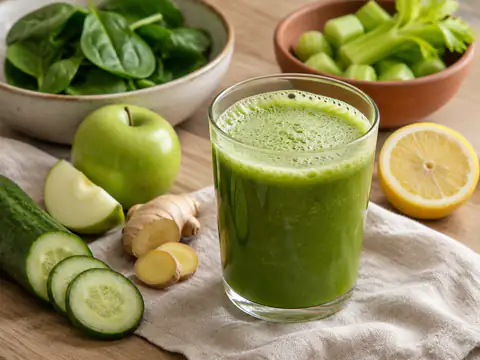
The beginner green juice uses about 300 g cucumber, 180 g green apple, 60 g baby spinach, half a lemon and a small piece of ginger. That is the example here.
Smoothie. Put 1 cup (240 ml) cold water in the blender first, then the spinach, lemon, cucumber and apple. Blend on high for 45 to 60 seconds until no flecks of leaf remain. Pour and drink.
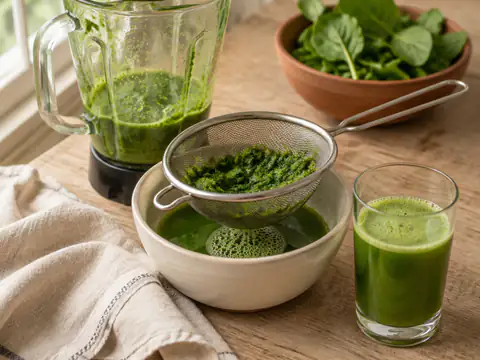
Juice. Feed the same produce through a juicer, or blend it with only 1/2 cup (120 ml) water and pour it through a fine-mesh strainer or nut milk bag, pressing until the pulp is nearly dry. How to make green juice without a juicer walks through each tool.
The same produce, two ways
| Smoothie | Juice (blender and strainer) | |
|---|---|---|
| Cucumber | 1 medium, about 300 g | 1 medium, about 300 g |
| Green apple | 1 medium, about 180 g | 1 medium, about 180 g |
| Baby spinach | 2 cups loosely packed, about 60 g | 2 cups loosely packed, about 60 g |
| Lemon | 1/2, about 40 g, peeled | 1/2, about 40 g, peeled |
| Water | 1 cup (240 ml) | 1/2 cup (120 ml) |
| After blending | Drink as is | Strain and press the pulp |
Chop the cucumber and apple into 1-inch (2.5 cm) pieces so the blades catch them. Blend for 60 to 90 seconds either way.
Common problems with each
- Gritty smoothie: the blender needed longer, or the spinach was packed too tightly. Add the water first, then the leaves, and blend a further 30 seconds.
- Smoothie too thick: add water 2 tablespoons (30 ml) at a time.
- Thin, watery juice: more cucumber than apple, or too much water in a blender method. Cut the water to 1/4 cup (60 ml) next time.
- Foam on top of juice: blending adds air. Let the juice stand for a minute and skim it, or pour it through the strainer a second time.
- Bitter taste in either: too much leafy green or lemon peel. Peel the lemon and add a second apple.
Which one to make
- Make a smoothie when you want a drink that is quick to prepare, filling to drink and easy to clean up, or when you want to use soft produce such as banana, avocado or ripe pear. Those do not juice well.
- Make a juice when you want something light and cold, or when you have a juicer and hard produce like apple, celery and cucumber.
- Make half and half if you are unsure: blend, strain through a coarse sieve instead of a fine one, and leave some pulp in.
A busy-morning comparison
A smoothie is the faster of the two on a weekday: one jar, one blend, one rinse. Juice takes longer, mostly in the cleanup, because juicer parts and strainers have more pieces to wash. If you only have a few minutes, make the smoothie. If you want a clear, cold drink and have time for the cleanup, make the juice.
Turning one into the other
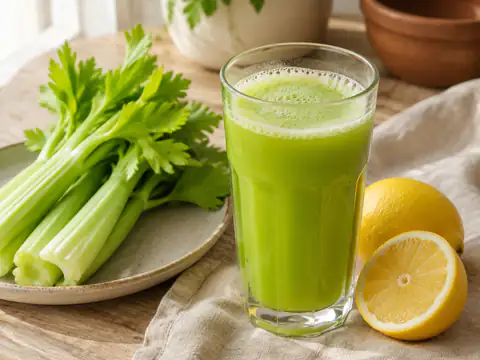
To turn a smoothie into juice, strain it through a nut milk bag and squeeze. You will lose most of the volume, so start with less water. To turn a juice into a smoothie, skip the straining and add 1/2 cup (120 ml) more water. Celery juice is an easy single-ingredient case, and the best vegetables for juicing lists which produce suits each style.
Safety for both drinks
Fresh juice made at home is not pasteurized or otherwise treated, and the FDA says untreated juice can carry harmful bacteria and seriously sicken children, older adults, pregnant women and people with weakened immune systems. The FDA’s juice safety page also says to keep untreated juice refrigerated.
For both drinks, wash all produce under running water before you cut it, as the FDA advises, and do not use soap or produce wash. Dry it with a clean towel. Drink both soon after making them, and throw away anything you left out for more than 2 hours, or 1 hour when the air is above 90°F (32°C) (FDA).
Where to go next
The juices and drinks hub lists every juice page. For more ideas, the 15 green juice ideas give a juicer method and a blender method for each recipe.
Questions and answers
Is a green smoothie just unstrained green juice?
Almost. A smoothie blends whole produce with some water, so the pulp stays in the glass. Strain the same blend through a nut milk bag and you have a green juice.
Do I need a juicer to make green juice?
No. A blender and a fine-mesh strainer or nut milk bag will do it. The method is in the guide to green juice without a juicer.
Which one keeps better in the fridge?
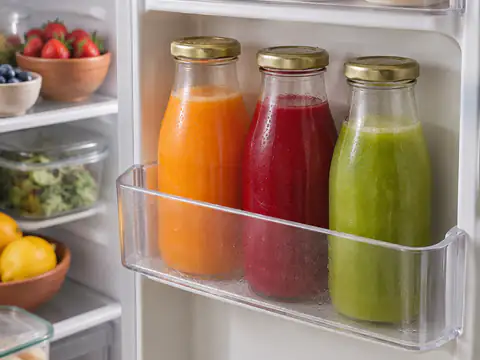
Neither keeps well. Both taste best fresh. For homemade juice, the FDA says untreated juice should be kept under refrigeration, and it gives no number of days, so drink it soon.
Sources
- Are You Storing Food Safely? — U.S. Food and Drug Administration
- What You Need to Know About Juice Safety — U.S. Food and Drug Administration
- Selecting and Serving Produce Safely — U.S. Food and Drug Administration