Kale Apple Juice
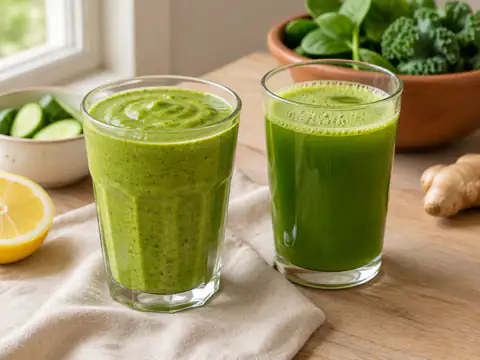
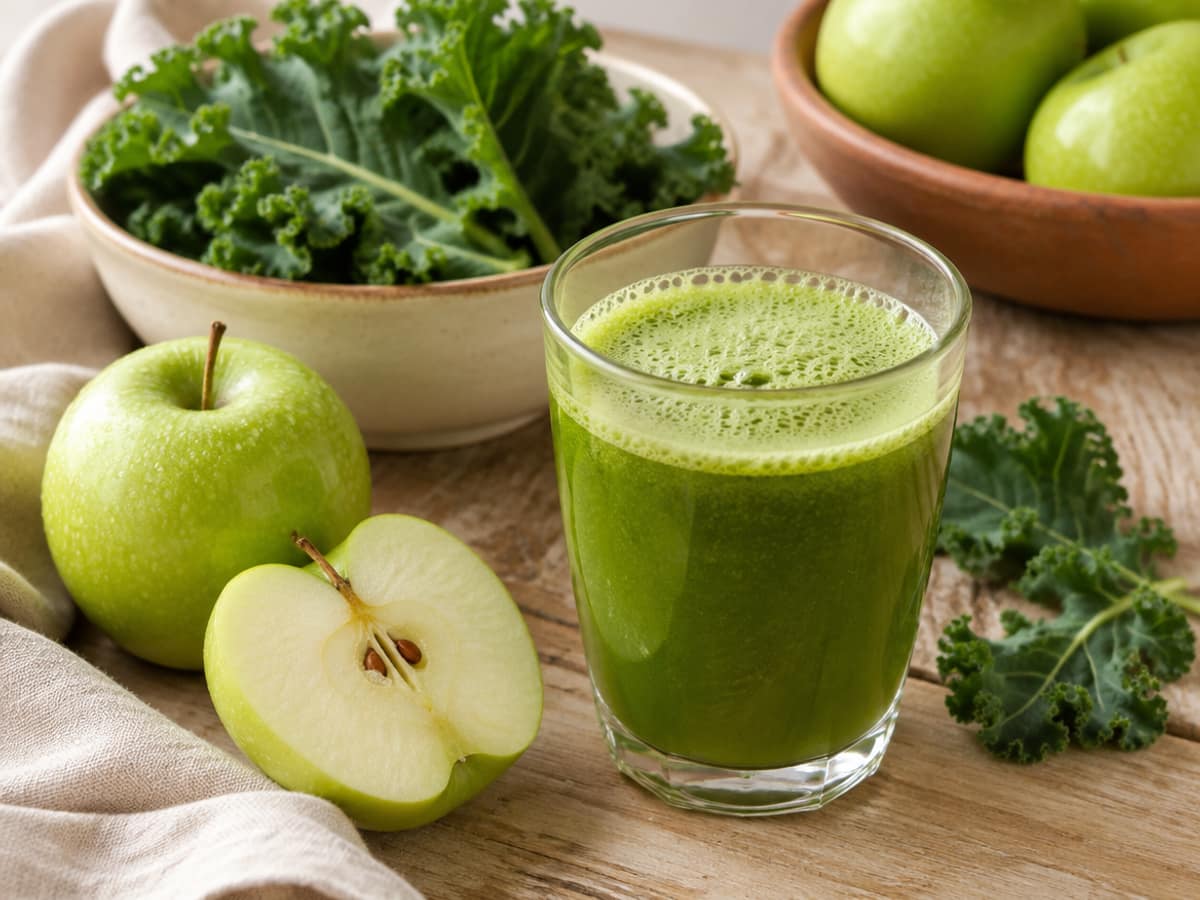
Kale apple juice takes about 150 g of kale (6 large leaves) and two green apples. Cut the thick stems out of the kale, roll the leaves tightly and feed them through a juicer between wedges of apple. Add half a lemon. You get about 1 1/2 cups (350 ml) of deep green juice with an earthy, slightly bitter taste softened by the apple. Without a juicer, blend everything with 1/2 cup (120 ml) of water and strain the blend through a fine strainer or a nut milk bag. The full recipe is below with both methods.
Recipe
Kale Apple Juice
- YieldAbout 1 1/2 cups (350 ml), 1 large glass
- Prep12 min
- Cook0 min
- Total12 min
Ingredients
Juice
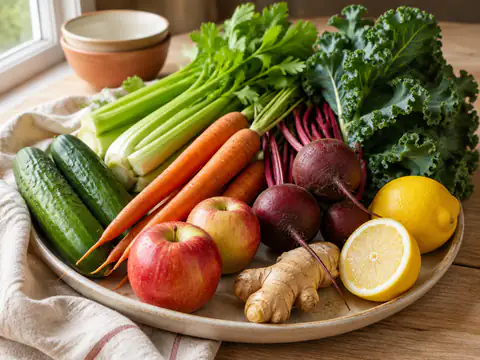
- 6 large leavesabout 150 g kale, thick stems cut out, washed and dried
- 2 mediumabout 360 g green apples, cored and cut in wedges
- 1/2about 40 g lemon, peeled, seeds removed
- 1/2 mediumabout 150 g cucumber, optional; makes the juice milder and gives more volume
- 1/2-inch (1 cm) pieceabout 5 g fresh ginger, optional
- 1/2 cup120 ml cold water, blender method only
Method
- Wash your hands, then wash the kale and the other produce under running water. Dry everything with a clean towel.
- Cut the thick stem out of each kale leaf by running a knife along both sides of it. Stack the leaves, roll them into a tight bundle and cut the bundle in half.
- Juicer: roll a kale bundle and push it into the chute between apple wedges, so the apple carries it through. Repeat with the rest of the kale. Juice the lemon, cucumber and ginger last. Stir the juice.
- Blender: add the water, then the kale, lemon, ginger, cucumber and apple. Blend on high for 90 seconds until no flecks of leaf remain.
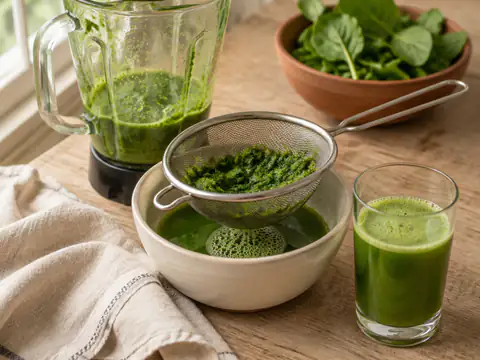
- Blender: pour the blend into a fine-mesh strainer or a nut milk bag set over a bowl. Press or squeeze until the pulp is nearly dry, about 3 minutes.
- Taste. If it is too bitter, stir in a few more apple wedges or 1 tablespoon (15 ml) more lemon juice. Pour over ice and drink right away.
Notes
- Kale gives less juice than cucumber or apple, so most of the volume comes from the apple and cucumber.
- Weigh the kale after you cut out the stems. A bunch from the store usually weighs more than 150 g with the stems on.
What this juice tastes like
Kale juice tastes earthy, a little bitter and slightly peppery. Apple supplies the sweetness that covers the bitterness, and lemon gives it a bright edge. The result is a deep green drink that tastes much more of kale than the beginner green juice tastes of spinach. If you have not had green juice before, start with the beginner juice and come back to this one.
The Kale, Apple and Lemon juice in the list of 15 is a smaller glass with less kale. This page uses more kale and goes deeper on the kale itself.
Curly vs lacinato kale
| Kale | Look | Taste in juice | Notes |
|---|---|---|---|
| Curly | Ruffled, bright to dark green leaves | Stronger and more bitter | The most common kind. Cut out the thick stem. |
| Lacinato (Tuscan, dinosaur) | Long, flat, dark blue-green, bumpy leaves | Milder and a little sweeter | Easier to roll tightly and feed into a juicer. |
| Red or purple | Frilly leaves with purple stems | Similar to curly, a little sweeter | Turns the juice a muddier color. |
| Baby kale | Small, tender leaves | The mildest | No stems to cut. Weigh it: 150 g of baby kale is about 5 loosely packed cups (1.2 L). |
How to balance the bitterness
Taste the juice, then change one thing at a time.
| If it tastes | Add | Why |
|---|---|---|
| Too bitter | A few more apple wedges (about 45 g), or 1 tbsp (15 ml) more lemon juice | Sweetness and acid cover bitterness |
| Too strong | 1/2 cucumber (about 150 g) | Cucumber is mild and watery |
| Flat | 1 tbsp (15 ml) lemon juice and a tiny pinch of salt | Acid and salt lift a dull taste |
| Too sweet | Use 1 apple, not 2, and add more lemon | Less fruit, sharper taste; see low-sugar green juice |
| Too peppery | Swap half the kale for baby spinach | Spinach is almost flavorless |
Juicer or blender
A juicer is the easier route for kale, because it separates the juice from the tough leaf fibers. Slow (masticating) juicers usually get more out of leaves than fast ones. With a blender, add water, blend until no flecks remain and strain through a nut milk bag, pressing hard. The steps and a table of tools are in how to make green juice without a juicer.
A note on oxalate
The National Center for Complementary and Integrative Health (NCCIH), part of the NIH, says some juices are made from foods that are high in oxalate, a naturally occurring substance, and that examples of high-oxalate foods include leafy green vegetables and beets. NCCIH says people who are susceptible to kidney stones should limit their consumption of high-oxalate foods (NCCIH). If you have had kidney stones, ask your doctor before you drink kale juice often.
Keeping it safe
Kale leaves have ruffled edges where grit collects, so rub each leaf under running water before you cut out the stems, and skip soap and produce wash (FDA produce guidance). The FDA also says juice that has not been pasteurized or treated can carry harmful bacteria and can seriously sicken children, older adults, pregnant women and people with weakened immune systems (FDA). Those groups should choose pasteurized juice. Drink this one soon after you make it, and do not leave it out for more than 2 hours, or 1 hour when the air is above 90°F (32°C) (FDA). How long does fresh juice last? covers storage.
Fixes for common problems
- Too bitter: add apple or lemon, or switch from curly to lacinato kale.
- Gritty: soak the leaves in a bowl of cold water, lift them out and rinse, then dry them before juicing. Strain a blended juice through a nut milk bag.
- Not enough juice: roll the kale tightly and feed it between wedges of firm apple, not on its own.
- Foamy: let it stand for a minute and skim the foam.
- Clogged juicer: cut the stems out and feed the kale in small bundles.
More juice guides
The beginner green juice uses spinach, and the juices and drinks hub lists every juice page.
Questions and answers
What does kale juice taste like?
Earthy, slightly bitter and peppery, with a deep green flavor. Apple and lemon soften it. Lacinato kale tastes milder than curly kale.
Do I have to massage the kale for juice?
No. Massaging softens raw kale for salads. In a juicer or a blender, the machine breaks the leaves down, so you only need to cut out the thick stems.
Can I use frozen kale?
Frozen kale works in a blender. It does not work well in a juicer, because the leaves are limp and give little juice. Thaw it and squeeze out the extra water before blending.
Sources
- Are You Storing Food Safely? — U.S. Food and Drug Administration
- Detoxes and Cleanses - What You Need To Know — National Center for Complementary and Integrative Health (NIH)
- What You Need to Know About Juice Safety — U.S. Food and Drug Administration
- Selecting and Serving Produce Safely — U.S. Food and Drug Administration