Snow White Mushroom vs Enoki
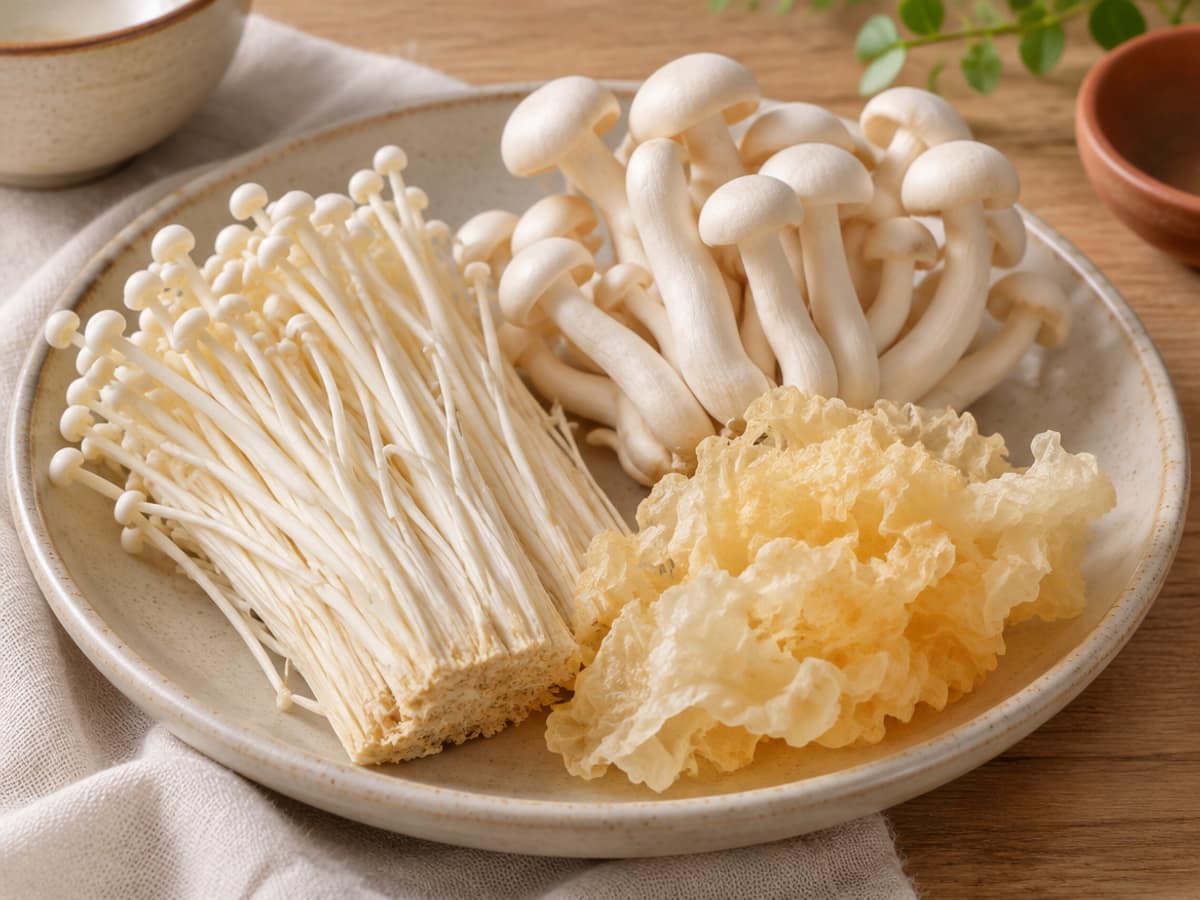
“Snow white mushroom” is not the name of one species. Reference sources do not list it as a standard species name or trade name. Sellers and recipes use it for three different white products: white enoki, white beech (shimeji) mushrooms and dried snow fungus. They look alike in a photo, but they cook very differently. The table below shows how they compare. If you are shopping, the Latin name on the package settles it.
For the full lineup of everyday mushrooms, see 9 essential types of mushrooms for cooking. More guides are in the mushrooms hub.
Enoki, white beech and snow fungus side by side
| Enoki | White beech (shimeji) | Snow fungus | |
|---|---|---|---|
| Latin name | Flammulina | Hypsizygus | Tremella fuciformis |
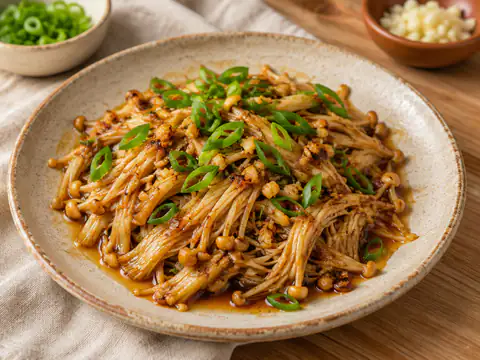
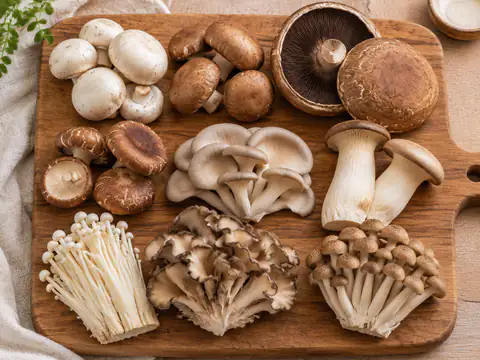
| Looks | Very long, thread-thin white stems with tiny caps, joined at the base | Short, thick stems with small round caps like buttons, in a clump | Snowball-shaped, frilly white clusters; sold dried and hard |
| Texture | Crisp and slightly crunchy; a bit chewy, like thin noodles, when cooked | Firm and slightly crunchy, even after cooking | Soft but crunchy, gelatinous after soaking |
| Flavor | Very mild, faintly fruity | Bitter raw; nutty and savory cooked | Very little; used for texture |
| Usually sold | Fresh, in a sealed pack | Fresh, in a small clump | Dried, mostly in Asian grocery stores |
| Best uses | Hot pot, soups, quick stir-fries | Stir-fries, sautés, soups, roasting | Sweet soups and desserts, savory soups |
| Cooking time | 1 to 2 minutes | About 3 to 5 minutes, until golden | Soak first, then simmer or sauté |
| Eaten raw? | No. Cook thoroughly | No. Cook | No. Soak and cook |
Why the name is confusing
Three separate products share the same color and the same snowy name, so they get mixed up.
Enoki. Cultivated enoki are grown in the dark. That is why the fruiting bodies are white, with very long stems and tiny caps (Pegler, Mycologist).
White beech. Beech mushrooms, also called shimeji, are Hypsizygus. Pegler notes that “shimeji” refers to a number of species in Japan, which is part of the confusion. A white form is sold as white beech or bunapi.
Snow fungus. Tremella fuciformis is an edible jelly fungus. Mycologist Tom Volk says the name likely comes from its white color and snowball-like shape. It has very little flavor, and the texture is the point: soft but crunchy at the same time (University of Wisconsin-La Crosse).
How to tell them apart in the store
- Look at the stems. Very long and thread-thin: enoki. Short, thick and sturdy with a round cap: white beech.
- Check the aisle. Fresh mushrooms in the refrigerated produce section are enoki or beech. Hard, dried, pale clusters in a bag on a shelf are snow fungus.
- Read the Latin name. Flammulina is enoki, Hypsizygus is beech, Tremella is snow fungus. Packages from Asian grocers often print it in small type.
- Check the name in the recipe. If a recipe calls for “snow white mushrooms” in a stir-fry or hot pot, it almost certainly means enoki or white beech. If it calls for them in a sweet soup, it means snow fungus.
How to cook each one
Enoki
Cut off the spongy base, about 1 to 2 inches (3 to 5 cm), and pull the stems apart into small bunches. Rinse them gently and pat dry. Add them near the end of cooking: 3 to 4 minutes in a hot pan, or the last 2 to 3 minutes in a soup, is enough.
Enoki have been linked to Listeria outbreaks in the United States, and the FDA has published a strategy to help prevent more outbreaks (FDA). Don’t eat them raw in salads or sandwiches, and cook them through; how to cook enoki mushrooms gives methods and times. The CDC says this matters most for people who are pregnant, 65 or older, or have weakened immune systems (CDC).
White beech
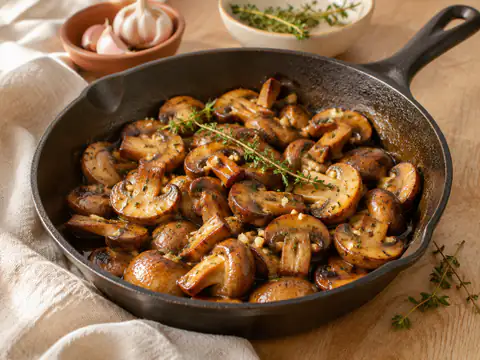
Cut off the joined base and separate the stems. Sauté them in a hot pan with oil for about 3 to 5 minutes, until golden, or add them to a soup or stir-fry. Cooking turns the bitterness nutty. Beech mushrooms keep a firm bite, so they don’t go soft the way button mushrooms do. See how to saute mushrooms for the browning method.
Snow fungus
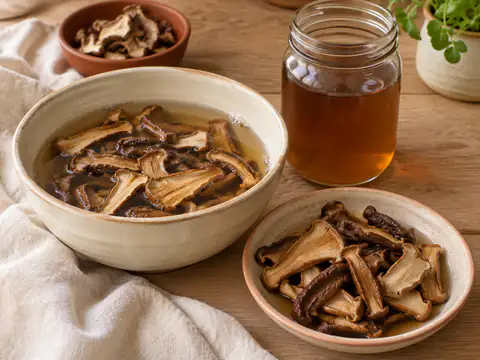
Soak the dried fungus in water until it swells and turns soft. Soaking times differ by brand and by recipe, so follow the package. Trim off any hard base, then tear the fungus into small pieces. Volk describes two uses: sautéed in oil and butter like any mushroom, and a traditional dessert where the rehydrated fungus soaks overnight in sugar syrup. Recipes also use it in soups.
Substitutes
- Enoki for white beech, or the reverse. This works in soups and stir-fries. Cook beech a few minutes longer. Enoki will go soft if you cook them as long.
- Either one for snow fungus. There isn’t a good swap. Snow fungus is soft and gelatinous. For a savory soup, enoki gives a light crunch, but the texture will be different.
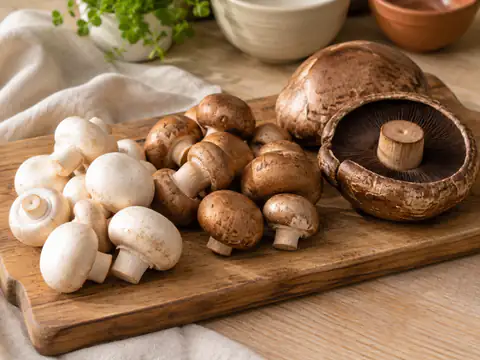
- Button or cremini for beech. They are milder and softer. Slice them thick and brown them well. More swaps for other mushrooms are in mushroom substitutes.
Prep and safety notes
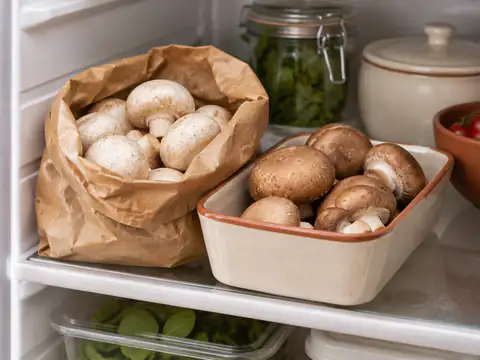
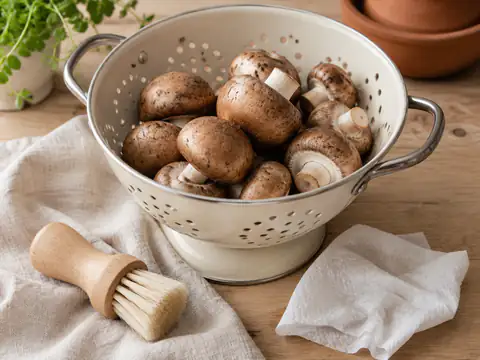
Clean mushrooms just before cooking, and keep them in the refrigerator in the meantime; how to store mushrooms has the details. Wipe off debris, or rinse briefly under cold running water, and pat dry; how to clean mushrooms covers each type. University of Illinois Extension advises against eating specialty mushrooms raw and says they should be thoroughly cooked (Illinois Extension). Buy mushrooms from a store or a reputable grower, and don’t forage wild ones unless an expert has identified them.
Questions and answers
Is a snow white mushroom the same as enoki?
Sometimes, but not always. Enoki are one of the white mushrooms that sellers describe as snow white. The name is not standard, so read the package for a Latin name: Flammulina is enoki, Hypsizygus is white beech and Tremella is snow fungus.
Can you eat enoki or white beech mushrooms raw?
No. Cook both. Enoki have been linked to Listeria outbreaks, and University of Illinois Extension advises against eating specialty mushrooms raw. Beech mushrooms also taste bitter raw.
Is snow fungus a mushroom?
It is an edible jelly fungus, Tremella fuciformis. It is cooked like a mushroom after soaking, but it is soft and gelatinous with very little flavor, so it is used for texture.
Can I swap enoki for white beech mushrooms?
In soups and stir-fries, yes. Beech mushrooms have thicker stems and a firmer bite, so give them a few more minutes. Neither one stands in for snow fungus.
Sources
- Listeria Outbreak Linked to Enoki Mushrooms — Centers for Disease Control and Prevention
- Useful fungi of the world: the Shii-take, Shimeji, Enoki-take, and Nameko mushrooms (Mycologist, vol. 17) — D. N. Pegler, Royal Botanic Gardens, Kew; Cambridge University Press
- Tremella fuciformis, the snow fungus, an edible jelly fungus — Tom Volk, University of Wisconsin-La Crosse (Fungus of the Month)
- Summary of FDA's Strategy to Help Prevent Listeriosis and Salmonellosis Outbreaks Associated with Imported Enoki Mushrooms — U.S. Food and Drug Administration
- Mushroom preparation — University of Illinois Extension