Shiitake Mushrooms: Fresh vs Dried and How to Cook Them
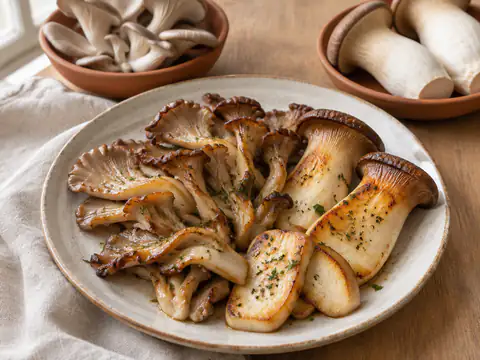
Shiitake are brown mushrooms with a rich, savory taste and a chewy texture. Buy them fresh or dried. Fresh shiitake need only the tough stems removed, then a few minutes in a hot pan. Dried shiitake have a stronger, smokier flavor and need soaking before you cook them. In both cases, cook shiitake thoroughly. A recipe for a soy garlic saute is below.
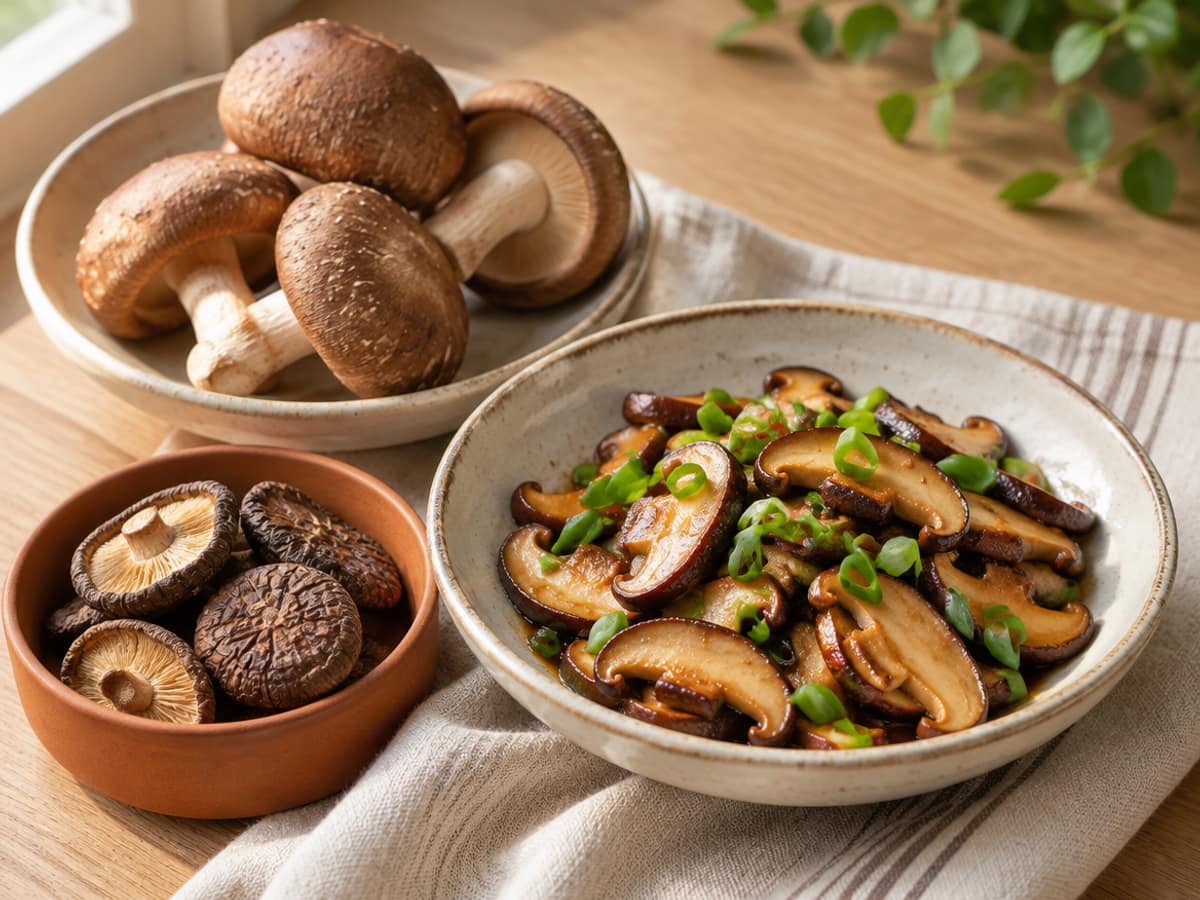
Recipe
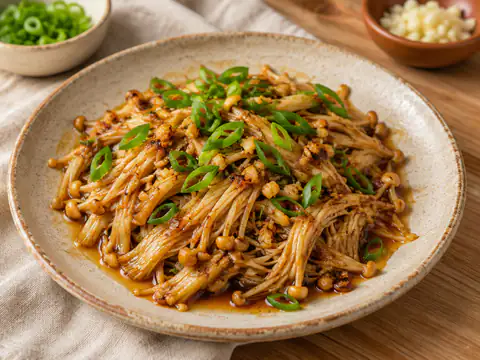
Soy Garlic Shiitake Saute
- Yield2 side servings (about 1/2 cup / 50 g cooked each)
- Prep5 min
- Cook8 min
- Total13 min
Ingredients
- 8 oz (about 12 medium)225 g fresh shiitake mushrooms, whole; stems removed, caps sliced 1/4 inch (6 mm) thick
- 1 tbsp15 ml neutral oil
- 2 cloves6 g garlic, minced
- 1 tbsp15 ml soy sauce
- 1 tsp5 ml rice vinegar, optional
- 1 stalkabout 15 g scallion, thinly sliced
Method
- Wipe the caps clean with a damp paper towel, twist or cut off the tough stems and save them for stock. Slice the caps 1/4 inch (6 mm) thick.
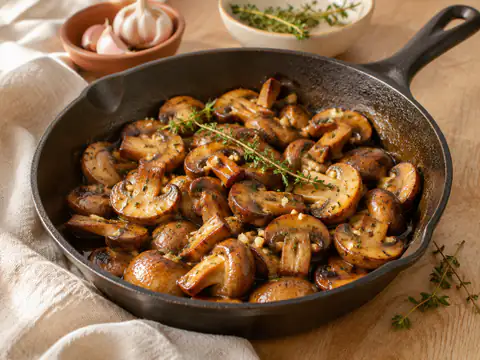
- Heat the oil in the skillet over medium-high heat for 1 minute. Add the shiitake in a single layer, working in two batches if they do not fit, and cook without stirring for 3 minutes until the undersides are browned.
- Stir and cook another 3 to 4 minutes, until the slices are browned, tender and the liquid has cooked away.
- Add the garlic and cook for 30 seconds. Add the soy sauce and vinegar, toss for 20 seconds, and take the pan off the heat.
- Stir in the scallion and serve hot.
Notes
- Shiitake stems are too tough to eat. Simmer a few in broth and strain them out. Freeze the cooled broth, not the raw stems.
- Dried shiitake work too: rehydrate them first, as described in the guide.
Fresh vs dried shiitake
| Fresh | Dried | |
|---|---|---|
| Flavor | Savory and mild, earthy | Stronger, smoky, more concentrated |
| Texture | Tender, meaty, chewy when cooked | Chewy and dense, even after soaking |
| Best for | Sauteing, roasting, stir-fries, soups, pizza | Broth, braises, stews, fillings, dumplings |
| Prep | Remove the stems, wipe the caps | Soak in hot water, squeeze out, remove stems |
| Cooking time | 6 to 8 minutes in a pan | 20 to 30 minutes in a soup or braise, after soaking |
| Where to find it | Produce section | Dried goods or Asian grocery aisle |
Cooking times are planning ranges.
The stems
Shiitake stems are woody and do not soften with cooking, so remove them from fresh mushrooms and discard them or use them to flavor liquid. Oregon State University Extension’s preservation guide also says to trim woody portions from the stem before drying. For stock, simmer the stems in water for 20 minutes and strain them out.
How to rehydrate dried shiitake
The same method works for most dried mushrooms, and how to rehydrate dried mushrooms covers the soaking liquid and straining grit.
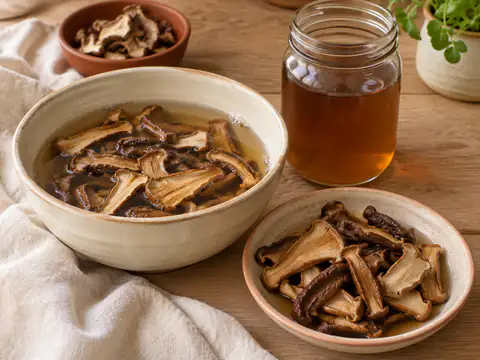
Oregon State University Extension says to rehydrate dried mushrooms by soaking them in boiling water for a few minutes until softened, then lift them out of the water with a slotted spoon (OSU Extension). Some packages call for a longer soak in warm water, so follow the package if it gives times.
- Rinse the mushrooms briefly to remove dust.
- Put them in a bowl, cover with boiling water and weight them down with a small plate so they stay under.
- Soak until the caps are soft all the way through.
- Lift them out and squeeze gently. Cut off the stems.
- Pour the soaking liquid through a fine strainer or a coffee filter to remove grit, and use it in soup or sauces.
Cook shiitake thoroughly
Cook shiitake before you eat them. University of Illinois Extension does not recommend eating specialty mushrooms raw and says to cook them thoroughly (Illinois Extension). Doctors have also described a skin reaction, called shiitake dermatitis, after people ate raw or undercooked shiitake. A case series from French poison control centers reported that 15 of 32 exposed patients had a rash after eating raw shiitake, and that guests at shared meals who preferred cooked shiitake had no symptoms (PubMed). A case report from Singapore says Japanese dermatologists were the first to describe this rash after people ate undercooked or raw shiitake (PubMed). These are case reports, not a measure of how common it is. Cook shiitake thoroughly, as Illinois Extension advises.
Ways to cook shiitake
- Saute: the recipe above, 6 to 8 minutes in a hot pan.
- Roast: toss caps with oil and salt, spread on a sheet and roast at 425°F (220°C) for 15 to 20 minutes.
- Stir-fry: slice and add to a hot wok with vegetables.
- Simmer: add whole caps to soup or noodles and cook 8 to 10 minutes.
- Grill: brush caps with oil and cook 3 to 4 minutes per side.
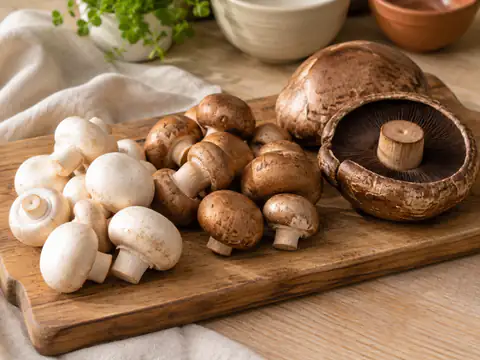
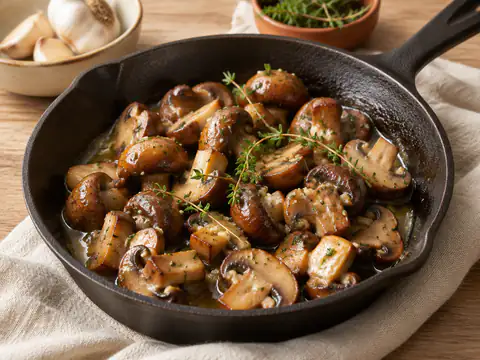
For the general browning technique, how to saute mushrooms has steps and fixes. Shiitake can stand in for cremini in many recipes, though the flavor is stronger.
Cleaning and storing
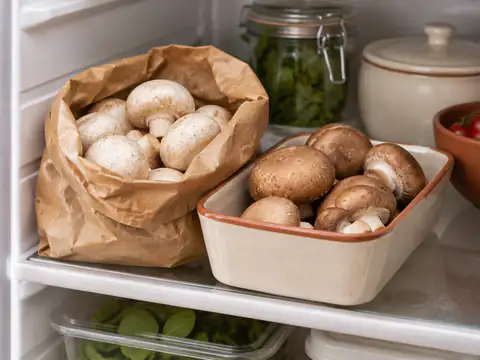
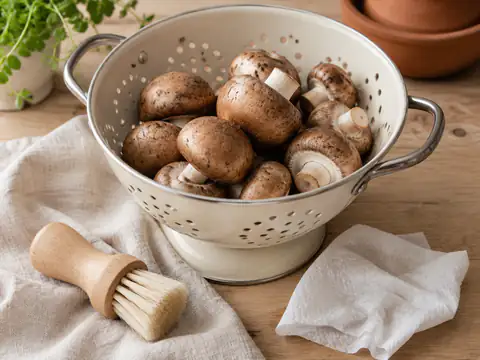
Wipe fresh shiitake with a damp paper towel or give them a quick rinse, as in how to clean mushrooms. Store them in a paper bag in the refrigerator; how to store mushrooms has the times and sources. Keep dried shiitake in an airtight container away from moisture.
Related guides
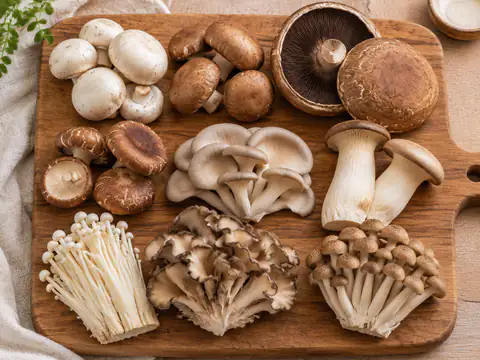
The 9 essential types of mushrooms places shiitake alongside the other common varieties. The mushrooms hub lists every mushroom page.
Questions and answers
Are shiitake stems edible?
They are tough and woody, so most cooks remove them and use them to flavor stock or broth.
Can you eat shiitake raw?
Cook them. A French poison control center case series reported rashes after people ate raw shiitake, and Illinois Extension recommends cooking all specialty mushrooms thoroughly.
How do you rehydrate dried shiitake?
Oregon State University Extension says to soak dried mushrooms in boiling water for a few minutes until softened, then lift them out with a slotted spoon. Package directions may give a longer soak in cooler water.
Sources
- Shiitake dermatitis recorded by French Poison Control Centers - new case series with clinical observations — PubMed, National Library of Medicine (NIH)
- Flagellate dermatitis following consumption of shiitake mushroom — PubMed, National Library of Medicine (NIH)
- Preserving mushrooms — Oregon State University Extension Service
- Mushroom preparation — University of Illinois Extension