Oyster and King Oyster Mushrooms
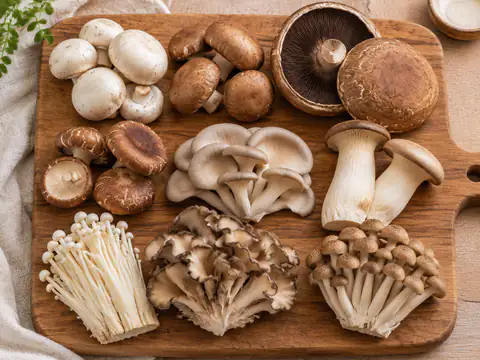
Oyster mushrooms and king oyster mushrooms belong to the same family, but they cook differently. Oyster mushrooms grow in thin, fan-shaped clusters, cook in a few minutes and crisp at the edges. King oyster mushrooms are the largest of the family, with a thick, firm stem you can slice into coins that brown like scallops. Cook both thoroughly, in a hot pan, and do not eat either raw. This guide compares the types, shows how to prep each one and gives planning times.
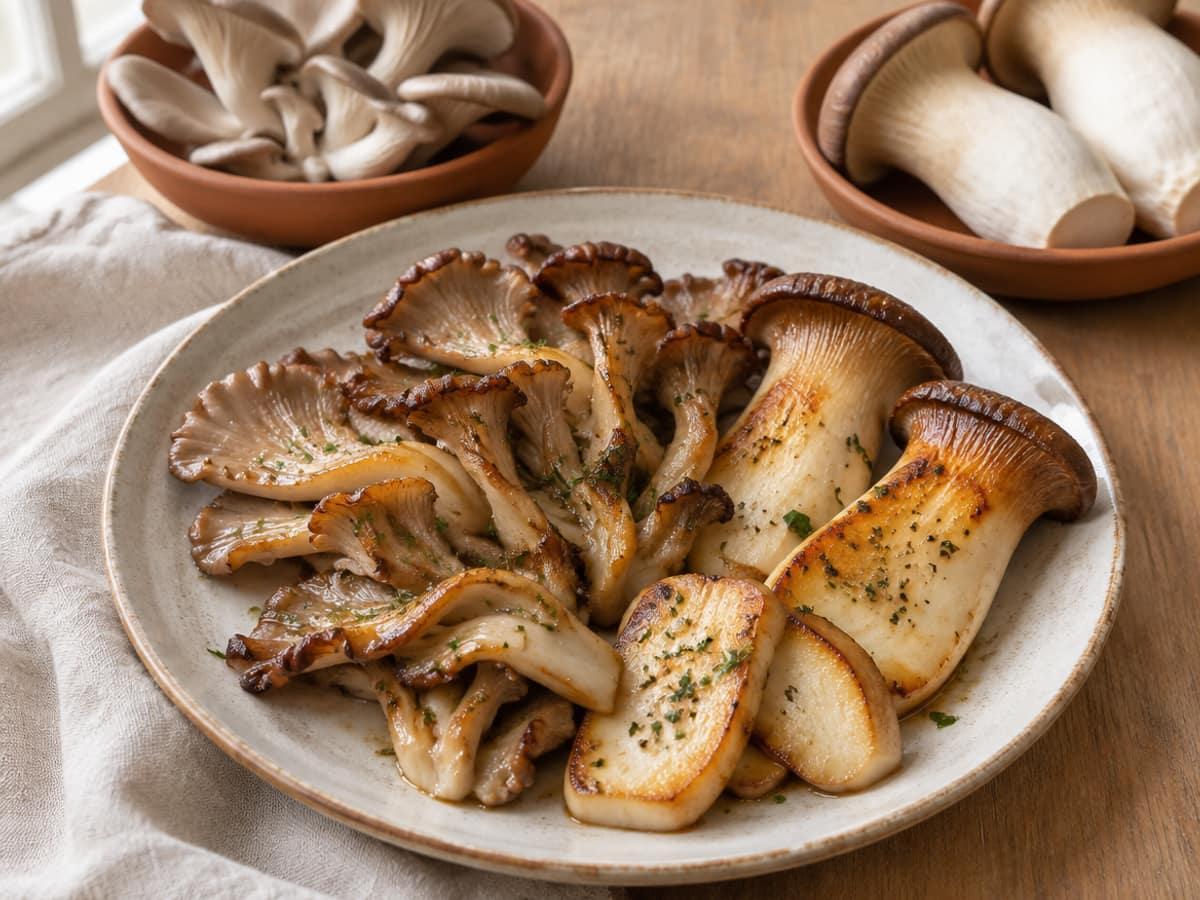
Oyster vs king oyster at a glance
| Oyster (pearl, blue) | Golden oyster | Pink oyster | King oyster | |
|---|---|---|---|---|
| Species | Pleurotus ostreatus | Pleurotus citrinopileatus | Pleurotus djamor | Pleurotus eryngii |
| Look | Fan-shaped caps in overlapping clusters; gray, tan or blue-gray | Bright yellow, ruffled clusters | Pink, thin clusters | Thick white stem with a small tan to brown cap |
| Flavor | From very mild to quite strong, sometimes slightly sweet | Described as like roasted cashews when sautéed in oil | Meaty, seafood-like, umami | Earthy and meaty |
| Texture | Very soft to very chewy, by strain and season | Delicate | Meaty and chewy; resembles bacon when fried | Firm, dense, chewy |
| Best uses | Sauté, roast, stir-fry, soups, pasta | Quick sauté, topping | Frying until crisp | Coins, planks, shreds, grilling, roasting |
| Prep | Trim the base, tear by hand | Trim the base, handle gently | Trim the base, tear by hand | Trim the base, slice the stem |
| Planning time in a pan | 4 to 6 minutes | 3 to 5 minutes | 4 to 6 minutes | 6 to 8 minutes |
The flavor and texture notes come from the University of Wisconsin-La Crosse and Ohio State’s mycology program. The times are planning ranges for a hot skillet, not measured figures.
How oyster mushrooms taste and feel
The University of Wisconsin-La Crosse says the name “oyster mushroom” comes from the white, shell-like look of the mushroom, not from its taste. It says the taste of oyster mushrooms varies from very mild to very strong, sometimes sweet with an anise (licorice) smell, and that the texture varies from very soft to very chewy depending on the strain and the time of year. The mushrooms tend to be chewier in the colder months (UW-La Crosse).
Ohio State’s mycology program describes the king oyster as the largest member of the oyster mushroom family, with an earthy aroma and a meaty flavor. It describes the golden oyster as fragrant and very delicate, with a taste that sautéed in oil resembles roasted cashews, and the pink oyster as meaty, with a seafood-like umami taste that resembles bacon or ham when fried (Ohio State).
How to prep oyster mushrooms
- Check the cluster. Pick out any with slimy spots or a sour smell. Oyster mushrooms bruise easily, so handle them gently.
- Trim the base. Cut off the hard, woody part where the cluster joins. Save tough stems for stock.
- Tear, do not slice. Pull the caps apart by hand into strips about 1 inch (2.5 cm) wide. The torn edges brown and crisp better than cut ones.
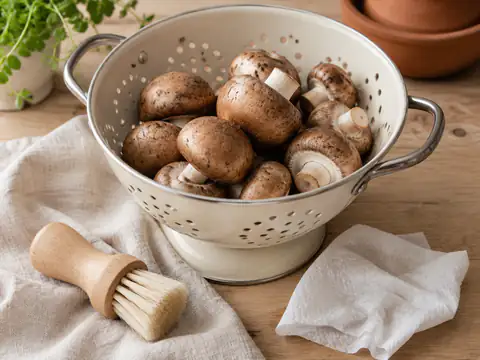
- Clean them just before cooking. Brush off debris or give them a quick rinse and pat them dry. How to clean mushrooms covers each type.
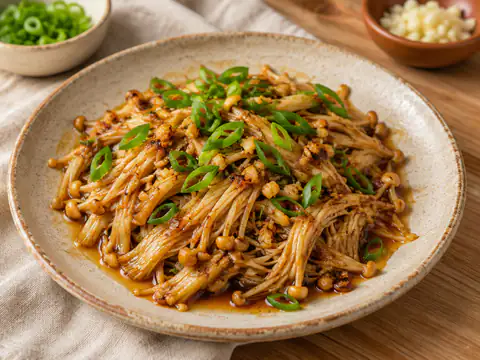
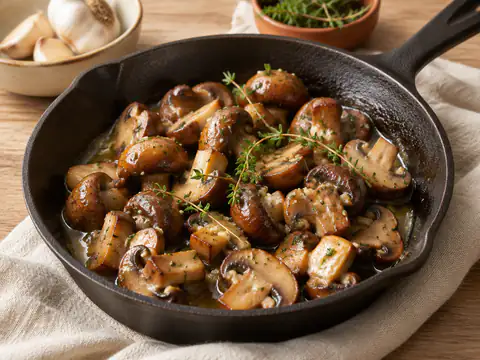
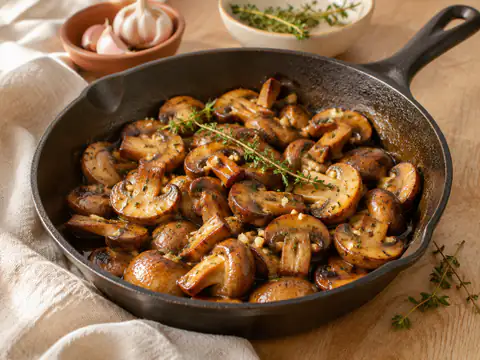
Cook them in a wide pan over medium-high heat, in a single layer, with a little oil or butter. Leave them alone for 2 to 3 minutes until the undersides are golden, then toss and cook 2 to 3 minutes more. The method is the same as in how to saute mushrooms, but oyster mushrooms cook faster, so they go in late in a stir-fry or sauce. Add salt at the end.
How to prep king oyster mushrooms
The stem is the main part, so use all of it.
- Trim the base. Cut off the bottom 1/4 inch (6 mm) if it looks dry or dirty.
- Pick a shape. Slice the stem crosswise into coins 1/2 inch (1.25 cm) thick for searing. Slice it lengthwise into planks 1/4 inch (6 mm) thick for grilling. Or shred it with a fork for a pulled texture. Score the cut sides in a light crisscross so they brown and take on sauce.
- Slice or halve the cap. The cap is small and softer than the stem. Cook it with the stem.
- Cook until browned. Sear the coins 3 to 4 minutes per side in a hot, oiled skillet until deeply golden. Add garlic, soy sauce or butter at the end. Brown them in two batches if the pan is crowded.
A thick coin that is browned on both sides and tender in the middle is the goal. If the center still feels firm and squeaky, give it a few more minutes.
Cook them thoroughly
University of Illinois Extension does not recommend eating specialty or gourmet mushrooms raw, and says all of them should be thoroughly cooked. It says that because mushrooms are not considered a high-risk food, cooking them to an internal temperature of 145°F (63°C) should be sufficient (Illinois Extension). A sauté that browns the mushrooms and leaves them steaming hot all the way through meets that.
Storing oyster and king oyster mushrooms
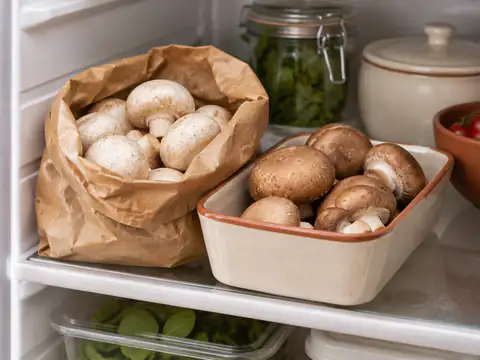
Keep fresh mushrooms in the refrigerator in their original container or a paper bag. Ohio State’s mycology program says king oyster mushrooms have an exceptional shelf life and can stay fresh for up to a week when refrigerated, while golden oysters have a shorter shelf life and pink oysters keep for under 3 days (Ohio State). Those figures are from growers, so use them as a guide and rely on how the mushrooms look and smell. How to store mushrooms gives the extension figures for mushrooms in general and how to freeze them.
Cooked mushrooms go into the refrigerator within 2 hours, or within 1 hour when the air is above 90°F (32°C), as the FDA advises for perishable food (FDA).
What to use instead
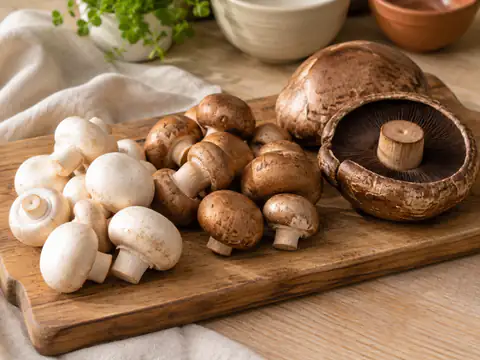
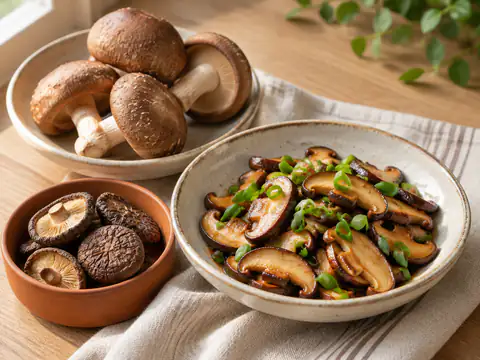
If you cannot find king oyster mushrooms, thick-stemmed cremini or large button mushrooms, cut thick, give a similar meaty bite. Shiitake caps work too; see shiitake mushrooms. The mushroom substitutes guide has a full table, including swaps for oyster mushrooms and a few that are not mushrooms.
Uses worth trying
- Garlic butter: the sear-then-butter method in garlic butter mushrooms suits oyster mushrooms, and king oyster coins do well too.
- Stir-fry: add torn oyster mushrooms in the last 2 minutes so they stay tender.
- Grilled planks: brush king oyster planks with oil and soy sauce and grill them until marked and tender.
- Pulled mushrooms: shred a king oyster stem with a fork, sear it hard and use it like pulled meat in tacos or sandwiches.
- Soup: drop torn oyster mushrooms into hot broth for the last 2 to 3 minutes.
Where these fit in the list
Oyster and king oyster mushrooms are two of the nine types in 9 essential types of mushrooms for cooking, which describes each one briefly. The mushrooms hub lists every mushroom page.
Questions and answers
What is the difference between oyster and king oyster mushrooms?
They are close relatives in the same genus, Pleurotus. Oyster mushrooms grow in fan-shaped clusters with thin caps and tender stems. King oyster mushrooms are the largest member of the family, with a thick, firm stem and a small cap, and a meaty, earthy flavor.
Can you eat oyster mushrooms raw?
Cook them. University of Illinois Extension does not recommend eating specialty or gourmet mushrooms raw and says to cook them thoroughly, to an internal temperature of 145°F (63°C).
Are the stems of king oyster mushrooms edible?
Yes. The stem is the main part of a king oyster mushroom and it is the part most recipes use. Slice it into coins or lengthwise planks and cook it until browned. The tough stems of oyster mushrooms from the clusters are better saved for stock.
What can I use instead of king oyster mushrooms?
Thick-stemmed cremini or large button mushrooms, or shiitake caps, give a similar meaty bite. The substitutes guide has a table.
Sources
- Pleurotus ostreatus, the Oyster mushroom, Tom Volk's Fungus of the Month for October 1998 — University of Wisconsin-La Crosse
- Gourmet Oyster Mushroom Varieties — Mycology at Ohio State University
- Preparation (Mushrooms) — University of Illinois Extension
- Are You Storing Food Safely? — U.S. Food and Drug Administration