

Introduction: Reclaiming a Holiday Icon
There is a specific sound that defines Thanksgiving morning in my kitchen. It isn’t the turkey sizzling or the timer dinging; it’s the crunch of a perfectly fried, golden onion ring shattering between my fingers.
- Introduction: Reclaiming a Holiday Icon
- Why This Recipe Works
- Deep Dive: Ingredient Breakdown
- The Green Beans
- The Mushroom Base
- The Creamy Binder
- The Crunch
- Equipment You Need
- Step-by-Step Narrative Guide: The Method
- Troubleshooting: Common Mistakes & Fixes
- Storage, Freezing & Reheating
- The Formal Recipe Card
- Recipe: Chef’s Ultimate Homemade Green Bean Casserole
- Ingredients:
- Instructions:
- Frequently Asked Questions (FAQ)
- Conclusion
For years, I held a bit of a grudge against the classic green bean casserole. You know the one—the 1955 invention by Dorcas Reilly at the Campbell’s test kitchen. It was iconic, sure, but as a chef with two decades of experience in fine dining and recipe development, I always found the standard “can of soup plus can of beans” approach to be lacking. It was often mushy, overly salty, and gray. It was a textureless string bean casserole that existed on the table out of obligation rather than desire.
But I missed the idea of it. I missed that nostalgic combination of earthy mushrooms, rich cream, and savory onions.
So, I set out on a mission to reconstruct the best green bean casserole recipe possible. I didn’t want to lose the soul of the original—I wanted to honor it by giving it the respect of fresh ingredients and proper French technique. I wanted a green bean casserole with fresh green beans that snapped when you bit into them, bathed in a homemade velouté that tasted of roasted mushrooms and garlic, not tin.
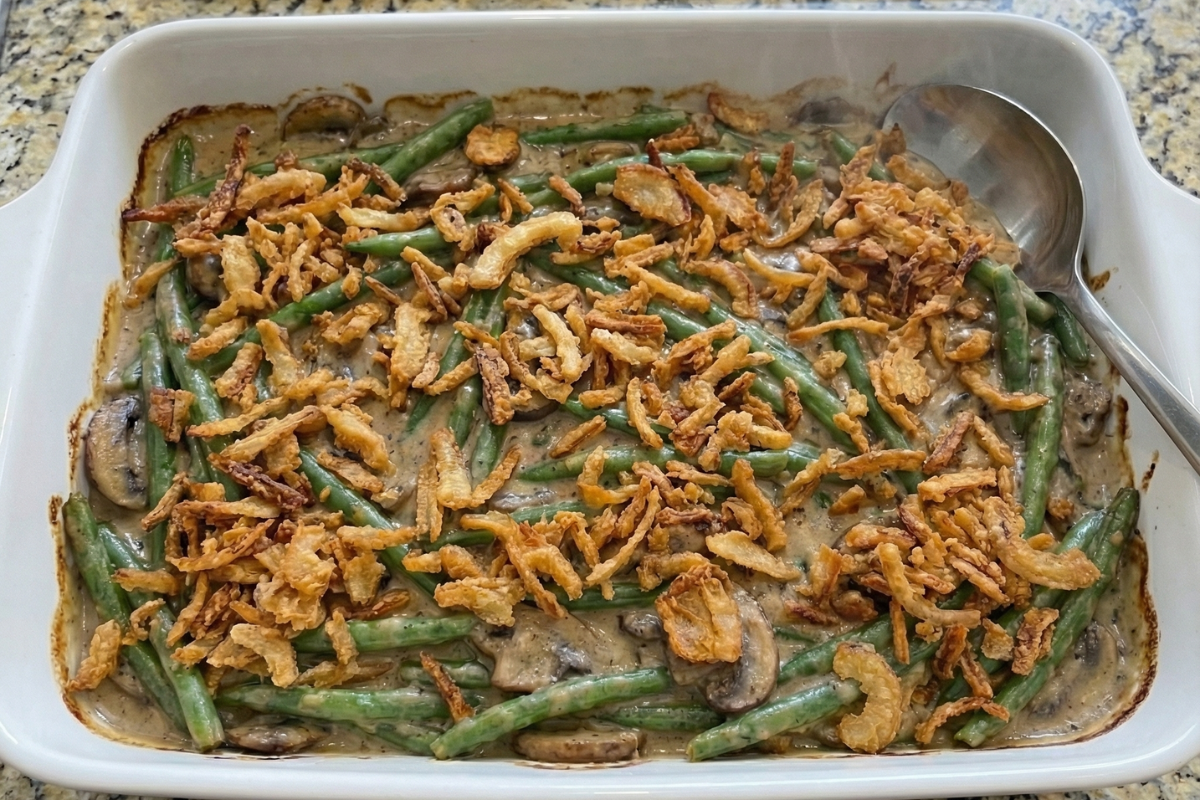
This recipe is the culmination of that journey. It is a bridge between the comfort food of our childhoods and the culinary standards of a modern kitchen. Whether you are looking for a fresh green bean casserole to impress the in-laws or simply want to elevate your Tuesday night dinner, this is the only guide you will ever need. It’s creamy, it’s crunchy, and it is unapologetically luxurious.
Why This Recipe Works
When developing this recipe, I focused on solving the three biggest problems with the traditional green bean casserole dish: lack of texture, one-note flavor, and unappealing color. Here is why this version is superior:
- The Blanch-and-Shock Technique: Unlike a canned green bean casserole where the vegetables are already cooked to death, we blanch fresh beans for exactly 3 minutes and shock them in ice water. This sets the chlorophyll (keeping them vibrant green) and maintains a structural “snap” even after baking.
- A Mushroom Duxelles Base: Instead of cream of mushroom soup, we create a rough duxelles (minced mushrooms sautéed in butter). By cooking the mushrooms down until they are golden brown, we concentrate their glutamate content, creating a massive savory umami bomb that a can simply cannot replicate.
- The Dual-Onion Approach: We don’t just put onions on top. We sweat shallots inside the sauce for sweetness and depth, and then top the dish with homemade crispy fried onions (or high-quality store-bought if you are pressed for time) for that essential contrast.
- The “Secret” Ingredient: A splash of soy sauce. It sounds unconventional, but it mimics the savory depth found in processed soup mixes naturally, boosting the “meatiness” of the mushrooms without adding distinct Asian flavor notes.
Deep Dive: Ingredient Breakdown
To achieve the best green bean casserole recipe, every component needs to be intentional. Here is exactly what you need and the science behind why I chose it.
The Green Beans
- Fresh Haricots Verts or Standard Green Beans: I prefer standard green beans for this casserole because they hold up better to the rich sauce. You will need 1.5 pounds (680g) of fresh beans.
- Chef’s Note: If you must use frozen, buy the “whole” variety, not “cut.” Thaw them completely and pat them extremely dry before using. If you are making a green bean casserole with canned green beans, rinse them thoroughly to remove excess sodium, though I highly recommend fresh for texture.
The Mushroom Base
- Cremini (Baby Bella) Mushrooms: You’ll need 10 ounces (280g). Creminis have a lower water content and deeper flavor than white button mushrooms. If you want to learn more about different mushroom varieties and when to use them, check out my complete guide..
- Garlic and Shallots: 2 cloves of garlic and 2 medium shallots. Shallots provide a sweeter, more delicate onion flavor that melts into the sauce, forming the aromatic foundation.
The Creamy Binder
- Unsalted Butter: 4 tablespoons (60g). Always use unsalted butter so you can control the seasoning yourself.
- All-Purpose Flour: 1/4 cup (30g). This creates our roux, the thickening agent that turns the liquid into a sauce.
- Chicken or Vegetable Stock: 1 cup (240ml). Homemade is best, but a high-quality “Better Than Bouillon” works wonders.
- Heavy Cream (Double Cream): 1 cup (240ml). Do not substitute milk here. The high fat content prevents the sauce from curdling (breaking) when it bubbles in the oven with the vegetables.
- Parmesan Cheese: 1/2 cup (50g), freshly grated. This isn’t traditional, but it adds a salty, nutty finish that binds the sauce to the beans.
The Crunch
- Fried Onions: You have two paths here. You can make homemade fried onions using thinly sliced shallots tossed in flour and fried in oil. However, I often find that for a French’s green bean casserole vibe, the high-quality prepared fried onions (like French’s or Trader Joe’s brand) stay crispier longer. You will need 1.5 cups (100g).
Equipment You Need
You do not need a professional kitchen, but specific tools will ensure your bean casserole recipe is a success.
- Large Pot (6-8 Quart / 5-7 Liter): For blanching the beans. It needs to be big enough so the water temperature doesn’t drop drastically when you add the beans.
- Ice Bath: A large bowl filled with water and ice cubes. Essential for stopping the cooking process.
- 12-inch (30cm) Cast Iron Skillet or Oven-Safe Sauté Pan: This allows you to cook the sauce and bake the casserole in the same vessel, saving on cleanup.
- Whisk: For smoothing out the roux and cream.
- Chef’s Knife: For chopping mushrooms and trimming beans.
Step-by-Step Narrative Guide: The Method
Cooking is a story of transformation. Here is how your string bean casserole should look, smell, and feel at every stage.
Phase 1: The Blanch (Setting the Color)
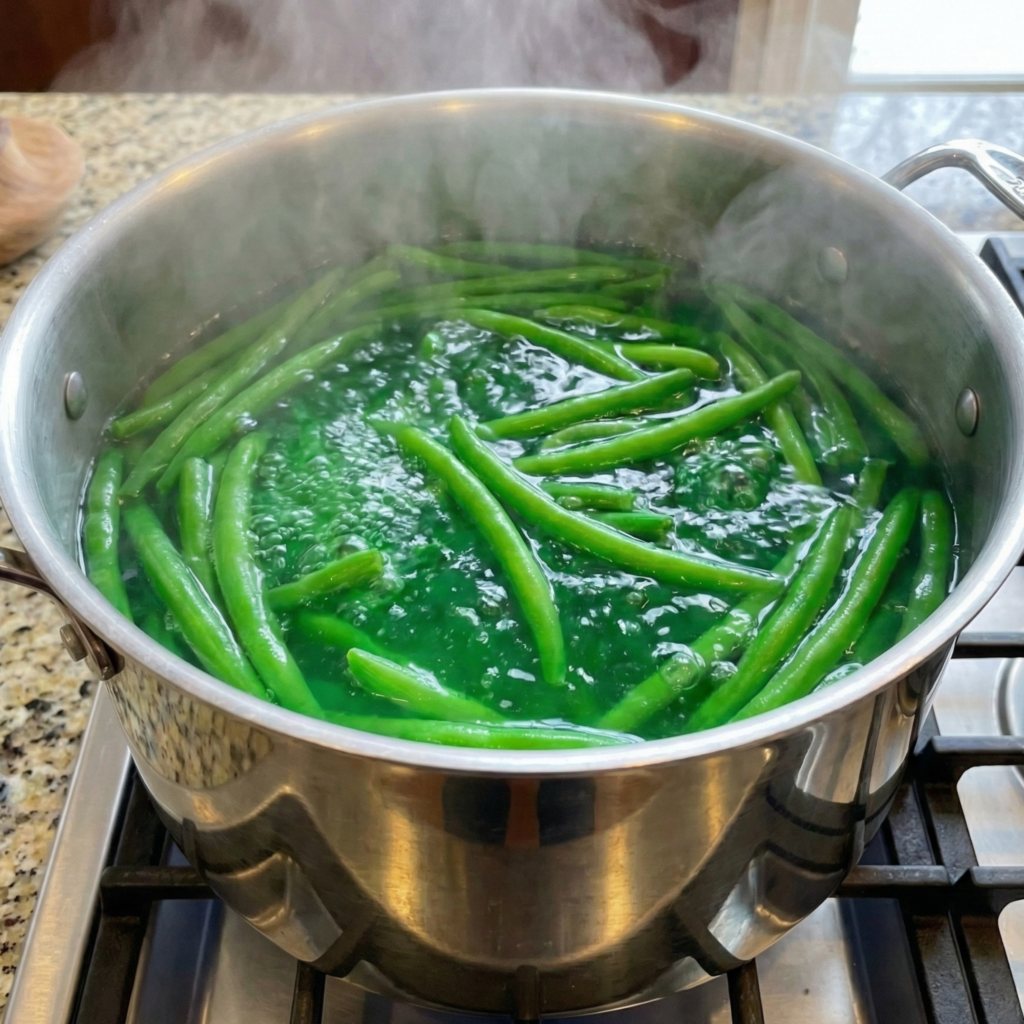
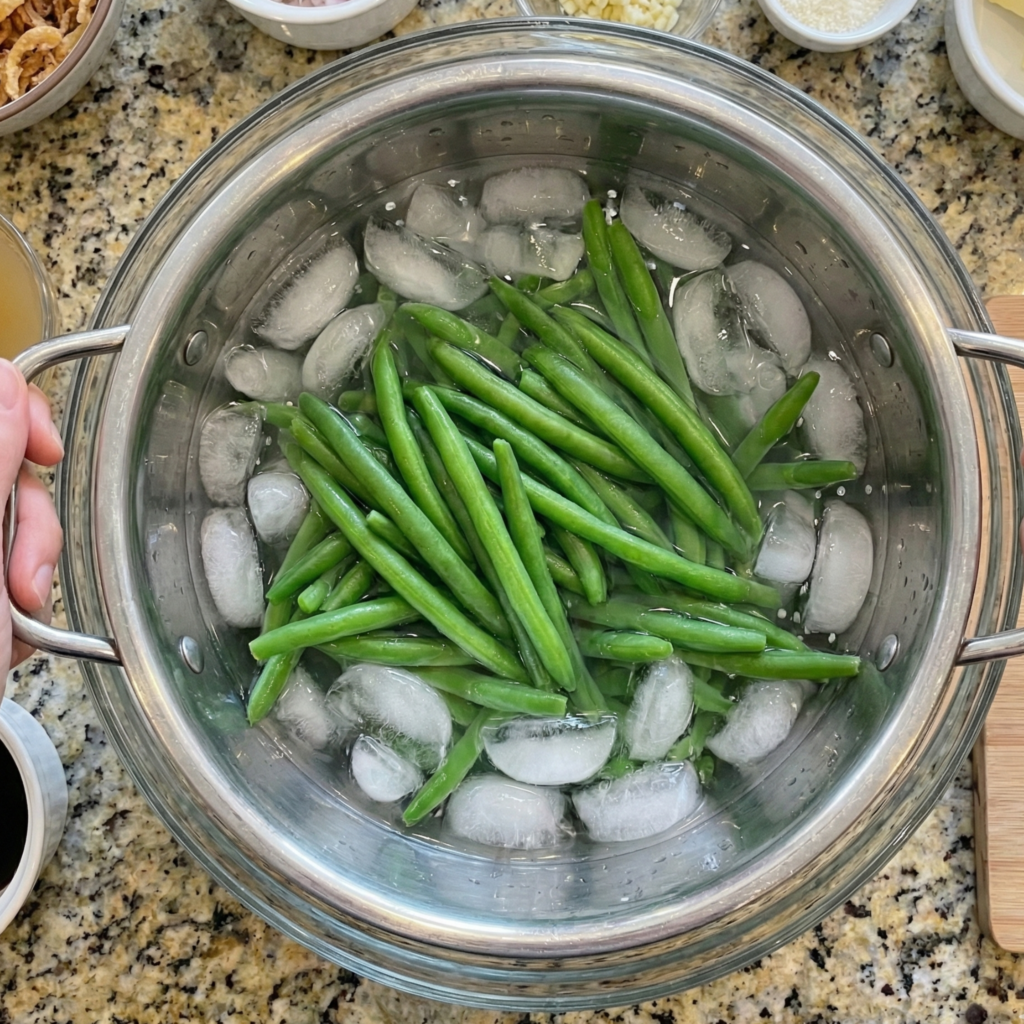
You start by bringing a large pot of heavily salted water to a rolling boil—it should taste like the ocean. Drop in your 1.5 lbs (680g) of trimmed green beans. Watch them closely. In the first minute, they will turn a dull olive color. By minute three, they will transform into a brilliant, electric green. This is what we want—blanching releases the gas trapped between the pigment and the skin, setting that vibrant color. Immediately transfer them to your ice bath. The shock of cold locks in that emerald hue. Once cool, drain them. Crucial Step: Pat them dry. Wet beans mean a watery casserole.
Phase 2: The Duxelles (Building Flavor)
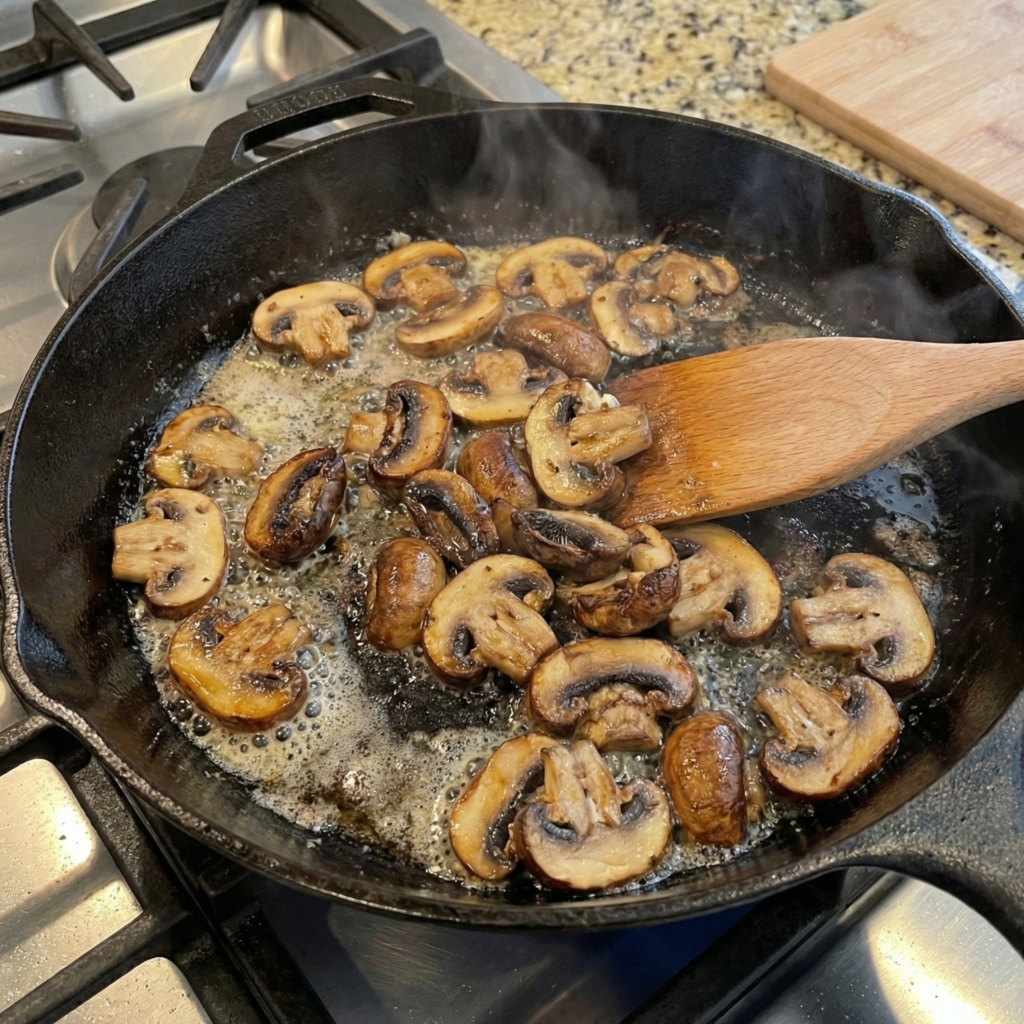
In your cast iron skillet over medium-high heat, melt the butter. Add the chopped mushrooms. At first, they will look dry and spongy. Don’t panic. After about 5 minutes, they will release their liquid. Keep cooking. You want that liquid to evaporate completely so the mushrooms start to sizzle and brown. This is the Maillard reaction, and it is the difference between a bland sauce and a rich one. Once browned, add the shallots and garlic, cooking until fragrant (about 2 minutes).
Phase 3: The Velouté (The Sauce)
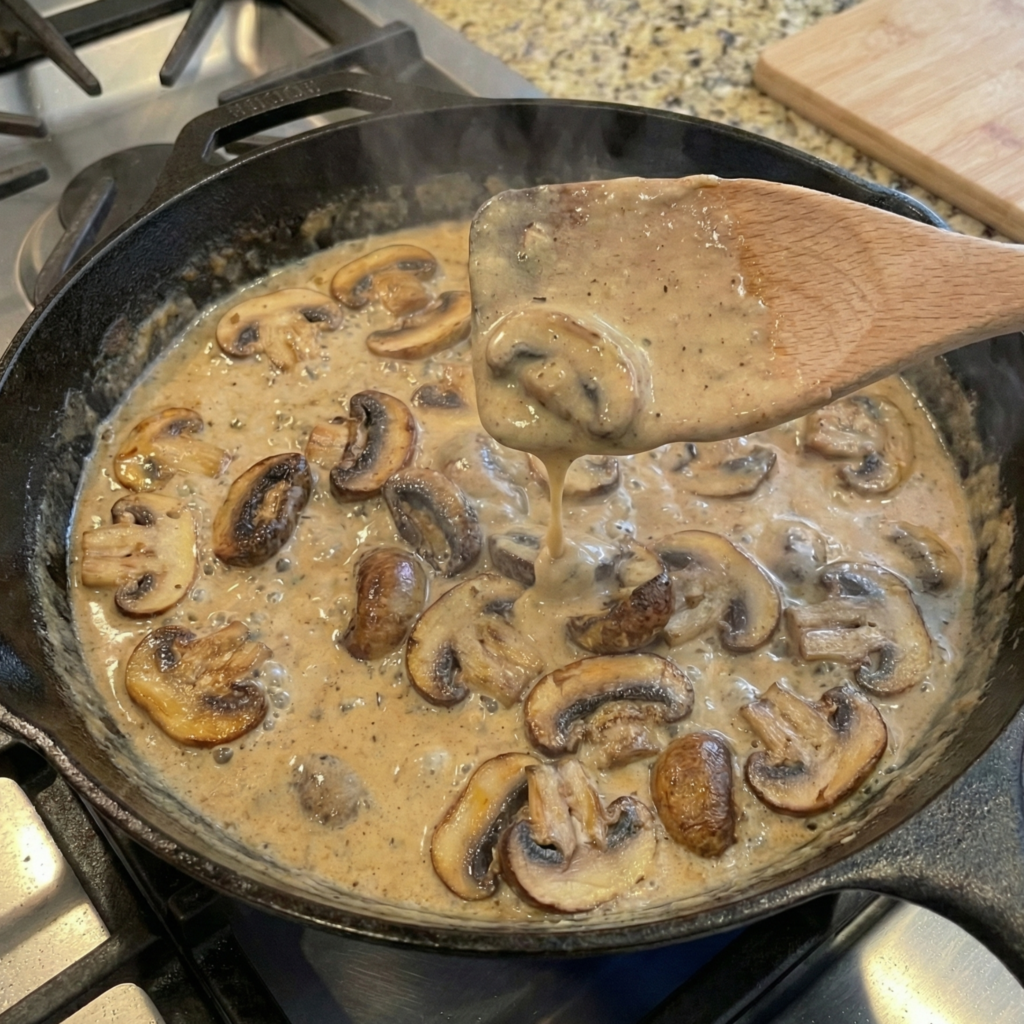
Sprinkle the flour over the mushroom mixture. Stir constantly for 1 minute. It will look like a pasty mess—this is good. You are cooking out the raw flour taste. Slowly stream in the stock, whisking vigorously to prevent lumps. It will thicken almost instantly into a gravy. Follow with the heavy cream. Bring it to a gentle simmer. The sauce should be thick enough to coat the back of a spoon (nappe consistency). Stir in the soy sauce and Parmesan. Taste it. It should be luxurious.
Phase 4: The Marriage
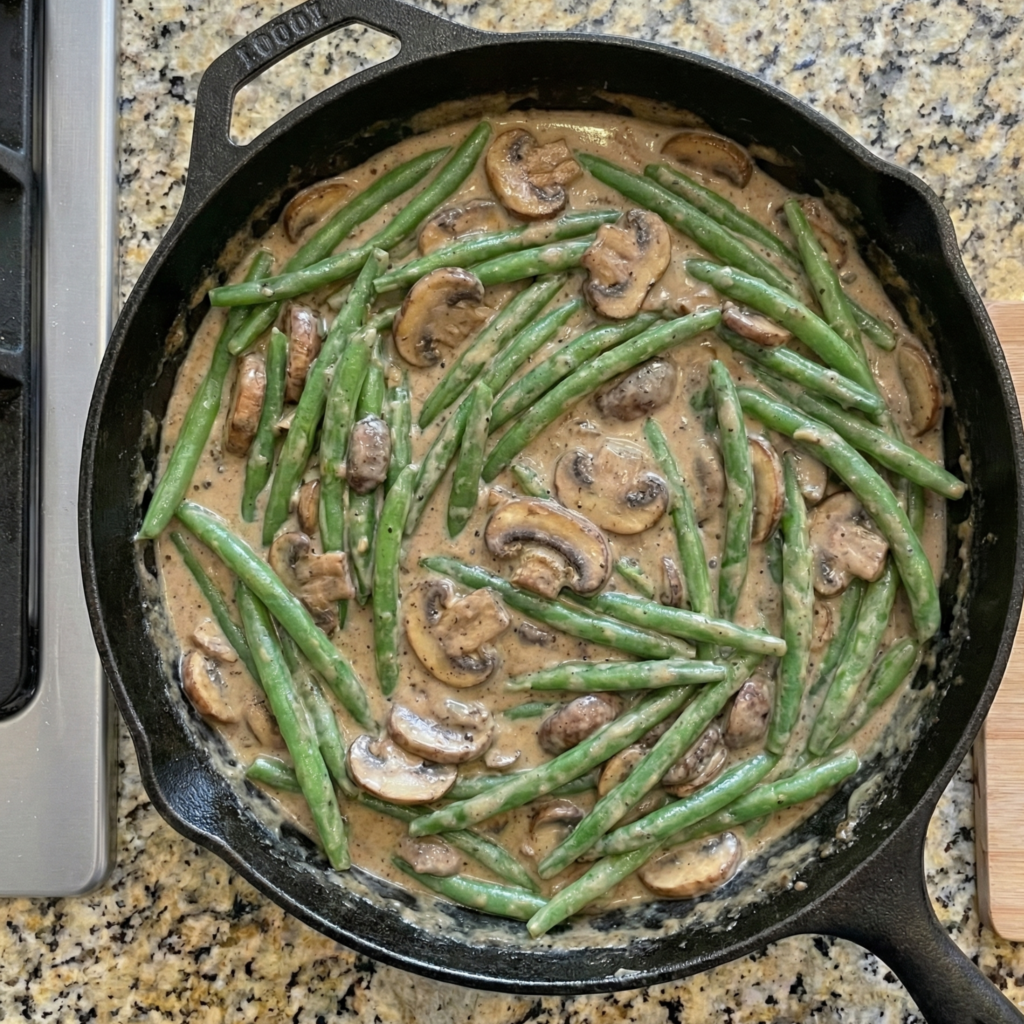
Toss the dried green beans into the sauce right in the skillet. Fold them gently so every bean is coated in the mushroom cream. Top with half of your fried onions.
Phase 5: The Bake
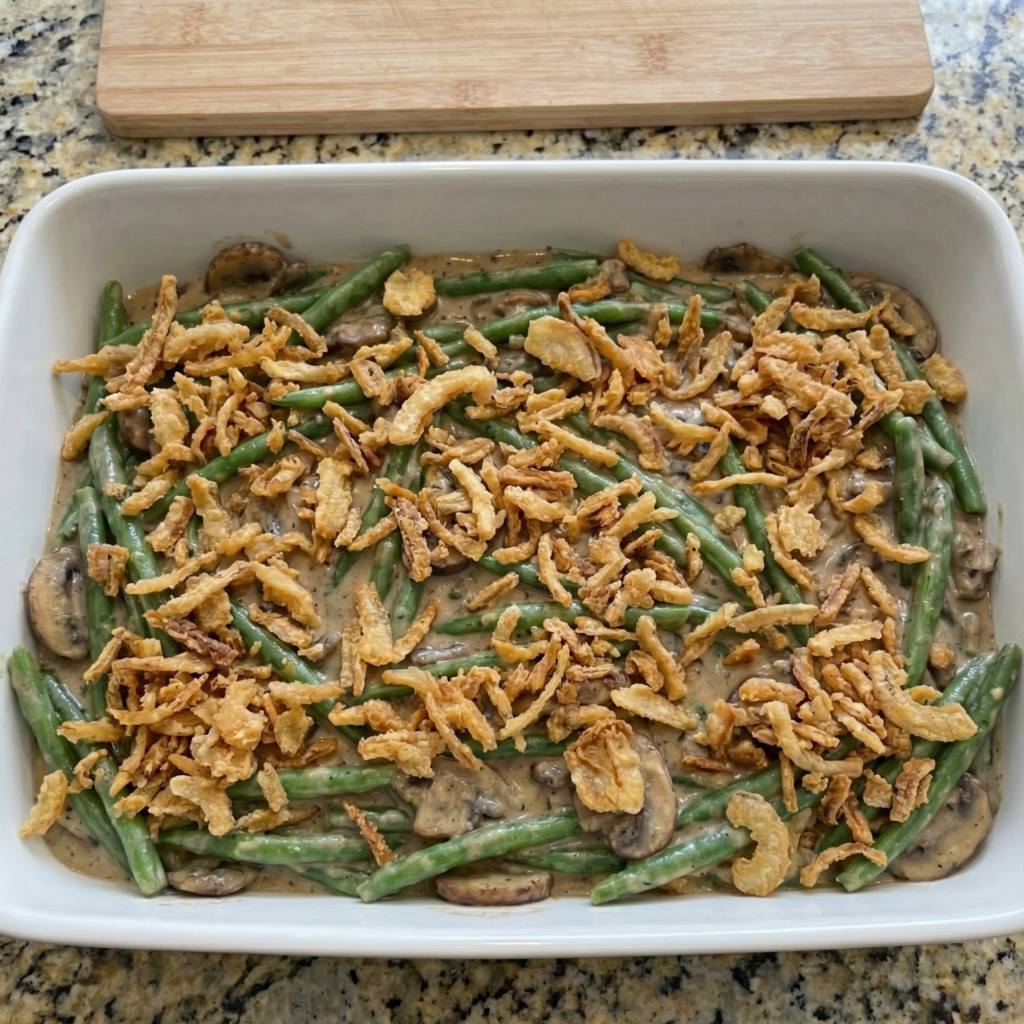
Slide the skillet into a 375°F (190°C) oven. You are looking for bubbling. Not just a little simmer, but aggressive, hot bubbling around the edges and in the center. This ensures the sauce has tightened up. In the last 5 minutes, add the remaining onions so they brown but don’t burn.
Troubleshooting: Common Mistakes & Fixes
Even with the best green bean casserole recipe, things can go wrong. Here is how to fix them.
- Problem: The Casserole is Watery/Soupy.
- The Cause: The mushrooms weren’t cooked long enough to release their water, or the green beans weren’t dried after blanching.
- The Fix: If it comes out of the oven watery, let it sit for 15-20 minutes. As it cools, the sauce will naturally thicken. Next time, cook the mushrooms until the pan is dry before adding flour.
- Problem: The Fried Onions Burned.
- The Cause: Adding the top layer of onions too early.
- The Fix: Only put half the onions in the mix initially. Tent the dish with foil if you see the top browning too fast. Add the “garnish” onions only during the last 5 minutes of baking.
- Problem: The Beans are Mushy.
- The Cause: Over-blanching or using canned beans without adjusting the cooking time.
- The Fix: If using fresh, set a timer for exactly 3 minutes. If using canned, skip the blanching step entirely and just fold them into the finished sauce immediately before baking.
Storage, Freezing & Reheating
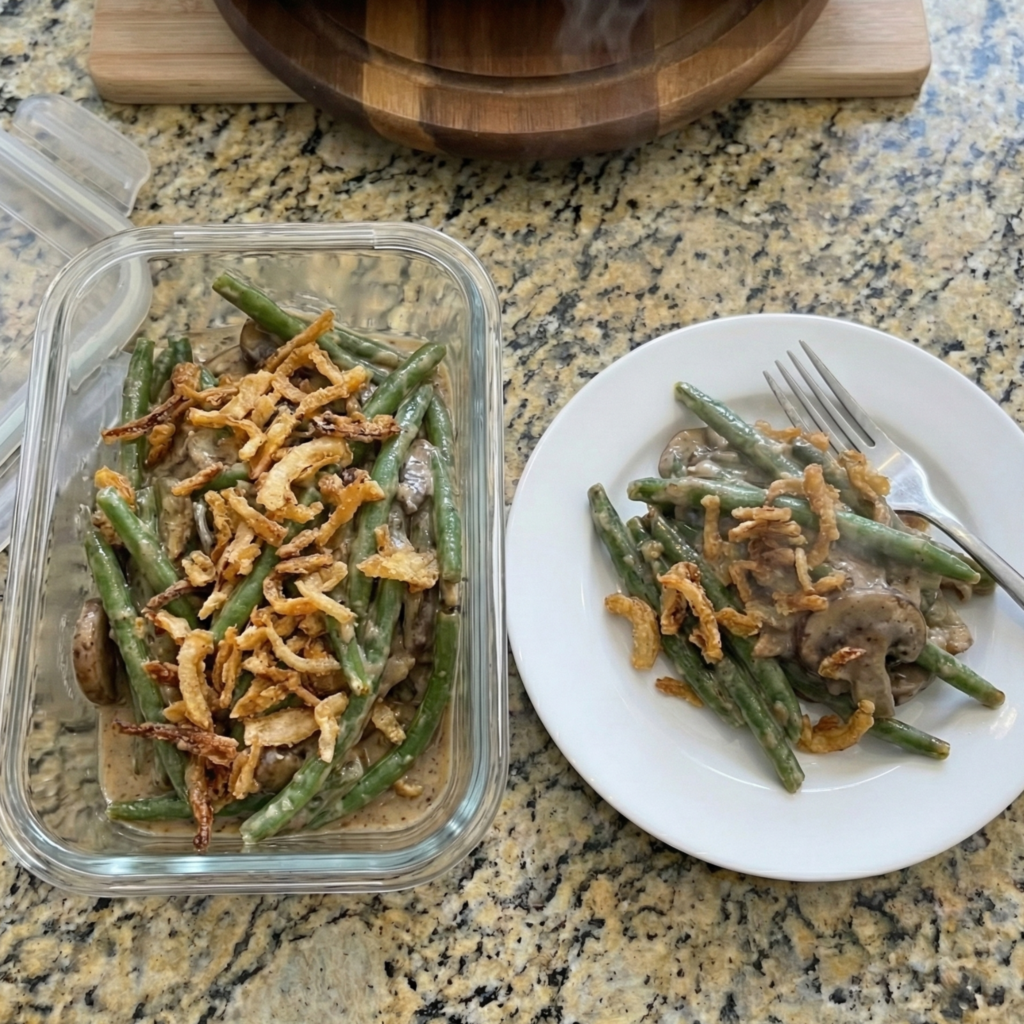
This green bean casserole dish is surprisingly resilient, making it great for holiday prep.
- Make-Ahead (Refrigeration): You can assemble the entire casserole (beans + sauce) up to 48 hours in advance. Store it in the baking dish covered tightly with plastic wrap or foil. Important: Do not add the fried onions until the day you bake it, or they will turn into soggy mush.
- Freezing: I generally do not recommend freezing this dish, as the cream sauce can break (separate) and the beans can become texturally compromised upon thawing. However, if you must, freeze the blanched beans and the sauce separately. Thaw both in the fridge, combine, and bake.
- Reheating Leftovers: To reheat, place portions in a 350°F (175°C) oven for 15-20 minutes. The microwave works, but your onions will lose their crunch.
The Formal Recipe Card
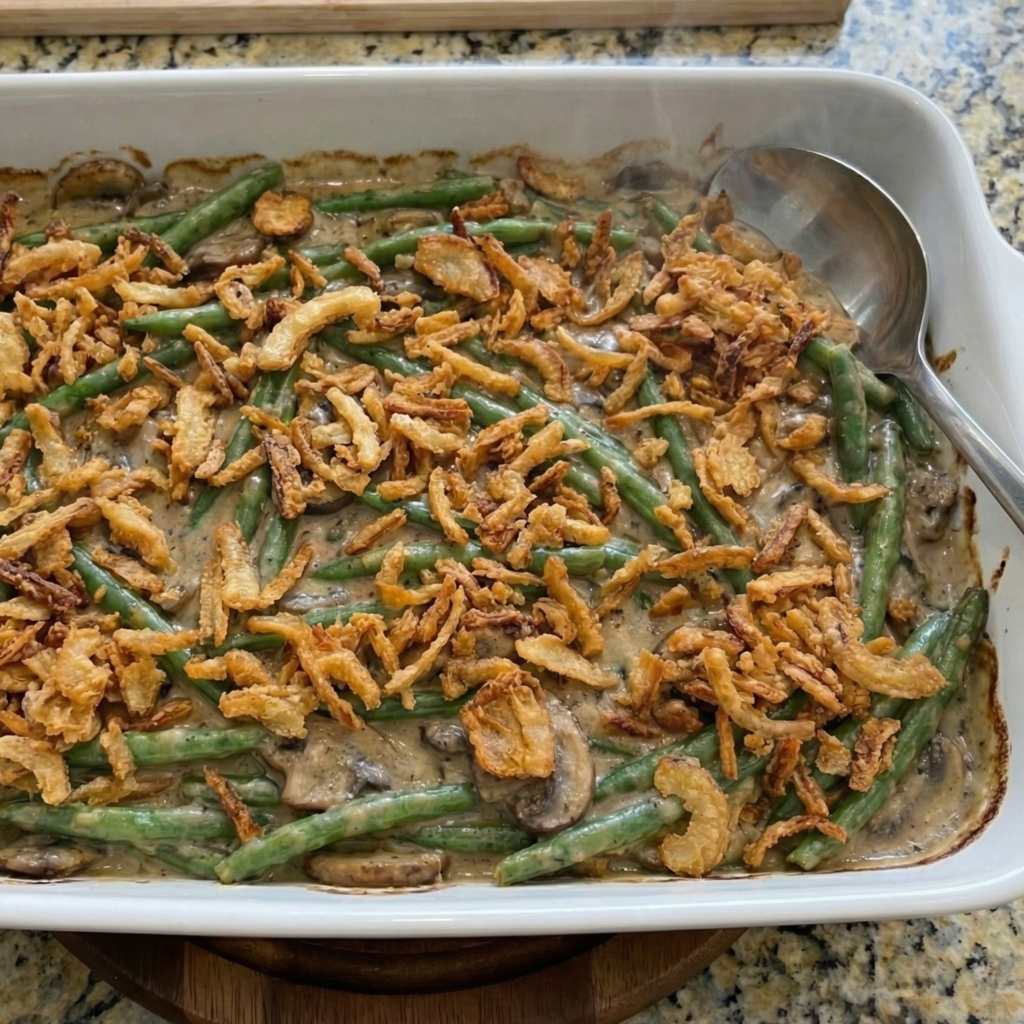
Here is the precise formula for the Ultimate Green Bean Casserole.
Recipe: Chef’s Ultimate Homemade Green Bean Casserole
- Meta Data:
- Prep Time: 25 Minutes
- Cook Time: 30 Minutes
- Total Time: 55 Minutes
- Yields: 8 Servings
- Nutrition:
- Calories: 310 kcal
- Carbohydrates: 22g
- Protein: 6g
- Fat: 24g
Nutrition values are estimates and for informational purposes only. Actual values may vary depending on ingredients used.
Ingredients:
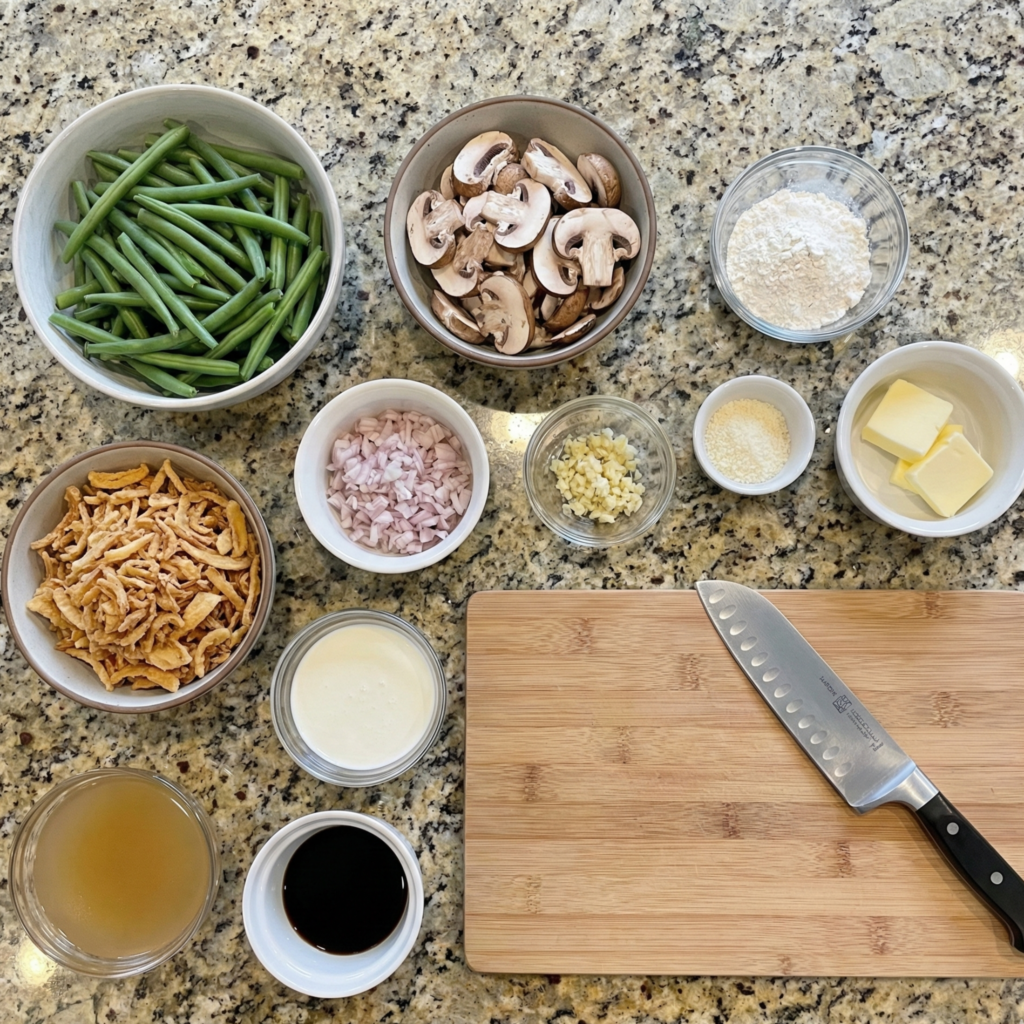
- The Beans:
- 1 1/2 lbs (680g) Fresh Green Beans, trimmed and halved
- 2 tbsp (30g) Kosher Salt (for blanching water)
- The Mushroom Cream Sauce:
- 4 tbsp (60g) Unsalted Butter
- 10 oz (280g) Cremini Mushrooms, finely chopped
- 2 Shallots, minced
- 2 Cloves Garlic, minced
- 1/4 cup (30g) All-Purpose Flour
- 1 cup (240ml) Chicken Stock or Vegetable Broth
- 1 cup (240ml) Heavy Cream (Double Cream)
- 1 tsp (5ml) Soy Sauce
- 1/2 tsp (2g) Black Pepper
- 1/4 tsp (1g) Nutmeg (optional)
- 1/2 cup (50g) Parmesan Cheese, freshly grated
- The Topping:
- 1 1/2 cups (100g) Crispy Fried Onions (homemade or store-bought)
Instructions:
- Preheat & Prep:
- Preheat your oven to 375°F (190°C).
- Bring a large pot of water to a boil and add the 2 tbsp (30g) salt. Prepare a large bowl with cold water and ice.
- Blanch the Beans:
- Add the green beans (680g) to the boiling water. Cook for exactly 3 minutes.
- Drain quickly and plunge them into the ice bath to stop the cooking.
- Once cool, drain and pat them completely dry with paper towels. Set aside.
- Sauté the Aromatics:
- In a 12-inch cast iron skillet or large oven-safe pan, melt the butter (60g) over medium-high heat.
- Add the chopped mushrooms (280g). Cook undisturbed for 3 minutes, then stir and cook for another 3-5 minutes until the liquid evaporates and mushrooms are browned.
- Reduce heat to medium. Add minced shallots and garlic. Sauté for 2 minutes until soft.
- Make the Sauce (The Roux):
- Sprinkle the flour (30g) over the mushroom mixture. Stir constantly for 1 minute to cook the flour.
- Slowly whisk in the chicken stock (240ml), followed by the heavy cream (240ml).
- Simmer for 3-4 minutes until the sauce thickens enough to coat the back of a spoon.
- Stir in the soy sauce, black pepper, nutmeg, and Parmesan cheese (50g). Remove from heat.
- Assemble & Bake:
- Add the cooked green beans and 1/2 cup of the fried onions into the sauce. Toss to combine thoroughly.
- Smooth the top of the mixture.
- Bake for 20 minutes until the sauce is bubbly and hot.
- The Final Crisp:
- Remove from the oven and top with the remaining 1 cup fried onions.
- Bake for an additional 5 minutes until the onions are golden brown and toasted.
- Let the dish rest for 10 minutes before serving (this helps the sauce set).
Frequently Asked Questions (FAQ)
1. Can I make this a green bean casserole with canned green beans?
Absolutely. While I prefer green bean casserole with fresh green beans, you can substitute the 1.5 lbs of fresh beans with 3 cans (14.5 oz/400g each) of cut green beans. Drain them and rinse them well. Skip the blanching step and add them directly to the thickened sauce.
2. Is this the same as the French’s green bean casserole recipe?
It is inspired by it, but elevated. The original French’s green bean casserole uses condensed soup and milk. My version uses a homemade roux-based mushroom sauce and heavy cream. It tastes fresher and richer, but we still use the crispy fried onions because they are delicious.
3. Can I use frozen green beans?
Yes. This is a great middle ground between fresh and canned. Use 1.5 lbs (680g) of frozen whole beans. Thaw them completely in the fridge overnight, or blanch them for just 1 minute in boiling water to remove the ice crystals. Pat them very dry before adding to the sauce.
4. Can I make this gluten-free?
Yes. To make a gluten-free string bean casserole recipe, replace the All-Purpose flour with a 1:1 Gluten-Free Flour blend (like King Arthur or Cup4Cup) to make the roux. Ensure your soy sauce is Tamari (gluten-free) and buy gluten-free fried onions or fry your own shallots in cornstarch.
5. Why is my sauce curdled?
Curdling usually happens if the heat is too high or the dairy fat content is too low. This is why we use Heavy Cream (36% fat). If you use skim milk or low-fat milk, the acidity of the vegetables and the high heat can cause the proteins to clump. Stick to the heavy cream!
6. Can I make this in a slow cooker?
You can, though you lose the crispy top. To make a slow cooker bean casserole recipe, combine the sauce ingredients and raw green beans (no need to blanch) in the slow cooker. Cook on Low for 4-5 hours. Stir in half the onions at the end and serve.
Conclusion
There is a reason the green bean casserole has survived for 70 years. It hits every comfort note we crave: creamy, salty, crunchy, and savory. But when you take the extra thirty minutes to make it from scratch—using fresh beans that snap and a sauce made of real cream and mushrooms—it transforms from a side dish you have to eat into the dish everyone fights over.
I hope this guide helps you reclaim this classic for your own holiday table. If you try this recipe, please leave a comment below and let me know how it turned out, or tag me in your photos on social media! Happy cooking